
BuddhistCatholicContemplativeEvangelicalGeneral ChristianHinduJewishLatter-day SaintMuslimNew VisionsProgressive Christian
Beliefs
- Buddhist
- Catholic
- Contemplative
- Evangelical
- General Christian
- Hindu
- Jewish
- Latter-day Saint
- More Voices
- Muslim
- New Visions
- Pagan
- Progressive Christian
Topics
- Religion News
- Food and Religion
- Sports and Religion
- Religious Art
- Religious Music and Entertainment
- Religious Events
- History and Religion
- Style and Religion
- Politics and Religion
- Women in Religion
- Recreation Outdoors and Religion
- Business Finance and Religion
- Careers Workplace and Religion
- Education and Religion
- Family Parenting and Religion
- Health Fitness and Religion
- Home and Religion
- Relationships and Religion
- Technology and Religion
- Travel and Religion
Columnists
- Buddhist Columnists
- Business Finance and Religion Columnists
- Careers Workplace and Religion Columnists
- Catholic Columnists
- Contemplative Columnists
- Education and Religion Columnists
- Evangelists Columnists
- Family Parenting and Religion Columnists
- General Christian Columnists
- Health Fitness and Religion Columnists
- Hindu Columnists
- History and Religion Columnists
- Home and Religion Columnists
- Jewish Columnists
- More Voices Columnists
- Latter Day Columnists
- Muslim Columnists
- New Visions Columnists
- Nonreligious Columnists
- Pagan Columnists
- Politics and Religion Columnists
- Progressive Columnists
- Recreation Outdoors and Religion Columnists
- Relationships and Religion Columnists
- Religion News Columnists
- Religious Art Columnists
- Religious Events Columnists
- Religious Music and Entertainment Columnists
- Sports and Religion Columnists
- Style and Religion Columnists
- Technology and Religion Columnists
- Travel and Religion Columnists
- Women in Religion Columnists
Resource Library
- 2026 Calendar
- Library of World Religions
- The 100 Most Holy Places on Earth
- Patheos Answers
- Podcasts
- Videos
- Faith Leaders Database
- Anglican Episcopalian
- Bahai
- Baptist
- Buddhism
- Christianity
- Confucianism
- Eastern Orthodoxy
- Hinduism
- Holiness and Pentecostal
- ISKCON
- Islam
- Judaism
- Lutheran
- Methodist
- The Church of Jesus Christ of Latter-day Saints
- New Age
- Paganism
- Presbytarian and Reformed
- Protestantism
- Religion Behind the Scenes
- Roman Catholic
- Scientology
- Shia Islam
- Sikhism
- Sufism
- Sunni Islam
- Taoism
- Zen
- See all religions
Research Tools
 Ad-Free & Subscriber Log-In Subscription Support
Ad-Free & Subscriber Log-In Subscription Support
Follow Patheos 

- Trending:
- Forgiveness
- |
- Marriage
- |
- Consciousness
- |
- Death Penalty
- |
- Election
- |
- Halloween
RELIGION LIBRARY
Lutheran
Toggle navigation
Beliefs
Ultimate Reality and Divine Beings
Luther's God is an all-powerful God. He stressed this idea in ways that may surprise people today. For Luther, God is wholly other than we are, and so we cannot rely on analogies from our own experience to understand God. We know about God only what God chooses to reveal to us. The picture of God in scripture is not uniformly comforting. God's power and goodness are not constrained by human conceptions of power and goodness. The Bible contains many stories of God acting in ways that contradict commonly accepted human beliefs regarding morality. (For example, in one Old Testament story, Uzzah puts his hand on the Ark of the Covenant to keep it from falling on the ground as it makes its way into Jerusalem, and is struck dead by God for his trouble. [2 Samuel 6:1-7]) In a way, for Luther this is the whole point: God acts in ways that puzzle or trouble us precisely to break down our reliance on our own reason and morality. Luther calls these acts the "alien works of God." God also comforts us with promises to forgive our sin. Luther calls acts that cause this experience the "proper works of God."
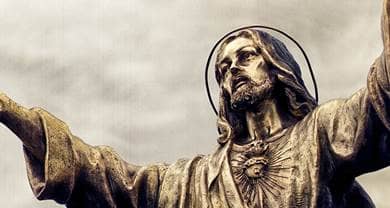
Luther maintains the traditional Christian teaching of the two natures of Christ: fully God and fully human. It is only because Jesus Christ is human that he can be punished for human sin. It is only because Jesus Christ is God and without sin that his sacrifice can pay the infinite debt of sin. As God, Jesus is not necessarily the friendly savior taught in some Sunday schools. One of Luther's favorite Bible passages was Mark 7:24-30, in which a non-Jewish woman asks Jesus to cure her daughter. Jesus responds, "First let the children eat all they want," he told her, "for it is not right to take the children's bread and toss it to their dogs," which by any human standard must be counted as a very rude response. The woman persists: "Yes, Lord," she replied, "but even the dogs under the table eat the children's crumbs" and Jesus relents and cures her daughter. The point for Luther is that God's (and therefore Jesus') alien works do not conform to our ideas. We are to cling to the hope, as this woman does, that the "no" of rejection will become the "yes" of grace promised in the gospel.
It has always been a theological puzzle in Christianity to hold together the ideas that Jesus is both God and human, that is, that two essentially different natures appear in one person in a way that does not split Jesus' personality. This puzzle becomes even harder in the 19th century when people begin to assume that what it means to be fully human is not simply to "have" a static human nature, but also to develop and change over time. Classical Christian doctrine does not allow for change in God. An important contribution to Christian thought is made by 19th-century Lutheran theologians who develop the idea of a "kenotic" (from the Greek word for "emptying") Christology. Philippians 2:7 states that Christ "emptied himself," being born as a servant. Many 19th-century Lutherans argued that this meant that Jesus emptied himself of his divine attributes (omnipotence, for example) in order to be born and develop as a true human. Their critics argue that this falls into the old heresy of Arianism (or, Ebionitism), which is the error of thinking of Jesus as less than fully divine.
Luther lived in a medieval world that did not question the existence of witches, goblins, demons, and other beings that most people today see as superstition. For Luther the devil was not some abstract symbol of evil, but a very real and threatening being. He reports hearing the devil thump about the room while he is trying to work, and records the following conversation: "When I awoke last night, the Devil came and wanted to debate with me; he rebuked and reproached me, arguing that I was a sinner. To this I replied: Tell me something new, Devil!" He showed his contempt for the devil by farting at him, and recommends to his parishioners that they tell the Devil to go eat his own dung. Luther frequently felt attacked by the devil (this has led some historians to think he suffered from depression). The only defense was faith in Christ, and Luther would yell: "I have been baptized, I am a Christian!"
Angels, too, are very real beings for Luther. For Luther, "An angel is a spiritual creature created by God without a body for the service of Christendom and the church."
Today, many Lutherans retain traditional beliefs in the devil and in angels. For many, angels seem either uncomfortably pre-modern, or simply have no relevance to their belief system, and the devil is a symbol of evil. Surveys show that increasing numbers believe in angels (and heaven) but reject belief in the devil (and hell). Still others believe in angels but, perhaps without being aware of it, instill them with qualities more in line with New Age religious movements than with those of traditional Christianity.
Back to Religion Library
Editor's picks See all columnists
Evangelical
Before You Unplug or Sign Out for Good
Evangelical
What Is the Purpose of Spiritual Gifts, and How Do You Discover Yours?
New Visions
5 Ways to Hear What God is Telling You
Muslim
How Awake Are We? When Waking Up is Falling Asleep
Latter-day Saint
"The Church supports the use of vaccinations"
Evangelical
Luther and the Beauty of Christ
The Soul of Gospel Music Explored in New Netflix Series "Voices of Fire"
Seven Ways to Think About Christian Mysticism

Evangelical
Evangelical
Muslim
Imam Ali’s letter to the Governor- Everlasting Example of Good...
Progressive Christian
Patheos Explore the world's faith through different perspectives on religion and spirituality! Patheos has the views of the prevalent religions and spiritualities of the world.
Ad-Free & Subscriber Log-In Subscription Support
- About Us
- 2026 Calendar
- Videos
- Podcasts
- Library of World Religions
- Faith In Media Tracker
- Advertise With Us
- Write for Us
- Privacy Policy
- Terms of Service
- Do Not Sell My Data
- Contact Us
- Radiant Digital
- Manage Newsletter Subscriptions
- Unsubscribe From Notifications
- Sitemap
Copyright 2008-2026, Patheos. All rights reserved.
Subscription Support Ad-Free & Subscriber Log-In
Follow Patheos