
BuddhistCatholicContemplativeEvangelicalGeneral ChristianHinduJewishLatter-day SaintMuslimNew VisionsProgressive Christian
Beliefs
- Buddhist
- Catholic
- Contemplative
- Evangelical
- General Christian
- Hindu
- Jewish
- Latter-day Saint
- More Voices
- Muslim
- New Visions
- Pagan
- Progressive Christian
Topics
- Religion News
- Food and Religion
- Sports and Religion
- Religious Art
- Religious Music and Entertainment
- Religious Events
- History and Religion
- Style and Religion
- Politics and Religion
- Women in Religion
- Recreation Outdoors and Religion
- Business Finance and Religion
- Careers Workplace and Religion
- Education and Religion
- Family Parenting and Religion
- Health Fitness and Religion
- Home and Religion
- Relationships and Religion
- Technology and Religion
- Travel and Religion
Columnists
- Buddhist Columnists
- Business Finance and Religion Columnists
- Careers Workplace and Religion Columnists
- Catholic Columnists
- Contemplative Columnists
- Education and Religion Columnists
- Evangelists Columnists
- Family Parenting and Religion Columnists
- General Christian Columnists
- Health Fitness and Religion Columnists
- Hindu Columnists
- History and Religion Columnists
- Home and Religion Columnists
- Jewish Columnists
- More Voices Columnists
- Latter Day Columnists
- Muslim Columnists
- New Visions Columnists
- Nonreligious Columnists
- Pagan Columnists
- Politics and Religion Columnists
- Progressive Columnists
- Recreation Outdoors and Religion Columnists
- Relationships and Religion Columnists
- Religion News Columnists
- Religious Art Columnists
- Religious Events Columnists
- Religious Music and Entertainment Columnists
- Sports and Religion Columnists
- Style and Religion Columnists
- Technology and Religion Columnists
- Travel and Religion Columnists
- Women in Religion Columnists
Resource Library
- 2026 Calendar
- Library of World Religions
- The 100 Most Holy Places on Earth
- Patheos Answers
- Podcasts
- Videos
- Faith Leaders Database
- Anglican Episcopalian
- Bahai
- Baptist
- Buddhism
- Christianity
- Confucianism
- Eastern Orthodoxy
- Hinduism
- Holiness and Pentecostal
- ISKCON
- Islam
- Judaism
- Lutheran
- Methodist
- The Church of Jesus Christ of Latter-day Saints
- New Age
- Paganism
- Presbytarian and Reformed
- Protestantism
- Religion Behind the Scenes
- Roman Catholic
- Scientology
- Shia Islam
- Sikhism
- Sufism
- Sunni Islam
- Taoism
- Zen
- See all religions
Research Tools
 Ad-Free & Subscriber Log-In Subscription Support
Ad-Free & Subscriber Log-In Subscription Support
Follow Patheos 

- Trending:
- Forgiveness
- |
- Marriage
- |
- Consciousness
- |
- Death Penalty
- |
- Election
- |
- Halloween
RELIGION LIBRARY
Islam
Toggle navigation
Rituals and Worship
Sacred Time
Sacred time is a "time out of time," when the community's sense of the sacred interrupts ordinary experiences of time. Like its sister religions, Judaism and Christianity, Islam marks the moments of sacred time in an annual calendar. The calendar is divided into twelve months, each with 29-30 days. The months are further divided into weeks of seven days each. As in Judaism, the days last from sunset to sunset. The calendar marks annual times that are particularly sacred to Muslims, such as the Night of Power. Celebrated on the 27th of Ramadan, this was the night when Muhammad received the first revelation of the Quran. The entire month of Ramadan is also sacred and is a time in which the powers of evil are diminished by the sacred event of the original revelation. Daily life is also punctuated by moments of holiness, signaled by the call of the muezzin to prayer.
Islamic Calendar
In 622, the Muslim community emigrated from Mecca, where they were persecuted, to Medina, where they were welcomed. This event, called the Hijrah or emigration, marks the beginning of the time of Islam. It marks a break from the former time, or the time before Islam, called al-Jahiliyya. This significance is reflected in the Islamic calendar, called the Hijrah calendar, in which 622 is year one, or 1 A.H. (after Hijrah).
The Hijrah calendar is a lunar calendar. It has twelve months of 29 or 30 days each, for a total of 354 days. Muslims use the solar calendar for non-religious purposes, and the lunar Hijrah calendar does not adjust to keep pace with the solar one. In any given 33-year cycle, annual observances like the Ramadan fast and the hajj will occur in each of all four seasons. The week has seven days, and the days begin and end at sunset. Fridays are set aside for communal prayers in the mosque, often accompanied by a sermon. Many businesses will close to allow people to attend the midday Friday prayers.
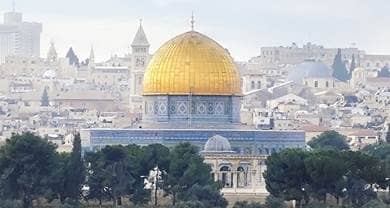
The Hijrah calendar includes many sacred days. There are days that commemorate important historical events, such as the Miraj, which celebrates Muhammad's miraculous journey from Mecca to Jerusalem. Other days remember anniversaries of Muhammad's birth and death, and those of his daughter Fatima. There are also days and months set aside for participation in religious observances and festivals, such as the month-long Ramadan fast and the season of the hajj. The main festivals and holy days are as follows.
Millions of Muslims make their hajj, or pilgrimage, during the twelfth month, called Dhu al-Hijjah. The Feast of Sacrifice, or Eid al-Adha, is celebrated on the tenth day of Dhu al-Hijjah. All Muslims celebrate Eid al-Adha, whether they are on pilgrimage or not. It is Islam's most important annual festival, commemorating Abraham's willingness to sacrifice his own son. In the Islamic tradition, the son Abraham nearly sacrificed was Ishmael. God substituted a ram for Abraham to sacrifice, and to honor the event, the male head of each household who can afford to do so is expected to sacrifice a sheep, cow, goat, or camel.
The sacrifice is regulated in Islamic law. The animal must be facing Mecca, and its throat must be cut quickly. The meat is cooked and one-third is shared by the family. The rest is shared with the poor and with other families. This is a social occasion, with families exchanging gifts and sweets and inviting non-Muslims to share in the festivities. Families will also visit the graves of ancestors during this special occasion. A similar feast is Eid al-Fitr, or the Feast of the Breaking of the Fast, which celebrates the conclusion of the fasting month of Ramadan in the ninth lunar month. Both Eids are three-day holidays.
The first month of the Muslim year is called Muharram, when Muslims celebrate the New Year and commemorate the emigration from Mecca. Muhammad's birthday occurs on the twelfth day of the third month, Rabi' al-Awwal, and Muslims celebrate and read religious texts. In some countries Muhammad's birthday is a public holiday, and in some regions the celebration lasts all month. Muslims celebrate the anniversaries of the birth and death of several important historical figures, including Muhammad. The Shi'a also celebrate the birthday of Ali, Muhammad's cousin and son-in-law, and the twelve imams. Sufi communities celebrate the birthdays of their founders, and the birthdays of holy men and women are celebrated locally in the places where they are honored. These celebrations are called mawalid, and include visiting shrines and tombs, touching the tomb to receive a blessing, donating money, or sacrificing an animal.
Shi'i Muslims observe a major festival in the month of Muharram called Ashura, which falls on the tenth day of the month. Tradition holds that Husayn, the grandson of Muhammad, was martyred in the month of Muharram, on the tenth day. Together with his family and some followers, Husayn was killed by Umayyad troops outside Karbala, in Iraq, as he traveled to take his place as caliph. The Shi'a recall Husayn's martyrdom in public festivals that include passion plays, which reenact Husayn's death, and processions in which the men express their profound grief and regret that more Shi'i loyalist troops did not ride to Husayn's defense. Their sorrow that Husayn died nearly alone and undefended is palpable, as is their gratitude that Husayn chose to die by standing up to oppression and unjust rule. Husayn's martyrdom has inspired Muslims to stand up to tyranny in many parts of the world.
Study Questions:
1. How does Islam mark its sacred events?
2. What is the Hijrah calendar? Why is it important?
3. How is sacred time enacted through ritual?
4. How does the commemoration of Husayn’s birthday unite Shi’a Muslims?
Back to Religion Library
Editor's picks See all columnists

Evangelical
Before You Unplug or Sign Out for Good

Evangelical
What Is the Purpose of Spiritual Gifts, and How Do You Discover Yours?

New Visions
5 Ways to Hear What God is Telling You

Muslim
How Awake Are We? When Waking Up is Falling Asleep

Latter-day Saint
"The Church supports the use of vaccinations"

Evangelical
Luther and the Beauty of Christ

The Soul of Gospel Music Explored in New Netflix Series "Voices of Fire"

Seven Ways to Think About Christian Mysticism

Evangelical

Evangelical

Muslim
Imam Ali’s letter to the Governor- Everlasting Example of Good...

Progressive Christian
Patheos Explore the world's faith through different perspectives on religion and spirituality! Patheos has the views of the prevalent religions and spiritualities of the world.
Ad-Free & Subscriber Log-In Subscription Support
- About Us
- 2026 Calendar
- Videos
- Podcasts
- Library of World Religions
- Faith In Media Tracker
- Advertise With Us
- Write for Us
- Privacy Policy
- Terms of Service
- Do Not Sell My Data
- Contact Us
- Radiant Digital
- Manage Newsletter Subscriptions
- Unsubscribe From Notifications
- Sitemap
Copyright 2008-2026, Patheos. All rights reserved.
Subscription Support Ad-Free & Subscriber Log-In
Follow Patheos