
BuddhistCatholicContemplativeEvangelicalGeneral ChristianHinduJewishLatter-day SaintMuslimNew VisionsProgressive Christian
Beliefs
- Buddhist
- Catholic
- Contemplative
- Evangelical
- General Christian
- Hindu
- Jewish
- Latter-day Saint
- More Voices
- Muslim
- New Visions
- Pagan
- Progressive Christian
Topics
- Religion News
- Food and Religion
- Sports and Religion
- Religious Art
- Religious Music and Entertainment
- Religious Events
- History and Religion
- Style and Religion
- Politics and Religion
- Women in Religion
- Recreation Outdoors and Religion
- Business Finance and Religion
- Careers Workplace and Religion
- Education and Religion
- Family Parenting and Religion
- Health Fitness and Religion
- Home and Religion
- Relationships and Religion
- Technology and Religion
- Travel and Religion
Columnists
- Buddhist Columnists
- Business Finance and Religion Columnists
- Careers Workplace and Religion Columnists
- Catholic Columnists
- Contemplative Columnists
- Education and Religion Columnists
- Evangelists Columnists
- Family Parenting and Religion Columnists
- General Christian Columnists
- Health Fitness and Religion Columnists
- Hindu Columnists
- History and Religion Columnists
- Home and Religion Columnists
- Jewish Columnists
- More Voices Columnists
- Latter Day Columnists
- Muslim Columnists
- New Visions Columnists
- Nonreligious Columnists
- Pagan Columnists
- Politics and Religion Columnists
- Progressive Columnists
- Recreation Outdoors and Religion Columnists
- Relationships and Religion Columnists
- Religion News Columnists
- Religious Art Columnists
- Religious Events Columnists
- Religious Music and Entertainment Columnists
- Sports and Religion Columnists
- Style and Religion Columnists
- Technology and Religion Columnists
- Travel and Religion Columnists
- Women in Religion Columnists
Resource Library
- 2026 Calendar
- Library of World Religions
- The 100 Most Holy Places on Earth
- Patheos Answers
- Podcasts
- Videos
- Faith Leaders Database
- Anglican Episcopalian
- Bahai
- Baptist
- Buddhism
- Christianity
- Confucianism
- Eastern Orthodoxy
- Hinduism
- Holiness and Pentecostal
- ISKCON
- Islam
- Judaism
- Lutheran
- Methodist
- The Church of Jesus Christ of Latter-day Saints
- New Age
- Paganism
- Presbytarian and Reformed
- Protestantism
- Religion Behind the Scenes
- Roman Catholic
- Scientology
- Shia Islam
- Sikhism
- Sufism
- Sunni Islam
- Taoism
- Zen
- See all religions
Research Tools
 Ad-Free & Subscriber Log-In Subscription Support
Ad-Free & Subscriber Log-In Subscription Support
Follow Patheos 

- Trending:
- Forgiveness
- |
- Marriage
- |
- Consciousness
- |
- Death Penalty
- |
- Election
- |
- Halloween
RELIGION LIBRARY
Eastern Orthodoxy
Toggle navigation
History
Modern Age
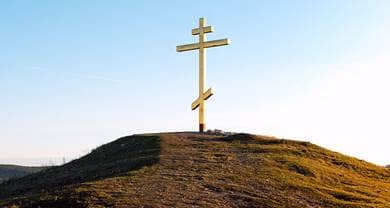
During the 19th-century uprisings against the Ottoman Empire in Greece and the Balkan states, the churches in these territories formed close alliances with nationalist governments. The relationship between church and state in Russia and the eastern European nations intensified in the Soviet Era, leading to direct government control and interference in the affairs of the churches. Government agents infiltrated church hierarchies, which subverted traditional Orthodox values of consultation and conciliation and alienated church hierarchies from their flocks. Churches and patriarchates were used for suppression of dissent, propaganda, and even war. State manipulation of the churches even extended into the diaspora, where Orthodox immigrant clergy in the United States, western Europe, and Australia became entangled in Cold War politics. Orthodox churches are also implicated in the nationalist hatreds that have afflicted Russia and the Balkans into the present moment.
The collapse of the Soviet Union in 1991 and the related liberation of Russia and eastern Europe from Communist rule brought freedom and self-determination to the Eastern Orthodox Churches in these countries. This sudden freedom included the need to come to terms with the painful recent past, and explore the role of Orthodoxy in the 21st century. This process is underway. The various churches of the former Soviet Republics face an internal reckoning with ethnic nationalism, and they struggle with past and present anti-semitism. They face an external reckoning with the unfamiliar values of the modern world, including individualism, market capitalism, democracy, and the secularism of the separation of church and state. The Greek Orthodox Church is much more familiar with these values, and had the luxury of time to get used to them, since the Greek Church became independent in 1833 and Greece was not subject to Communist rule.
The ecumenical patriarchate of Constantinople (Istanbul) paid a terrible price for its nationalist politics in the early 20th century, losing nearly all of its flock in the population transfer between Greece and Turkey mandated by the Treaty of Lausanne. Having learned from that mistake, the patriarchate has devoted itself to providing leadership in the areas of ecumenical and canonical unity among all Orthodox Christians. In the meantime, the ancient patriarchates of Alexandria, Antioch, and Jerusalem are deeply affected by Arab aspirations and the conflict over the establishment of the nation of Israel.
Government intervention and manipulation in the 20th century was a problem for the church hierarchy, while grass roots Orthodoxy hints at a different story. Ordinary Christians in the Soviet years, alienated from church and state hierarchy alike, focused on adhering to the liturgical rhythms of worship, and embraced Orthodox spirituality, including a renewed interest in hesychasm, the spiritual discipline of "inner stillness." In the late 18th century, two members of a Greek Orthodox revival movement called the Kollyvades published a huge volume of ascetic and mystical texts collected from the 4th to the 15th centuries. Titled the Philokalia, it runs over 1,000 pages. Intended for lay people and monks, it is devoted to the theology and practice of inner prayer, particularly the Jesus Prayer. Initially sparking a spiritual revival in 19th-century Russia, the Philokalia sparked a second revival in Russia after 1950, which spread to the rest of the Soviet Republics and into the diaspora, sustaining the spiritual life of monks and laypeople alike. The Orthodox ethos also found expression in Russian and Greek culture, through the novels of Fyodor Dostoevsky and Leo Tolstoy, and the short stories of Alexandros Papadiamantis. The interest in the Philokalia and in hesychasm is still very high, and is providing a basis for dialogue between Orthodox, Roman Catholic, and Anglican Christians.
As the Eastern Orthodox Communion makes its way into the 21st century by examining its recent past and recommitting to Orthodox fellowship and unity, it faces the challenges inherent in participating in the international community. Relations between eastern and western Christians have historically not been good. Eastern Orthodoxy still bears the scars of the pillaging of Constantinople by Western Christians in 1204. Since the fall of the Soviet Union, an influx of enthusiastic and well-funded evangelical Christians has arrived from the west, threatening the integrity of Orthodox communities. There have been recent signs of hope for reconciliation between Orthodox and Roman Catholic Christians. In 2001, Pope John Paul II made a papal visit to Greece, the first visit by a pope to Greece in a thousand years. And in 2004, the Roman Catholic Church returned the relics of St. John Chrysostom to Constantinople. These relics were originally plundered by the Crusaders in 1204.
In perhaps the most significant sign of reconciliation, the Eastern Orthodox Chalcedonian and non-Chalcedonian churches, first divided in 451, began a process of dialogue to heal their rift. After a series of meetings between 1964 and 1991, participants stated that the two traditions have preserved the same faith in Jesus Christ. While the two are not yet officially in full communion, there is close cooperation and sometimes intercommunion in many places, particularly Syria.
Meanwhile, the accelerating immigration of Orthodox Christians to the west, and particularly to the United States, has created unique conditions for immigrants, who seek proper organization and support. As churches are increasingly filled with second- and third-generation Orthodox, communicants feel themselves to be more western than eastern in ethnicity and language. The Orthodox Church in America (OCA) was formed in 1967, and was recognized by the Moscow Patriarchate in 1970. However, the other patriarchates did not follow suit, and the church is still unrecognized by most Orthodox. In spite of this, the OCA operates an influential seminary, St. Vladimir's Orthodox Theological Seminary in New York, and an active publishing program. An English-language communion, the OCA represents indigenous American Orthodoxy, and could help to deepen and enrich worldwide Orthodox identity.
Study Questions:
1. In the 19th century, how was the church forced into becoming a political agent?
2. Why are the effects of the Soviet Union still damaging to Eastern Orthodoxy today?
3. What is the Philokalia? How is it useful in the modern age?
4. How is Eastern Orthodoxy attempting to reconcile itself with the global community?
Back to Religion Library
Editor's picks See all columnists

Evangelical
Before You Unplug or Sign Out for Good

Evangelical
What Is the Purpose of Spiritual Gifts, and How Do You Discover Yours?

New Visions
5 Ways to Hear What God is Telling You

Muslim
How Awake Are We? When Waking Up is Falling Asleep

Latter-day Saint
"The Church supports the use of vaccinations"

Evangelical
Luther and the Beauty of Christ

The Soul of Gospel Music Explored in New Netflix Series "Voices of Fire"

Seven Ways to Think About Christian Mysticism
Evangelical

Evangelical

Muslim
Imam Ali’s letter to the Governor- Everlasting Example of Good...

Progressive Christian
Patheos Explore the world's faith through different perspectives on religion and spirituality! Patheos has the views of the prevalent religions and spiritualities of the world.
Ad-Free & Subscriber Log-In Subscription Support
- About Us
- 2026 Calendar
- Videos
- Podcasts
- Library of World Religions
- Faith In Media Tracker
- Advertise With Us
- Write for Us
- Privacy Policy
- Terms of Service
- Do Not Sell My Data
- Contact Us
- Radiant Digital
- Manage Newsletter Subscriptions
- Unsubscribe From Notifications
- Sitemap
Copyright 2008-2026, Patheos. All rights reserved.
Subscription Support Ad-Free & Subscriber Log-In
Follow Patheos