
BuddhistCatholicContemplativeEvangelicalGeneral ChristianHinduJewishLatter-day SaintMuslimNew VisionsProgressive Christian
Beliefs
- Buddhist
- Catholic
- Contemplative
- Evangelical
- General Christian
- Hindu
- Jewish
- Latter-day Saint
- More Voices
- Muslim
- New Visions
- Pagan
- Progressive Christian
Topics
- Religion News
- Food and Religion
- Sports and Religion
- Religious Art
- Religious Music and Entertainment
- Religious Events
- History and Religion
- Style and Religion
- Politics and Religion
- Women in Religion
- Recreation Outdoors and Religion
- Business Finance and Religion
- Careers Workplace and Religion
- Education and Religion
- Family Parenting and Religion
- Health Fitness and Religion
- Home and Religion
- Relationships and Religion
- Technology and Religion
- Travel and Religion
Columnists
- Buddhist Columnists
- Business Finance and Religion Columnists
- Careers Workplace and Religion Columnists
- Catholic Columnists
- Contemplative Columnists
- Education and Religion Columnists
- Evangelists Columnists
- Family Parenting and Religion Columnists
- General Christian Columnists
- Health Fitness and Religion Columnists
- Hindu Columnists
- History and Religion Columnists
- Home and Religion Columnists
- Jewish Columnists
- More Voices Columnists
- Latter Day Columnists
- Muslim Columnists
- New Visions Columnists
- Nonreligious Columnists
- Pagan Columnists
- Politics and Religion Columnists
- Progressive Columnists
- Recreation Outdoors and Religion Columnists
- Relationships and Religion Columnists
- Religion News Columnists
- Religious Art Columnists
- Religious Events Columnists
- Religious Music and Entertainment Columnists
- Sports and Religion Columnists
- Style and Religion Columnists
- Technology and Religion Columnists
- Travel and Religion Columnists
- Women in Religion Columnists
Resource Library
- 2026 Calendar
- Library of World Religions
- The 100 Most Holy Places on Earth
- Patheos Answers
- Podcasts
- Videos
- Faith Leaders Database
- Anglican Episcopalian
- Bahai
- Baptist
- Buddhism
- Christianity
- Confucianism
- Eastern Orthodoxy
- Hinduism
- Holiness and Pentecostal
- ISKCON
- Islam
- Judaism
- Lutheran
- Methodist
- The Church of Jesus Christ of Latter-day Saints
- New Age
- Paganism
- Presbytarian and Reformed
- Protestantism
- Religion Behind the Scenes
- Roman Catholic
- Scientology
- Shia Islam
- Sikhism
- Sufism
- Sunni Islam
- Taoism
- Zen
- See all religions
Research Tools
 Ad-Free & Subscriber Log-In Subscription Support
Ad-Free & Subscriber Log-In Subscription Support
Follow Patheos 

- Trending:
- Forgiveness
- |
- Marriage
- |
- Consciousness
- |
- Death Penalty
- |
- Election
- |
- Halloween
RELIGION LIBRARY
Baptist
Toggle navigation
Rituals and Worship
Symbolism
Generally speaking, symbolism per se is not a prominent category in Baptist thought and worship, and there are not as many self-consciously or intentionally symbolic objects and acts as there are in many other traditions of Christianity. Nonetheless, there are at least four instances of symbolism that are common within and important for the Baptist tradition: representations of the cross of Jesus Christ, the rites of baptism and the Lord's Supper, and copies of the Bible.
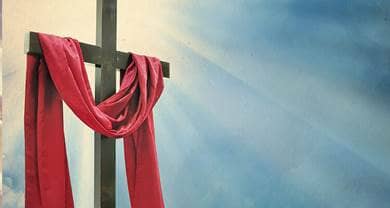
Many, if not most, Baptist churches will have at least one cross mounted prominently on the exterior of the church building and one mounted prominently in the front of the sanctuary. (Sometimes, there will be three crosses, alluding to Jesus' crucifixion between two other men who were crucified at the same time. See Matthew 23:32-33.) These will not be crucifixes, which portray Christ's lifeless body hanging on the cross, but what are often referred to as "empty" crosses, that is, without Christ's body depicted. The symbolism here is, first, one of centrality. The death of Jesus Christ is central to the Gospel (or "good news"), the message of God's offer of salvation in Christ. The preaching and teaching of this gospel message of salvation only through the work of Christ, centering on his death and resurrection, is at the very heart--one could say it is the very heart--of Baptist belief. The most simple and prominent material symbol of this is a cross.
Second, an "empty" cross represents belief that, after his death by crucifixion, Jesus Christ rose from the dead, and that his atoning work is "finished," complete. Thus, the empty cross does not depict emptiness, but quite the opposite. It proclaims Christ's victory over death, for which the cross was the instrument. It proclaims hope and assurance, for Christ is risen and lives today.
A second instance of highly intentional symbolism in the Baptist tradition is the rite of baptism. Baptism by immersion is universal within the Baptist tradition, and it symbolizes the Christian's identification with Christ in his death and resurrection (Romans 6:3-4; 1 Corinthians 3:10-11). It is an expression, by means of symbolic ritual, of an individual Christian's commitment to Jesus Christ. Furthermore, it is symbolic of the fact that through union with Christ, testified to in baptism, the person baptized is washed clean of sin--an outward washing symbolic of an inner washing.
A third instance of symbolism is the ordinance of the Lord's Supper. The celebration of the Lord's Table is a symbolic rite that directs a celebrant's attention to the past, present, and future life and work of Jesus Christ. This meal is derived from the meal Christ shared with his disciples shortly before he was crucified. The broken bread and the wine (or grape juice) point to the broken body and shed blood of Christ in his suffering and death. Today, Christians gather together at the Lord's Table testifying to the fact that this same Christ is alive and at work today. And, this backward remembrance and present testimony are engaged with a confident hope for the future, when Christ will return and share a meal, a feast, with his people.
The fact that, according to Baptist belief, baptism and the Lord's Supper are ordinances rather than sacraments could mistakenly lead to the conclusion that, because they are not regarded as means of grace they cannot be symbolically significant. However, from a Baptist perspective quite the contrary can be said to be the case. Because they are regarded as ordinances, their significance is largely and precisely symbolic. These rites do not "do" anything directly related to the reality of salvation itself; rather, as ordinances they symbolically represent and testify to that reality. Thus, they are highly and profoundly symbolic.
Fourth, while its primary function and use is not symbolic, there is nonetheless considerable symbolism in Baptist churches associated with copies of the Bible. Baptists are often referred to as "people of the Book," and the Bible is central to worship and devotion. Consequently, even if not always consciously or intentionally, a copy of a Bible (as well as textual or oral references to it) is symbolic of the highest source and authority, next to God, of Baptist belief and practice.
A final, more general observation with regard to symbolism in the Baptist tradition should be noted. Traditions that tend to have rather "plain" churches and sanctuaries and rather simple rites and worship services, as is often the case with Baptist churches, can be misunderstood as lacking symbolism. In fact, this very plainness and simplicity is symbolic. Baptists believe that the individual Christian relates directly and immediately to God, and that neither the Church nor pastors mediate this relationship. Thus, there is, in a sense, no need for elaborate worship spaces.
Furthermore, the central acts of corporate worship are preaching, singing, baptism, and the Lord's Supper, and, once again, the Baptist understanding of each of these is such that they do not require an elaborate material culture. While there are some sub-traditions where ministers wear robes during worship services, many Baptist ministers do not. In the case of those who do not wear robes, their dressing "like the rest of the people" is an expression of Baptist belief in the priesthood of all believers.
Study Questions:
1. What are the four instances of symbolism within the Baptist tradition?
2. Describe the symbolism associated with the cross.
3. Are the elements used at the Lord’s Supper symbols of Jesus, or his actual body manifested? Explain.
4. Why could it be argued that simplicity is a form of symbolism?
Back to Religion Library
Editor's picks See all columnists

Evangelical
Before You Unplug or Sign Out for Good

Evangelical
What Is the Purpose of Spiritual Gifts, and How Do You Discover Yours?

New Visions
5 Ways to Hear What God is Telling You

Muslim
How Awake Are We? When Waking Up is Falling Asleep

Latter-day Saint
"The Church supports the use of vaccinations"

Evangelical
Luther and the Beauty of Christ

The Soul of Gospel Music Explored in New Netflix Series "Voices of Fire"

Seven Ways to Think About Christian Mysticism

Evangelical

Evangelical

Muslim
Imam Ali’s letter to the Governor- Everlasting Example of Good...

Progressive Christian
Patheos Explore the world's faith through different perspectives on religion and spirituality! Patheos has the views of the prevalent religions and spiritualities of the world.
Ad-Free & Subscriber Log-In Subscription Support
- About Us
- 2026 Calendar
- Videos
- Podcasts
- Library of World Religions
- Faith In Media Tracker
- Advertise With Us
- Write for Us
- Privacy Policy
- Terms of Service
- Do Not Sell My Data
- Contact Us
- Radiant Digital
- Manage Newsletter Subscriptions
- Unsubscribe From Notifications
- Sitemap
Copyright 2008-2026, Patheos. All rights reserved.
Subscription Support Ad-Free & Subscriber Log-In
Follow Patheos