
BuddhistCatholicContemplativeEvangelicalGeneral ChristianHinduJewishLatter-day SaintMuslimNew VisionsProgressive Christian
Beliefs
- Buddhist
- Catholic
- Contemplative
- Evangelical
- General Christian
- Hindu
- Jewish
- Latter-day Saint
- More Voices
- Muslim
- New Visions
- Pagan
- Progressive Christian
Topics
- Religion News
- Food and Religion
- Sports and Religion
- Religious Art
- Religious Music and Entertainment
- Religious Events
- History and Religion
- Style and Religion
- Politics and Religion
- Women in Religion
- Recreation Outdoors and Religion
- Business Finance and Religion
- Careers Workplace and Religion
- Education and Religion
- Family Parenting and Religion
- Health Fitness and Religion
- Home and Religion
- Relationships and Religion
- Technology and Religion
- Travel and Religion
Columnists
- Buddhist Columnists
- Business Finance and Religion Columnists
- Careers Workplace and Religion Columnists
- Catholic Columnists
- Contemplative Columnists
- Education and Religion Columnists
- Evangelists Columnists
- Family Parenting and Religion Columnists
- General Christian Columnists
- Health Fitness and Religion Columnists
- Hindu Columnists
- History and Religion Columnists
- Home and Religion Columnists
- Jewish Columnists
- More Voices Columnists
- Latter Day Columnists
- Muslim Columnists
- New Visions Columnists
- Nonreligious Columnists
- Pagan Columnists
- Politics and Religion Columnists
- Progressive Columnists
- Recreation Outdoors and Religion Columnists
- Relationships and Religion Columnists
- Religion News Columnists
- Religious Art Columnists
- Religious Events Columnists
- Religious Music and Entertainment Columnists
- Sports and Religion Columnists
- Style and Religion Columnists
- Technology and Religion Columnists
- Travel and Religion Columnists
- Women in Religion Columnists
Resource Library
- 2026 Calendar
- Library of World Religions
- The 100 Most Holy Places on Earth
- Patheos Answers
- Podcasts
- Videos
- Faith Leaders Database
- Anglican Episcopalian
- Bahai
- Baptist
- Buddhism
- Christianity
- Confucianism
- Eastern Orthodoxy
- Hinduism
- Holiness and Pentecostal
- ISKCON
- Islam
- Judaism
- Lutheran
- Methodist
- The Church of Jesus Christ of Latter-day Saints
- New Age
- Paganism
- Presbytarian and Reformed
- Protestantism
- Religion Behind the Scenes
- Roman Catholic
- Scientology
- Shia Islam
- Sikhism
- Sufism
- Sunni Islam
- Taoism
- Zen
- See all religions
Research Tools
 Ad-Free & Subscriber Log-In Subscription Support
Follow Patheos 

- Trending:
- Advent
- |
- Forgiveness
- |
- Thanksgiving
- |
- Election
- |
- Seasonal Holidays
- |
- Marriage

RELIGION LIBRARY
Baha'i
Toggle navigation
History
Missions and Expansion
The central figures of the Baha'i Faith have always directed the expansion and development of the religion. The Bab instructed his earliest disciples, the Letters of the Living, to go to various parts of Iran, Iraq, and India to spread word of his claim. Baha'u'llah directed certain of his followers to go to India, Egypt, Anatolia, the Caucasus, and Central Asia in order to spread his religion. 'Abdu'l-Baha supervised the spread of the Baha'i Faith to North America and Europe and sent some of the learned Baha'is to these areas to educate the Western converts in their new religion. He himself undertook two lengthy journeys in 1911-1913, spreading the Baha'i teachings throughout North America and Europe. In addition, Baha'is moved to such places as China, Japan, Australia, and the Pacific, while some people in places such as New Zealand and South Africa heard about the Baha'i Faith and became Baha'is. In 1916-17, 'Abdu'l-Baha also wrote the Tablets of the Divine Plan, which are regarded as the charter for the planned expansion of the Baha'i Faith.
Shoghi Effendi spent the early part of his ministry establishing the Baha'i administrative system to act as a platform for further expansion. Then in 1937, he launched the North American Baha'i community into the first of a series of systematic plans that would take the Baha'i Faith first into Central and South America and then, after World War II, to those countries in Europe where Baha'i communities had not been established. As other Baha'i communities developed the capacity, they were also given goals to assist in this expansion process. In 1953, the twelve national or regional Baha'i administrative bodies (National Spiritual Assemblies) that were then in existence were given a global ten-year plan. In this, there were numerous goals of establishing Baha'i communities in new countries (there were Baha'is present in 128 countries at this time), purchasing suitable headquarters in each country, and translating Baha'i literature into the languages of these countries. By the end of this plan, the Baha'i Faith had spread to 159 countries with fifty-six National Spiritual Assemblies.
Countries and Major Territories Opened to the Baha’i Faiths 1863-1963 Period Countries Total Cumulative
Total Period of Baha’u’llah’s Ministry (1863—1892)
1. Iraq 6. Egypt 11. Pakistan 2. Iran 7. Georgia 12. Sudan 3. Adzarbaijan 8. India 13. Syria 4. Armenia 9. Israel 14. Turkey 5. Burma 10. Lebanon 15. Turkmenistan
15 15 Period of ‘Abdu’l-Baha’s Ministry (1892—192 1)
16. Saudi Arabia 23. Germany 30. Jordan 17. Australia 24.Great Britain 31. Russia 18. Austria 25. Hawaiian Is 32. South Africa 19. Brazil 26. Holland 33. Switzerland 20. Canada 27. Hungary 34. Tunisia 21. China 28. Italy 35. United States of America 22. France 29. Japan
20 35 Period of Shoghi Effendi’s Ministry up to 1953 93 Countries and Major Territories 93 128 Ten Year Plan (1953-1963) 131 Countries and Major Territories 131 259
When the Universal House of Justice was elected in 1963, it continued this process of spreading the Baha'i Faith to new countries. A series of further plans from 1964 to 1986 took forward the process of establishing the Baha'i Faith in every country and major territory of the world, such that, once it became possible to spread the Baha'i Faith in the former communist countries in the 1990s, this process was more or less complete.
Starting from 1986, once the Universal House of Justice was satisfied that the National Spiritual Assemblies had developed sufficient capacity, the responsibility for drawing up the plans for expansion and development was devolved to these institutions. From about the same time but more particularly from about 1996, the focus changed from the geographical spread of the Baha'i Faith to the development of the community. This involved formulating goals to improve and develop community activities such as children's classes, junior youth activities, devotional meetings, and study circles. In the world, there are now 179 national spiritual assemblies, over 10,000 local spiritual assemblies, with Baha'i literature translated into some 800 languages. As of 2006, the Universal House of Justice claims that there are five million Baha'is in 191 countries among more than 2,100 ethnic groups.
Teaching the Baha'i Faith to others is viewed as a commendable and indeed an obligatory act for all Baha'is. It is believed to be a way of putting a person in contact with spiritual reality and with the divine purpose for humanity. Baha'is are encouraged first to become adequately informed about the teachings of the Baha'i Faith and then to try to improve their own character by acquiring those spiritual qualities advocated in the Baha'i writings. It is considered that, in this way, they will attract others to the Baha'i teachings and will be able to convey these in a pure form (without too much mixing in of their own ideas).
From Baha'u'llah's writings on Teaching the Baha'i Faith
Say: Teach ye the Cause of God, O people of Bahá, for God hath prescribed unto every one the duty of proclaiming His Message, and regardeth it as the most meritorious of all deeds. Such a deed is acceptable only when he that teacheth the Cause is already a firm believer in God, the Supreme Protector, the Gracious, the Almighty. He hath, moreover, ordained that His Cause be taught through the power of men's utterance, and not through resort to violence. Thus hath His ordinance been sent down from the Kingdom of Him Who is the Most Exalted, the All-Wise.
Beware lest ye contend with any one, nay, strive to make him aware of the truth with kindly manner and most convincing exhortation. If your hearer respond, he will have responded to his own behoof, and if not, turn ye away from him, and set your faces towards God's sacred Court, the seat of resplendent holiness. (Gleanings from the Writings of Bahá'u'lláh, section 128, pp. 278-279)
"Teaching" is distinguished from "proselytization"; the latter for Baha'is implies using inducements or pressure to change a person's religion and is forbidden. Baha'is are encouraged to seek out, from among their friends and relatives, individuals who are open to speaking about religion and who can be engaged in spiritual conversation, which it is hoped would lead to their joining the Baha'i community. Whereas previously, they would take an interested person along to a "fireside" meeting, the purpose of which was give sufficient further information about the Baha'i Faith, they are now just as likely to encourage a person to enroll in a study class.
The spread of the Baha'i Faith to new areas, whether within a country or to new countries, is not implemented by paid missionaries. Baha'is move to a new area or a new country and either obtain employment there or set up a business. They aim to be self-supporting although they are sometimes supported by Baha'i funds in the initial period while they establish themselves. They then seek to interest local people in the Baha'i teachings and gain enough adherents (minimum of nine adults) to be able to elect a local Baha'i administrative institution (called a local spiritual assembly). When there were enough local institutions, a national administrative institution (called a national spiritual assembly) is elected. Part of the success of the Baha'is in spreading throughout the world has been the fact that the Baha'i Faith has few set rituals and thus is open to the incorporation of local customs and cultural practices into its meetings and into such events as weddings and funerals.
Study Questions:
1. In what way has the Baha'i Faith spread throughout the world?
2. How do Baha’is attract others to the Baha'i Faith?
3. What do Baha’is perceive to be the difference between “teaching” and “proselytization”?
4. How do Baha’is interact with the cultures of the world?
Back to Religion Library
Editor's picks See all columnists

Evangelical
Before You Unplug or Sign Out for Good

Evangelical
What Is the Purpose of Spiritual Gifts, and How Do You Discover Yours?

New Visions
5 Ways to Hear What God is Telling You

Muslim
How Awake Are We? When Waking Up is Falling Asleep

Latter-day Saint
"The Church supports the use of vaccinations"

Evangelical
Luther and the Beauty of Christ

The Soul of Gospel Music Explored in New Netflix Series "Voices of Fire"

Seven Ways to Think About Christian Mysticism

Evangelical

Evangelical
Muslim
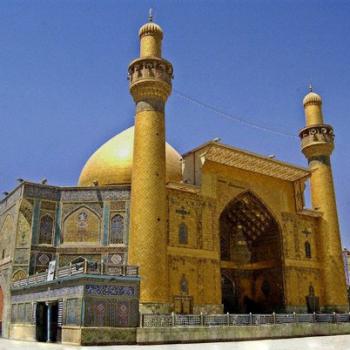
Imam Ali’s letter to the Governor- Everlasting Example of Good...

Progressive Christian
Patheos Explore the world's faith through different perspectives on religion and spirituality! Patheos has the views of the prevalent religions and spiritualities of the world.
Ad-Free & Subscriber Log-In Subscription Support
- About Us
- 2026 Calendar
- Videos
- Podcasts
- Library of World Religions
- Faith In Media Tracker
- Advertise With Us
- Write for Us
- Privacy Policy
- Terms of Service
- Do Not Sell My Data
- Contact Us
- Radiant Digital
- Manage Newsletter Subscriptions
- Unsubscribe From Notifications
- Sitemap
Copyright 2008-2026, Patheos, part of the Radiant Digital network of media brands. All rights reserved.
Subscription Support Ad-Free & Subscriber Log-In
Follow Patheos