
BuddhistCatholicContemplativeEvangelicalGeneral ChristianHinduJewishLatter-day SaintMuslimNew VisionsProgressive Christian
Beliefs
- Buddhist
- Catholic
- Contemplative
- Evangelical
- General Christian
- Hindu
- Jewish
- Latter-day Saint
- More Voices
- Muslim
- New Visions
- Pagan
- Progressive Christian
Topics
- Religion News
- Food and Religion
- Sports and Religion
- Religious Art
- Religious Music and Entertainment
- Religious Events
- History and Religion
- Style and Religion
- Politics and Religion
- Women in Religion
- Recreation Outdoors and Religion
- Business Finance and Religion
- Careers Workplace and Religion
- Education and Religion
- Family Parenting and Religion
- Health Fitness and Religion
- Home and Religion
- Relationships and Religion
- Technology and Religion
- Travel and Religion
Columnists
- Buddhist Columnists
- Business Finance and Religion Columnists
- Careers Workplace and Religion Columnists
- Catholic Columnists
- Contemplative Columnists
- Education and Religion Columnists
- Evangelists Columnists
- Family Parenting and Religion Columnists
- General Christian Columnists
- Health Fitness and Religion Columnists
- Hindu Columnists
- History and Religion Columnists
- Home and Religion Columnists
- Jewish Columnists
- More Voices Columnists
- Latter Day Columnists
- Muslim Columnists
- New Visions Columnists
- Nonreligious Columnists
- Pagan Columnists
- Politics and Religion Columnists
- Progressive Columnists
- Recreation Outdoors and Religion Columnists
- Relationships and Religion Columnists
- Religion News Columnists
- Religious Art Columnists
- Religious Events Columnists
- Religious Music and Entertainment Columnists
- Sports and Religion Columnists
- Style and Religion Columnists
- Technology and Religion Columnists
- Travel and Religion Columnists
- Women in Religion Columnists
Resource Library
- 2026 Calendar
- Library of World Religions
- The 100 Most Holy Places on Earth
- Patheos Answers
- Podcasts
- Videos
- Faith Leaders Database
- Anglican Episcopalian
- Bahai
- Baptist
- Buddhism
- Christianity
- Confucianism
- Eastern Orthodoxy
- Hinduism
- Holiness and Pentecostal
- ISKCON
- Islam
- Judaism
- Lutheran
- Methodist
- The Church of Jesus Christ of Latter-day Saints
- New Age
- Paganism
- Presbytarian and Reformed
- Protestantism
- Religion Behind the Scenes
- Roman Catholic
- Scientology
- Shia Islam
- Sikhism
- Sufism
- Sunni Islam
- Taoism
- Zen
- See all religions
Research Tools
 Ad-Free & Subscriber Log-In Subscription Support
Ad-Free & Subscriber Log-In Subscription Support
Follow Patheos 

- Trending:
- Forgiveness
- |
- Marriage
- |
- Consciousness
- |
- Death Penalty
- |
- Election
- |
- Halloween
RELIGION LIBRARY
Anglican/Episcopalian
Toggle navigation
Rituals and Worship
Rites and Ceremonies
Anglicanism's main book of rites and ceremonies is the Book of Common Prayer, or BCP. First composed by Thomas Cranmer in 1549, editions of the BCP are to be found around the Anglican Communion in a variety of languages and with diverse theological emphases. In addition, alternative liturgies (orders of services) have proliferated, the Church of England's Common Worship being a prominent example. In the United States, the latest (1979) version of the BCP retains much of the traditional language of the 1928 version, but also adds modern language liturgies. Some of the changes not only modernized the language, but adjusted the theological emphases, generally in an Anglo-Catholic direction. In spite of this diversity, the BCP is still considered a bond of unity in Anglicanism, and most editions are recognizably heirs of Cranmer's work.
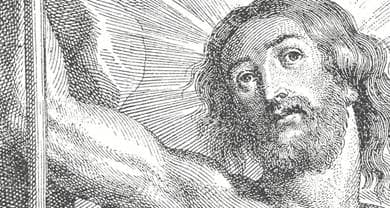
Anglican rites are generally centered upon the worship of God and the receipt of God's grace or blessing. The two great sacraments of baptism and Holy Communion (or the "Eucharist" or "Lord's Supper") are primary in this regard. A sacrament is an outward and visible sign of an inward and spiritual grace. Baptism and Holy Communion are the "great" sacraments because they were instituted by Jesus Christ.
Jesus was baptized by John the Baptist, and instructed his disciples to go and make disciples of others through teaching and baptism. In the Anglican rite of baptism, water is applied (by sprinkling or immersion) to an infant or a newly believing adult (or older child), together with the recitation of particular words from scripture and an explanation of the meaning of baptism. This ordinarily occurs as part of the regular weekly worship service, as the occasion arises. A person is baptized once in his or her life, although a few Evangelical Anglicans promote rebaptism of those who were baptized as infants. The exact meaning and efficacy of baptism is debated within Anglicanism, but the Thirty-nine Articles teach that baptism is a sign of regeneration by which, as by an instrument, one is grafted into the Church, the promise of forgiveness is sealed, and faith is confirmed.
The second great sacrament is Holy Communion. The practice of Communion was instituted by Christ at the Last Supper. The American BCP summarizes the Last Supper in these words:
On the night before he died for us, our Lord Jesus Christ took bread; and when he had given thanks to you [God the Father], he broke it, and gave it to his disciples, and said, "Take, eat: This is my Body, which is given for you. Do this for the remembrance of me." After supper he took the cup of wine; and when he had given thanks, he gave it to them, and said, "Drink this, all of you: This is my Blood of the new Covenant, which is shed for you and for many for the forgiveness of sins. Whenever you drink it, do this for the remembrance of me."
Communion is received at the regular worship service throughout the life of an Anglican believer. Some churches celebrate the Eucharist at every weekly service, others less frequently. In Communion, worshippers receive a bite of bread or a wafer, and a sip of wine (or grape juice in some churches). The significance of the bread and wine, however, is debated within Anglicanism, with a variety of Reformed views being most common. Some view them as simply bread and wine, with the significance placed on the Eucharistic ceremony. Such ceremony might be seen as a memorial of Christ's sacrifice on the cross, or as an action during which the spiritual presence of Christ is received by the faithful. Others view the elements of bread and wine in more sanctified terms, as instruments through which the spiritual presence of Christ is received. Some, however, maintain a rather Lutheran perspective, seeing the elements as bearing the real but intangible body and blood of Christ.
Anglicanism also recognizes other sacramental rites that evolved in the Church under the guidance of the Holy Spirit. These include confirmation (the affirmation of the faith upon reaching maturity), ordination (the rite of being made a clergy person), matrimony, reconciliation of a penitent (confession of sins and pronouncement of absolution), and unction (anointing the sick, usually with oil, for the sake of healing).
The BCP contains ceremonies for the great sacraments, the other sacramental rites, and other occasions such as burial of the deceased. The central ceremony is the weekly (generally Sunday) worship service, which is structured with twin focal points, word and sacrament, because of the importance of joining the proclamation of God's word (meaning the Bible and its message) with the administration of a sacrament.
The first portion of the weekly service is the service of the word. It contains set prayers, invocations, and proclamations of praise, some said by a clergy person and some by all worshippers. There are also songs, perhaps of contemporary composition or from a book of classic hymns. The core of the service of the word involves reading from passages of scripture and a sermon or homily, with a proclamation of faith (usually the Nicene or Apostles' Creed) serving as a corporate response to the word read and preached. More prayers and the confession of sins follow.
The second portion is the service of the sacrament, referring to the Eucharist. This portion of the service includes brief recitations of salvation history (creation, fall, redemption) and the Last Supper. There is also an invocation of the Holy Spirit to consecrate the Eucharistic elements of bread and wine, and the Lord's Prayer is said. Then the elements are distributed to the worshippers. After more prayers and singing, the service ends. There are, of course, variations on this pattern, but this is a representative summary.
Study Questions:
1. What is the BCP? When was it created, and what does it include?
2. Describe the Anglican rite of baptism. Why do Anglicans participate in it?
3. Describe the Anglican Eucharist.
4. What other sacramental rites does Anglicanism celebrate? How are they guided?
Back to Religion Library
Editor's picks See all columnists

Evangelical
Before You Unplug or Sign Out for Good

Evangelical
What Is the Purpose of Spiritual Gifts, and How Do You Discover Yours?

New Visions
5 Ways to Hear What God is Telling You

Muslim
How Awake Are We? When Waking Up is Falling Asleep

Latter-day Saint
"The Church supports the use of vaccinations"

Evangelical
Luther and the Beauty of Christ

The Soul of Gospel Music Explored in New Netflix Series "Voices of Fire"

Seven Ways to Think About Christian Mysticism
Evangelical

Evangelical

Muslim
Imam Ali’s letter to the Governor- Everlasting Example of Good...

Progressive Christian
Patheos Explore the world's faith through different perspectives on religion and spirituality! Patheos has the views of the prevalent religions and spiritualities of the world.
Ad-Free & Subscriber Log-In Subscription Support
- About Us
- 2026 Calendar
- Videos
- Podcasts
- Library of World Religions
- Faith In Media Tracker
- Advertise With Us
- Write for Us
- Privacy Policy
- Terms of Service
- Do Not Sell My Data
- Contact Us
- Radiant Digital
- Manage Newsletter Subscriptions
- Unsubscribe From Notifications
- Sitemap
Copyright 2008-2026, Patheos. All rights reserved.
Subscription Support Ad-Free & Subscriber Log-In
Follow Patheos