
BuddhistCatholicContemplativeEvangelicalGeneral ChristianHinduJewishLatter-day SaintMuslimNew VisionsProgressive Christian
Beliefs
- Buddhist
- Catholic
- Contemplative
- Evangelical
- General Christian
- Hindu
- Jewish
- Latter-day Saint
- More Voices
- Muslim
- New Visions
- Pagan
- Progressive Christian
Topics
- Religion News
- Food and Religion
- Sports and Religion
- Religious Art
- Religious Music and Entertainment
- Religious Events
- History and Religion
- Style and Religion
- Politics and Religion
- Women in Religion
- Recreation Outdoors and Religion
- Business Finance and Religion
- Careers Workplace and Religion
- Education and Religion
- Family Parenting and Religion
- Health Fitness and Religion
- Home and Religion
- Relationships and Religion
- Technology and Religion
- Travel and Religion
Columnists
- Buddhist Columnists
- Business Finance and Religion Columnists
- Careers Workplace and Religion Columnists
- Catholic Columnists
- Contemplative Columnists
- Education and Religion Columnists
- Evangelists Columnists
- Family Parenting and Religion Columnists
- General Christian Columnists
- Health Fitness and Religion Columnists
- Hindu Columnists
- History and Religion Columnists
- Home and Religion Columnists
- Jewish Columnists
- More Voices Columnists
- Latter Day Columnists
- Muslim Columnists
- New Visions Columnists
- Nonreligious Columnists
- Pagan Columnists
- Politics and Religion Columnists
- Progressive Columnists
- Recreation Outdoors and Religion Columnists
- Relationships and Religion Columnists
- Religion News Columnists
- Religious Art Columnists
- Religious Events Columnists
- Religious Music and Entertainment Columnists
- Sports and Religion Columnists
- Style and Religion Columnists
- Technology and Religion Columnists
- Travel and Religion Columnists
- Women in Religion Columnists
Resource Library
- 2026 Calendar
- Library of World Religions
- The 100 Most Holy Places on Earth
- Patheos Answers
- Podcasts
- Videos
- Faith Leaders Database
- Anglican Episcopalian
- Bahai
- Baptist
- Buddhism
- Christianity
- Confucianism
- Eastern Orthodoxy
- Hinduism
- Holiness and Pentecostal
- ISKCON
- Islam
- Judaism
- Lutheran
- Methodist
- The Church of Jesus Christ of Latter-day Saints
- New Age
- Paganism
- Presbytarian and Reformed
- Protestantism
- Religion Behind the Scenes
- Roman Catholic
- Scientology
- Shia Islam
- Sikhism
- Sufism
- Sunni Islam
- Taoism
- Zen
- See all religions
Research Tools
 Ad-Free & Subscriber Log-In Subscription Support
Ad-Free & Subscriber Log-In Subscription Support
Follow Patheos 

- Trending:
- Forgiveness
- |
- Marriage
- |
- Consciousness
- |
- Death Penalty
- |
- Election
- |
- Halloween
Latter-day Saint
Are Mormons Christians? A Response to Ben Witherington
August 29, 2012 by James Faulconer
So, to respond to the way in which many people think about Christianity and to the specific things that Witherington has said, consider the question of what Mormons believe.
Witherington gets a number of things right about Mormons. We believe that God the Father is, like his Son, embodied, and that enables him truly to understand us in our weakness (Alma 7:11-12).
David Paulsen has shown that belief in a corporeal God was not unusual for first-century Christians. (See "Early Christian Views of a Corporeal Deity: Origen and Augustine as Reluctant Witnesses," Harvard Theological Review 832 [1990]: 105-16). Stephen H. Webb (a non-Mormon scholar) has made a related argument in his book Jesus Christ, Eternal God (Oxford, 2012). Presumably Witherington would not argue that the early Christians' belief in an embodied God disqualified them as real Christians.
If my experience talking with those of other faiths is evidence, understanding God as corporeal is also the unreflective, folk view that many traditional Christians hold, apart from what their creeds teach. "Yes, but that's only the folk view," a theologian might respond. Agreed. But these people, too, are Christians in spite of their folk view. Members of the Church of Jesus Christ of Latter-day Saints—Mormons—are in the theological minority on this one, but it isn't such a bad minority to be in, and it isn't clear how it disqualifies us as Christians.
Witherington is also right when he says that we don't believe that the Bible is inerrant. We can add to that the statement on the Book of Mormon's title page explicitly saying that it also is not. We do not believe that the human instruments through which God reveals his will were or are infallible. Many Christians may disagree with us about the inerrancy of the Bible, but at least as many agree with us, and they do so without losing their identity as Christians. Why? I'm not sure, but my guess is because the inerrancy of scripture is an extra-biblical belief.
Further, Witherington is right that Mormons believe in living prophecy (something else about which I've written). Therefore, we believe that beliefs and practices can change and have changed over time. In that we are, perhaps, not unique, but we are at least unusual.
Jews argue that prophecy ended with Malachi and have several explanations for that end. For some Christians it continues at least through the lifetimes of Christ's apostles and then ends. For this, too, there are several explanations. Many Christians believe that prophecy—in other words God speaking through a human being, revealing his truth—continues today through the inspiration of the Holy Spirit.
Mormons, too, believe that God speaks through inspired human beings, and that those who do so in the spirit of testifying of Jesus (Rev. 19:10) utter prophecy. The difference is that in addition to that belief in prophecy that we share with many Christians, we believe God appoints some to be prophetic leaders in the Church and he does so in an orderly way.
Whether we are monotheists seems, at first glance, like a trickier question. After all, we do believe that the members of the Trinity or Godhead are distinct beings. Three distinct personal beings make up the Trinity. But the question of monotheism depends on what the unity of the Trinity consists of.
Many Jews would reject the traditional Christian claim that the Christianity is monotheistic. Certainly Christians are not monotheists in the same sense that Jews are. Jews and Christians would both accept the biblical statement that God is one, but they would understand that claim quite differently, sufficiently differently that the multiple persons in the Christian Trinity would, from a Jewish perspective, in itself disqualify those Christians as monotheists.
Similarly traditional Christians like Witherington reject the Mormon claim that we, too, are monotheists. Yet we, too, accept the biblical teaching that God is one. What we disagree about is about how to understand that unity: what do we mean by one when we speak of the Trinity or Godhead being one? Mormons and most Evangelicals have different answers to that question. (And Witherington is right to insist that these are not trivial issues.)
The usual Mormon answer to the question of divine unity is that the Father, Son, and Holy Ghost are one in will and purpose. The few Mormons who have given the question theological thought have argued that Mormonism is a species of social trinitarianism. To my knowledge, those outside of Mormonism who accept social trinitarianism as the explanation of divine unity are not, thereby, disqualified as Christians.
Article Continued On Next Page
Page: 2 of 3
12/2/2022 9:09:19 PM
Mormon
Speaking Silence
Doctrine
Election
History
Sacred Texts
Christianity
Mormonism
more at patheos
1
2
Evangelicalism Is Becoming an Idol. I Saw It Happen
3

Exchanges on 1 Corinthians 3:10-15 & Purgatory
4
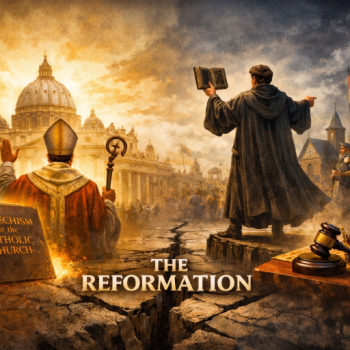
Binding Authority or Private Judgment? Luther Reconsidered

About James Faulconer
James Faulconer is a Richard L. Evans Professor of Religious Understanding at Brigham Young University, where he has taught philosophy since 1975.
Patheos Explore the world's faith through different perspectives on religion and spirituality! Patheos has the views of the prevalent religions and spiritualities of the world.
Ad-Free & Subscriber Log-In Subscription Support
- About Us
- 2026 Calendar
- Videos
- Podcasts
- Library of World Religions
- Faith In Media Tracker
- Advertise With Us
- Write for Us
- Privacy Policy
- Terms of Service
- Do Not Sell My Data
- Contact Us
- Radiant Digital
- Manage Newsletter Subscriptions
- Unsubscribe From Notifications
- Sitemap
Copyright 2008-2026, Patheos. All rights reserved.
Subscription Support Ad-Free & Subscriber Log-In
Follow Patheos