
BuddhistCatholicContemplativeEvangelicalGeneral ChristianHinduJewishLatter-day SaintMuslimNew VisionsProgressive Christian
Beliefs
- Buddhist
- Catholic
- Contemplative
- Evangelical
- General Christian
- Hindu
- Jewish
- Latter-day Saint
- More Voices
- Muslim
- New Visions
- Pagan
- Progressive Christian
Topics
- Religion News
- Food and Religion
- Sports and Religion
- Religious Art
- Religious Music and Entertainment
- Religious Events
- History and Religion
- Style and Religion
- Politics and Religion
- Women in Religion
- Recreation Outdoors and Religion
- Business Finance and Religion
- Careers Workplace and Religion
- Education and Religion
- Family Parenting and Religion
- Health Fitness and Religion
- Home and Religion
- Relationships and Religion
- Technology and Religion
- Travel and Religion
Columnists
- Buddhist Columnists
- Business Finance and Religion Columnists
- Careers Workplace and Religion Columnists
- Catholic Columnists
- Contemplative Columnists
- Education and Religion Columnists
- Evangelists Columnists
- Family Parenting and Religion Columnists
- General Christian Columnists
- Health Fitness and Religion Columnists
- Hindu Columnists
- History and Religion Columnists
- Home and Religion Columnists
- Jewish Columnists
- More Voices Columnists
- Latter Day Columnists
- Muslim Columnists
- New Visions Columnists
- Nonreligious Columnists
- Pagan Columnists
- Politics and Religion Columnists
- Progressive Columnists
- Recreation Outdoors and Religion Columnists
- Relationships and Religion Columnists
- Religion News Columnists
- Religious Art Columnists
- Religious Events Columnists
- Religious Music and Entertainment Columnists
- Sports and Religion Columnists
- Style and Religion Columnists
- Technology and Religion Columnists
- Travel and Religion Columnists
- Women in Religion Columnists
Resource Library
- 2026 Calendar
- Library of World Religions
- The 100 Most Holy Places on Earth
- Patheos Answers
- Podcasts
- Videos
- Faith Leaders Database
- Anglican Episcopalian
- Bahai
- Baptist
- Buddhism
- Christianity
- Confucianism
- Eastern Orthodoxy
- Hinduism
- Holiness and Pentecostal
- ISKCON
- Islam
- Judaism
- Lutheran
- Methodist
- The Church of Jesus Christ of Latter-day Saints
- New Age
- Paganism
- Presbytarian and Reformed
- Protestantism
- Religion Behind the Scenes
- Roman Catholic
- Scientology
- Shia Islam
- Sikhism
- Sufism
- Sunni Islam
- Taoism
- Zen
- See all religions
Research Tools
 Ad-Free & Subscriber Log-In Subscription Support
Ad-Free & Subscriber Log-In Subscription Support
Follow Patheos 

- Trending:
- Forgiveness
- |
- Marriage
- |
- Consciousness
- |
- Death Penalty
- |
- Election
- |
- Halloween
Jewish
Shavuot and the Romance-Love Dynamic
May 23, 2012 by Eliyahu Yaakov
This Sunday (as well as Monday outside of Israel), we celebrate the holiday of Shavuot, upon which the Jewish people experienced God communicating with them and giving them the Torah.
However, in order to understand this holiday at its spiritual core, we must do what we always do to get to the spiritual core of anything according to Kabbalah: take a look at its name.
The name "Shavuot" literally means "weeks," referring to the seven weeks from the holiday of Passover to the holiday of Shavuot.
This begs a question: Why are we referring to one of the most pinnacle days in Judaism by a name that de-emphasizes what it is that we are celebrating? Shouldn't this holiday be called "Torah Day"? Why, instead of calling it "Torah Day" do we refer to it as "Previous Seven Weeks"? This seems very anticlimactic. It's similar to if we would refer to Rosh Hashonah as "Previous 364 Days of the Year"—very anticlimactic.
To answer this question about the spiritual core of Shavuot, we must delve into the spiritual core of Passover.
According to Kabbalah, Passover is not only called "Passover" due to God's passing over the houses of the Jewish people during the plague of the firstborn sons. It is also called "Passover" because on Passover (Seder) night there is a "passing over of levels."
That is, Passover night is the "highest" night according to Kabbalah. A person is able to experience God on a level much higher than the level he is truly holding at.
This is easily explained by the following illustration: Imagine a friend of yours telling you that she has just met a guy and that the two of them are in love—"It's love at first sight," she says.
You respond to your friend, "Wow! That's great! So how did you get such a feeling?"
"Well," she says, "we were both at a party. I was on one side of the room and he was on the other side of the room. I was looking around the room, and he too, was looking around the room. All of a sudden, right there in middle of the room, our eyes met and sparks flew and there were fireworks—you know, love at first sight!"
You, not being a member of this couple, think to yourself, "So, you are telling me that this feeling of love is based on nothing."
At First Sight: Romance or Love?
This is how relationships tend to start—with a passing over of levels.
Despite the fact that your friend's relationship is holding steadily at zero (or close to zero), having put next to nothing into it, you feel and experience love that is much higher.
But, what happens next?
At some point she has to come crashing down to the level that her relationship is truly at.
The burst of inspiration at the beginning of our relationships is a 'love feeling', but it isn't 'love actually'. We are not in love at first sight; we are in romance at first sight.
However, this romance opens the door and awakens us to the love potential of this relationship. It motivates us to go after the relationship opportunity at our doorstep.
Since we cannot experience this level of love in an enduring manner if our relationship is not truly holding there, we crash down from the high, and then the question is whether or not we will put the work in to build this relationship up in a real way. When we do buy in and follow through, we climb step-by-step and stage-by-stage to come back to that grand love experience that we felt at the beginning, but in a deeper, fuller, and more meaningful way; and that is love.
This is what the Passover-Shavuot dynamic is all about.
On Passover night, upon which we celebrate the Jewish people's exodus from Egypt, we experience the initiation of the relationship between God and the Jewish nation; there is a "romantic" passing over of levels and we experience a much higher plane of relationship with God than the level we are truly at.
However, after that initial high, we crash down; but we are left with an impression of what could be, and we are motivated to make that into a reality. Over the next seven weeks, we work to build ourselves into the more refined individual—both personally and spiritually—that we are truly capable of being, the individual that merits to be on that high level of God-connection and God-experience, that high level of love.
This is why the holiday of Shavuot is called by that name, meaning "weeks"; it is only to the extent that we build and refine ourselves to become the person truly open to receiving the Torah that we are capable of receiving the Torah on the holiday of Shavuot. After all, God can send the Torah our way on the holiday of Shavuot but if we are not open to receiving it, we are going to miss out.
Therefore, the Shavuot holiday is only "Torah Day" for us to the extent that we build, refine, and open ourselves up to receiving the Torah during the seven weeks leading up to the holiday. And it is for this reason that we call the holiday by the name "Shavuot," meaning "weeks."
May we all be blessed to take the necessary steps to build ourselves into the higher more refined versions of ourselves, live out our potentials, experience our love relationship with God, and truly receive the Torah into our lives on Shavuot.
12/2/2022 9:02:50 PM
Jewish
Kabbalah Korner
Holidays
Sacred Texts
Shavuot
Judaism
Kabbalah
more at patheos
1

Doom Scrolling & Keeping Up with the A.I.-s
2
Reflections For Lent 2026 Part Two: Humanity
3

4
Nation’s 250th Birthday Brings Scouts Together in Prayer
About Eliyahu Yaakov
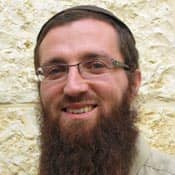
Rabbi Eliyahu Yaakov is a sought after international speaker on Kabbalah, relationships, parenting, and life. His newly released book, Jewish By Choice: A Kabbalistic Take on Life & Judaism, recently hit #1 on Amazon's Best Seller list.
Patheos Explore the world's faith through different perspectives on religion and spirituality! Patheos has the views of the prevalent religions and spiritualities of the world.
Ad-Free & Subscriber Log-In Subscription Support
- About Us
- 2026 Calendar
- Videos
- Podcasts
- Library of World Religions
- Faith In Media Tracker
- Advertise With Us
- Write for Us
- Privacy Policy
- Terms of Service
- Do Not Sell My Data
- Contact Us
- Radiant Digital
- Manage Newsletter Subscriptions
- Unsubscribe From Notifications
- Sitemap
Copyright 2008-2026, Patheos. All rights reserved.
Subscription Support Ad-Free & Subscriber Log-In
Follow Patheos