
BuddhistCatholicContemplativeEvangelicalGeneral ChristianHinduJewishLatter-day SaintMuslimNew VisionsProgressive Christian
Beliefs
- Buddhist
- Catholic
- Contemplative
- Evangelical
- General Christian
- Hindu
- Jewish
- Latter-day Saint
- More Voices
- Muslim
- New Visions
- Pagan
- Progressive Christian
Topics
- Religion News
- Food and Religion
- Sports and Religion
- Religious Art
- Religious Music and Entertainment
- Religious Events
- History and Religion
- Style and Religion
- Politics and Religion
- Women in Religion
- Recreation Outdoors and Religion
- Business Finance and Religion
- Careers Workplace and Religion
- Education and Religion
- Family Parenting and Religion
- Health Fitness and Religion
- Home and Religion
- Relationships and Religion
- Technology and Religion
- Travel and Religion
Columnists
- Buddhist Columnists
- Business Finance and Religion Columnists
- Careers Workplace and Religion Columnists
- Catholic Columnists
- Contemplative Columnists
- Education and Religion Columnists
- Evangelists Columnists
- Family Parenting and Religion Columnists
- General Christian Columnists
- Health Fitness and Religion Columnists
- Hindu Columnists
- History and Religion Columnists
- Home and Religion Columnists
- Jewish Columnists
- More Voices Columnists
- Latter Day Columnists
- Muslim Columnists
- New Visions Columnists
- Nonreligious Columnists
- Pagan Columnists
- Politics and Religion Columnists
- Progressive Columnists
- Recreation Outdoors and Religion Columnists
- Relationships and Religion Columnists
- Religion News Columnists
- Religious Art Columnists
- Religious Events Columnists
- Religious Music and Entertainment Columnists
- Sports and Religion Columnists
- Style and Religion Columnists
- Technology and Religion Columnists
- Travel and Religion Columnists
- Women in Religion Columnists
Resource Library
- 2026 Calendar
- Library of World Religions
- The 100 Most Holy Places on Earth
- Patheos Answers
- Podcasts
- Videos
- Faith Leaders Database
- Anglican Episcopalian
- Bahai
- Baptist
- Buddhism
- Christianity
- Confucianism
- Eastern Orthodoxy
- Hinduism
- Holiness and Pentecostal
- ISKCON
- Islam
- Judaism
- Lutheran
- Methodist
- The Church of Jesus Christ of Latter-day Saints
- New Age
- Paganism
- Presbytarian and Reformed
- Protestantism
- Religion Behind the Scenes
- Roman Catholic
- Scientology
- Shia Islam
- Sikhism
- Sufism
- Sunni Islam
- Taoism
- Zen
- See all religions
Research Tools
 Ad-Free & Subscriber Log-In Subscription Support
Follow Patheos 

- Trending:
- Advent
- |
- Forgiveness
- |
- Thanksgiving
- |
- Election
- |
- Seasonal Holidays
- |
- Marriage
Jewish
The Limitations of Democracy
July 05, 2012 by Eliyahu Yaakov
Democracy Versus Tyranny
As is well-known, democracy is civilization's response to tyrannical monarchs. Therefore, while it is championed as the most righteous brand of government, this does not say anything about it being an efficient brand of government. In fact, if you think about it, it is the inefficiency of democratic government that sustains its righteousness. That is, since we don't want a power-hungry dictatorship taking over, we put a power-limiting democracy in its place.
In fact, this is what the word 'democracy' means: the will of the people. Meaning, the people ought to rule over themselves rather than the power-hungry dictator who does not have the best interest of the people in mind. The premise of democracy, therefore, is that one man or group should not trample over the masses in its midst and, for that reason, we ought to limit the power of the leadership.
Now, it is true that in the democratic system the minority still does not get its way and 49 percent of the population winds up having its will trampled on by the 51 percent of the population that opposes it, but that is certainly better than the alternative in which one monarch or a number of noblemen assert their will onto the majority.
Superseding Values
However, even the democratic system is not foolproof: What if 86 percent of the population votes in favor of killing off the other 14 percent? After all, if the end-all-be-all value is that the people should rule over themselves and that the minority's will should not rule over the majority's will, wouldn't it be "immoral" to stand up against the will of the majority? Wouldn't the minority be dictating to the majority and violating the majority's right to societal self-determination if they would attempt to resist the slaughter? (Of course, this actually happened in Nazi Germany.)
Our answer to this quandary would have to be that sometimes there are other values that outweigh, supersede, and trump the value of having the people rule over themselves. Thus, in extreme cases, even pundits for democracy would agree that it is appropriate to pull back the power of democracy and assert the will of the minority over the will of the majority due to a superseding value.
Drawing the Line
The question then becomes: Where do you draw the line? What values supersede "the will of the people"? And what or who is the basis for determining this hierarchy?
At this point, some will certainly blurt out "life," "liberty," "freedom," but, again, that is just his or his society's opinion. What's to say this should be a universal value?
Now, there will be those who will say that it's natural and obvious. However, what is natural and obvious to you and your society in the year 2012, will certainly not be natural and obvious to the average Joe and his society in the year 2052. Thus, "natural and obvious" is not a plausible explanation for establishing the criteria of superseding universal values.
Taking Reality into Account
I think we can get a glimpse into the determining factor we are looking for by looking at another facet of the U.S. democratic system.
Despite wanting to lessen the power of government and give the most power to the people as possible, we find that modern democracies are not true democracies. Unlike the original direct democratic system that took place in ancient Greece, in which everyone in the society had a direct vote on issues that arose, the democracies of our time have a representative system. (Note that the Greek "everyone" here is theoretical: slaves, foreigners, women, and children did not have a vote.)
Well, why don't the democracies of our day implement a direct system? Certainly with the technological advances of our time, it is quite feasible to pull off a true "one man, one vote" brand of government.
There are a number of answers we can posit to this question but I think the most sensible and simple argument for a representative democracy over a direct democracy is that if everyone votes on everything, it would lead to uninformed decision making, resulting in unproductive and destructive policy that causes damage to the country.
It comes out from this that the democratic ideal of "power to the people" is sacrificed yet again by Western democratic societies, giving way to the "partial tyranny" of a non-direct democracy, all for the sake of taking reality into account. That is, since the masses are uninformed of the reality of most situations, we have them elect (supposedly) informed individuals to vote on the issues instead of actually voting on those issues themselves in the hope that this will lead to more constructive and productive decision-making resulting in a more prosperous country.
Thus, even in the democratic West, the value of 'reality' rules.
This is an important point because it is making the statement that democracy is only really sensible in situations in which there is no objective reality. If there is no reality in a given situation or if the issues being discussed are a matter of preference, then go ahead and vote on it and do whatever you feel. But in situations where there is a reality at play, then you have to take that reality into account.
12/2/2022 9:02:50 PM
Jewish
Kabbalah Korner
Democracy
Freedom
History
politics
Judaism
more at patheos
1

Meta Faces New Trial Over Addiction Claims
2

Courtney Hope is Mary in Easter-Themed 'The Christ' Podcast
3
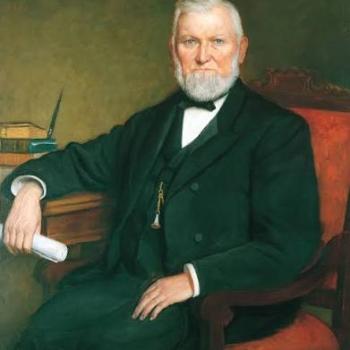
Wilford Woodruff (1807-1898), returned for a visit in 1978?
4

The Time-Traveler’s Apprentice (A Short Story)

About Eliyahu Yaakov
Rabbi Eliyahu Yaakov is a sought after international speaker on Kabbalah, relationships, parenting, and life. His newly released book, Jewish By Choice: A Kabbalistic Take on Life & Judaism, recently hit #1 on Amazon's Best Seller list.
Patheos Explore the world's faith through different perspectives on religion and spirituality! Patheos has the views of the prevalent religions and spiritualities of the world.
Ad-Free & Subscriber Log-In Subscription Support
- About Us
- 2026 Calendar
- Videos
- Podcasts
- Library of World Religions
- Faith In Media Tracker
- Advertise With Us
- Write for Us
- Privacy Policy
- Terms of Service
- Do Not Sell My Data
- Contact Us
- Radiant Digital
- Manage Newsletter Subscriptions
- Unsubscribe From Notifications
- Sitemap
Copyright 2008-2026, Patheos, part of the Radiant Digital network of media brands. All rights reserved.
Subscription Support Ad-Free & Subscriber Log-In
Follow Patheos