
BuddhistCatholicContemplativeEvangelicalGeneral ChristianHinduJewishLatter-day SaintMuslimNew VisionsProgressive Christian
Beliefs
- Buddhist
- Catholic
- Contemplative
- Evangelical
- General Christian
- Hindu
- Jewish
- Latter-day Saint
- More Voices
- Muslim
- New Visions
- Pagan
- Progressive Christian
Topics
- Religion News
- Food and Religion
- Sports and Religion
- Religious Art
- Religious Music and Entertainment
- Religious Events
- History and Religion
- Style and Religion
- Politics and Religion
- Women in Religion
- Recreation Outdoors and Religion
- Business Finance and Religion
- Careers Workplace and Religion
- Education and Religion
- Family Parenting and Religion
- Health Fitness and Religion
- Home and Religion
- Relationships and Religion
- Technology and Religion
- Travel and Religion
Columnists
- Buddhist Columnists
- Business Finance and Religion Columnists
- Careers Workplace and Religion Columnists
- Catholic Columnists
- Contemplative Columnists
- Education and Religion Columnists
- Evangelists Columnists
- Family Parenting and Religion Columnists
- General Christian Columnists
- Health Fitness and Religion Columnists
- Hindu Columnists
- History and Religion Columnists
- Home and Religion Columnists
- Jewish Columnists
- More Voices Columnists
- Latter Day Columnists
- Muslim Columnists
- New Visions Columnists
- Nonreligious Columnists
- Pagan Columnists
- Politics and Religion Columnists
- Progressive Columnists
- Recreation Outdoors and Religion Columnists
- Relationships and Religion Columnists
- Religion News Columnists
- Religious Art Columnists
- Religious Events Columnists
- Religious Music and Entertainment Columnists
- Sports and Religion Columnists
- Style and Religion Columnists
- Technology and Religion Columnists
- Travel and Religion Columnists
- Women in Religion Columnists
Resource Library
- 2026 Calendar
- Library of World Religions
- The 100 Most Holy Places on Earth
- Patheos Answers
- Podcasts
- Videos
- Faith Leaders Database
- Anglican Episcopalian
- Bahai
- Baptist
- Buddhism
- Christianity
- Confucianism
- Eastern Orthodoxy
- Hinduism
- Holiness and Pentecostal
- ISKCON
- Islam
- Judaism
- Lutheran
- Methodist
- The Church of Jesus Christ of Latter-day Saints
- New Age
- Paganism
- Presbytarian and Reformed
- Protestantism
- Religion Behind the Scenes
- Roman Catholic
- Scientology
- Shia Islam
- Sikhism
- Sufism
- Sunni Islam
- Taoism
- Zen
- See all religions
Research Tools
 Ad-Free & Subscriber Log-In Subscription Support
Ad-Free & Subscriber Log-In Subscription Support
Follow Patheos 

- Trending:
- Forgiveness
- |
- Marriage
- |
- Consciousness
- |
- Death Penalty
- |
- Election
- |
- Halloween
Hindu
Religious Pluralism: The Key to Overcoming Global Conflict and Achieving Peace
January 06, 2013 by Ramesh Rao
To the Hindu, man is not travelling from error to truth, but from truth to truth, from lower to higher truth. To him all the religions, from the lowest fetishism to the highest absolutism, mean so many attempts of the human soul to grasp and realise the Infinite each determined by the conditions of its birth and association, and each of these marks a stage of progress . . . (The Complete Works of Swami Vivekananda, p. 17)
Ronald Neufeldt, in response to Vivekananda's 1893 speeches, asserts that Vivekananda was seeking for Hinduism a place at the top of the heap ("Reflections on Swami Vivekananda's Speeches at the World Parliament of Religions, 1893," Journal of Hindu-Christian Studies: Vol. 6, Article 4, 1993). But that is the reaction of the Western observer who cannot see the world except in hierarchical terms. Since Hindus don't seek to proselytize, to convert the other into their ways of being and believing, one should be able to acknowledge the power of their argument that all individuals and groups seek their own path to God without, in turn, reading it as some kind of supremacist claim to "god knowledge." As David Frawley argued in his address to the Bangalore Initiative for Religious Dialogue in March 2012,
We all inherently belong to the one religion that is the basis of all life. There are certain natural religious tendencies in all human beings: capacities for devotion, service or meditation, for example, which different religions adapt or mold according to their own views, considerations or compulsions. The ultimate goal of religion is to know the Divine, which is to know one's Self. This means that religious conversion is only an outer phenomenon and may be of no value at all. We are all inherently one with the Divine. Spirituality is a self-discovery, which is a shedding of outer attachments. This at least has been the Hindu approach through history, which has never embraced any aggressive form of conversion. A universal approach to religion should approximate this natural religion of humanity, with its efforts to relate to the sacred nature of all life and to discover the spiritual nature of one's own being. Hinduism to a great extent has been able to do this and most great Hindu teachers continue to strive in that direction.
Of course, I need not invoke the word "Hindu" or "Hinduism" here to make my point. The great sages of India recognized intuitively the paradoxical nature of claims and identities, and so sought to distance themselves from all labels and all affiliations. We can do that here. But we need to go beyond "faith" since Hinduism and Buddhism are experience and knowledge-based affiliations, and the label "faith" can only be loosely tied to them. What we can say, however, in closing is that unless we open up the field of faith to enquiry and stop marking our territory as the only "holy" territory, we will continue to live in a conflicted world. If we seek peace, then we should be willing to let go of our monopolistic claims to heaven and to God. If we wish to build a brotherhood and sisterhood of understanding, then we should be ready to stop our aggressive agenda to convert the other.
This is the slightly edited text of the remarks I made at the World Conference of Religions, in Washington, DC, on November 30, 2012.
:::page break:::
Page: 3 of 3
12/2/2022 9:08:55 PM
Hindu
God in the Age of Kali
History
Interfaith Dialogue
Pluralism
Hinduism
more at patheos
1

4 Ways to Curb Defensiveness in Marriage
2

Finding God's Grace in ‘Project Hail Mary’
3

I Disagree With You, but I Don't Hate You
4

Unscriptural Doctrines of Scripture
About Ramesh Rao
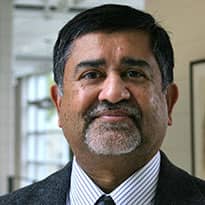
Ramesh Rao, Professor and Chair, DN3 Program, Columbus State University, Columbus, GA, is the author of two books on Indian politics and society and has written numerous op-eds for newspapers and magazines in India, the U.S., and the U.K. Ramesh served as Human Rights Coordinator and Executive Council member at the Hindu American Foundation between 2004-2013. He spent the first twenty-eight years of his life in India where he worked as a bank officer, a school teacher, and a copy editor. He received his MS in Mass Communication from the University of Southern Mississippi, and his PhD in Communication from Michigan State University. He taught at Truman State University in Kirksville, MO, and Longwood University in Farmville, VA, before he joined Columbus State University. He lives with wife Sujaya, and son Sudhanva in Columbus, GA.
Patheos Explore the world's faith through different perspectives on religion and spirituality! Patheos has the views of the prevalent religions and spiritualities of the world.
Ad-Free & Subscriber Log-In Subscription Support
- About Us
- 2026 Calendar
- Videos
- Podcasts
- Library of World Religions
- Faith In Media Tracker
- Advertise With Us
- Write for Us
- Privacy Policy
- Terms of Service
- Do Not Sell My Data
- Contact Us
- Radiant Digital
- Manage Newsletter Subscriptions
- Unsubscribe From Notifications
- Sitemap
Copyright 2008-2026, Patheos. All rights reserved.
Subscription Support Ad-Free & Subscriber Log-In
Follow Patheos