
BuddhistCatholicContemplativeEvangelicalGeneral ChristianHinduJewishLatter-day SaintMuslimNew VisionsProgressive Christian
Beliefs
- Buddhist
- Catholic
- Contemplative
- Evangelical
- General Christian
- Hindu
- Jewish
- Latter-day Saint
- More Voices
- Muslim
- New Visions
- Pagan
- Progressive Christian
Topics
- Religion News
- Food and Religion
- Sports and Religion
- Religious Art
- Religious Music and Entertainment
- Religious Events
- History and Religion
- Style and Religion
- Politics and Religion
- Women in Religion
- Recreation Outdoors and Religion
- Business Finance and Religion
- Careers Workplace and Religion
- Education and Religion
- Family Parenting and Religion
- Health Fitness and Religion
- Home and Religion
- Relationships and Religion
- Technology and Religion
- Travel and Religion
Columnists
- Buddhist Columnists
- Business Finance and Religion Columnists
- Careers Workplace and Religion Columnists
- Catholic Columnists
- Contemplative Columnists
- Education and Religion Columnists
- Evangelists Columnists
- Family Parenting and Religion Columnists
- General Christian Columnists
- Health Fitness and Religion Columnists
- Hindu Columnists
- History and Religion Columnists
- Home and Religion Columnists
- Jewish Columnists
- More Voices Columnists
- Latter Day Columnists
- Muslim Columnists
- New Visions Columnists
- Nonreligious Columnists
- Pagan Columnists
- Politics and Religion Columnists
- Progressive Columnists
- Recreation Outdoors and Religion Columnists
- Relationships and Religion Columnists
- Religion News Columnists
- Religious Art Columnists
- Religious Events Columnists
- Religious Music and Entertainment Columnists
- Sports and Religion Columnists
- Style and Religion Columnists
- Technology and Religion Columnists
- Travel and Religion Columnists
- Women in Religion Columnists
Resource Library
- 2026 Calendar
- Library of World Religions
- The 100 Most Holy Places on Earth
- Patheos Answers
- Podcasts
- Videos
- Faith Leaders Database
- Anglican Episcopalian
- Bahai
- Baptist
- Buddhism
- Christianity
- Confucianism
- Eastern Orthodoxy
- Hinduism
- Holiness and Pentecostal
- ISKCON
- Islam
- Judaism
- Lutheran
- Methodist
- The Church of Jesus Christ of Latter-day Saints
- New Age
- Paganism
- Presbytarian and Reformed
- Protestantism
- Religion Behind the Scenes
- Roman Catholic
- Scientology
- Shia Islam
- Sikhism
- Sufism
- Sunni Islam
- Taoism
- Zen
- See all religions
Research Tools
 Ad-Free & Subscriber Log-In Subscription Support
Ad-Free & Subscriber Log-In Subscription Support
Follow Patheos 

- Trending:
- Forgiveness
- |
- Marriage
- |
- Consciousness
- |
- Death Penalty
- |
- Election
- |
- Halloween
Hindu
Religious Pluralism: The Key to Overcoming Global Conflict and Achieving Peace
January 06, 2013 by Ramesh Rao
The only way we can reduce human conflict is to understand the human quest for liberation, knowledge, and finding the answers to the fundamental questions that have troubled us—Who are we? Why are we here? Where do we go from here?—is to acknowledge that we can access answers to these questions using a variety of means, under the guidance of a variety of spiritual and religious leaders, and as adherents to any of the world's faith groups.
The other facet of this argument is that those who claim God for themselves, or assert that their religious faith is the only one that paves the way to God contribute to human suffering and conflict by denying others the right to follow their own spiritual instincts, their God-given freedom to probe the universe as they wish. They do so by imposing hierarchies that categorize people as infidels or believers, saved or lost, devil worshipers or God-followers, and heathens or religious people. These exclusivist and monopolistic claims to God then pave the way to predatory proselytism, and the denial of agency to others—the "adhikara" (authority or ownership) and "ishta" (desired, liked)—guiding principles that shape the Hindu pursuit of transcending the mundane.
This argument is not new. In fact, I wrote a short piece for United Press International's "religion and spirituality forum" in 2006, which I think can describe why religious pluralism is essential to mitigating conflict in the world. Before we get there, we have to clarify what pluralism means. Swami Vivekananda said, "We not only tolerate, but we Hindus accept every religion, praying in the mosque of the Mohammedans, worshipping the fire of the Zoroastrians, and kneeling before the Cross of Christians, knowing that all the religions, from the lowest fetishism to the highest absolutism, mean so many attempts of the human soul to grasp and realize the infinite, each determined by the conditions of its birth and association, and each of them marking a stage of progress" (The Complete Works of Swami Vivekananda, pp. 331-32). Vivekananda was stating something a hundred years before what Professor Diana Eck of Harvard and the Pluralism Project call necessary conditions for the practice of and belief in pluralism. Pluralism, for her, has to be "the energetic engagement with diversity . . . , the active seeking of understanding across lines of difference . . . , the encounter of commitments . . ." arrived at through dialogue.
In 2006 we had a visitor at Longwood University where I teach. He was a holocaust survivor. Jay Ipson, President and Executive Director of the Virginia Holocaust Museum, came to talk to our students about love, hate, and bigotry. He began by asking the luncheon audience what it was that made Germans hate the Jews. One person said that maybe Germans learned it at home; another said that the media played a role; and yet another offered the hypothesis that maybe they learned it at school. I suggested that it was religion that was at the bottom of that hatred. He nodded his head, looked around, and asked us to consider that fact.
In the audience were a Presbyterian minister, a Catholic priest, and Christians of other denominations. People uncomfortably shifted in their chairs, and one person said that religions don't teach hate but people misuse religion. Is that true, Ipson asked, and he himself seemed to indicate that it might be so. Some others pointed out that there is much in religious literature that is problematic, if not hateful.
Ipson's story of survival in a Lithuanian Jewish ghetto, and of escape with his father and mother from the ghetto, while the rest of his family was sent to the concentration camps and to their deaths, made us all acknowledge the real import of religious discrimination. Ipson still retains a strong German/European accent but has a fine command of American colloquial English. His talk was precise, and he avoided the politically correct clichés that many modern speakers use to soften the horrors of the past, and the vulgarities of the present.
The holocaust survivor's story is important not only in the context of continuing anti-Semitism but it can also provide the context for pluralism, the lessons we can learn from Hinduism, and the concerns of Hindus, Native Americans, and others about the effects of predatory proselytism—aggressive and manipulative efforts at converting others through force, fraud, seduction, and lies.
Article Continued On Next Page
Page: 1 of 3
12/2/2022 9:08:55 PM
Hindu
God in the Age of Kali
History
Interfaith Dialogue
Pluralism
Hinduism
more at patheos
1

A Conversation With God: Finding Hope in Your Failures
2

What Does "Faith" Mean in Non-Religious Spirituality?
3

Sunday Readings: It's All About Forgiveness
4

How Does Šālôm Connect The Texas Shooting & UFC 250?
About Ramesh Rao
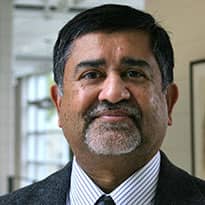
Ramesh Rao, Professor and Chair, DN3 Program, Columbus State University, Columbus, GA, is the author of two books on Indian politics and society and has written numerous op-eds for newspapers and magazines in India, the U.S., and the U.K. Ramesh served as Human Rights Coordinator and Executive Council member at the Hindu American Foundation between 2004-2013. He spent the first twenty-eight years of his life in India where he worked as a bank officer, a school teacher, and a copy editor. He received his MS in Mass Communication from the University of Southern Mississippi, and his PhD in Communication from Michigan State University. He taught at Truman State University in Kirksville, MO, and Longwood University in Farmville, VA, before he joined Columbus State University. He lives with wife Sujaya, and son Sudhanva in Columbus, GA.
Patheos Explore the world's faith through different perspectives on religion and spirituality! Patheos has the views of the prevalent religions and spiritualities of the world.
Ad-Free & Subscriber Log-In Subscription Support
- About Us
- 2026 Calendar
- Videos
- Podcasts
- Library of World Religions
- Faith In Media Tracker
- Advertise With Us
- Write for Us
- Privacy Policy
- Terms of Service
- Do Not Sell My Data
- Contact Us
- Radiant Digital
- Manage Newsletter Subscriptions
- Unsubscribe From Notifications
- Sitemap
Copyright 2008-2026, Patheos. All rights reserved.
Subscription Support Ad-Free & Subscriber Log-In
Follow Patheos