
BuddhistCatholicContemplativeEvangelicalGeneral ChristianHinduJewishLatter-day SaintMuslimNew VisionsProgressive Christian
Beliefs
- Buddhist
- Catholic
- Contemplative
- Evangelical
- General Christian
- Hindu
- Jewish
- Latter-day Saint
- More Voices
- Muslim
- New Visions
- Pagan
- Progressive Christian
Topics
- Religion News
- Food and Religion
- Sports and Religion
- Religious Art
- Religious Music and Entertainment
- Religious Events
- History and Religion
- Style and Religion
- Politics and Religion
- Women in Religion
- Recreation Outdoors and Religion
- Business Finance and Religion
- Careers Workplace and Religion
- Education and Religion
- Family Parenting and Religion
- Health Fitness and Religion
- Home and Religion
- Relationships and Religion
- Technology and Religion
- Travel and Religion
Columnists
- Buddhist Columnists
- Business Finance and Religion Columnists
- Careers Workplace and Religion Columnists
- Catholic Columnists
- Contemplative Columnists
- Education and Religion Columnists
- Evangelists Columnists
- Family Parenting and Religion Columnists
- General Christian Columnists
- Health Fitness and Religion Columnists
- Hindu Columnists
- History and Religion Columnists
- Home and Religion Columnists
- Jewish Columnists
- More Voices Columnists
- Latter Day Columnists
- Muslim Columnists
- New Visions Columnists
- Nonreligious Columnists
- Pagan Columnists
- Politics and Religion Columnists
- Progressive Columnists
- Recreation Outdoors and Religion Columnists
- Relationships and Religion Columnists
- Religion News Columnists
- Religious Art Columnists
- Religious Events Columnists
- Religious Music and Entertainment Columnists
- Sports and Religion Columnists
- Style and Religion Columnists
- Technology and Religion Columnists
- Travel and Religion Columnists
- Women in Religion Columnists
Resource Library
- 2026 Calendar
- Library of World Religions
- The 100 Most Holy Places on Earth
- Patheos Answers
- Podcasts
- Videos
- Faith Leaders Database
- Anglican Episcopalian
- Bahai
- Baptist
- Buddhism
- Christianity
- Confucianism
- Eastern Orthodoxy
- Hinduism
- Holiness and Pentecostal
- ISKCON
- Islam
- Judaism
- Lutheran
- Methodist
- The Church of Jesus Christ of Latter-day Saints
- New Age
- Paganism
- Presbytarian and Reformed
- Protestantism
- Religion Behind the Scenes
- Roman Catholic
- Scientology
- Shia Islam
- Sikhism
- Sufism
- Sunni Islam
- Taoism
- Zen
- See all religions
Research Tools
 Ad-Free & Subscriber Log-In Subscription Support
Ad-Free & Subscriber Log-In Subscription Support
Follow Patheos 

- Trending:
- Forgiveness
- |
- Marriage
- |
- Consciousness
- |
- Death Penalty
- |
- Election
- |
- Halloween
Hindu
Reincarnation or Punar-Janma: What Evidence, to What End?
June 26, 2012 by Ramesh Rao
The idea of and belief in reincarnation is fundamental to Hinduism, determined by karma, the law that posits all actions have effects. This Hindu belief is now shared by a large chunk of Americans: 24 percent of Americans say they believe in reincarnation, says Lisa Miller, quoting a Harris poll. About a similar percent of Brits believe they will come back after death. Belief in reincarnation is common across the world, from the Inuits to Buddhists. And Adi Shankara, the great Hindu philosopher, sang of samsara and of the yoke of rebirth:
punarapi jananam punarapi maranam
punarapi jananii jathare shayanam
iha samsaare bahudustaare
kripayaa apaare paahi muraare
("Born again, death again, birth again to stay in the mother's womb! It is indeed hard to cross this boundless ocean of samsara. Oh Murari! Redeem me through Thy mercy.")
And God Himself took birth in the form of Krishna, the son of Devaki and Vasudeva, to defeat Kamsa, the evil king. Almost every Hindu myth, epic, purana, and punya katha (sacred story) includes a story of reincarnation. But recently, arguing with a skeptical cousin, I was forced to confront the idea of birth and re-birth again, and had to muster all my energies to counter a forceful rebuttal from a determined debater! But he is only the latest reincarnation of the materialists of old, the lokaayatas/chaarvakas who rejected the idea of reincarnation and spiritual insight. So, in many ways our questions are old, and our answers haven't changed, nor are our quarrels different. We could go our own believing or unbelieving ways, and life would go on.
But how did we come to believe in reincarnation? To get there we have to first enquire about karma, free will, and morality. If one does not have free will, morality is not part of the equation of life. Only when we choose to act are we ethically responsible. Of course, there is always the accompanying question about whether we have free will or whether it comes shackled and fettered. Mahadevan argues that Hinduism offers the theory of karma as a solution: karma stands for free will, and we should consider ourselves responsible for our present state/fate. Life is not a game of chance or caprice or a statistical probability; our actions in the past shape our life at present, and how we behave now in turn conditions the future. Karma is based on the concept of Rta -- order, both physical as well as moral—and Gods are the guardians of rta. Good people follow the path of rta, which later came to embody Vedic ritual, and still later, in the Upanishads, came to mean both action and the results of action. Action both produces a result and affects one's character, leaving an impression on the mind of the doer.
But if karma determines our life, where is free will? Are we not simply tied to the past, our present actions and attitudes merely the results of the past? We do know now that even in the physical universe the law of cause and effect leaves space for uncertainty, and we can similarly surmise that karma is not a rigid and a concrete chain of action and reaction/result. Human beings can use free will to climb out of the cycle of causality, and we are always provided options to tinker with our life and alter our ways.
Karma cannot play out in one life, because the theory precludes that. We are born with certain characteristics, the result of past karma. Similarly, our actions in this life do not all bear fruit in this life. We may experience the results in a future life. So, what dies and what is reborn? Essential to the theory of karma and of reincarnation or punar-janma is the belief in soul, which casts off bodies and reenters new ones, and this is called samsara. The wheel of existence can be broken and the soul attains the realization of God.
If so, where is verifiable evidence for reincarnation? Is it just another poppycock theory that we humans, over hundreds of thousands of years of evolutionary pressures, have concocted to deal with the world that we are born into? So goes the response of the atheists, materialists, and skeptics or those who argue that chance and probability can explain it all. But what if there were evidence for reincarnation? We have great astrologers and palm readers in India who will tell you what you were in your previous life/lives, and what happened to you a decade ago, or two decades ago, in some uncanny detail. "This is all pure bunk," is the reaction of the skeptics, like my cousin, who steadfastly refuse to consider examples of and evidence for reincarnation.
Article Continued On Next Page
Page: 1 of 2
12/2/2022 9:08:55 PM
Hindu
God in the Age of Kali
Death
India
Karma
Reincarnation
Sacred Texts
Samsara
science
Hinduism
more at patheos
1

What Does Mᵉlach Mean For American Bases & The Midterms?
2

Spiritual Resilience Grows Here
3

Speaking of the Devil, and Aliens
4
About Ramesh Rao
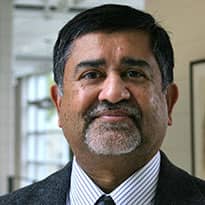
Ramesh Rao, Professor and Chair, DN3 Program, Columbus State University, Columbus, GA, is the author of two books on Indian politics and society and has written numerous op-eds for newspapers and magazines in India, the U.S., and the U.K. Ramesh served as Human Rights Coordinator and Executive Council member at the Hindu American Foundation between 2004-2013. He spent the first twenty-eight years of his life in India where he worked as a bank officer, a school teacher, and a copy editor. He received his MS in Mass Communication from the University of Southern Mississippi, and his PhD in Communication from Michigan State University. He taught at Truman State University in Kirksville, MO, and Longwood University in Farmville, VA, before he joined Columbus State University. He lives with wife Sujaya, and son Sudhanva in Columbus, GA.
Patheos Explore the world's faith through different perspectives on religion and spirituality! Patheos has the views of the prevalent religions and spiritualities of the world.
Ad-Free & Subscriber Log-In Subscription Support
- About Us
- 2026 Calendar
- Videos
- Podcasts
- Library of World Religions
- Faith In Media Tracker
- Advertise With Us
- Write for Us
- Privacy Policy
- Terms of Service
- Do Not Sell My Data
- Contact Us
- Radiant Digital
- Manage Newsletter Subscriptions
- Unsubscribe From Notifications
- Sitemap
Copyright 2008-2026, Patheos. All rights reserved.
Subscription Support Ad-Free & Subscriber Log-In
Follow Patheos