
BuddhistCatholicContemplativeEvangelicalGeneral ChristianHinduJewishLatter-day SaintMuslimNew VisionsProgressive Christian
Beliefs
- Buddhist
- Catholic
- Contemplative
- Evangelical
- General Christian
- Hindu
- Jewish
- Latter-day Saint
- More Voices
- Muslim
- New Visions
- Pagan
- Progressive Christian
Topics
- Religion News
- Food and Religion
- Sports and Religion
- Religious Art
- Religious Music and Entertainment
- Religious Events
- History and Religion
- Style and Religion
- Politics and Religion
- Women in Religion
- Recreation Outdoors and Religion
- Business Finance and Religion
- Careers Workplace and Religion
- Education and Religion
- Family Parenting and Religion
- Health Fitness and Religion
- Home and Religion
- Relationships and Religion
- Technology and Religion
- Travel and Religion
Columnists
- Buddhist Columnists
- Business Finance and Religion Columnists
- Careers Workplace and Religion Columnists
- Catholic Columnists
- Contemplative Columnists
- Education and Religion Columnists
- Evangelists Columnists
- Family Parenting and Religion Columnists
- General Christian Columnists
- Health Fitness and Religion Columnists
- Hindu Columnists
- History and Religion Columnists
- Home and Religion Columnists
- Jewish Columnists
- More Voices Columnists
- Latter Day Columnists
- Muslim Columnists
- New Visions Columnists
- Nonreligious Columnists
- Pagan Columnists
- Politics and Religion Columnists
- Progressive Columnists
- Recreation Outdoors and Religion Columnists
- Relationships and Religion Columnists
- Religion News Columnists
- Religious Art Columnists
- Religious Events Columnists
- Religious Music and Entertainment Columnists
- Sports and Religion Columnists
- Style and Religion Columnists
- Technology and Religion Columnists
- Travel and Religion Columnists
- Women in Religion Columnists
Resource Library
- 2026 Calendar
- Library of World Religions
- The 100 Most Holy Places on Earth
- Patheos Answers
- Podcasts
- Videos
- Faith Leaders Database
- Anglican Episcopalian
- Bahai
- Baptist
- Buddhism
- Christianity
- Confucianism
- Eastern Orthodoxy
- Hinduism
- Holiness and Pentecostal
- ISKCON
- Islam
- Judaism
- Lutheran
- Methodist
- The Church of Jesus Christ of Latter-day Saints
- New Age
- Paganism
- Presbytarian and Reformed
- Protestantism
- Religion Behind the Scenes
- Roman Catholic
- Scientology
- Shia Islam
- Sikhism
- Sufism
- Sunni Islam
- Taoism
- Zen
- See all religions
Research Tools
 Ad-Free & Subscriber Log-In Subscription Support
Ad-Free & Subscriber Log-In Subscription Support
Follow Patheos 

- Trending:
- Forgiveness
- |
- Marriage
- |
- Consciousness
- |
- Death Penalty
- |
- Election
- |
- Halloween
Hindu
Imperialist Goals Masked in the Garb of Religious Freedom
August 05, 2012 by Ramesh Rao
For Hindus, Buddhists, and Jains, different cultural/spiritual traditions do not constitute religious rivalry because they think of their traditions as part of the human quest of the search for truth. As Mahatma Gandhi said, "Religions are different roads converging on the same point. What does it matter that we take different roads so long as we reach the same goal?" The wish to convert the other, to proselytize, therefore has led to conflict between the two groups: Hindus, Jains, and Buddhists on the one hand, and Christians and Muslims on the other. As India and other countries got colonized, people who were influenced by Western philosophy and traditions began to adopt the worldview of the Western/Christian colonizers regarding the nature of religion and religious freedom, ignoring the fundamental and logical contradictions between Indian/native cultural faith traditions and Abrahamic religions.
The result is that after liberation and independence they were still bound to the Western/Christian ideas. We can see this slavery to Western/Christian ideas reflected in documents like the Universal Declaration of Human Rights as well as in the Indian Constitution, which both privilege Christianity and Islam because the document writers accept the freedom to propagate religion and to proselytize as fundamental freedoms. In India, we should therefore be asking the following questions instead of beating the Western/Christian/Muslim drum of religious freedom: "How have the Indian traditions succeeded at alleviating the problem of religious conversion in the past? Which mechanisms and dynamics were at play there? To what extent do these persist? How could they be rediscovered and revived in the interests of a vibrant pluralism in India today?"
And finally let us tackle the State Department's concern that the 2007 law enacted in the state of Andhra Pradesh regarding the propagation of other religions in the places of worship or prayer and how the law has been applied only to Hindu places of worship. Duh! It is simply because Hindus don't proselytize, don't spread canards about other religions, and Hindus don't send their missionaries to churches and mosques to convert Christians and Muslims! That this obvious fact is not acknowledged by the State Department report goes to show the sheer cussedness of the assertions made in the report.
Alas, few in academe or in the media or in the human rights arena are going to challenge these nonsensical assertions and the imperialistic venture that such report writing constitutes. The Chinese are the only ones who have struck back hard and been dismissive of the Western, American-led human rights and religious freedom exercises. Interestingly, the Chinese have been able to reach the point of challenging Western hegemony by adopting the ideology of communism crafted in Europe, which in turn is an illiberal ideology. It is time that the West and the Chinese took a look at India and how India was the cradle of a variety of cultures that allowed others to live and prosper side by side—the thousands of languages, jati groups, cultural mores of food and drink, dress and worship all existing and prospering cheek by jowl for millennia. The right to propagate illiberal religions and ideologies will be the death knell of diversity in India.
Page: 3 of 3
12/2/2022 9:08:54 PM
Hindu
God in the Age of Kali
India
Oprah Winfrey
Religious freedom
Hinduism
more at patheos
1

Deuterocanon & Javier Perdomo's Straw Men
2

When everything is broken, we can mend it if we try
3

'Adore Him: He Is Here': On the Red Carpet for Adoration Doc
4

The Thing I Don't Understand about Rich People...
About Ramesh Rao
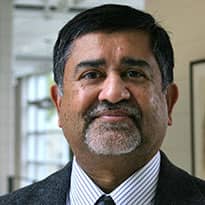
Ramesh Rao, Professor and Chair, DN3 Program, Columbus State University, Columbus, GA, is the author of two books on Indian politics and society and has written numerous op-eds for newspapers and magazines in India, the U.S., and the U.K. Ramesh served as Human Rights Coordinator and Executive Council member at the Hindu American Foundation between 2004-2013. He spent the first twenty-eight years of his life in India where he worked as a bank officer, a school teacher, and a copy editor. He received his MS in Mass Communication from the University of Southern Mississippi, and his PhD in Communication from Michigan State University. He taught at Truman State University in Kirksville, MO, and Longwood University in Farmville, VA, before he joined Columbus State University. He lives with wife Sujaya, and son Sudhanva in Columbus, GA.
Patheos Explore the world's faith through different perspectives on religion and spirituality! Patheos has the views of the prevalent religions and spiritualities of the world.
Ad-Free & Subscriber Log-In Subscription Support
- About Us
- 2026 Calendar
- Videos
- Podcasts
- Library of World Religions
- Faith In Media Tracker
- Advertise With Us
- Write for Us
- Privacy Policy
- Terms of Service
- Do Not Sell My Data
- Contact Us
- Radiant Digital
- Manage Newsletter Subscriptions
- Unsubscribe From Notifications
- Sitemap
Copyright 2008-2026, Patheos. All rights reserved.
Subscription Support Ad-Free & Subscriber Log-In
Follow Patheos