
BuddhistCatholicContemplativeEvangelicalGeneral ChristianHinduJewishLatter-day SaintMuslimNew VisionsProgressive Christian
Beliefs
- Buddhist
- Catholic
- Contemplative
- Evangelical
- General Christian
- Hindu
- Jewish
- Latter-day Saint
- More Voices
- Muslim
- New Visions
- Pagan
- Progressive Christian
Topics
- Religion News
- Food and Religion
- Sports and Religion
- Religious Art
- Religious Music and Entertainment
- Religious Events
- History and Religion
- Style and Religion
- Politics and Religion
- Women in Religion
- Recreation Outdoors and Religion
- Business Finance and Religion
- Careers Workplace and Religion
- Education and Religion
- Family Parenting and Religion
- Health Fitness and Religion
- Home and Religion
- Relationships and Religion
- Technology and Religion
- Travel and Religion
Columnists
- Buddhist Columnists
- Business Finance and Religion Columnists
- Careers Workplace and Religion Columnists
- Catholic Columnists
- Contemplative Columnists
- Education and Religion Columnists
- Evangelists Columnists
- Family Parenting and Religion Columnists
- General Christian Columnists
- Health Fitness and Religion Columnists
- Hindu Columnists
- History and Religion Columnists
- Home and Religion Columnists
- Jewish Columnists
- More Voices Columnists
- Latter Day Columnists
- Muslim Columnists
- New Visions Columnists
- Nonreligious Columnists
- Pagan Columnists
- Politics and Religion Columnists
- Progressive Columnists
- Recreation Outdoors and Religion Columnists
- Relationships and Religion Columnists
- Religion News Columnists
- Religious Art Columnists
- Religious Events Columnists
- Religious Music and Entertainment Columnists
- Sports and Religion Columnists
- Style and Religion Columnists
- Technology and Religion Columnists
- Travel and Religion Columnists
- Women in Religion Columnists
Resource Library
- 2026 Calendar
- Library of World Religions
- The 100 Most Holy Places on Earth
- Patheos Answers
- Podcasts
- Videos
- Faith Leaders Database
- Anglican Episcopalian
- Bahai
- Baptist
- Buddhism
- Christianity
- Confucianism
- Eastern Orthodoxy
- Hinduism
- Holiness and Pentecostal
- ISKCON
- Islam
- Judaism
- Lutheran
- Methodist
- The Church of Jesus Christ of Latter-day Saints
- New Age
- Paganism
- Presbytarian and Reformed
- Protestantism
- Religion Behind the Scenes
- Roman Catholic
- Scientology
- Shia Islam
- Sikhism
- Sufism
- Sunni Islam
- Taoism
- Zen
- See all religions
Research Tools
 Ad-Free & Subscriber Log-In Subscription Support
Ad-Free & Subscriber Log-In Subscription Support
Follow Patheos 

- Trending:
- Forgiveness
- |
- Marriage
- |
- Consciousness
- |
- Death Penalty
- |
- Election
- |
- Halloween
Hindu
Imperialist Goals Masked in the Garb of Religious Freedom
August 05, 2012 by Ramesh Rao
There is a lot more in the report but let me focus on the above. We are told that American officials discussed with political leaders and others concerns about harassment of minorities and missionaries. There is no mention that these officials expressed any concern about the majority community being harassed, discriminated against, killed, or maimed. For example, in late 2010 Hindus were attacked in the Deganga district of West Bengal. Indian newspapers, following a self-imposed rule, never mentioned who attacked whom with what consequences. In the case of the Deganga riots, Hindu families were attacked and uprooted from their homes, Hindu men and boys killed, and women raped by their Muslim neighbors as they were egged on by a Muslim legislator. It is the rare Indian journalist who will stick his or her neck out to report that Hindus were targeted and attacked. The State Department report is mum about this as if it does not matter what happens to Hindus in India.
Regarding Christian missionaries, posing as tourists and traveling on tourist visas, there is enough evidence about the havoc they cause in India as they traverse the country with money in their pockets and dreams in their heads of planting churches and converting Hindus. There is a reason that India provides different types of visas, just as the U.S. does. Trying to shame the country by reporting that missionaries have been harassed or denied visas is one way of keeping the pressure on.
As to the banning of cow slaughter, the State Department officials fail to note that the banning of cow slaughter is included in Article 48 of the Indian Constitution! Of course, one can argue that by seeking to ban cow slaughter India deprives its Muslims, Christians, and Dalits of their right to eat cows. But there is a reason as to why cow slaughter is sought to be banned: the cow is considered sacred by Hindus, and that sentiment is millennia old. Dog meat trade is illegal in the U.S. and many parts of the world. Other animals are protected by national, regional, and international conventions. Based on that rationale, why should it not be legal in India to ban cow slaughter? Anyway, why should the ban on eating cow meat be considered a restriction of religious freedom? Does it say in the Quran, in the Bible, or in any religious texts of the Dalits that the eating of beef is religiously mandated? This conflation of a cultural tradition or habit with religious freedom is an example of either the sheer mendacity of the State Department officials who compile the annual reports or their vast ignorance about matters cultural and religious.
Regarding anti-conversion laws, it is important to understand some of the basic ideas about religion and religious freedom to understand the nature of the problem in India. What we believe is religion and faith differs between the Indic traditions (Hinduism, Buddhism, Jainism) and the Abrahamic traditions (Christianity, Judaism, Islam). If we make a monopolistic claim on God, and if we believe only our faith is "true," how we approach others and what we wish to convince them about will change/differ.
Some scholars, like S. N. Balagangadhara and his student Jacob De Roover have argued that unless we understand the difference between religions and cultural traditions, we will not be able to deal with the problem of religious conversion and religious conflict. They say that there is a false assumption that a variety of cultural traditions must be understood as religions. When we put both a monopolistic and prophetic religion and a set of cultural/spiritual traditions in the same box, we then have the problem of religious conversion, which then becomes a "common problem" across nations, cultures, and traditions.
The second false assumption is that religions are rivals—not rivalry of any sort, but a competition "between the teachings, doctrines or belief systems of the two religions in question." If Christians claim to have truth on their side, and God on their side, then the natural corollary is that I have various devils and falsehoods in my camp! So, my claim to my own God/s and truths are "false," and I am a rival who has to be defeated. For the "religions of the book," true religion has existed since the creation of humanity, but degenerated over time, to be rescued either by Christianity or Islam. This rivalry, based on truth claims, is then transferred to other cultural traditions, and Christians and Muslims therefore believe that all the other "religions" are their competitors.
:::page break:::
Article Continued On Next Page
Page: 2 of 3
12/2/2022 9:08:54 PM
Hindu
God in the Age of Kali
India
Oprah Winfrey
Religious freedom
Hinduism
more at patheos
1

2

Do I Have A Kingdom Mindset Or A Self-Centered One?
3

Seventeenth Sunday in Ordinary Time: Choosing God's Wisdom
4

When Psalm 23 Began Reading Me
About Ramesh Rao
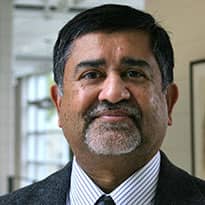
Ramesh Rao, Professor and Chair, DN3 Program, Columbus State University, Columbus, GA, is the author of two books on Indian politics and society and has written numerous op-eds for newspapers and magazines in India, the U.S., and the U.K. Ramesh served as Human Rights Coordinator and Executive Council member at the Hindu American Foundation between 2004-2013. He spent the first twenty-eight years of his life in India where he worked as a bank officer, a school teacher, and a copy editor. He received his MS in Mass Communication from the University of Southern Mississippi, and his PhD in Communication from Michigan State University. He taught at Truman State University in Kirksville, MO, and Longwood University in Farmville, VA, before he joined Columbus State University. He lives with wife Sujaya, and son Sudhanva in Columbus, GA.
Patheos Explore the world's faith through different perspectives on religion and spirituality! Patheos has the views of the prevalent religions and spiritualities of the world.
Ad-Free & Subscriber Log-In Subscription Support
- About Us
- 2026 Calendar
- Videos
- Podcasts
- Library of World Religions
- Faith In Media Tracker
- Advertise With Us
- Write for Us
- Privacy Policy
- Terms of Service
- Do Not Sell My Data
- Contact Us
- Radiant Digital
- Manage Newsletter Subscriptions
- Unsubscribe From Notifications
- Sitemap
Copyright 2008-2026, Patheos. All rights reserved.
Subscription Support Ad-Free & Subscriber Log-In
Follow Patheos