
BuddhistCatholicContemplativeEvangelicalGeneral ChristianHinduJewishLatter-day SaintMuslimNew VisionsProgressive Christian
Beliefs
- Buddhist
- Catholic
- Contemplative
- Evangelical
- General Christian
- Hindu
- Jewish
- Latter-day Saint
- More Voices
- Muslim
- New Visions
- Pagan
- Progressive Christian
Topics
- Religion News
- Food and Religion
- Sports and Religion
- Religious Art
- Religious Music and Entertainment
- Religious Events
- History and Religion
- Style and Religion
- Politics and Religion
- Women in Religion
- Recreation Outdoors and Religion
- Business Finance and Religion
- Careers Workplace and Religion
- Education and Religion
- Family Parenting and Religion
- Health Fitness and Religion
- Home and Religion
- Relationships and Religion
- Technology and Religion
- Travel and Religion
Columnists
- Buddhist Columnists
- Business Finance and Religion Columnists
- Careers Workplace and Religion Columnists
- Catholic Columnists
- Contemplative Columnists
- Education and Religion Columnists
- Evangelists Columnists
- Family Parenting and Religion Columnists
- General Christian Columnists
- Health Fitness and Religion Columnists
- Hindu Columnists
- History and Religion Columnists
- Home and Religion Columnists
- Jewish Columnists
- More Voices Columnists
- Latter Day Columnists
- Muslim Columnists
- New Visions Columnists
- Nonreligious Columnists
- Pagan Columnists
- Politics and Religion Columnists
- Progressive Columnists
- Recreation Outdoors and Religion Columnists
- Relationships and Religion Columnists
- Religion News Columnists
- Religious Art Columnists
- Religious Events Columnists
- Religious Music and Entertainment Columnists
- Sports and Religion Columnists
- Style and Religion Columnists
- Technology and Religion Columnists
- Travel and Religion Columnists
- Women in Religion Columnists
Resource Library
- 2026 Calendar
- Library of World Religions
- The 100 Most Holy Places on Earth
- Patheos Answers
- Podcasts
- Videos
- Faith Leaders Database
- Anglican Episcopalian
- Bahai
- Baptist
- Buddhism
- Christianity
- Confucianism
- Eastern Orthodoxy
- Hinduism
- Holiness and Pentecostal
- ISKCON
- Islam
- Judaism
- Lutheran
- Methodist
- The Church of Jesus Christ of Latter-day Saints
- New Age
- Paganism
- Presbytarian and Reformed
- Protestantism
- Religion Behind the Scenes
- Roman Catholic
- Scientology
- Shia Islam
- Sikhism
- Sufism
- Sunni Islam
- Taoism
- Zen
- See all religions
Research Tools
 Ad-Free & Subscriber Log-In Subscription Support
Ad-Free & Subscriber Log-In Subscription Support
Follow Patheos 

- Trending:
- Forgiveness
- |
- Marriage
- |
- Consciousness
- |
- Death Penalty
- |
- Election
- |
- Halloween
Hindu
Effulgent Light of the Radiant Sun
April 17, 2012 by Ramesh Rao
The chanting of the Gayatri mantra is said to dispel ignorance and darkness and let one see the spiritual Sun. It enables one to realize the oneness of life. Consisting of three parts - praise (Om, the mystic word composed of the three sounds: aa, u, mm), meditation (tat savitur varenyam, bhargo devasya dheemahi—the lustrous, splendorous, radiant, glorious God Savita), and prayer (dhiyo yo nah prachodayaat—who may stimulate our prayers)—the mantra is said to enable the awakening of the Divine and the strengthening of the human intellect, which then can perceive unity in diversity. The knowing of this universal truth takes place at three levels: the intellectual, the intuitional, and the Real. There are three parts to the Gayatri mantra, with the first one said to prepare the mind of the person reciting the mantra. The second part stimulates in the aspirant an intense desire to come in contact with Savita, the presiding deity of our solar system, and the third part is meant to create the attitude of self-surrender, which is essential for the reception of divine grace.
These days there are many who have heard of the Gayatri mantra, and there are all kinds of recordings, including the Indian cinematic renderings by artistes who seem to know little of the power and grace of the mantra. A traditional rendering of the mantra can be found here.
In closing, it is best that those interested in learning the Gayatri mantra do so from a traditional teacher. There is a science to chanting mantras, and there is a history of people misusing these mantras for their own, selfish and short-term ends. Taimni cautions us by saying that the "application of any science for personal and especially for evil purposes is always attended with dangers of various kinds and, as a safeguard, it is necessary to employ many devices which can guard the aspirant against those dangers" (p. 34).
The one, true goal of Mantra Yoga is the unfolding of our spiritual and real self. Mantra Yoga enables us to understand that this material universe, which seems solid and real, " . . . are not what they seem but are merely the result of the interplay of different kinds of energies and consciousness" (p. 35). Here then is the beautiful and transcendent Gayatri mantra, and its meaning translated by one of modern India's great philosophers, Dr. S. Radhakrishnan:
Om bhur bhuvah suvah
Tat savitr varen(i)yam
Bhargo devasya dheemahi
Dhiyoh yo nah prachodayaat
"We meditate on the effulgent glory of the divine Light; may he inspire our understanding."
Page: 2 of 2
12/2/2022 9:08:54 PM
Hindu
God in the Age of Kali
Meditation
Mantra
Ritual
Sacred Texts
Yoga
Hinduism
more at patheos
1

Netflix 'Little House' Cast on 'Goodness' of Ingalls Family
2

Eight Myths about Heaven That Many Believe
3

For my Mother, twenty-one years on
4

About Ramesh Rao
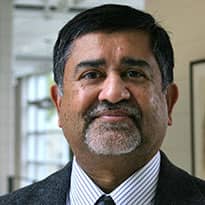
Ramesh Rao, Professor and Chair, DN3 Program, Columbus State University, Columbus, GA, is the author of two books on Indian politics and society and has written numerous op-eds for newspapers and magazines in India, the U.S., and the U.K. Ramesh served as Human Rights Coordinator and Executive Council member at the Hindu American Foundation between 2004-2013. He spent the first twenty-eight years of his life in India where he worked as a bank officer, a school teacher, and a copy editor. He received his MS in Mass Communication from the University of Southern Mississippi, and his PhD in Communication from Michigan State University. He taught at Truman State University in Kirksville, MO, and Longwood University in Farmville, VA, before he joined Columbus State University. He lives with wife Sujaya, and son Sudhanva in Columbus, GA.
Patheos Explore the world's faith through different perspectives on religion and spirituality! Patheos has the views of the prevalent religions and spiritualities of the world.
Ad-Free & Subscriber Log-In Subscription Support
- About Us
- 2026 Calendar
- Videos
- Podcasts
- Library of World Religions
- Faith In Media Tracker
- Advertise With Us
- Write for Us
- Privacy Policy
- Terms of Service
- Do Not Sell My Data
- Contact Us
- Radiant Digital
- Manage Newsletter Subscriptions
- Unsubscribe From Notifications
- Sitemap
Copyright 2008-2026, Patheos. All rights reserved.
Subscription Support Ad-Free & Subscriber Log-In
Follow Patheos