
BuddhistCatholicContemplativeEvangelicalGeneral ChristianHinduJewishLatter-day SaintMuslimNew VisionsProgressive Christian
Beliefs
- Buddhist
- Catholic
- Contemplative
- Evangelical
- General Christian
- Hindu
- Jewish
- Latter-day Saint
- More Voices
- Muslim
- New Visions
- Pagan
- Progressive Christian
Topics
- Religion News
- Food and Religion
- Sports and Religion
- Religious Art
- Religious Music and Entertainment
- Religious Events
- History and Religion
- Style and Religion
- Politics and Religion
- Women in Religion
- Recreation Outdoors and Religion
- Business Finance and Religion
- Careers Workplace and Religion
- Education and Religion
- Family Parenting and Religion
- Health Fitness and Religion
- Home and Religion
- Relationships and Religion
- Technology and Religion
- Travel and Religion
Columnists
- Buddhist Columnists
- Business Finance and Religion Columnists
- Careers Workplace and Religion Columnists
- Catholic Columnists
- Contemplative Columnists
- Education and Religion Columnists
- Evangelists Columnists
- Family Parenting and Religion Columnists
- General Christian Columnists
- Health Fitness and Religion Columnists
- Hindu Columnists
- History and Religion Columnists
- Home and Religion Columnists
- Jewish Columnists
- More Voices Columnists
- Latter Day Columnists
- Muslim Columnists
- New Visions Columnists
- Nonreligious Columnists
- Pagan Columnists
- Politics and Religion Columnists
- Progressive Columnists
- Recreation Outdoors and Religion Columnists
- Relationships and Religion Columnists
- Religion News Columnists
- Religious Art Columnists
- Religious Events Columnists
- Religious Music and Entertainment Columnists
- Sports and Religion Columnists
- Style and Religion Columnists
- Technology and Religion Columnists
- Travel and Religion Columnists
- Women in Religion Columnists
Resource Library
- 2026 Calendar
- Library of World Religions
- The 100 Most Holy Places on Earth
- Patheos Answers
- Podcasts
- Videos
- Faith Leaders Database
- Anglican Episcopalian
- Bahai
- Baptist
- Buddhism
- Christianity
- Confucianism
- Eastern Orthodoxy
- Hinduism
- Holiness and Pentecostal
- ISKCON
- Islam
- Judaism
- Lutheran
- Methodist
- The Church of Jesus Christ of Latter-day Saints
- New Age
- Paganism
- Presbytarian and Reformed
- Protestantism
- Religion Behind the Scenes
- Roman Catholic
- Scientology
- Shia Islam
- Sikhism
- Sufism
- Sunni Islam
- Taoism
- Zen
- See all religions
Research Tools
 Ad-Free & Subscriber Log-In Subscription Support
Ad-Free & Subscriber Log-In Subscription Support
Follow Patheos 

- Trending:
- Forgiveness
- |
- Marriage
- |
- Consciousness
- |
- Death Penalty
- |
- Election
- |
- Halloween
Hindu
Effulgent Light of the Radiant Sun
April 17, 2012 by Ramesh Rao
It is easy these days to be dismissive of the lessons—practical and spiritual—imparted by sages in the hoary past. The dismissive attitude toward Hindu traditions, not just by foreigners but by India's own, is a result of a variety of factors: colonialism, proselytism, scientism, and blind westernization. It is not surprising therefore that even some of the Indian teachers who traveled west to teach yoga and meditation ignored the disciplined practice of Hindu modes of prayer, worship, and belief. "Just focus on breathing and meditating with eyes closed," seems to be the gist of their advice to Western students.
And in the public pronouncements and in their writings, the well-known marketers of yoga and meditation seem too eager to ignore the sacred language of Sanskrit, and the disciplined meditative utterance of sacred sounds and words that can transform the leaden mind into the bright vehicle for reaching the transcendent. As we read more about some of the celebrated Indian gurus who came to the U.S. to show and tell, we realize how much they sacrificed in their attempts to reach and teach their new students, who had difficulty tucking their legs under them, and getting their ears and tongues attuned to the sounds of Sanskrit.
But the fault is ours too. After I went through the sacred ceremony of Upanayanam or Munji—rather late in my youth, instead of at the age of seven as recommended in the scriptures—I did not practice performing the Sandhyavandanam, the daily dawn and dusk oblation to the Sun. I am not the only lapsed Brahmin around—the "higher caste" men and boys (Brahmins, Kshatriyas, and Vysyas) who, after the sacred thread investiture ceremony, are supposed to perform the Sandhyavandanam daily—who does not perform this duty daily, I believe. But that was not the case a generation or two ago, and I remember my paternal grandfather sitting every morning and evening to perform what I thought was a truly mesmerizing ritual of prayer.
Luckily, there are still some in my family—cousins, their children, and friends—who diligently and thoughtfully perform the Sandhavandanam daily even now, and there is a new interest in these sacred rituals, which are truly necessary if one wants to discipline one's mind to perform serious meditation and yoga. These days there are attempts to enable girls to undergo the sacred thread ceremony so that they too can perform the Sandhyavandanam. I mention all this to bring to your attention, in a roundabout way, the chanting of the Gayatri mantra, which the seven-year-olds, who undergo the Upanayanam, are taught and which then they are supposed to chant regularly during their daily Sandhyavandanam.
No one has written a more eloquent and erudite explanation of the Gayatri mantra than I.K. Taimni (1898-1978), who served as a professor of chemistry at the University of Allahabad in India. A distinguished member of the Theosophical Society, Iqbal Kishen Taimni (his parents were so accepting of all religions that they gave their son a Muslim first name) has written in his inimitable style commentaries on and translations of Patanjali's Yoga Sutras as well as the Shiva Sutra. Taimni begins his introduction to the Gayatri mantra by reminding us that the path to enlightenment rests on three pillars—character building, worship or upasana, and yoga—and without the careful shaping of the mind through worship and self-discipline the path of yoga becomes too difficult to traverse, and our attempts to walk that path end in failure.
Hindus regarded the meditative utterance (japa) of the Gayatri mantra as an essential and integral part of their daily life; that is, when the performance of the Sandhyavandanam was carried out religiously and rigorously. While it may be difficult for everyone to follow the path of self-realization, the great Hindu sages advised and offered us a device to acknowledge and face God daily, and the chanting of the Gayatri mantra is considered the most effective way of doing that for those living the mundane life. The Gayatri mantra is mentioned in all four Vedas, as well as in Tantra texts. It is considered to be of such power and importance that Taimni says, ". . . the great importance of this mantra should leave no doubt in the mind of the reader that it is capable of unfolding our spiritual faculties in a remarkable manner provided it is used properly" (p. 8).
Article Continued On Next Page
Page: 1 of 2
12/2/2022 9:08:54 PM
Hindu
God in the Age of Kali
Meditation
Mantra
Ritual
Sacred Texts
Yoga
Hinduism
more at patheos
1

7 Reasons Heaven Would Be Different From This Life
2

Adventurous Lectionary - Pentecost 7 - July 12
3

4

Worldview vs. Social Imaginary
About Ramesh Rao
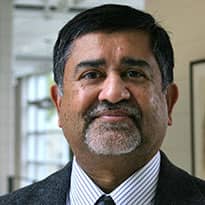
Ramesh Rao, Professor and Chair, DN3 Program, Columbus State University, Columbus, GA, is the author of two books on Indian politics and society and has written numerous op-eds for newspapers and magazines in India, the U.S., and the U.K. Ramesh served as Human Rights Coordinator and Executive Council member at the Hindu American Foundation between 2004-2013. He spent the first twenty-eight years of his life in India where he worked as a bank officer, a school teacher, and a copy editor. He received his MS in Mass Communication from the University of Southern Mississippi, and his PhD in Communication from Michigan State University. He taught at Truman State University in Kirksville, MO, and Longwood University in Farmville, VA, before he joined Columbus State University. He lives with wife Sujaya, and son Sudhanva in Columbus, GA.
Patheos Explore the world's faith through different perspectives on religion and spirituality! Patheos has the views of the prevalent religions and spiritualities of the world.
Ad-Free & Subscriber Log-In Subscription Support
- About Us
- 2026 Calendar
- Videos
- Podcasts
- Library of World Religions
- Faith In Media Tracker
- Advertise With Us
- Write for Us
- Privacy Policy
- Terms of Service
- Do Not Sell My Data
- Contact Us
- Radiant Digital
- Manage Newsletter Subscriptions
- Unsubscribe From Notifications
- Sitemap
Copyright 2008-2026, Patheos. All rights reserved.
Subscription Support Ad-Free & Subscriber Log-In
Follow Patheos