
BuddhistCatholicContemplativeEvangelicalGeneral ChristianHinduJewishLatter-day SaintMuslimNew VisionsProgressive Christian
Beliefs
- Buddhist
- Catholic
- Contemplative
- Evangelical
- General Christian
- Hindu
- Jewish
- Latter-day Saint
- More Voices
- Muslim
- New Visions
- Pagan
- Progressive Christian
Topics
- Religion News
- Food and Religion
- Sports and Religion
- Religious Art
- Religious Music and Entertainment
- Religious Events
- History and Religion
- Style and Religion
- Politics and Religion
- Women in Religion
- Recreation Outdoors and Religion
- Business Finance and Religion
- Careers Workplace and Religion
- Education and Religion
- Family Parenting and Religion
- Health Fitness and Religion
- Home and Religion
- Relationships and Religion
- Technology and Religion
- Travel and Religion
Columnists
- Buddhist Columnists
- Business Finance and Religion Columnists
- Careers Workplace and Religion Columnists
- Catholic Columnists
- Contemplative Columnists
- Education and Religion Columnists
- Evangelists Columnists
- Family Parenting and Religion Columnists
- General Christian Columnists
- Health Fitness and Religion Columnists
- Hindu Columnists
- History and Religion Columnists
- Home and Religion Columnists
- Jewish Columnists
- More Voices Columnists
- Latter Day Columnists
- Muslim Columnists
- New Visions Columnists
- Nonreligious Columnists
- Pagan Columnists
- Politics and Religion Columnists
- Progressive Columnists
- Recreation Outdoors and Religion Columnists
- Relationships and Religion Columnists
- Religion News Columnists
- Religious Art Columnists
- Religious Events Columnists
- Religious Music and Entertainment Columnists
- Sports and Religion Columnists
- Style and Religion Columnists
- Technology and Religion Columnists
- Travel and Religion Columnists
- Women in Religion Columnists
Resource Library
- 2026 Calendar
- Library of World Religions
- The 100 Most Holy Places on Earth
- Patheos Answers
- Podcasts
- Videos
- Faith Leaders Database
- Anglican Episcopalian
- Bahai
- Baptist
- Buddhism
- Christianity
- Confucianism
- Eastern Orthodoxy
- Hinduism
- Holiness and Pentecostal
- ISKCON
- Islam
- Judaism
- Lutheran
- Methodist
- The Church of Jesus Christ of Latter-day Saints
- New Age
- Paganism
- Presbytarian and Reformed
- Protestantism
- Religion Behind the Scenes
- Roman Catholic
- Scientology
- Shia Islam
- Sikhism
- Sufism
- Sunni Islam
- Taoism
- Zen
- See all religions
Research Tools
 Ad-Free & Subscriber Log-In Subscription Support
Ad-Free & Subscriber Log-In Subscription Support
Follow Patheos 

- Trending:
- Forgiveness
- |
- Marriage
- |
- Consciousness
- |
- Death Penalty
- |
- Election
- |
- Halloween
Faith Figures and Leaders Database
Jeffrey R. Holland
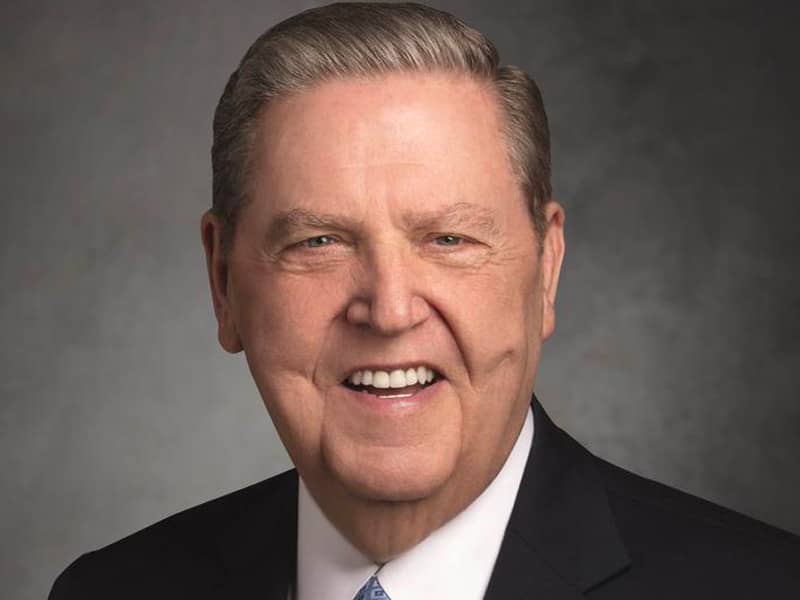
Image source: newsroom.churchofjesuschrist.org
- Faith: The Church of Jesus Christ of Latter-day Saints
- Profession: Apostle
- Lived: 1940 -
- Nationality: American
- Known for: 9th President of Brigham Young University
- Fun Fact: In 1974, Holland was appointed the Dean of Religious Education at BYU and was appointed as the eleventh commissioner of the Church Educational System.
- Fun Fact: After graduating from high school, his college education began at Dixie College and he also served a mission for the LDS Church in Great Britain.
- Fun Fact:
Jeffrey Roy Holland is an American educator and religious leader. He served as the ninth President of Brigham Young University and is a member of the Quorum of the Twelve Apostles of The Church of Jesus Christ of Latter-day Saints. As a member, Holland is accepted by the church as a prophet, seer, and revelator. Currently, he's the fourth most senior apostle in the church.
Early Life and Education
Holland was born and raised in St. George, Utah. His father, Frank D. Holland, was a convert to the LDS Church, while his mother, Alice, came from a long line of Latter-day Saints. He worked as a newspaper carrier, a grocery bagger, and a service station attendant as a youth.
After graduating from high school, he started his college education at Dixie College and served a mission for the LDS Church in Great Britain. He and Quentin Cook were missionary companions. When he got back, he transferred to Brigham Young University and graduated with a bachelor's degree in English.
He later earned a master's degree in Religious Education at BYU. He got his second master's and a Ph.D. in American Studies at Yale. At Yale, Holland studied with American literary scholar and critic R. W. B. Lewis and authored a dissertation on the religious sense of Mark Twain. He was an instructor at the LDS Church's institute in Hartford while he was a student at Yale.
After earning his master's degree, Holland became an Institute of Religion teacher in Hayward, California. He worked as an institute director in Seattle, Washington. In 1974, Holland was appointed the Dean of Religious Education at BYU and was appointed as the eleventh Commissioner of the Church Educational System two years later, replacing Neal A. Maxwell. In 1980, Holland became the ninth president of BYU, replacing Dallin H. Oaks.
Family Life
Holland and his wife, Patricia Terry, were married on June 7, 1963, in St. George Temple. They are the parents of three children. Their oldest son, Matthew S. Holland, served as president of Utah Valley University from 2009 to 2018 and has been a general authority since April 2020. Their youngest son, David F. Holland, is a professor at Harvard Divinity School.
Leadership at BYU
Holland served as an institute director in Salt Lake City after earning his Ph.D. He also served as director of the Melchizedek Priesthood MIA and as chair of the Young Adult Committee for the LDS Church. In 1974, at the age of thirty-three, Holland was appointed Dean of Religious Education at BYU. From 1976 to 1980, he served as the eleventh Commissioner of CES, replacing Neal A. Maxwell, who was called to the First Council of the Seventy. During this time, Holland also served on the board of directors of LDS Hospital and the Polynesian Cultural Center.
In 1980, Holland was appointed to succeed Dallin H. Oaks as president of BYU. After a search committee was formed, as a favorite candidate of the First Counselor in the LDS Church's First Presidency, N. Eldon Tanner, Holland was appointed less than two days later. As the church's Commissioner of Education when Oaks was released, Holland was supposed to compile a list of candidates to be the next BYU president.
Instead, he was unexpectedly notified of the First Presidency's intention to become president. After his appointment, rumors on campus cited the decision as "politically motivated." Before he arrived in Provo, Holland reduced the number of vice-presidents to four and increased the number of assistant and associate vice-presidents over academics.
A significant achievement during Holland's presidency was the founding of the BYU Jerusalem Center. Also during his presidency, the BYU Center for International Studies was renamed the David M. Kennedy Center for International Studies and had its role at BYU re-emphasized. There had been a large amount of debate about BYU's dress code throughout the previous administration. Holland clarified his support for dress code rules. Regarding violations of the Honor Code, if a student requested their names be removed from the church records, Holland instituted a policy in which they would have to receive special permission from the Board of Trustees to remain enrolled in school.
Back to Search Results

Search Our Database Again?
Faith Buddhism Christianity Confucianism Esotericism Hinduism ISKCON Islam Judaism New Thought Nonreligious Scientology Sikhism Society of Friends Taoism The Church of Jesus Christ of Latter-day Saints Zoroastrian
Era Early Church Early Medieval Early Modern Era Great Awakening Late Medieval Middle Ages Modern Era Prehistory Reformation Renaissance The Ancient Era The Common Era
Patheos Explore the world's faith through different perspectives on religion and spirituality! Patheos has the views of the prevalent religions and spiritualities of the world.
Ad-Free & Subscriber Log-In Subscription Support
- About Us
- 2026 Calendar
- Videos
- Podcasts
- Library of World Religions
- Faith In Media Tracker
- Advertise With Us
- Write for Us
- Privacy Policy
- Terms of Service
- Do Not Sell My Data
- Contact Us
- Radiant Digital
- Manage Newsletter Subscriptions
- Unsubscribe From Notifications
- Sitemap
Copyright 2008-2026, Patheos. All rights reserved.
Subscription Support Ad-Free & Subscriber Log-In
Follow Patheos