
BuddhistCatholicContemplativeEvangelicalGeneral ChristianHinduJewishLatter-day SaintMuslimNew VisionsProgressive Christian
Beliefs
- Buddhist
- Catholic
- Contemplative
- Evangelical
- General Christian
- Hindu
- Jewish
- Latter-day Saint
- More Voices
- Muslim
- New Visions
- Pagan
- Progressive Christian
Topics
- Religion News
- Food and Religion
- Sports and Religion
- Religious Art
- Religious Music and Entertainment
- Religious Events
- History and Religion
- Style and Religion
- Politics and Religion
- Women in Religion
- Recreation Outdoors and Religion
- Business Finance and Religion
- Careers Workplace and Religion
- Education and Religion
- Family Parenting and Religion
- Health Fitness and Religion
- Home and Religion
- Relationships and Religion
- Technology and Religion
- Travel and Religion
Columnists
- Buddhist Columnists
- Business Finance and Religion Columnists
- Careers Workplace and Religion Columnists
- Catholic Columnists
- Contemplative Columnists
- Education and Religion Columnists
- Evangelists Columnists
- Family Parenting and Religion Columnists
- General Christian Columnists
- Health Fitness and Religion Columnists
- Hindu Columnists
- History and Religion Columnists
- Home and Religion Columnists
- Jewish Columnists
- More Voices Columnists
- Latter Day Columnists
- Muslim Columnists
- New Visions Columnists
- Nonreligious Columnists
- Pagan Columnists
- Politics and Religion Columnists
- Progressive Columnists
- Recreation Outdoors and Religion Columnists
- Relationships and Religion Columnists
- Religion News Columnists
- Religious Art Columnists
- Religious Events Columnists
- Religious Music and Entertainment Columnists
- Sports and Religion Columnists
- Style and Religion Columnists
- Technology and Religion Columnists
- Travel and Religion Columnists
- Women in Religion Columnists
Resource Library
- 2026 Calendar
- Library of World Religions
- The 100 Most Holy Places on Earth
- Patheos Answers
- Podcasts
- Videos
- Faith Leaders Database
- Anglican Episcopalian
- Bahai
- Baptist
- Buddhism
- Christianity
- Confucianism
- Eastern Orthodoxy
- Hinduism
- Holiness and Pentecostal
- ISKCON
- Islam
- Judaism
- Lutheran
- Methodist
- The Church of Jesus Christ of Latter-day Saints
- New Age
- Paganism
- Presbytarian and Reformed
- Protestantism
- Religion Behind the Scenes
- Roman Catholic
- Scientology
- Shia Islam
- Sikhism
- Sufism
- Sunni Islam
- Taoism
- Zen
- See all religions
Research Tools
 Ad-Free & Subscriber Log-In Subscription Support
Ad-Free & Subscriber Log-In Subscription Support
Follow Patheos 

- Trending:
- Forgiveness
- |
- Marriage
- |
- Consciousness
- |
- Death Penalty
- |
- Election
- |
- Halloween
Pagan
Where Are the Pagan Fundamentalists?
July 12, 2012 by Gus diZerega
Pagans may or may not grant there is a transcendent dimension to Spirit. (I do.) But I think we all emphasize Spirit's immanent dimension. The sacred is in the earth, the sky, it is in everything (although sometimes very well hidden).
At least two facts come from this. First, everything in the world has a spiritual dimension if approached appropriately. Second, the ways to honor and engage with Spirit are therefore innumerable. These facts push us to employ mythos in a contemporary context, and to acknowledge that there are many ways to honor the sacred. Many of us have the Wheel of the Year in our celebratory cycle whereas African diasporic traditions do not. But it makes no sense to any Pagan I have ever encountered to say one is right and the other wrong. They are simply different ways of accessing and honoring Spirit as it exists in and through the world.
When we have them, our texts are mythic, as with the story of the Holly King and the Oak King. Often times one set of myths used within a tradition will differ from another set of myths also used in that tradition. If the God dies with the waning of the year, how can there be a Holly King co-equal with the Oak King? But these 'contradictions' are not signs of sloppiness, they are two different ways for us to grasp meanings that are beyond the ability of words alone to express. Both are fingers pointing towards the moon.
Our approach to the Sacred has little need for a sacred text giving a linear literal account of spiritual reality. When read as a narrative, a text cannot help but distort a spiritual experience because the text is linear and in vital respects the experience is not. Linear understanding guarantees missing their meaning, but texts encourage it for the superficial reader.
A scientist who considers himself an atheist, Geerat Vermeij, has been blind since childhood. Consequently he became extraordinarily tuned to other senses, such as sound. In his excellent The Evolutionary World, Vermeij wrote about a Panamanian rain forest in a way that demonstrates why a linear text can never bring us to the Sacred since it cannot even adequately describe the beauty of the world considered in a secular way.
Reading about a place is necessarily a sequential act, filtered through someone else's sensibilities. On one page one might read about trees; on another there is a vivid description of the termites or the frogs or the birds. Being in the forest, one experiences everything at once, and one notices things that others overlooked or considered too trivial to mention. Shapes, sounds, smells, and weather come together to offer the prepared mind an emergent conception of the whole. . . .
I am listening to an unrehearsed orchestra of many different instruments playing symphonies and concerti that are at once musically complex and pleasingly transparent. If only the twelve-tone composers of the twentieth century could have produced such lush textures.
When the world in all its wondrous variety and beauty and paradox is our 'text' fundamentalism seems to me about the most incoherent approach to spiritual understanding of which I can imagine. It never gets to first base and tarts up human pride with the trappings of the divine. That is why I call it a spiritual malady to which text based religions and particularly monotheistic text based religions are particularly prone to suffer.
I do not mean to say there can never be a Pagan fundamentalist. Fools exist in every spiritual community. But Pagan spirituality is particularly resistant to fundamentalism, and I believe this is one of its great virtues.
Page: 3 of 3
12/2/2022 9:03:17 PM
Pagan
Pointedly Pagan
Fundamentalism
Paganism
more at patheos
1

How Does 'Ǡḏôn Connect Jeanine Pirro & Cyberattacks?
2

3

EKKL Launches: A Brand-New Faith-Focused Entertainment Hub
4

Would Evidence of Aliens "Shatter" Christian Beliefs?
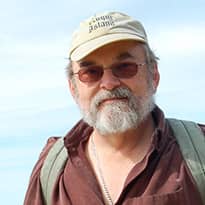
About Gus diZerega
Gus diZerega is a Gardnerian Elder with over 25 years practice, including six years close study with a Brazilian shaman. He has been active in interfaith work off and on for most of those 25 years as well. He has conducted workshops and given presentations on healing, shamanism, ecology and politics at Pagan gatherings in the United States and Canada. Follow Gus on Facebook. Gus blogs at Pointedly Pagan
Patheos Explore the world's faith through different perspectives on religion and spirituality! Patheos has the views of the prevalent religions and spiritualities of the world.
Ad-Free & Subscriber Log-In Subscription Support
- About Us
- 2026 Calendar
- Videos
- Podcasts
- Library of World Religions
- Faith In Media Tracker
- Advertise With Us
- Write for Us
- Privacy Policy
- Terms of Service
- Do Not Sell My Data
- Contact Us
- Radiant Digital
- Manage Newsletter Subscriptions
- Unsubscribe From Notifications
- Sitemap
Copyright 2008-2026, Patheos. All rights reserved.
Subscription Support Ad-Free & Subscriber Log-In
Follow Patheos