
BuddhistCatholicContemplativeEvangelicalGeneral ChristianHinduJewishLatter-day SaintMuslimNew VisionsProgressive Christian
Beliefs
- Buddhist
- Catholic
- Contemplative
- Evangelical
- General Christian
- Hindu
- Jewish
- Latter-day Saint
- More Voices
- Muslim
- New Visions
- Pagan
- Progressive Christian
Topics
- Religion News
- Food and Religion
- Sports and Religion
- Religious Art
- Religious Music and Entertainment
- Religious Events
- History and Religion
- Style and Religion
- Politics and Religion
- Women in Religion
- Recreation Outdoors and Religion
- Business Finance and Religion
- Careers Workplace and Religion
- Education and Religion
- Family Parenting and Religion
- Health Fitness and Religion
- Home and Religion
- Relationships and Religion
- Technology and Religion
- Travel and Religion
Columnists
- Buddhist Columnists
- Business Finance and Religion Columnists
- Careers Workplace and Religion Columnists
- Catholic Columnists
- Contemplative Columnists
- Education and Religion Columnists
- Evangelists Columnists
- Family Parenting and Religion Columnists
- General Christian Columnists
- Health Fitness and Religion Columnists
- Hindu Columnists
- History and Religion Columnists
- Home and Religion Columnists
- Jewish Columnists
- More Voices Columnists
- Latter Day Columnists
- Muslim Columnists
- New Visions Columnists
- Nonreligious Columnists
- Pagan Columnists
- Politics and Religion Columnists
- Progressive Columnists
- Recreation Outdoors and Religion Columnists
- Relationships and Religion Columnists
- Religion News Columnists
- Religious Art Columnists
- Religious Events Columnists
- Religious Music and Entertainment Columnists
- Sports and Religion Columnists
- Style and Religion Columnists
- Technology and Religion Columnists
- Travel and Religion Columnists
- Women in Religion Columnists
Resource Library
- 2026 Calendar
- Library of World Religions
- The 100 Most Holy Places on Earth
- Patheos Answers
- Podcasts
- Videos
- Faith Leaders Database
- Anglican Episcopalian
- Bahai
- Baptist
- Buddhism
- Christianity
- Confucianism
- Eastern Orthodoxy
- Hinduism
- Holiness and Pentecostal
- ISKCON
- Islam
- Judaism
- Lutheran
- Methodist
- The Church of Jesus Christ of Latter-day Saints
- New Age
- Paganism
- Presbytarian and Reformed
- Protestantism
- Religion Behind the Scenes
- Roman Catholic
- Scientology
- Shia Islam
- Sikhism
- Sufism
- Sunni Islam
- Taoism
- Zen
- See all religions
Research Tools
 Ad-Free & Subscriber Log-In Subscription Support
Ad-Free & Subscriber Log-In Subscription Support
Follow Patheos 

- Trending:
- Forgiveness
- |
- Marriage
- |
- Consciousness
- |
- Death Penalty
- |
- Election
- |
- Halloween
Pagan
Where Are the Pagan Fundamentalists?
July 12, 2012 by Gus diZerega
This all started to come apart in the West during the Reformation. The problem was that texts do not speak for themselves. They must be interpreted. As soon as you put a teaching into your own words, you have interpreted it. If you cannot put it into your own words, you do not understand it. Yet when put it into your own words, you have changed the message, even if trivially. When the dividing line between historical claims and myth is unclear, and accounts of supposed events such as the resurrection differ, divergence is guaranteed. With the best will in the world people will read the 'same' passage differently. And so, for all their claim to clarity, texts create disputation even while claiming to teach the one right way.
As the Reformation wore on, disputing Catholics and Protestants both discovered their arguments gained strength in many people's eyes when they could claim they derived from a literal rather than mythic reading of scripture. Increasingly mythos was abandoned as a valid form of spiritual knowledge. The later successes of science strengthened this trend, but its origins were religious: in a text that did not make clear what was literal truth and what was myth while claiming it and it alone taught the only road to salvation.
The Triumph of Will
Protestantism in general abandoned most mythos but most Protestants are not fundamentalists. One more step was needed to lay fundamentalism's foundations.
To cover a complex era very briefly but I hope not misleadingly, initially modern science was thought to support Christianity. When it increasingly did not, particularly with Darwin's discoveries, a crisis emerged for modern Christianity. The logocentric reasoning Christians had come to rely on for most of their doctrinal understanding now indicated scripture was deeply flawed.
Christians could return to mythic understanding, and some did. The Quakers offered another way out of this dilemma, but their path was a demanding one. Others argued that faith could trump all other evidence and faith was maintained by a will-to-believe. Logos could be taken as far as it could, and when it faltered, faith could take over. Mythos and logos were both subordinated to faith-as-will-to-believe. Soren Kierkegaard called this move the "leap to faith." W. W. Bartley describes this fascinating transformation from reason to its rejection n his Retreat to Commitment.
When my will trumps reason in all its forms truth ceases to be securely distinct from my desires. For many human will now became the determinant of what counted as religious truth. With this step, I would argue, religion's connecting human beings with the more-than-human weakened. The more religion became a matter of willed faith rather than reason whether as mythos or logos, the greater this disconnect.
Fundamentalists took this Protestant leap to faith a crucial step farther. Mainstream Protestantism made its leap to Jesus, Fundamentalism made its leap to scripture. In doing so it unavoidably exalted human interpretations of scripture, claiming them to reflect the Will of God. Fundamentalism is therefore a kind of ultimate spiritual narcissism. A good and kind person reads into scripture with that bias, and finds these qualities. A harsh and angry person reads into it with their very different bias and finds very different qualities. I would argue the first is in some genuine harmony with Spirit, but not due to scripture, but rather due to their kindness. The second is not in harmony at all. That so many fundamentalist leaders generally emphasize God's wrath, power, and willingness to punish "rebellion" says a great deal about what they initially brought to the table. But now their anger, fear, and willingness to punish have "divine" sanction. Their distance from Spirit is strengthened by their belief their personal attributes are in fact divine commandments.
Small wonder the fruits of so much Fundamentalism are so bitter.
Dominionism grows from those folks whose version of Biblical literalism leads them to believe they have divine sanction to rule others, a truly cosmic ego trip. They exhibit a Sauronic "spirituality" that ultimately worships power and domination.
And Pagans?
Spiritual experience is not logocentric. Among spiritual traditions I think it is universally true that when people relate their encounter with the sacred, they say it is beyond the power of their words to describe. That has certainly been my experience as well as of those I know. For those who try to communicate anyway, stories, metaphors and poetry give a better sense of their experience to others than does a logical syllogism. Poetry, stories, and metaphor can take us beyond the literal meaning to something more because they point beyond themselves. Mythos is the primary language of spirituality.
Article Continued On Next Page
Page: 2 of 3
12/2/2022 9:03:17 PM
Pagan
Pointedly Pagan
Fundamentalism
Paganism
more at patheos
1

Self-Obsession Is a Formula for Unhappiness
2

3

4

Stephen Hawking Said "Losers" Boast about IQ—That's Trump
About Gus diZerega
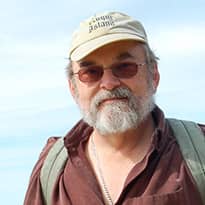
Gus diZerega is a Gardnerian Elder with over 25 years practice, including six years close study with a Brazilian shaman. He has been active in interfaith work off and on for most of those 25 years as well. He has conducted workshops and given presentations on healing, shamanism, ecology and politics at Pagan gatherings in the United States and Canada. Follow Gus on Facebook. Gus blogs at Pointedly Pagan
Patheos Explore the world's faith through different perspectives on religion and spirituality! Patheos has the views of the prevalent religions and spiritualities of the world.
Ad-Free & Subscriber Log-In Subscription Support
- About Us
- 2026 Calendar
- Videos
- Podcasts
- Library of World Religions
- Faith In Media Tracker
- Advertise With Us
- Write for Us
- Privacy Policy
- Terms of Service
- Do Not Sell My Data
- Contact Us
- Radiant Digital
- Manage Newsletter Subscriptions
- Unsubscribe From Notifications
- Sitemap
Copyright 2008-2026, Patheos. All rights reserved.
Subscription Support Ad-Free & Subscriber Log-In
Follow Patheos