
BuddhistCatholicContemplativeEvangelicalGeneral ChristianHinduJewishLatter-day SaintMuslimNew VisionsProgressive Christian
Beliefs
- Buddhist
- Catholic
- Contemplative
- Evangelical
- General Christian
- Hindu
- Jewish
- Latter-day Saint
- More Voices
- Muslim
- New Visions
- Pagan
- Progressive Christian
Topics
- Religion News
- Food and Religion
- Sports and Religion
- Religious Art
- Religious Music and Entertainment
- Religious Events
- History and Religion
- Style and Religion
- Politics and Religion
- Women in Religion
- Recreation Outdoors and Religion
- Business Finance and Religion
- Careers Workplace and Religion
- Education and Religion
- Family Parenting and Religion
- Health Fitness and Religion
- Home and Religion
- Relationships and Religion
- Technology and Religion
- Travel and Religion
Columnists
- Buddhist Columnists
- Business Finance and Religion Columnists
- Careers Workplace and Religion Columnists
- Catholic Columnists
- Contemplative Columnists
- Education and Religion Columnists
- Evangelists Columnists
- Family Parenting and Religion Columnists
- General Christian Columnists
- Health Fitness and Religion Columnists
- Hindu Columnists
- History and Religion Columnists
- Home and Religion Columnists
- Jewish Columnists
- More Voices Columnists
- Latter Day Columnists
- Muslim Columnists
- New Visions Columnists
- Nonreligious Columnists
- Pagan Columnists
- Politics and Religion Columnists
- Progressive Columnists
- Recreation Outdoors and Religion Columnists
- Relationships and Religion Columnists
- Religion News Columnists
- Religious Art Columnists
- Religious Events Columnists
- Religious Music and Entertainment Columnists
- Sports and Religion Columnists
- Style and Religion Columnists
- Technology and Religion Columnists
- Travel and Religion Columnists
- Women in Religion Columnists
Resource Library
- 2026 Calendar
- Library of World Religions
- The 100 Most Holy Places on Earth
- Patheos Answers
- Podcasts
- Videos
- Faith Leaders Database
- Anglican Episcopalian
- Bahai
- Baptist
- Buddhism
- Christianity
- Confucianism
- Eastern Orthodoxy
- Hinduism
- Holiness and Pentecostal
- ISKCON
- Islam
- Judaism
- Lutheran
- Methodist
- The Church of Jesus Christ of Latter-day Saints
- New Age
- Paganism
- Presbytarian and Reformed
- Protestantism
- Religion Behind the Scenes
- Roman Catholic
- Scientology
- Shia Islam
- Sikhism
- Sufism
- Sunni Islam
- Taoism
- Zen
- See all religions
Research Tools
 Ad-Free & Subscriber Log-In Subscription Support
Ad-Free & Subscriber Log-In Subscription Support
Follow Patheos 

- Trending:
- Forgiveness
- |
- Marriage
- |
- Consciousness
- |
- Death Penalty
- |
- Election
- |
- Halloween
Pagan
Late to the Feast
August 23, 2012 by P. Sufenas Virius Lupus
It's probably no secret to many people who are readers of my column, my blog, or my books that I've made a very particular decision in my life: knowing about ancient cultures, their gods, and their religions in-depth requires one to invest lots of time and energy into those studies, and thus knowledge of current cultures, events, and trends often suffers as a result. Sure, I refer to Lady GaGa on my blog and in one of my books (and, if one was at PantheaCon in 2011, in my ritual!), but I was a late convert to The Eleventh Muse's repertoire. While pop cultural matters are not unknown as material on my blog, they're also not the main focus, and I usually only refer to them when there is some perceived connection by myself (however tenuous!) to any of the variety of things that I discuss regularly.
So, it's also probably no surprise that I don't often see films when they come out in the cinema; and, if there's a popular book or set of books people are reading, I've probably not read them, and most likely don't have plans to do so in the future. Such is life.
What I do often enjoy, though—contrary to what most fans of literature might assume—is seeing a film that is based on a book. Certainly, I know that film and literature are different media, and thus have different rules and different ways of portraying things, to the extent that no film, no matter how faithful to its literary source, will ever quite capture all of it. But, I'm an extremely slow reader (which is one of the reasons why I am so choosy about what I do devote the time and energy to read). So, if I can watch a two-hour film rather than sit down with a book that might take me six hours to read (if it is 250 pages . . . and what novel is that short these days?), I'm happy to do that to be "caught up" to some degree on whatever the story happens to be. I know Alan Moore would choke on his own beard if he read this, but alas, that's the way of things for me.
Thus, I found myself recently watching the DVD of The Hunger Games, after having seen all the hype around it earlier this year, and being told by many friends and family that I have to read it.
Yes, I'm very late to this particular dinner party, and that metaphor seems somehow apt in discussing that book/film phenomenon. Nonetheless, here we are.
While there are a thousand themes one could pick up on in discussing this film, within or outside of a religious context—including commodification of human life, the ridiculousness of reality shows, fascist elements in government, or the desensitization to violence and the easy resort to violence amongst youths—I came away from my 146-minute viewing experience thinking of one major theme.
Human sacrifice.
That might seem surprising to some readers, but even though it's not stated outright in the film, it is hinted at pretty strongly during various scenes. When the President addresses the Tributes as they ride in on chariots for the first time, he salutes them for their courage and their "sacrifice." The grand procession on chariots, and the implied gesture of "Those who are about to die salute you" certainly evokes images of gladiators and the "good ole' days" of polytheist Rome. I was also reminded, since the entire phenomenon of the Hunger Games in the film (and books) came about as a kind of punishment and reminder of the rebellion of the various districts, that something somewhat similar occurred in ancient Rome after the sacking of the city by the Gauls in the early 4th century B.C.E. The Romans were pretty averse to human sacrifice, except where the Gauls were concerned, and the sacrifice of a Gaul in a particular manner to alleviate their fears of another uprising of the Gauls did take place in Rome from time to time—but, since the Gauls didn't exactly count as "human" for Republican-period Romans, it wasn't really human sacrifice.
That's often the insidious thing about human sacrifice: it still goes on to the present day, it's just not called "human sacrifice" nor is it recognized as such. And no, I don't mean the specter of "ritual murders" (which usually have no basis in fact whatsoever) that remains to this very day amongst some deluded monotheists, nor do I mean strange customs of obscure tribes in third-world countries and secluded tropical islands.
No, we don't send twelve-to-eighteen-year-old children to a central capital city to fight for their lives after a lottery. But, we do send eighteen-year-olds into combat in other countries, and they are often people who have enlisted in the armed forces not because they wanted to go and fight wars or even serve their country, but because they are dirt poor, or come from economically disadvantaged backgrounds and the only viable option for them is to trade their life and health and bodily integrity to their government for a paycheck, and the possibility of education and future employment (the latter two things of which often don't come about, for various reasons).
Article Continued On Next Page
Page: 1 of 2
12/2/2022 9:03:17 PM
Pagan
Queer I Stand
Violence
History
Hunger Games
politics
Ritual
Sacrifice
War
Paganism
more at patheos
1

2

The God Paradox | Bible Sales Surging as Hope is Dwindling
3
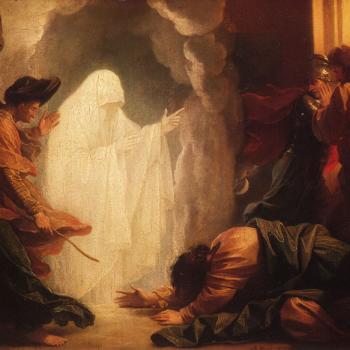
Origen, Eustathius, and the Witch of Endor
4

Chapter 1: The Quest to End Burned Out, Part 1

About P. Sufenas Virius Lupus
P. Sufenas Virius Lupus is a metagender and a founding member of the Ekklesía Antínoou (a queer, Graeco-Roman-Egyptian syncretist reconstructionist polytheist religious group dedicated to Antinous, the deified lover of the Roman Emperor Hadrian and other related gods and divine figures). E is a contributing member of Neos Alexandria and a Celtic Reconstructionist pagan in the filidecht and gentlidecht traditions. Follow Lupus' work on the Aedicula Antinoi blog.
Patheos Explore the world's faith through different perspectives on religion and spirituality! Patheos has the views of the prevalent religions and spiritualities of the world.
Ad-Free & Subscriber Log-In Subscription Support
- About Us
- 2026 Calendar
- Videos
- Podcasts
- Library of World Religions
- Faith In Media Tracker
- Advertise With Us
- Write for Us
- Privacy Policy
- Terms of Service
- Do Not Sell My Data
- Contact Us
- Radiant Digital
- Manage Newsletter Subscriptions
- Unsubscribe From Notifications
- Sitemap
Copyright 2008-2026, Patheos. All rights reserved.
Subscription Support Ad-Free & Subscriber Log-In
Follow Patheos