
BuddhistCatholicContemplativeEvangelicalGeneral ChristianHinduJewishLatter-day SaintMuslimNew VisionsProgressive Christian
Beliefs
- Buddhist
- Catholic
- Contemplative
- Evangelical
- General Christian
- Hindu
- Jewish
- Latter-day Saint
- More Voices
- Muslim
- New Visions
- Pagan
- Progressive Christian
Topics
- Religion News
- Food and Religion
- Sports and Religion
- Religious Art
- Religious Music and Entertainment
- Religious Events
- History and Religion
- Style and Religion
- Politics and Religion
- Women in Religion
- Recreation Outdoors and Religion
- Business Finance and Religion
- Careers Workplace and Religion
- Education and Religion
- Family Parenting and Religion
- Health Fitness and Religion
- Home and Religion
- Relationships and Religion
- Technology and Religion
- Travel and Religion
Columnists
- Buddhist Columnists
- Business Finance and Religion Columnists
- Careers Workplace and Religion Columnists
- Catholic Columnists
- Contemplative Columnists
- Education and Religion Columnists
- Evangelists Columnists
- Family Parenting and Religion Columnists
- General Christian Columnists
- Health Fitness and Religion Columnists
- Hindu Columnists
- History and Religion Columnists
- Home and Religion Columnists
- Jewish Columnists
- More Voices Columnists
- Latter Day Columnists
- Muslim Columnists
- New Visions Columnists
- Nonreligious Columnists
- Pagan Columnists
- Politics and Religion Columnists
- Progressive Columnists
- Recreation Outdoors and Religion Columnists
- Relationships and Religion Columnists
- Religion News Columnists
- Religious Art Columnists
- Religious Events Columnists
- Religious Music and Entertainment Columnists
- Sports and Religion Columnists
- Style and Religion Columnists
- Technology and Religion Columnists
- Travel and Religion Columnists
- Women in Religion Columnists
Resource Library
- 2026 Calendar
- Library of World Religions
- The 100 Most Holy Places on Earth
- Patheos Answers
- Podcasts
- Videos
- Faith Leaders Database
- Anglican Episcopalian
- Bahai
- Baptist
- Buddhism
- Christianity
- Confucianism
- Eastern Orthodoxy
- Hinduism
- Holiness and Pentecostal
- ISKCON
- Islam
- Judaism
- Lutheran
- Methodist
- The Church of Jesus Christ of Latter-day Saints
- New Age
- Paganism
- Presbytarian and Reformed
- Protestantism
- Religion Behind the Scenes
- Roman Catholic
- Scientology
- Shia Islam
- Sikhism
- Sufism
- Sunni Islam
- Taoism
- Zen
- See all religions
Research Tools
 Ad-Free & Subscriber Log-In Subscription Support
Ad-Free & Subscriber Log-In Subscription Support
Follow Patheos 

- Trending:
- Forgiveness
- |
- Marriage
- |
- Consciousness
- |
- Death Penalty
- |
- Election
- |
- Halloween
Catholic
Where Now for the Church of England?
November 22, 2012 by Dwight Longenecker
Twenty years ago, in November 1992, I was a priest in the Church of England. On that November afternoon I sat watching a TV screen waiting on the General Synod of the Church of England to vote for or against the ordination of women to the priesthood. They voted in favor.
The decision caused me to look again at the authority structures in the Church of England. In the debate on women priests, good people were on both sides of the argument. People on both sides thought they were doing the will of God. Both sides sincerely believed Scripture and reason and truth were on their side. Men and women on both sides were bitterly opposed. All thought they were on the side of the angels and the other side were dancing with the devil.
The mechanism for deciding such things in the Church of England is a body called the General Synod. Made up of three houses—Bishops, Clergy, and Laity—the General Synod is elected from the grass roots up across all of the Church of England. It is supposed to be representative. However, because it is an elected body, and because this body makes such important decisions, the elections are held in the usual atmosphere of campaigning and working to attain the 'right' number of votes.
During the debate over women's ordination to the priesthood twenty years ago I came to question the whole methodology of Church of England's decision making. How could an elected body know what was best for the whole church? Furthermore, the voting process rarely convinced anyone who opposed the result of the vote. This is because religious members did not consider their view to be simply a matter of opinion, but to be God's will. If their side lost they did not say, "Ah well, the Synod has spoken. That settles it." Instead they cried, "We did not rally enough votes. Back to the trenches! Let's get it through next time!" They then spent the next five years campaigning for the change that was voted down or they spent the next five years campaigning for ways to repeal the change they had voted against.
For an Anglican believer the sources of authority are the Sacred Scriptures, human reason, and tradition. But this begs the question, "Who interprets Sacred Scriptures? Whose human reasoning is trustworthy?" and "Which tradition?" In the 1992 debate on women's ordination, and in the present debate on women in the episcopate both sides appealed to Scripture, reason, and tradition. Both sides were utterly convinced they were right. Who is to say which side had it right? Flip a coin? Roll the dice? General Synod? Who cooked up the General Synod in the first place? Where did it come from and why should it necessarily have the skills and experience to decide on such matters?
So an elected body makes the decision. That's when I made a decision too. I decided to look again at the Catholic Church. She offered a decision making process which was very impressive. When trying to decide on a difficult issue the Catholics considered the witness of Scripture, but she also had a final authority to interpret the Scripture. Anyone can read the Bible, but the Catholic Church drew on an international body of scholars and theologians and bishops to interpret the Scriptures correctly and with authority.
The Catholic Church also had a capacity for listening to the voice of tradition not only within one national church, but to the voice of tradition around the world and down through two thousand years of history. She considered the voice of the Eastern Orthodox. She weighed up the voices of what G.K. Chesterton called "the greatest majority"—the dead. That is to say she weighed up the voices of all the saints and theologians and bishops and doctors of the church who had thought and prayed and fought and prayed down through the ages.
The Catholic Church was also able to look at current issues from a much wider perspective. She was not concerned merely with the believers in one country and in one culture. Instead, Catholics weighed up the concerns of all Catholics everywhere. The demands for women's ordination, for example, were mostly from the developed countries. Rome looked at the big picture and considered what Catholics in the poorer countries thought. They listened to those in the developing world who otherwise had no voice.
Finally, Rome was not swayed by considerations of political correctness. She was not concerned about what sold or what was popular or what might be considered polite or impolite. She did not have to please the British parliament or the Queen of England. The Catholic Church's concern was with the truth of the Christian faith as revealed by God. If that sold well amongst the people, all well and good. If it did not, well then, bring on the lions, the coliseum, and the crowds.
After much consideration and consultation, in May 1994—two years after the Anglican decision to ordain women as priests—Pope John Paul II came out with a short document. Titled Ordinatio Sacerdotalis, the letter goes through earlier papal documents from Pope Paul VI and expounds the reasons why only men are chosen as priests. It refers to Scripture and tradition and concludes in very clear terms:
Article Continued On Next Page
Page: 1 of 2
12/2/2022 9:05:40 PM
Catholic
Father Dwight Longenecker
Anglicanism
Bishops
Church of England
Leadership
Women
Christianity
Roman Catholicism
more at patheos
1
Learning to Love Without Carrying — A Spiritual Practice
2
3
Word on Fire Launches Luminor with Kreeft Novel
4
To the Christians who are Excited about the End of the World
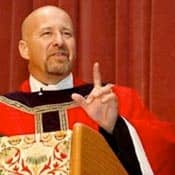
About Dwight Longenecker
Fr. Dwight Longenecker is the Parish Priest of Our Lady of the Rosary Church in Greenville, South Carolina. His latest book is Catholicism Pure and Simple.
Patheos Explore the world's faith through different perspectives on religion and spirituality! Patheos has the views of the prevalent religions and spiritualities of the world.
Ad-Free & Subscriber Log-In Subscription Support
- About Us
- 2026 Calendar
- Videos
- Podcasts
- Library of World Religions
- Faith In Media Tracker
- Advertise With Us
- Write for Us
- Privacy Policy
- Terms of Service
- Do Not Sell My Data
- Contact Us
- Radiant Digital
- Manage Newsletter Subscriptions
- Unsubscribe From Notifications
- Sitemap
Copyright 2008-2026, Patheos. All rights reserved.
Subscription Support Ad-Free & Subscriber Log-In
Follow Patheos