
BuddhistCatholicContemplativeEvangelicalGeneral ChristianHinduJewishLatter-day SaintMuslimNew VisionsProgressive Christian
Beliefs
- Buddhist
- Catholic
- Contemplative
- Evangelical
- General Christian
- Hindu
- Jewish
- Latter-day Saint
- More Voices
- Muslim
- New Visions
- Pagan
- Progressive Christian
Topics
- Religion News
- Food and Religion
- Sports and Religion
- Religious Art
- Religious Music and Entertainment
- Religious Events
- History and Religion
- Style and Religion
- Politics and Religion
- Women in Religion
- Recreation Outdoors and Religion
- Business Finance and Religion
- Careers Workplace and Religion
- Education and Religion
- Family Parenting and Religion
- Health Fitness and Religion
- Home and Religion
- Relationships and Religion
- Technology and Religion
- Travel and Religion
Columnists
- Buddhist Columnists
- Business Finance and Religion Columnists
- Careers Workplace and Religion Columnists
- Catholic Columnists
- Contemplative Columnists
- Education and Religion Columnists
- Evangelists Columnists
- Family Parenting and Religion Columnists
- General Christian Columnists
- Health Fitness and Religion Columnists
- Hindu Columnists
- History and Religion Columnists
- Home and Religion Columnists
- Jewish Columnists
- More Voices Columnists
- Latter Day Columnists
- Muslim Columnists
- New Visions Columnists
- Nonreligious Columnists
- Pagan Columnists
- Politics and Religion Columnists
- Progressive Columnists
- Recreation Outdoors and Religion Columnists
- Relationships and Religion Columnists
- Religion News Columnists
- Religious Art Columnists
- Religious Events Columnists
- Religious Music and Entertainment Columnists
- Sports and Religion Columnists
- Style and Religion Columnists
- Technology and Religion Columnists
- Travel and Religion Columnists
- Women in Religion Columnists
Resource Library
- 2026 Calendar
- Library of World Religions
- The 100 Most Holy Places on Earth
- Patheos Answers
- Podcasts
- Videos
- Faith Leaders Database
- Anglican Episcopalian
- Bahai
- Baptist
- Buddhism
- Christianity
- Confucianism
- Eastern Orthodoxy
- Hinduism
- Holiness and Pentecostal
- ISKCON
- Islam
- Judaism
- Lutheran
- Methodist
- The Church of Jesus Christ of Latter-day Saints
- New Age
- Paganism
- Presbytarian and Reformed
- Protestantism
- Religion Behind the Scenes
- Roman Catholic
- Scientology
- Shia Islam
- Sikhism
- Sufism
- Sunni Islam
- Taoism
- Zen
- See all religions
Research Tools
 Ad-Free & Subscriber Log-In Subscription Support
Ad-Free & Subscriber Log-In Subscription Support
Follow Patheos 

- Trending:
- Forgiveness
- |
- Marriage
- |
- Consciousness
- |
- Death Penalty
- |
- Election
- |
- Halloween
Catholic
Lumen Fidei, Chapter 3: Unity, Unity, Unity
October 16, 2013 by Pat Gohn
Note: This article continues a chapter-by-chapter examination of Francis' first encyclical, Lumen Fidei (LF). Chapter three is entitled "I Delivered to You What I Also Have Received." (1 Cor. 15:3) To find articles on the introduction and previous chapters, go here.
Have you ever traced the roots of your faith, examining the connections that brought you to Christ? It's an exercise in gratitude, for Christian faith does not magically appear in someone's life; it doesn't spring up from the ether. It comes from Christ himself, and is transmitted to us through the ministry of the Body of Christ, the Church. "It is impossible to believe on our own." (Lumen Fidei, 39)
We believers should be grateful for the gift of faith.
In the Easter Vigil liturgy there's a beautiful ritual wherein Catholics symbolically reenact the process of receiving and passing on the faith. The Christ candle—symbolizing the Risen Christ whose light conquers all darkness—is dramatically lit from the Easter fire. It illumines the Church as its light is passed to all the members of the congregation, who hold tapers of their own. The flame from the Christ candle is passed on, one to another, until everyone's candles are aglow.
Faith is passed on... by contact, from one person to another, just as one candle is lit from another. (LF, 37)
Lumen Fidei celebrates how faith is handed down through the Church, the mother of our faith. The Church and her members communicate not just an idea, a story, or head-knowledge, but an encounter with God, and an invitation to enter into communion with the Body of Christ.
The new light born of an encounter with the true God, a light which touches us at the core of our being and engages our minds, wills and emotions, opening us to relationships lived in communion. (LF, 40)
The Church's special means of transmitting the fullness of this encounter reside within its sacraments "in which visible and material realities are seen to point beyond themselves to the mystery of the eternal." (LF, 40)
While the gospel message may have been preached to an individual in preparation to receive the faith, it is most often baptism—ideally received during this Easter Vigil—where the first dynamic transmission of faith occurs. In baptism a person is changed, becoming a new creation, and an adopted child of God. The baptized person enters a new context, a new environment, and begins a new way of acting in the Church.
Baptism makes us see, then, that faith is not the achievement of isolated individuals; in not an act performed on his own, but rather something that must be received by entering into the ecclesial communion which transmits God's grace... No one baptizes himself, just as no one comes into the world by himself. Baptism is something we receive. (LF, 41)
Baptism cannot be earned or achieved; it is a gift, bestowed freely, of true encounter with God, after which we are no longer the same. We are changed in name and identity; as adoptive children of God we are sharers in divine nature. Our souls, by analogy, now possess the spiritual DNA of God. God touches us and remains with us.
The encyclical underscores the strong link between faith and baptism that often comes through the family, where parents pass on the faith to their children. In this way, families cooperate with the Church's mission to raise up new disciples—fostering their growth and communion with the church through reception of the other sacraments.
In the celebration of the sacraments, the Church hands down her memory, especially through the profession of faith...
The believer thus states that the core of all being, the inmost secret of all reality, is the divine communion [with the Trinity]...
The believer who professes his or her faith is taken up, as it were, into the truth being professed. He or she cannot recite the words of the creed without being changed, without becoming part of that history of love which embraces us and expands our being, making it part of a great fellowship... namely, the Church. (LF, 45)
Faith puts us on a journey that flows from the encounter with God. Our relationship with God leads us to respond with trust in the goodness of God—"the origin and upholder of all things" and "to be guided by this love." (LF, 46)
Love is never a dead end; it is never isolating. It always moves outward to others. The Christian's life becomes a response to the goodness of God and communion with God calls us to share this communion with others.
Lumen Fidei mentions two elements that are essential in the transmission of our faith. The first is the Lord's Prayer. Through it we learn that Jesus teaches about the personal nature of this relationship with God the Father. The second is the Decalogue, or the Ten Commandments, that undergird the moral life of believers.
Article Continued On Next Page
Page: 1 of 2
12/2/2022 9:05:39 PM
Year of Faith
Catholic
A Word in Season
Doctrine
Faith
Pope Francis
Christianity
Roman Catholicism
more at patheos
1
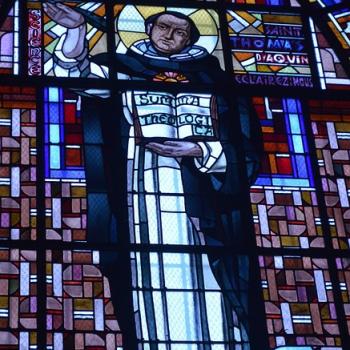
Two Types of Merit in the Christian Life
2

3

Forget Algorithms—Gen AI Feedback Is the Real Advantage
4

Wyndam Clark Wins BMW Championship

About Pat Gohn
Pat Gohn is a Catholic writer, speaker, and the host of the Among Women Podcast and blog. Her book Blessed, Beautiful and Bodacious: Celebrating the Gift of Catholic Womanhood is published by Ave Maria Press.
Patheos Explore the world's faith through different perspectives on religion and spirituality! Patheos has the views of the prevalent religions and spiritualities of the world.
Ad-Free & Subscriber Log-In Subscription Support
- About Us
- 2026 Calendar
- Videos
- Podcasts
- Library of World Religions
- Faith In Media Tracker
- Advertise With Us
- Write for Us
- Privacy Policy
- Terms of Service
- Do Not Sell My Data
- Contact Us
- Radiant Digital
- Manage Newsletter Subscriptions
- Unsubscribe From Notifications
- Sitemap
Copyright 2008-2026, Patheos. All rights reserved.
Subscription Support Ad-Free & Subscriber Log-In
Follow Patheos