
BuddhistCatholicContemplativeEvangelicalGeneral ChristianHinduJewishLatter-day SaintMuslimNew VisionsProgressive Christian
Beliefs
- Buddhist
- Catholic
- Contemplative
- Evangelical
- General Christian
- Hindu
- Jewish
- Latter-day Saint
- More Voices
- Muslim
- New Visions
- Pagan
- Progressive Christian
Topics
- Religion News
- Food and Religion
- Sports and Religion
- Religious Art
- Religious Music and Entertainment
- Religious Events
- History and Religion
- Style and Religion
- Politics and Religion
- Women in Religion
- Recreation Outdoors and Religion
- Business Finance and Religion
- Careers Workplace and Religion
- Education and Religion
- Family Parenting and Religion
- Health Fitness and Religion
- Home and Religion
- Relationships and Religion
- Technology and Religion
- Travel and Religion
Columnists
- Buddhist Columnists
- Business Finance and Religion Columnists
- Careers Workplace and Religion Columnists
- Catholic Columnists
- Contemplative Columnists
- Education and Religion Columnists
- Evangelists Columnists
- Family Parenting and Religion Columnists
- General Christian Columnists
- Health Fitness and Religion Columnists
- Hindu Columnists
- History and Religion Columnists
- Home and Religion Columnists
- Jewish Columnists
- More Voices Columnists
- Latter Day Columnists
- Muslim Columnists
- New Visions Columnists
- Nonreligious Columnists
- Pagan Columnists
- Politics and Religion Columnists
- Progressive Columnists
- Recreation Outdoors and Religion Columnists
- Relationships and Religion Columnists
- Religion News Columnists
- Religious Art Columnists
- Religious Events Columnists
- Religious Music and Entertainment Columnists
- Sports and Religion Columnists
- Style and Religion Columnists
- Technology and Religion Columnists
- Travel and Religion Columnists
- Women in Religion Columnists
Resource Library
- 2026 Calendar
- Library of World Religions
- The 100 Most Holy Places on Earth
- Patheos Answers
- Podcasts
- Videos
- Faith Leaders Database
- Anglican Episcopalian
- Bahai
- Baptist
- Buddhism
- Christianity
- Confucianism
- Eastern Orthodoxy
- Hinduism
- Holiness and Pentecostal
- ISKCON
- Islam
- Judaism
- Lutheran
- Methodist
- The Church of Jesus Christ of Latter-day Saints
- New Age
- Paganism
- Presbytarian and Reformed
- Protestantism
- Religion Behind the Scenes
- Roman Catholic
- Scientology
- Shia Islam
- Sikhism
- Sufism
- Sunni Islam
- Taoism
- Zen
- See all religions
Research Tools
 Ad-Free & Subscriber Log-In Subscription Support
Ad-Free & Subscriber Log-In Subscription Support
Follow Patheos 

- Trending:
- Forgiveness
- |
- Marriage
- |
- Consciousness
- |
- Death Penalty
- |
- Election
- |
- Halloween
Catholic
Communion Rails: Restoring a Sense of the Sacred
January 14, 2013 by Greg Kandra
Okay. I've changed my mind. It's time to bring back the altar rail.
Hey, I'm as surprised as anyone else that I feel this way.
Two years ago, I rhapsodized on the Feast of Corpus Christi on the theology behind standing to receive communion, and defended it. And why not? I've received that way for most of my adult life; I even remember the Latin church's experiment with intinction back in the '70s. Standing and in-the-hand always seemed to me sensible, practical and—with proper catechesis—appropriate.
But now, after several years of standing on the other side of the ciborium—first as an Extraordinary Minister of Holy Communion, now as a deacon—and watching what goes on, I've had about enough.
I've watched a mother receive communion, her toddler in tow, then take it back to the pew and share it with him like a cookie.
At least four or five times a year, I have to stop someone who just takes the host and wanders away with it and ask them to consume it on the spot.
Once or twice a month I encounter the droppers. Many are well-intentioned folks who somewhere, somehow drop the host or it slides out of their hands and Jesus tumbles to the floor.
A couple times a year I get the take-out crowd. They receive the host properly, and then pull out a hanky and ask if they can take another one home to a sick relative.
Beyond that, I'm reminded week after week that people have no uniform way to receive in the hand. There's the reverent "hands-as-throne" approach; there's the "Gimme five," one-hand-extended style; there are the notorious "body snatchers" who reach up and seize the host to pop into their mouths like an after-dinner mint; and there are the vacillating undecideds who approach with hands slightly cupped and lips parted. Where do you want it and how??
After experiencing this too often, in too many places, under a variety of circumstances, I've decided: it's got to stop. Catechesis is fruitless. We've tried. You can show people how it's done; you can instruct them; you can post reminders in the bulletin and give talks from the pulpit. It does no good. Again and again, there is a sizable minority of the faithful who are just clueless—or, worse, indifferent.
The fact is, we fumbling humans need external reminders—whether smells and bells, or postures and gestures—to reinforce what we are doing, direct our attention, and make us get over ourselves. Receiving communion is about something above us, and beyond us. It should transcend what we normally do. But what does it say about the state of our worship and our reception of the Eucharist that it has begun to resemble a trip to the DMV?
Our modern liturgy has become too depleted of reverence and awe, of wonder and mystery. The signs and symbols that underscored the mystery—the windows of stained glass, the chants of Latin, the swirls of incense at the altar—vanished and were replaced by . . . what? Fifty shades of beige? Increasingly churches now resemble warehouses, and the Body of Christ is just one more commodity we stockpile and give out.
Can kneeling to receive on the tongue help alleviate some of this? Well, it can't hurt. And for this reason: to step up to a communion rail, and kneel, and receive on the tongue, is an act of utter and unabashed humility. In that posture to receive the Body of Christ, you become less so that you can then become more. It requires a submission of will and clear knowledge of what you are doing, why you are doing it, and what is about to happen to you.
Frankly, we should not only be humbled, but intimidated enough to ask ourselves if we are really spiritually ready to partake of the sacrament. Kneeling means you can't just go up and receive without knowing how it's properly done. It demands not only a sense of focus and purpose, but also something else, something that has eluded our worship for two generations.
It demands a sense of the sacred. It challenges us to kneel before wonder, and bow before grace. It insists that we not only fully understand what is happening, but that we fully appreciate the breathtaking generosity behind it. It asks us to be mindful of what "Eucharist" really means: thanksgiving.
I don't see that much today. It's gone. We need to reclaim it. Pope Benedict XVI seems to agree. He has decided he will only give communion at papal Masses to those who kneel and receive on the tongue. He was gently making a liturgical point. Are we paying attention?
After what I've seen, I agree with him. We need to get off our feet, and on our knees.
Bring back the communion rail. It's time.
12/2/2022 9:05:38 PM
Year of Faith
Catholic
All Things New
Eucharist
Liturgy
Mystery
Worship
Christianity
Roman Catholicism
more at patheos
1

The Unbreakable Promise: The Truth About God's Covenant
2

This Darkness In Me: Where Girard and Jung Intersect
3

Respectability Isn't Righteousness: The Parable of Two Sons
4

Pentecost And The Infilling Of The Holy Spirit-A Prayer
About Greg Kandra
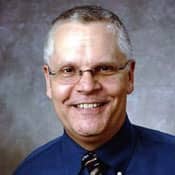
Deacon Greg Kandra is a Roman Catholic Deacon serving the Diocese of Brooklyn, NY, and an award-winning journalist.
Patheos Explore the world's faith through different perspectives on religion and spirituality! Patheos has the views of the prevalent religions and spiritualities of the world.
Ad-Free & Subscriber Log-In Subscription Support
- About Us
- 2026 Calendar
- Videos
- Podcasts
- Library of World Religions
- Faith In Media Tracker
- Advertise With Us
- Write for Us
- Privacy Policy
- Terms of Service
- Do Not Sell My Data
- Contact Us
- Radiant Digital
- Manage Newsletter Subscriptions
- Unsubscribe From Notifications
- Sitemap
Copyright 2008-2026, Patheos. All rights reserved.
Subscription Support Ad-Free & Subscriber Log-In
Follow Patheos