
BuddhistCatholicContemplativeEvangelicalGeneral ChristianHinduJewishLatter-day SaintMuslimNew VisionsProgressive Christian
Beliefs
- Buddhist
- Catholic
- Contemplative
- Evangelical
- General Christian
- Hindu
- Jewish
- Latter-day Saint
- More Voices
- Muslim
- New Visions
- Pagan
- Progressive Christian
Topics
- Religion News
- Food and Religion
- Sports and Religion
- Religious Art
- Religious Music and Entertainment
- Religious Events
- History and Religion
- Style and Religion
- Politics and Religion
- Women in Religion
- Recreation Outdoors and Religion
- Business Finance and Religion
- Careers Workplace and Religion
- Education and Religion
- Family Parenting and Religion
- Health Fitness and Religion
- Home and Religion
- Relationships and Religion
- Technology and Religion
- Travel and Religion
Columnists
- Buddhist Columnists
- Business Finance and Religion Columnists
- Careers Workplace and Religion Columnists
- Catholic Columnists
- Contemplative Columnists
- Education and Religion Columnists
- Evangelists Columnists
- Family Parenting and Religion Columnists
- General Christian Columnists
- Health Fitness and Religion Columnists
- Hindu Columnists
- History and Religion Columnists
- Home and Religion Columnists
- Jewish Columnists
- More Voices Columnists
- Latter Day Columnists
- Muslim Columnists
- New Visions Columnists
- Nonreligious Columnists
- Pagan Columnists
- Politics and Religion Columnists
- Progressive Columnists
- Recreation Outdoors and Religion Columnists
- Relationships and Religion Columnists
- Religion News Columnists
- Religious Art Columnists
- Religious Events Columnists
- Religious Music and Entertainment Columnists
- Sports and Religion Columnists
- Style and Religion Columnists
- Technology and Religion Columnists
- Travel and Religion Columnists
- Women in Religion Columnists
Resource Library
- 2026 Calendar
- Library of World Religions
- The 100 Most Holy Places on Earth
- Patheos Answers
- Podcasts
- Videos
- Faith Leaders Database
- Anglican Episcopalian
- Bahai
- Baptist
- Buddhism
- Christianity
- Confucianism
- Eastern Orthodoxy
- Hinduism
- Holiness and Pentecostal
- ISKCON
- Islam
- Judaism
- Lutheran
- Methodist
- The Church of Jesus Christ of Latter-day Saints
- New Age
- Paganism
- Presbytarian and Reformed
- Protestantism
- Religion Behind the Scenes
- Roman Catholic
- Scientology
- Shia Islam
- Sikhism
- Sufism
- Sunni Islam
- Taoism
- Zen
- See all religions
Research Tools
 Ad-Free & Subscriber Log-In Subscription Support
Ad-Free & Subscriber Log-In Subscription Support
Follow Patheos 

- Trending:
- Forgiveness
- |
- Marriage
- |
- Consciousness
- |
- Death Penalty
- |
- Election
- |
- Halloween
Buddhist
Quietude: 'Tis a Gift to Be Silent
February 16, 2015 by Gary Gach
People often ask me, "How can I find a Buddhist meditation center where I live?" It's often someone new to meditation entirely. So I recommend that they look for a Quaker center in town. No worry then whether it's to be Zen silence, Tibetan silence, or Vipassana silence. It can be so rewarding to sit with other human beings, feeling how silence can happen of its own. But maybe, just by yourself, quite naturally, you've felt for yourself a silent presence, whenever fully inhabiting the here and now. It's wonderful. It's sufficient cause for happiness.
The common standard, however, is anything but silence. Society is addicted to noise. In his new book, Silence: The Power of Quiet in a World Full of Noise, Zen master Thich Nhat Hanh aptly typifies so much of our noise as "Radio NST": Non-Stop Talking. This, he notes, often takes the form of rumination over the same thoughts, often negative ones, like a cow chewing on its cud. As antidote, he offers ancient and contemporary insights, with simple, immediate, direct ways to turn off the mental radio and live life fully. Throughout, he reminds us of ways silence can delight, surprise, inspire, and deeply nourish.
For instance, this book opened my ears to two kinds of silence. There's my ability to contact silence within me. And there's my ability to be silent even in the midst of a world full of noise. I tested this out at my weekly mindfulness practice group, as I sat in silence with six others. Aware of my in-breath, aware of my out-breath, I instantly felt silence within me. And, during the session, I felt equanimous toward the sounds of people down the hall, and the sounds of the surf outside. The sounds came to my ear, my ear did not run after them. Like my breath, they arose and passed away. What a perfect wonder.
And there's an amazingly obvious reason why silence is good: happiness. Too often, we place our innate happiness in front of ourselves, and run after it. Only when we turn off Radio NST do we open our eyes (awaken) to what's right in front of our nose. Silence enables us to appreciate the ample causes and conditions already within and around us that are sufficient reasons to be happy. The simple joys of life. Breathing in and out. The miracle of the blue sky. Mother Earth beneath our feet. Green vegetation. The smile of a little child. With a compassionate heart, Thich Nhat Hanh draws us into the plain light of day and invites us to ask ourselves what do we really want. Too often, he notes, people become victims of their own success, but no one is ever a victim of happiness.
This is not abstract philosophy. Over and over, we're invited to see for ourselves. The author draws numerous instances from life — the life of the Buddha, the lives of people who come to him, his friends, and his own life. Longtime readers of Thich Nhat Hanh will be especially nourished at some of his own stories he's chosen to reveal. I don't recall ever hearing before his own sense of the famous self-immolation of a member of his order, Venerable Quang Duc (1897-1963). One story, of a French soldier, is worthy of Tolstoy.
It might seem curious, at first blush, to hear tales of war in the context of a book on silence. Lest we forget, Thich Nhat Hanh's living legacy is as much about pacifism as about Buddhism. When he teaches us how he listens to the sound of helicopters without being drawn into anger or fear, we ourselves are ennobled and inspired. Peace is composed of non-peace elements, like a bell formed of spent ammunition casings.
If you're new to Thich Nhat Hanh, this is a worthy entrance. Longtime readers will find this latest title one of his best, taking its place alongside his recent books on such simple subjects as communication, anger, fear, death, and love. His latest works have all shone with a mastery as of late Rembrandt and Bach. He's always been simple and powerful. Now he's even pithier, while the range of his healing is that much more encompassing. There's a slow, steady progression across the eight chapters — from noise to silence; from paying attention to being with others. There are wholesome practices throughout, such as listening to the voice of a bell, finding answers without thinking, communing with our ancestors; a major practice at the end of each chapter invites the reader into experiences such as stopping and letting go, sitting and walking meditation, finding the island of self, practicing words of love, and so on.
Whether you study the book on your own, or with a group, it could nourish a year's attention. Thich Nhat Hanh is an author whose works you can practice five times as much as you read. Many tell me they too find themselves taking a long time to get through any of his books. They'll say a paragraph or two will jump off the page and speak right to them, with such profundity that they have to put the book down, right there, and come back to it later. Another of his traits I've found people agree on is his subtle blend of light touch as of a butterfly with solidity and power as of a water buffalo.
Article Continued On Next Page
Page: 1 of 2
12/2/2022 9:04:52 PM
Books
Mindfulness
Peace
Silence
Thich Nhat Hanh
Buddhism
more at patheos
1

Reflections on My Spiritual Reconstruction
2

3

God's Not a Potluck: The Problem with Interfaith Service
4

The Wonderful Wizarding World of Artificial Intelligence
About Gary Gach
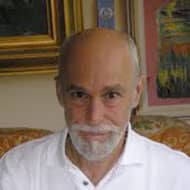
Gary Gach is the author of The Complete Idiot's Guide to Buddhism (Nautilus Award) and editor of What Book!? Buddha Poems from Beat to Hiphop (American Book Award). His work has appeared in such magazines and anthologies as AsianArt.com, BuddhaDharma, Harvard Divinity Bulletin, Inquiring Mind, Language for a New Century, The New Yorker, Shambhala Sun, Technicians of the Sacred, Tricycle, Veterans of War Veterans of Peace, Whole Earth Review, and Yoga Journal.
Patheos Explore the world's faith through different perspectives on religion and spirituality! Patheos has the views of the prevalent religions and spiritualities of the world.
Ad-Free & Subscriber Log-In Subscription Support
- About Us
- 2026 Calendar
- Videos
- Podcasts
- Library of World Religions
- Faith In Media Tracker
- Advertise With Us
- Write for Us
- Privacy Policy
- Terms of Service
- Do Not Sell My Data
- Contact Us
- Radiant Digital
- Manage Newsletter Subscriptions
- Unsubscribe From Notifications
- Sitemap
Copyright 2008-2026, Patheos. All rights reserved.
Subscription Support Ad-Free & Subscriber Log-In
Follow Patheos