
BuddhistCatholicContemplativeEvangelicalGeneral ChristianHinduJewishLatter-day SaintMuslimNew VisionsProgressive Christian
Beliefs
- Buddhist
- Catholic
- Contemplative
- Evangelical
- General Christian
- Hindu
- Jewish
- Latter-day Saint
- More Voices
- Muslim
- New Visions
- Pagan
- Progressive Christian
Topics
- Religion News
- Food and Religion
- Sports and Religion
- Religious Art
- Religious Music and Entertainment
- Religious Events
- History and Religion
- Style and Religion
- Politics and Religion
- Women in Religion
- Recreation Outdoors and Religion
- Business Finance and Religion
- Careers Workplace and Religion
- Education and Religion
- Family Parenting and Religion
- Health Fitness and Religion
- Home and Religion
- Relationships and Religion
- Technology and Religion
- Travel and Religion
Columnists
- Buddhist Columnists
- Business Finance and Religion Columnists
- Careers Workplace and Religion Columnists
- Catholic Columnists
- Contemplative Columnists
- Education and Religion Columnists
- Evangelists Columnists
- Family Parenting and Religion Columnists
- General Christian Columnists
- Health Fitness and Religion Columnists
- Hindu Columnists
- History and Religion Columnists
- Home and Religion Columnists
- Jewish Columnists
- More Voices Columnists
- Latter Day Columnists
- Muslim Columnists
- New Visions Columnists
- Nonreligious Columnists
- Pagan Columnists
- Politics and Religion Columnists
- Progressive Columnists
- Recreation Outdoors and Religion Columnists
- Relationships and Religion Columnists
- Religion News Columnists
- Religious Art Columnists
- Religious Events Columnists
- Religious Music and Entertainment Columnists
- Sports and Religion Columnists
- Style and Religion Columnists
- Technology and Religion Columnists
- Travel and Religion Columnists
- Women in Religion Columnists
Resource Library
- 2026 Calendar
- Library of World Religions
- The 100 Most Holy Places on Earth
- Patheos Answers
- Podcasts
- Videos
- Faith Leaders Database
- Anglican Episcopalian
- Bahai
- Baptist
- Buddhism
- Christianity
- Confucianism
- Eastern Orthodoxy
- Hinduism
- Holiness and Pentecostal
- ISKCON
- Islam
- Judaism
- Lutheran
- Methodist
- The Church of Jesus Christ of Latter-day Saints
- New Age
- Paganism
- Presbytarian and Reformed
- Protestantism
- Religion Behind the Scenes
- Roman Catholic
- Scientology
- Shia Islam
- Sikhism
- Sufism
- Sunni Islam
- Taoism
- Zen
- See all religions
Research Tools
 Ad-Free & Subscriber Log-In Subscription Support
Ad-Free & Subscriber Log-In Subscription Support
Follow Patheos 

- Trending:
- Forgiveness
- |
- Marriage
- |
- Consciousness
- |
- Death Penalty
- |
- Election
- |
- Halloween
 Zach Hoag Is Uncategorized
- Home
- Vespers
Vespers
Last updated on: August 16, 2018 at 2:21 pm by Guest Contributor
Vespers 2018-08-16T14:21:27-05:00 Guest Contributor
Patheos Explore the world's faith through different perspectives on religion and spirituality! Patheos has the views of the prevalent religions and spiritualities of the world.
I’m standing in a dimly candle-lit room full of strangers, staring at the faces of long dead-saints, and hearing the chants of a priest I can barely understand. No, this isn’t some nightmare of mine, this is my first Vespers service at an Orthodox church.
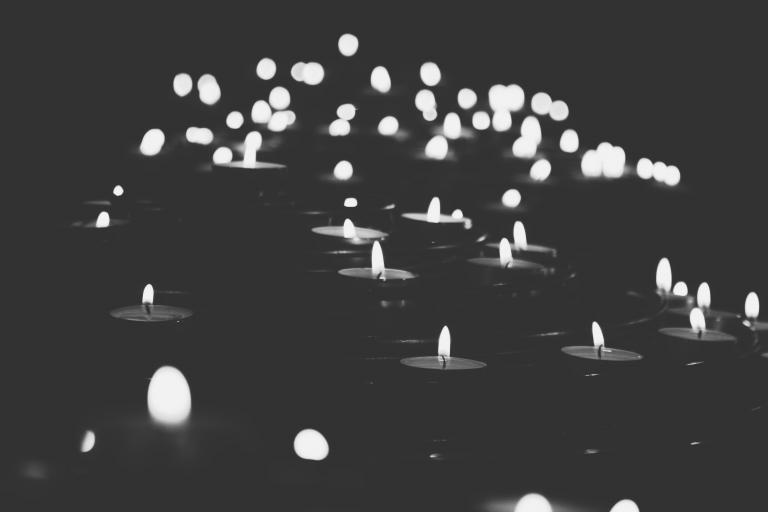
Photo by Mike Labrum on Unsplash
A Vespers service is quite the beautiful affair. With the songlike chanting and the many candles and intimate feel, it evokes a sense of magic, I think. The history of the liturgy practically smells of aged wine, and to participate in such a service is to drink deeply from the worshipful practices of the ancients.
But I am out of place. I marvel at the Icons but I do not know their names. I close my eyes and listen to the chants, but I am unsure of their true meaning. Having only ever been to one other Orthodox service, I feel like I have opened these big wooden doors and stepped into a foreign world.
My social anxiety kicks in and while the other worshippers are repeating various prayers my mind repeats the only prayer I can think of at this moment: “Just don’t be awkward.”
But as the Priest walks around the room to approach the various Icons with the bells and incense, the other worshippers anticipate his path. They shift to the right, facing the left wall of the church.
I however, do not anticipate the priest and when I look up, I see the eyes of everyone in the room staring right back at me. No doubt they can see the sheepish look on my face. What they cannot see is the bright shade of red that lights up my cheeks as I feel hot blood rushing to my ears.
Awkward and embarrassed, I shift and face the same way with them. A few moments later I hear the bells behind me, and footsteps. I finally turn around to see that everyone else has already turned and I, ever the stalwart idiot, have my back to all of them. Again I adjust as the priest finally makes his way back to the front altar and firmly into my view where I shan’t be caught off guard again.
It’s at this point I notice my position in the room. I had started the service in the very back. But with each awkward shift, I had moved closer into the core of the group. My stumbling actually made it necessary that I move inward toward the people so I could quickly turn and move with them instead of lagging around in isolation. They had tricked me, these sneaky Orthodox, into coming closer to them.
But it didn’t feel like a forced or rigid uniformity, it felt like community.
Standing in the back of the room I could barely see what was happening at the altar, but as the priest moved around it had the effect of gathering me in. Now, standing in the middle of the group I was in full view of the front and the icon of Jesus was staring right at me.
I am finding that everything in Orthodox theology and worship is meant to have this effect. It draws the worshipper out of isolation and into community, then pulls the collective toward the face of Jesus. It feels so unlike much of my Protestant upbringing, where Jesus was my “personal Lord and savior,” and the ideal prayer life was spent alone in a closet yelling at a silent God.
For a liturgical tradition like the Orthodox, prayer is taught in community. Theology is done in community. Worship is practiced by community. This way of life creates an interesting shift in how God is viewed, no longer the champion of an individualistic faith, but a savior of a whole community.
When I asked the priest for books to help me learn to pray, he said “Prayer is best taught in the life of the church.”
When I asked him for books to help me understand Orthodox theology, he responded “Theology is best taught in liturgy and worship.”
It defies my bookish nature. Although I could open up Lossky’s tome tomorrow (and perhaps I will) without the context of a living community, will I really understand any of it? If I learned the various chants and prayers but never experienced praying them with the people of God, would they really be meaningful? Hopeful prayers can be uttered in isolation, but only in hope-connected prayers said with the saints can my hope be made whole as it is joined with those around me.
And so I am floating around this beautiful little community, intruding into their sacred space to catch a glimpse of the mystery they hold within. They have much to teach me, the Orthodox, about prayer and mysticism and trust in Jesus, and I know it. So I linger by their candles, being pulled further inward by the people toward whatever they see and grasp in Jesus.
At the Vespers service, I couldn’t help but chuckle at just how out of place I was, and at the same time how at peace I felt. The Orthodox faith is ancient, spanning the annals of time. Certainly they of all people have patience for a stumbler like me.
 Nathan Smith is a writer and thinker from Texas. Follow him on Twitter.
Previous Post

November 23, 2016
What to Do When Following Your Dreams Leads You Into the Wilderness
Next Post
January 26, 2017 Believe Boldly: Scorsese's SILENCE Speaks to Trump's America
Browse Our Archives
Select a Category Uncategorized
Select a Month December 2018 August 2018 July 2018 July 2017 May 2017 January 2017 November 2016 October 2016 August 2016 July 2016 May 2016 April 2016 March 2016 February 2016 January 2016 December 2015 November 2015 October 2015 September 2015 August 2015 July 2015 June 2015 May 2015 April 2015 February 2015 January 2015 December 2014 November 2014 October 2014 September 2014 August 2014 July 2014 June 2014 May 2014 April 2014 March 2014 February 2014 January 2014 December 2013 October 2013 September 2013 August 2013 July 2013 June 2013 May 2013 April 2013 March 2013 February 2013 January 2013 December 2012 November 2012 September 2012 August 2012 July 2012 June 2012 March 2012 December 2011 November 2011 October 2011 September 2011 August 2011 March 2011
Follow Us!
TAKE THE
Religious Wisdom Quiz
How many times did Elisha multiply food?
Select your answer to see how you score.
1 4 3 2
Support this
Column


Related posts from Zach Hoag Is Uncategorized

10 Things I Want You to Know About...

Brian Zahnd is Not Just Spiritual - He's...

Brian Zahnd's Abrahamic Dream - And What It...

Do Millennials Really Want a Cool Jesus?
TRENDING AT PATHEOS General Christian

A Biblical Vision of Success in Christian Life...
The Concern and Quest Recent trends and tendencies I note around me...

Indigenous Peoples’ Day and the Church
Indigenous' Peoples Day or Columbus Day? Depending on where you live...

When Spiritual Growth Looks Like Losing Ground
Four Passive Spiritual Disciplines: An Introduction When I was a college freshman,...

Faith and Finding Your Current Season
“To everything there is a season,” Ecclesiastes tells us, “and a time...

Did Jesus Fear God's Wrath in Gethsemane?
That Time Jesus Was Terrified Before we begin, let me say at...

A Generation Searching for God in All the...
Revival Begins With God’s People! Holidays Are Upon Us! Welcome to October!...
view all General Christian blogs
Ad-Free & Subscriber Log-In Subscription Support
- About Us
- 2026 Calendar
- Videos
- Podcasts
- Library of World Religions
- Faith In Media Tracker
- Advertise With Us
- Write for Us
- Privacy Policy
- Terms of Service
- Do Not Sell My Data
- Contact Us
- Radiant Digital
- Manage Newsletter Subscriptions
- Unsubscribe From Notifications
- Sitemap
Copyright 2008-2026, Patheos. All rights reserved.
Subscription Support Ad-Free & Subscriber Log-In
Follow Patheos