
BuddhistCatholicContemplativeEvangelicalGeneral ChristianHinduJewishLatter-day SaintMuslimNew VisionsProgressive Christian
Beliefs
- Buddhist
- Catholic
- Contemplative
- Evangelical
- General Christian
- Hindu
- Jewish
- Latter-day Saint
- More Voices
- Muslim
- New Visions
- Pagan
- Progressive Christian
Topics
- Religion News
- Food and Religion
- Sports and Religion
- Religious Art
- Religious Music and Entertainment
- Religious Events
- History and Religion
- Style and Religion
- Politics and Religion
- Women in Religion
- Recreation Outdoors and Religion
- Business Finance and Religion
- Careers Workplace and Religion
- Education and Religion
- Family Parenting and Religion
- Health Fitness and Religion
- Home and Religion
- Relationships and Religion
- Technology and Religion
- Travel and Religion
Columnists
- Buddhist Columnists
- Business Finance and Religion Columnists
- Careers Workplace and Religion Columnists
- Catholic Columnists
- Contemplative Columnists
- Education and Religion Columnists
- Evangelists Columnists
- Family Parenting and Religion Columnists
- General Christian Columnists
- Health Fitness and Religion Columnists
- Hindu Columnists
- History and Religion Columnists
- Home and Religion Columnists
- Jewish Columnists
- More Voices Columnists
- Latter Day Columnists
- Muslim Columnists
- New Visions Columnists
- Nonreligious Columnists
- Pagan Columnists
- Politics and Religion Columnists
- Progressive Columnists
- Recreation Outdoors and Religion Columnists
- Relationships and Religion Columnists
- Religion News Columnists
- Religious Art Columnists
- Religious Events Columnists
- Religious Music and Entertainment Columnists
- Sports and Religion Columnists
- Style and Religion Columnists
- Technology and Religion Columnists
- Travel and Religion Columnists
- Women in Religion Columnists
Resource Library
- 2026 Calendar
- Library of World Religions
- The 100 Most Holy Places on Earth
- Patheos Answers
- Podcasts
- Videos
- Faith Leaders Database
- Anglican Episcopalian
- Bahai
- Baptist
- Buddhism
- Christianity
- Confucianism
- Eastern Orthodoxy
- Hinduism
- Holiness and Pentecostal
- ISKCON
- Islam
- Judaism
- Lutheran
- Methodist
- The Church of Jesus Christ of Latter-day Saints
- New Age
- Paganism
- Presbytarian and Reformed
- Protestantism
- Religion Behind the Scenes
- Roman Catholic
- Scientology
- Shia Islam
- Sikhism
- Sufism
- Sunni Islam
- Taoism
- Zen
- See all religions
Research Tools
 Ad-Free & Subscriber Log-In Subscription Support
Ad-Free & Subscriber Log-In Subscription Support
Follow Patheos 

- Trending:
- Forgiveness
- |
- Marriage
- |
- Consciousness
- |
- Death Penalty
- |
- Election
- |
- Halloween
 Zach Hoag Is Uncategorized
- Home
- Love Expressed at the House of Grace (Tristan Sherwin)
Love Expressed at the House of Grace (Tristan Sherwin)
Last updated on: August 16, 2018 at 2:21 pm by Guest Contributor
Love Expressed at the House of Grace (Tristan Sherwin) 2018-08-16T14:21:31-05:00 Guest Contributor
Patheos Explore the world's faith through different perspectives on religion and spirituality! Patheos has the views of the prevalent religions and spiritualities of the world.
 The following is a post by Tristan Sherwin taken from his book, Love Expressed.
It must have been a picture – the pool of Bethesda mentioned by the writer of the fourth Gospel, as described in John chapter 5. A pool of water, mainly stagnant, surrounded by five covered porches, under which sat crowds (John’s words, not mine) of sick people – blind, lame, paralysed. All of them are waiting for one thing; ‘a certain movement of the water’ – this would be the voice that would call all nearby to abandon their comfort and plunge towards the surface. If they were fortunate enough to be the first to enter, then they would be the one to arise healed and free.
John’s Gospel doesn’t tell us if this happened to be true or not, whether John believed it credible or just false hope – did this pool actually heal people? All John is telling us is that those who gathered there believed it was so. This was their system. All they had to do was make an acceptable entrance into this vending machine of liquid and then their desired response would be dispensed. So there they would sit, waiting and watching for the pool’s command which would signal when their obedience should begin.
This is an odd place.
It’s called Bethesda – which means ‘house of grace’ – but this is anything but. Nothing is dispensed for free in this place. As the man’s words in John 5:7 show us, help and love were not the ethos of the community that lay under these porches. If anything, this was more like a house of competition. Can you imagine for one moment, the response of this crowd when that ‘certain movement’ came? How many would be crushed, pushed and hurt by the stampede of people heading towards the water’s edge? One person would leave healed (maybe?), but how many more would be left in a worse condition than when they first arrived? How many would drown?
And another thing; ‘a certain movement’! It’s not the best description to give – what did this movement actually look like? Was it some bubbling up? Was it a ripple going from the east side of the pool to the west? Did you have to get into the water the very second the movement occurred, or could you wait thirty seconds before the healing properties dispersed thoroughly? Did your entrance have to be graceful and elegant, or were you allowed to dive-bomb?
Would you really take the risk in getting it wrong?
I hazard a guess that opinion of this movement would have been divided within the crowd. I imagine a place where different schools of theology had developed, with those of shared conviction gathering together – each denomination holding as sacred a particular style of movement. With every failed healing, every failed attempt to reach the water and every bad entry, not only amplifying these theological divisions, but also serving to reinforce the mystical properties of this water; only perfectobedience to its demands would provide the results one sought.
Everyone here is an expert at classifying ripples, or at the very least an expert in training, but none of them have actually experienced the thing that they specialise in.
This place, that is meant to bring people freedom, actually ends up leading people into captivity. When John describes the occupants as ‘blind, lame, paralysed’, I can’t help but feel – with every reading of the story – that their conditions have transcended from physical to spiritual. None can afford to take their eyes off the water before them, none can afford to look at the conditions of those around them who share their prison, no one can afford to help anybody else, and no one can afford to miss their ‘divine calling’. No one even has the courage to raise a voice and offer the suggestion – ‘Hey, why don’t we all get in and just wait?’ (And, if that suggestion seems ridiculous to you, then you’ve just reinforced my point!)
They are a lost people, trapped within a mechanical system of fear and control – a system that requires broken people to save themselves, using abilities they do not possess. This pool asks, but it gives no answers. This pool calls, but it offers no help. This pool demands obedience, but only highlights the failures of those who attempt to meet its rules. This pool uses the hope of acceptance to entice those in need, but only reinforces their feeling of rejection. It almost sounds like a Greek tragedy.
But here they sit, all waiting for movement – all waiting for the right wave to come along.
Does this sound familiar? In seeing this scene, maybe our minds begin to make a connection with organised religion, but the concept is sown into all our patterns of living. Such an idea should hardly survive within our twenty-first century society, but this same mindset is everywhere. We are drowning in a world full of ‘isms’; we are all living in obedience to the fluid motion of some pond.
Most of the people I have met (myself included), have found themselves waiting for a wave. Maybe our system isn’t a spiritual one, or one that revolves around a deity, but our lives still keep watch on the waters of life, waiting for the prompts and ripples – the signals that will summon our obedience. Our language about our futures is consistently filled with talk of When and Then. ‘If I can be in the right place, at the right time, and produce the right action, then life will dispense my desires’.
And we all have desires – most of which boil down to wanting that elusive/ambiguous/mysterious thing called ‘happiness’. We crave meaning, value, purpose and function. We long to live. And so we’re happy to keep spinning our saliva-coated offering into whatever system we think will guarantee that.
We place our hopes in our own ability to respond acceptably to life’s unpredictable movements. Such thinking places us as the captain of our own vessel, charting the currents, and navigating the deep waters. We feel this false sense of control, that we are the masters, when in reality we are slaves to the water’s allure.
It’s into this mechanical system, this fluid vending machine, where Jesus enters and totally messes with our thinking.
—
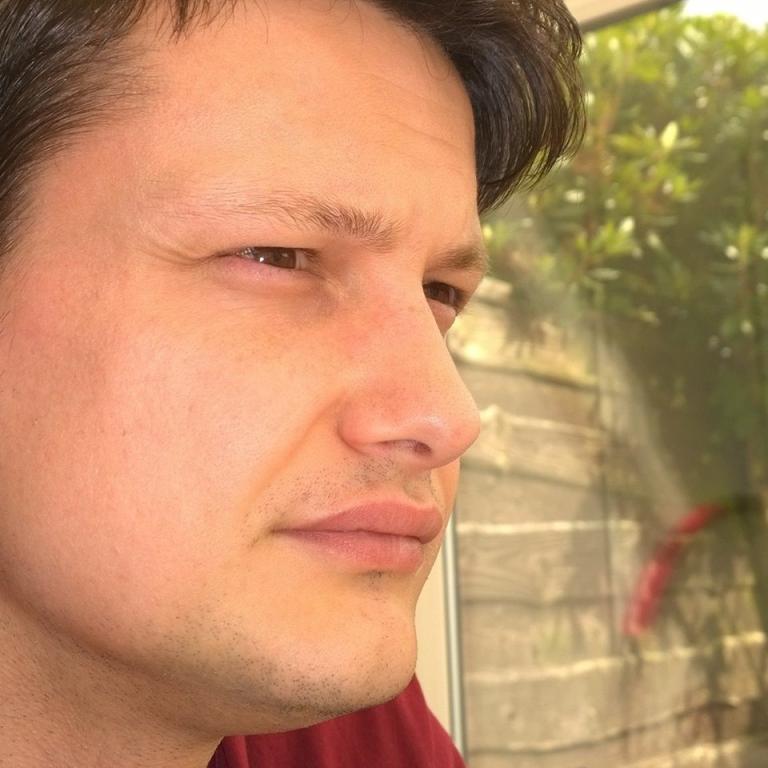 The above is an extract of Tristan Sherwin’s new book Love: Expressed – now available.
Twitter: @tristansherwin
Facebook: https://www.facebook.com/LoveExpressedBook/
Blog: https://tristansherwin.wordpress.com
Previous Post

December 18, 2015
Volf, Islam, and a Jesus-Centered Take on Wheaton Professor Hawkins
Next Post
December 24, 2015 Where's Worship? On the Loss of Adoration in Our Caroling
Browse Our Archives
Select a Category Uncategorized
Select a Month December 2018 August 2018 July 2018 July 2017 May 2017 January 2017 November 2016 October 2016 August 2016 July 2016 May 2016 April 2016 March 2016 February 2016 January 2016 December 2015 November 2015 October 2015 September 2015 August 2015 July 2015 June 2015 May 2015 April 2015 February 2015 January 2015 December 2014 November 2014 October 2014 September 2014 August 2014 July 2014 June 2014 May 2014 April 2014 March 2014 February 2014 January 2014 December 2013 October 2013 September 2013 August 2013 July 2013 June 2013 May 2013 April 2013 March 2013 February 2013 January 2013 December 2012 November 2012 September 2012 August 2012 July 2012 June 2012 March 2012 December 2011 November 2011 October 2011 September 2011 August 2011 March 2011
Follow Us!
TAKE THE
Religious Wisdom Quiz
What does the Bible warn about "idle chatter"?
Select your answer to see how you score.
Is educational Is entertaining Leads to poverty Is holy
Support this
Column


Related posts from Zach Hoag Is Uncategorized

3 Reasons God Did Not Kill Jesus (But...

Political Choices and Decisions for Jesus

We're Never Gonna Survive Unless...We Get a Lot...

10 Things I Want You to Know About...
TRENDING AT PATHEOS General Christian

A Biblical Vision of Success in Christian Life...
The Concern and Quest Recent trends and tendencies I note around me...

Indigenous Peoples’ Day and the Church
Indigenous' Peoples Day or Columbus Day? Depending on where you live...

When Spiritual Growth Looks Like Losing Ground
Four Passive Spiritual Disciplines: An Introduction When I was a college freshman,...

Faith and Finding Your Current Season
“To everything there is a season,” Ecclesiastes tells us, “and a time...

Did Jesus Fear God's Wrath in Gethsemane?
That Time Jesus Was Terrified Before we begin, let me say at...

A Generation Searching for God in All the...
Revival Begins With God’s People! Holidays Are Upon Us! Welcome to October!...
view all General Christian blogs
Ad-Free & Subscriber Log-In Subscription Support
- About Us
- 2026 Calendar
- Videos
- Podcasts
- Library of World Religions
- Faith In Media Tracker
- Advertise With Us
- Write for Us
- Privacy Policy
- Terms of Service
- Do Not Sell My Data
- Contact Us
- Radiant Digital
- Manage Newsletter Subscriptions
- Unsubscribe From Notifications
- Sitemap
Copyright 2008-2026, Patheos. All rights reserved.
Subscription Support Ad-Free & Subscriber Log-In
Follow Patheos