
BuddhistCatholicContemplativeEvangelicalGeneral ChristianHinduJewishLatter-day SaintMuslimNew VisionsProgressive Christian
Beliefs
- Buddhist
- Catholic
- Contemplative
- Evangelical
- General Christian
- Hindu
- Jewish
- Latter-day Saint
- More Voices
- Muslim
- New Visions
- Pagan
- Progressive Christian
Topics
- Religion News
- Food and Religion
- Sports and Religion
- Religious Art
- Religious Music and Entertainment
- Religious Events
- History and Religion
- Style and Religion
- Politics and Religion
- Women in Religion
- Recreation Outdoors and Religion
- Business Finance and Religion
- Careers Workplace and Religion
- Education and Religion
- Family Parenting and Religion
- Health Fitness and Religion
- Home and Religion
- Relationships and Religion
- Technology and Religion
- Travel and Religion
Columnists
- Buddhist Columnists
- Business Finance and Religion Columnists
- Careers Workplace and Religion Columnists
- Catholic Columnists
- Contemplative Columnists
- Education and Religion Columnists
- Evangelists Columnists
- Family Parenting and Religion Columnists
- General Christian Columnists
- Health Fitness and Religion Columnists
- Hindu Columnists
- History and Religion Columnists
- Home and Religion Columnists
- Jewish Columnists
- More Voices Columnists
- Latter Day Columnists
- Muslim Columnists
- New Visions Columnists
- Nonreligious Columnists
- Pagan Columnists
- Politics and Religion Columnists
- Progressive Columnists
- Recreation Outdoors and Religion Columnists
- Relationships and Religion Columnists
- Religion News Columnists
- Religious Art Columnists
- Religious Events Columnists
- Religious Music and Entertainment Columnists
- Sports and Religion Columnists
- Style and Religion Columnists
- Technology and Religion Columnists
- Travel and Religion Columnists
- Women in Religion Columnists
Resource Library
- 2026 Calendar
- Library of World Religions
- The 100 Most Holy Places on Earth
- Patheos Answers
- Podcasts
- Videos
- Faith Leaders Database
- Anglican Episcopalian
- Bahai
- Baptist
- Buddhism
- Christianity
- Confucianism
- Eastern Orthodoxy
- Hinduism
- Holiness and Pentecostal
- ISKCON
- Islam
- Judaism
- Lutheran
- Methodist
- The Church of Jesus Christ of Latter-day Saints
- New Age
- Paganism
- Presbytarian and Reformed
- Protestantism
- Religion Behind the Scenes
- Roman Catholic
- Scientology
- Shia Islam
- Sikhism
- Sufism
- Sunni Islam
- Taoism
- Zen
- See all religions
Research Tools
 Ad-Free & Subscriber Log-In Subscription Support
Ad-Free & Subscriber Log-In Subscription Support
Follow Patheos 

- Trending:
- Forgiveness
- |
- Marriage
- |
- Consciousness
- |
- Death Penalty
- |
- Election
- |
- Halloween
 Zach Hoag Is Uncategorized
- Home
- The Loss of Lament [Andy Campbell]
The Loss of Lament [Andy Campbell]
Last updated on: August 16, 2018 at 2:21 pm by Anderson Campbell
The Loss of Lament [Andy Campbell] 2018-08-16T14:21:47-05:00 Anderson Campbell
Patheos Explore the world's faith through different perspectives on religion and spirituality! Patheos has the views of the prevalent religions and spiritualities of the world.

 On a hot summer night in 2012, I tossed and turned in bed, unable to sleep. I was angry and frustrated. The year before I’d been fired from a large church for “not being a good fit.” After blaming the church leaders failed to satiate my anger, I turned to blaming God. If God was omnipotent and loving, why didn’t God prevent this from happening to me and my family? I’d committed no great sin; there was no moral or ethical failure that led to my dismissal. Yet, within just a few weeks of being let go, my family and I moved out of our house and headed to a duplex on the other side of the country.
As we settled in to our new place, we became quick friends with the couple renting out the other half of the duplex. He was a mechanical engineer from Switzerland and she was a nurse from New Jersey, both in their mid-forties. They’d moved to Oregon from Nashville only a week before us. As we got to know them, we danced around the topics of faith and religion. They knew I worked at a seminary in the area. I learned that he was an atheist and she was a lapsed Catholic. Both were angry at God and religion.
See, she’d been battling breast cancer for a long time. A few years prior, it had gone into remission (again). Then, in 2010, she lost her house in the Nashville floods. All the church could offer her for why bad things kept happening to her was an paltry, “It’s all part of God’s plan.” She decided that God was a jerk and that she’d done nothing to deserve the tragedies that seemed to follow her around. She left church and never returned. The reason they left Nashville and moved across the country was to try and make a fresh start, to leave behind cancer and chemo and flooded houses and Christianese.
Less than a year after the move, she learned that her cancer was back. She had to quit her job at the hospital and become a patient in it. She underwent round after round of treatment, losing large amounts of hair and weight. That restless summer night in 2012, I’d just had a conversation with her husband who confided in me that things were looking bad.
As I tried to go to sleep that night, I was angry. I was still being angry with God for what had happened to me and my family, and now I was angry that God allowed our neighbor’s cancer to return. These friends already shouldered more sorrow than was their fair share. So I tossed and turned, anger welling up inside me and, for the first time in over a year, I prayed. It went something like this:
“Who do you think you are, God? You call yourself ‘Love’? There isn’t anything loving about this. What we’re dealing with here isn’t fair. It’s not right. But I don’t want you to do anything for me. You want to do something? Heal HER. Destroy her cancer. Give her hope. Or maybe it would be better if you just left us all alone.”
I waited for the lightning to strike.
It didn’t.
And I felt a little better.
*******
We have lost the art of lament and it is killing our faith.
Western, affluent, success-oriented Christianity is so focused on blessing and praise that it doesn’t know what to do with tragedy or pain. In a weak attempt to offer consolation and hope, we sputter out platitudes about what God’s motivations must be (“God needed another angel in heaven”), what the grieving person should do (“just trust God’s plan”), or what we’ll do on their behalf (“I’ll pray for you”). At our core, though, we have no idea what to do with anger and tragedy and grief, so we do or say whatever we can to put some distance between us and it. In doing so, we rob ourselves of the opportunity to lament.
Lament is a deep and passionate expression of sorrow, grief, or anger, usually in response to the intense pain of injustice, tragedy, or loss. Other cultures, notably those in parts of Africa and the Middle East, have maintained public expressions of lament. Our culture, however, has not. Instead of giving ourselves to our grief, we run from it and we hide from those who grieve. Worse still, public outpourings of lament, such as the #BringBackOurGirls phenomenon that swept through social media earlier this month, are met with public scorn and cynicism.
We need to learn how to cry out to God, full-voiced, unfettered and unfiltered. That is lament.
The Israelites knew well the power of lament. I mean, there’s a whole book in the Old Testament that is one long series of laments. We tend to skip over that book when it comes to preparing sermons or doing morning devotionals. The psalms are full of lament, but we often rush through those in favor of psalms of praise.
In the Old Testament, there are basically two kinds of lament to God: those that are addressed to God but are against one’s neighbor (cries for justice) and those that are addressed to God and are against God (cries for relief). Walter Bruggemann reminds us that we desperately need to recover the lost art of lament. Why? Because the act of lament “redresses the redistribution of power between the two parties, so that the petitionary party is taken seriously and the God who is addressed is newly engaged in the crisis in a way that puts God at risk” (Brueggemann 1986, 59). Lament is initiative taken by the grieving toward God for God to act in the world in a certain way. Things aren’t right and God has the power to make them right. So do something, God!
Our concept of God is often way too small to accommodate lament. It makes people uncomfortable when you blame God for things. We appear to have the praise and blessing thing down, but when it comes to engaging in lament together, we’re lost. This has dire consequences on our communities. Again, Brueggemann:
Where lament is absent, covenant comes into being only as a celebration of joy and well-being…. [God] is surrounded by subjects who are always ‘yes men and women’ from whom ‘never is heard a discouraging word’…. Where the capacity to lament is absent, one is left only with praise and doxology. God then is omnipotent, always to be praised. The believer is nothing, and can uncritically praise or accept guilt where life with God does not function properly. The outcome is a ‘False Self’, bad faith which is based in fear and guilt and lived out as resentful or self-deceptive works or righteousness. The absence of lament makes a religion of coercive obedience the only possibility (60, 61).
Sound familiar? “The believer is nothing, and can uncritically praise or accept guilt where life with God does not function properly.” An individual or a community who does not engage in lament has only the thinnest understanding of who God is. In the absence of expressing one’s full range of emotions to God, one is left with a God who can only be addressed in the good times and who is conspicuously absent in the bad times. To engage in lament, however, is to drastically broaden God’s reach into one’s life. It is a move that boldly demands that God be real and present and accountable in the bad times as well as the good. This is the difference, according to Brueggemann, between a God who is “a dead cipher who cannot be addressed and is only the silent guarantor of the status quo” and a God who “can be addressed in risky ways as the transformer of what has not yet appeared” (64). It is a call for God to remain with us in the “already” as well as in the hope of the “not yet.”
Psalm 88 is a striking example of lament. The psalmist proclaims that he is as good as dead because of the affliction poured out on him. He minces no words, accusing God of making him repulsive to his friends, of ignoring his cries for help, of engulfing him with terror and despair. The psalm is raw, unfiltered, and sad. It is real.
Such pure emotion in the scripture shows us that God is big enough to take on whatever we can serve up. It is an encouragement to not hold anything back, to be fully ourselves before God. “A God who must always be praised and never assaulted correlates with a development of ‘False Self’, and an uncritical status quo. But a God who is available in assault correlates with the emergence of genuine self and the development of serious justice” (65). Lament isn’t giving up, it is pressing in.
Finally, it is only through lament that we come to real praise. It is through engaging God in the painful, broken, unjust parts of our lives that we are ultimately taught the depths of gratitude and praise. When we trust God with our darkest emotions we learn to trust God with our most ebullient emotions as well. God is big enough to respond to both.
*******
In August of 2013, my friend and neighbor died from her cancer. My wife and I were home when the ambulance arrived. We had to call her husband and tell him to come home right away, that things were bad and she was being rushed to the hospital. He arrived just after the ambulance left, tossed me his keys, and my wife drove him to the emergency room. I joined them some hours later. The three of us sat in her intensive care room while the doctors turned off the machines and removed the tubes. Her breathing slowed and finally stopped. We wept.
Her illness and death weren’t peaceful and they weren’t fair. She was in a lot of physical, emotional, and spiritual pain right up to the end. Her husband sobbed as I held him in the hospital and then again several times over beers in the months that followed. In my prayers, I’d remind God how unfair the whole ordeal was, how unjust and unloving it was. But this time I was aware that I wasn’t shouting into the void. God was near and attentive.
That is, ultimately, what we express when we lament. We cry out to a near and attentive God and we beg, plead, and demand that God do something.
–
For further reading:
Brueggemann, Walter. 1986. “The Costly Loss of Lament,” Journal for the Study of the Old Testament 36 (October): 57-71. Accessed May 12, 2014. http://dx.doi.org/10.1177/030908928601103605.
Image credit: philippe leroyer (CC BY-NC-ND 2.0)
Previous Post

July 4, 2014
Building Fences Big Enough For A Neighborhood [Fr. Tony Bleything]
Next Post

July 8, 2014 The Measure of a Ministry [KrisAnne Swartley]
Browse Our Archives
Select a Category Uncategorized
Select a Month December 2018 August 2018 July 2018 July 2017 May 2017 January 2017 November 2016 October 2016 August 2016 July 2016 May 2016 April 2016 March 2016 February 2016 January 2016 December 2015 November 2015 October 2015 September 2015 August 2015 July 2015 June 2015 May 2015 April 2015 February 2015 January 2015 December 2014 November 2014 October 2014 September 2014 August 2014 July 2014 June 2014 May 2014 April 2014 March 2014 February 2014 January 2014 December 2013 October 2013 September 2013 August 2013 July 2013 June 2013 May 2013 April 2013 March 2013 February 2013 January 2013 December 2012 November 2012 September 2012 August 2012 July 2012 June 2012 March 2012 December 2011 November 2011 October 2011 September 2011 August 2011 March 2011
Follow Us!
TAKE THE
Religious Wisdom Quiz
Where was Jesus praying the night before He was crucified?
Select your answer to see how you score.
Galilee Tarsus The Garden of Gethsemane Antioch
Support this
Column


Related posts from Zach Hoag Is Uncategorized

3 Kinds of Evangelicals (Whether They Want That...

A God in the Dirt [Andrew Arndt]
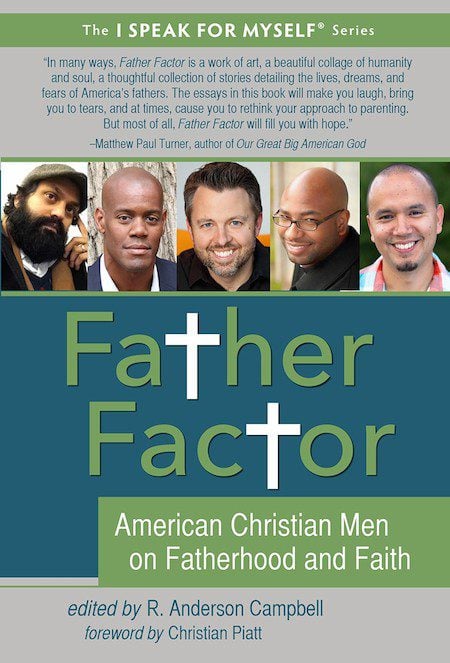
Choosing My Religion? [Anderson Campbell]

Learning to Make Disciples...AA Style [Fr. Tony Bleything]
TRENDING AT PATHEOS General Christian

Seventy and Five Years Old: God Still Starts...
There is a small detail tucked into Genesis 12 that I skipped...

A Biblical Vision of Success in Christian Life...
The Concern and Quest Recent trends and tendencies I note around me...

Indigenous Peoples’ Day and the Church
Indigenous' Peoples Day or Columbus Day? Depending on where you live...

When Spiritual Growth Looks Like Losing Ground
Four Passive Spiritual Disciplines: An Introduction When I was a college freshman,...

Faith and Finding Your Current Season
“To everything there is a season,” Ecclesiastes tells us, “and a time...

Did Jesus Fear God's Wrath in Gethsemane?
That Time Jesus Was Terrified Before we begin, let me say at...
view all General Christian blogs
Ad-Free & Subscriber Log-In Subscription Support
- About Us
- 2026 Calendar
- Videos
- Podcasts
- Library of World Religions
- Faith In Media Tracker
- Advertise With Us
- Write for Us
- Privacy Policy
- Terms of Service
- Do Not Sell My Data
- Contact Us
- Radiant Digital
- Manage Newsletter Subscriptions
- Unsubscribe From Notifications
- Sitemap
Copyright 2008-2026, Patheos. All rights reserved.
Subscription Support Ad-Free & Subscriber Log-In
Follow Patheos