
BuddhistCatholicContemplativeEvangelicalGeneral ChristianHinduJewishLatter-day SaintMuslimNew VisionsProgressive Christian
Beliefs
- Buddhist
- Catholic
- Contemplative
- Evangelical
- General Christian
- Hindu
- Jewish
- Latter-day Saint
- More Voices
- Muslim
- New Visions
- Pagan
- Progressive Christian
Topics
- Religion News
- Food and Religion
- Sports and Religion
- Religious Art
- Religious Music and Entertainment
- Religious Events
- History and Religion
- Style and Religion
- Politics and Religion
- Women in Religion
- Recreation Outdoors and Religion
- Business Finance and Religion
- Careers Workplace and Religion
- Education and Religion
- Family Parenting and Religion
- Health Fitness and Religion
- Home and Religion
- Relationships and Religion
- Technology and Religion
- Travel and Religion
Columnists
- Buddhist Columnists
- Business Finance and Religion Columnists
- Careers Workplace and Religion Columnists
- Catholic Columnists
- Contemplative Columnists
- Education and Religion Columnists
- Evangelists Columnists
- Family Parenting and Religion Columnists
- General Christian Columnists
- Health Fitness and Religion Columnists
- Hindu Columnists
- History and Religion Columnists
- Home and Religion Columnists
- Jewish Columnists
- More Voices Columnists
- Latter Day Columnists
- Muslim Columnists
- New Visions Columnists
- Nonreligious Columnists
- Pagan Columnists
- Politics and Religion Columnists
- Progressive Columnists
- Recreation Outdoors and Religion Columnists
- Relationships and Religion Columnists
- Religion News Columnists
- Religious Art Columnists
- Religious Events Columnists
- Religious Music and Entertainment Columnists
- Sports and Religion Columnists
- Style and Religion Columnists
- Technology and Religion Columnists
- Travel and Religion Columnists
- Women in Religion Columnists
Resource Library
- 2026 Calendar
- Library of World Religions
- The 100 Most Holy Places on Earth
- Patheos Answers
- Podcasts
- Videos
- Faith Leaders Database
- Anglican Episcopalian
- Bahai
- Baptist
- Buddhism
- Christianity
- Confucianism
- Eastern Orthodoxy
- Hinduism
- Holiness and Pentecostal
- ISKCON
- Islam
- Judaism
- Lutheran
- Methodist
- The Church of Jesus Christ of Latter-day Saints
- New Age
- Paganism
- Presbytarian and Reformed
- Protestantism
- Religion Behind the Scenes
- Roman Catholic
- Scientology
- Shia Islam
- Sikhism
- Sufism
- Sunni Islam
- Taoism
- Zen
- See all religions
Research Tools
 Ad-Free & Subscriber Log-In Subscription Support
Ad-Free & Subscriber Log-In Subscription Support
Follow Patheos 

- Trending:
- Forgiveness
- |
- Marriage
- |
- Consciousness
- |
- Death Penalty
- |
- Election
- |
- Halloween
 Zach Hoag Is Uncategorized
- Home
- Truth and Power: Looking at Evangelical Crises [John Hawthorne]
Truth and Power: Looking at Evangelical Crises [John Hawthorne]
Last updated on: August 16, 2018 at 2:21 pm by John Hawthorne
Truth and Power: Looking at Evangelical Crises [John Hawthorne] 2018-08-16T14:21:48-05:00 John Hawthorne
Patheos Explore the world's faith through different perspectives on religion and spirituality! Patheos has the views of the prevalent religions and spiritualities of the world.
 I’ve started many posts on my blog with a similar phrase: “there was an interesting debate going on in evangelical social media this week.” But lately, this sentiment comes off as trite. It feels like every day we’ve got multiple Twitter fights going among evangelical groups: progressives calling folks out for being abusive, conservatives writing on false prophets, people being called heretics over pronoun usage, others confronted over misuse of scripture. Frankly, it’s hard to keep it all straight and figure out where it will all settle out. We cannot continue like this over the long haul. A more robust understanding of the diversity of Christ’s Church is a necessity.
I’ve been trying to explore the factors beneath all this animus. Why are boundaries so important that we’d throw around accusations of heresy? Why isn’t Paul’s body imagery in Corinthians our go-to principle and guiding principle? And, to continue the theme of one of the recent twitter fights, what does Jesus tell us in terms of his engagement with diversity?
While continuing to ponder these questions, I read Walter Brueggemann’s Truth Speaks to Power (2013). I’ve always loved Brueggemann but this one was special. Probably because it tapped three images important to me: sociological processes, countercultural action, and the invisible kingdom.
As he does in most of his books, Brueggemann unpacks a familiar biblical narrative and then follows with a much more careful reading. The second reading pays attention to shifts in the narrative and the ways in which the text itself illustrates major conceptual shifts going on beneath the surface.
He opens the book with an examination of the Exodus story. Pharaoh has enslaved the people of Israel and has them working in impossible situations that grow worse by the day. Pharaoh is motivated be fear of scarcity in the midst of his abundance. He believes that the only way to protect his position is to maximize his power position. It is an essentially defensive move, although it creates great offense. The people cry out in the midst of their suffering they cry out and God hears, who then calls Moses to act on their behalf. (Brueggemann notes that the text doesn’t say that the people cried out to God, just that he heard their cries.) The balance of the story is the tension between Pharaoh’s dependence on the Power of Empire set against the Truth of pain and suffering. Brueggemann writes:
Power must now acknowledge truth. The truth that meets power here is the combination of attentive divine resolve and the bodily assertion of the slaves who suffer out loud. Pharaoh, the last to catch on, now knows that his exploitative power has no future. (35)
In reading this section, I was struck that some of the evangelical crises fall in the category of concern over scarcity. There is a dominant motif in some quarters that religious monopoly is fracturing. The fear of the potential loss creates a stance where people find it easier to exploit others. It’s what must be done to protect against “the coming cataclysm”.
Brueggemann’s message here is that God is paying attention. In the end, power is defeated because shalom is emerging.
The second section of the book looks at King Solomon. This is a particularly interesting section given the way we’ve adopted the image of the wise King who finds the baby’s mother and writes wise sayings. Mining the biblical narratives, Brueggemann identifies the problems with Solomon’s rise to power. He lists all the ways in which Solomon uses power to gain military might, economic wealth, political alliances, and women. In the heart of the story is the tension between following God and building Empire. In a remarkable passage, Brueggemann observes that passages describing the opulence of Solomon’s temple should be read ironically:
It is more likely, for that reason, that what may appear on the surface to be gloating over Solomon’s success should be taken ironically. Such irony was designed to expose the extravagant self-indulgence of the royal entourage that is quite inappropriate in the midst of peasant realism. Thus the reader may decide if the narrative of accumulation is to be read as congratulations or as ironic exposé. (58)
The Truth of Shalom calls us away from accumulation of power and things. Brueggemann boldly suggests that Jesus’ mention of “the fool” who built barns was a reference to Solomon (“consider the lilies of the field..”)
Here is the lesson for evangelical crises. We have been far too concerned with issues of power and counting folks as being “with us”. We have been tempted to adopt the rhetorical devices of power-maintenance that work in cable news for the truth of being God’s people. When we find ourselves defending turf or, heaven forbid, market dominance it’s a clear sign that we’re following in Solomon’s footsteps.
I’ll treat the third and fourth section of the book together since they pick up some similar themes. The third section is about Elisha, who shows up in the middle of the stories of kings and dynasties. He has no official power but through the mantle he inherits from Elijah he performs miracles and confronts power. Brueggemann suggests that it is the contrast between the Kings and the Prophet that is the heart of the story. The Prophet aligns with a deep truth that is stronger and more lasting than that of the powers that be. His work with children, widows, and foreigners stands in contrast to Empire building. Josiah the King is the exception to the normal King narratives. He finds an ancient scroll that calls him and his people to repentence. He tears his garments, repents, and seems to establish a new form of leadership based on obedience to the scripture. Unfortunately for Israel and Judah, subsequent kings did not follow Josiah’s lead.
Two takeaways from these sections. First, the perspective of truth comes more often from ordinary people called to speak than from leaders defending power. Not that every utterance from every blogger is treated equal, but those that ask honest questions and authentically search for Truth should be acknowledged and not attacked. Second, Josiah is not as much interested in defending scripture in the abstract as in doing what it says. Many others have written about the elevation of scripture as an abstraction to be defended instead of an avenue to discipleship (this Missio Alliance post by Mark Moore is a great illustration of this distinction.)
One final thought. The sections of scripture that Brueggemann writes about are not about foreign lands or secular governments. They involve the life of God’s people who are forming a new type of society. It’s become far too easy for today’s evangelicals to apply scriptural passages like 2 Chronicles 7:14 as a judgment on the secular nation-state. But the context of the scripture is really about God’s people who are to “humble themselves and turn from their wicked ways” in search of healing.
Maybe this is the tactic the evangelical church should try next.
–
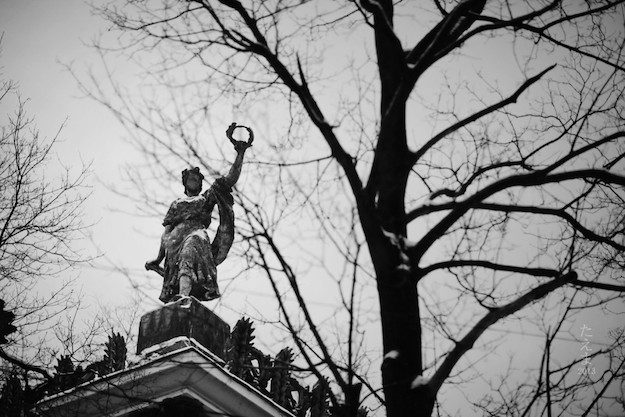
[Image by Taema, CC via Flickr]
Previous Post

June 4, 2014
Ordination: Stuck or Sent? [Levi Holland]
Next Post

June 4, 2014 I Know My Place [Kelly Green]
Browse Our Archives
Select a Category Uncategorized
Select a Month December 2018 August 2018 July 2018 July 2017 May 2017 January 2017 November 2016 October 2016 August 2016 July 2016 May 2016 April 2016 March 2016 February 2016 January 2016 December 2015 November 2015 October 2015 September 2015 August 2015 July 2015 June 2015 May 2015 April 2015 February 2015 January 2015 December 2014 November 2014 October 2014 September 2014 August 2014 July 2014 June 2014 May 2014 April 2014 March 2014 February 2014 January 2014 December 2013 October 2013 September 2013 August 2013 July 2013 June 2013 May 2013 April 2013 March 2013 February 2013 January 2013 December 2012 November 2012 September 2012 August 2012 July 2012 June 2012 March 2012 December 2011 November 2011 October 2011 September 2011 August 2011 March 2011
Follow Us!
TAKE THE
Religious Wisdom Quiz
Who said: "Yet I hold this against you: You have forsaken the love you had at first"?
Select your answer to see how you score.
Jesus (to the church in Ephesus) An angel John The Spirit
Support this
Column


Related posts from Zach Hoag Is Uncategorized

The Ghost of Christmas Present has a word...

Experiencing Advent hope and love even when the...


Full Circle Center, Part 1: Beyond Doubt
TRENDING AT PATHEOS General Christian

Seventy and Five Years Old: God Still Starts...
There is a small detail tucked into Genesis 12 that I skipped...

A Biblical Vision of Success in Christian Life...
The Concern and Quest Recent trends and tendencies I note around me...

Indigenous Peoples’ Day and the Church
Indigenous' Peoples Day or Columbus Day? Depending on where you live...

When Spiritual Growth Looks Like Losing Ground
Four Passive Spiritual Disciplines: An Introduction When I was a college freshman,...

Faith and Finding Your Current Season
“To everything there is a season,” Ecclesiastes tells us, “and a time...

Did Jesus Fear God's Wrath in Gethsemane?
That Time Jesus Was Terrified Before we begin, let me say at...
view all General Christian blogs
Ad-Free & Subscriber Log-In Subscription Support
- About Us
- 2026 Calendar
- Videos
- Podcasts
- Library of World Religions
- Faith In Media Tracker
- Advertise With Us
- Write for Us
- Privacy Policy
- Terms of Service
- Do Not Sell My Data
- Contact Us
- Radiant Digital
- Manage Newsletter Subscriptions
- Unsubscribe From Notifications
- Sitemap
Copyright 2008-2026, Patheos. All rights reserved.
Subscription Support Ad-Free & Subscriber Log-In
Follow Patheos