
BuddhistCatholicContemplativeEvangelicalGeneral ChristianHinduJewishLatter-day SaintMuslimNew VisionsProgressive Christian
Beliefs
- Buddhist
- Catholic
- Contemplative
- Evangelical
- General Christian
- Hindu
- Jewish
- Latter-day Saint
- More Voices
- Muslim
- New Visions
- Pagan
- Progressive Christian
Topics
- Religion News
- Food and Religion
- Sports and Religion
- Religious Art
- Religious Music and Entertainment
- Religious Events
- History and Religion
- Style and Religion
- Politics and Religion
- Women in Religion
- Recreation Outdoors and Religion
- Business Finance and Religion
- Careers Workplace and Religion
- Education and Religion
- Family Parenting and Religion
- Health Fitness and Religion
- Home and Religion
- Relationships and Religion
- Technology and Religion
- Travel and Religion
Columnists
- Buddhist Columnists
- Business Finance and Religion Columnists
- Careers Workplace and Religion Columnists
- Catholic Columnists
- Contemplative Columnists
- Education and Religion Columnists
- Evangelists Columnists
- Family Parenting and Religion Columnists
- General Christian Columnists
- Health Fitness and Religion Columnists
- Hindu Columnists
- History and Religion Columnists
- Home and Religion Columnists
- Jewish Columnists
- More Voices Columnists
- Latter Day Columnists
- Muslim Columnists
- New Visions Columnists
- Nonreligious Columnists
- Pagan Columnists
- Politics and Religion Columnists
- Progressive Columnists
- Recreation Outdoors and Religion Columnists
- Relationships and Religion Columnists
- Religion News Columnists
- Religious Art Columnists
- Religious Events Columnists
- Religious Music and Entertainment Columnists
- Sports and Religion Columnists
- Style and Religion Columnists
- Technology and Religion Columnists
- Travel and Religion Columnists
- Women in Religion Columnists
Resource Library
- 2026 Calendar
- Library of World Religions
- The 100 Most Holy Places on Earth
- Patheos Answers
- Podcasts
- Videos
- Faith Leaders Database
- Anglican Episcopalian
- Bahai
- Baptist
- Buddhism
- Christianity
- Confucianism
- Eastern Orthodoxy
- Hinduism
- Holiness and Pentecostal
- ISKCON
- Islam
- Judaism
- Lutheran
- Methodist
- The Church of Jesus Christ of Latter-day Saints
- New Age
- Paganism
- Presbytarian and Reformed
- Protestantism
- Religion Behind the Scenes
- Roman Catholic
- Scientology
- Shia Islam
- Sikhism
- Sufism
- Sunni Islam
- Taoism
- Zen
- See all religions
Research Tools
 Ad-Free & Subscriber Log-In Subscription Support
Ad-Free & Subscriber Log-In Subscription Support
Follow Patheos 

- Trending:
- Forgiveness
- |
- Marriage
- |
- Consciousness
- |
- Death Penalty
- |
- Election
- |
- Halloween
 Zach Hoag Is Uncategorized
- Home
- Naming the Master
Naming the Master
Last updated on: August 16, 2018 at 2:21 pm by Zach Hoag
Naming the Master 2018-08-16T14:21:52-05:00 Zach Hoag
Patheos Explore the world's faith through different perspectives on religion and spirituality! Patheos has the views of the prevalent religions and spiritualities of the world.
Emotional abuse is an actual thing.I know because I was abused this way by an authority figure for the better part of my life.
The difficult thing about emotional abuse is that it doesn’t get the press it deserves. There is no physical evidence – no bruises, no DNA – so the experience is not easy to justify, to explain, to believe. Perpetrators will rarely stand trial unless their abuse has led to some other more tangible crime. As a result, victims are typically caught in a cycle of anxiously desiring escape while assailed by shame and self-doubt, with no real means to make a break anyway.
In the words of one therapist, “In some respects, emotional abuse is more devastating than physical violence, due to the greater likelihood that victims will blame themselves.”
And perhaps this is especially true if that abuse comes clothed in Christianity.
///
When the news of Philip Seymour Hoffman’s death hit my feeds, I couldn’t for the life of me figure out why I felt so sad. Celebrities and public figures die tragically, before their time, all the time. Paul Walker passed only a few months before, and I thought it terribly sad but didn’t feel any sadness. Know what I mean?
But my throat tightened and eyes welled up almost immediately at the news of PSH’s accidental overdose.
Paul Walker and PSH were very different actors, to be sure. Hoffman was just on another level, virtually perfecting the art of the sympathetic, tortured, insecure, intelligent, often devious character, with a kind of flourish that made each performance impossible to forget. But his inimitable acting wasn’t the thing driving me to tears. There was something else.
As I combed through the initial articles online, it finally hit me.
///
Coming to terms with emotional abuse often requires a catalytic experience of some kind – a hardship, a betrayal, a tragedy, a death. It’s the cold water awakening you from the slumber. It’s the shift that triggers a sudden, inescapable eruption of the Real. It’s the heat that brings the truth to a boil.
Pretty early on I knew that what I was experiencing was not right. But I suppressed that knowledge in the name of love, of self-denial, of loyalty, of getting over the “sin” of doubting. I thought it my burden, perhaps even my life’s purpose, to endure the pain I was feeling for the sake of keeping it all together – the family, his ministry, the fledgling home churches he kept founding and destroying. Most of all, I felt a shame that became a kind of guide. It kept me in check, kept me from running.
He had put it there, the shame. And the shame did its job.
There was a woman who began following him in the early days, when I was quite little. She was young, creative, fun, intelligent, alive. She was part of a group of twenty-somethings he had mentored in one way or another as a rehab counselor, now the core of his new church. He held total sway over them, but especially her. After the church service on Friday nights I was allowed to tag along with her and her friends for pizza. She would drive with the top down and play Christian music and everyone would sing. And even though I was little, I felt like a part of this amazing, vibrant group of cool grown-ups.
She was a fashion designer in Miami with a promising career. But she gave that up to follow him when he moved our family to be part of a little known Pentecostal church in Texas. She followed him to New York after that, where she moved in with us. Then New Jersey. Then, finally, Vermont.
She was always there, like a big sister. And she was so much like me at first – creative, independent, an intellect. She understood me. She listened to me. We talked about books. We had a connection.
But gradually, along the way, he broke her.
Just like he broke me.
///
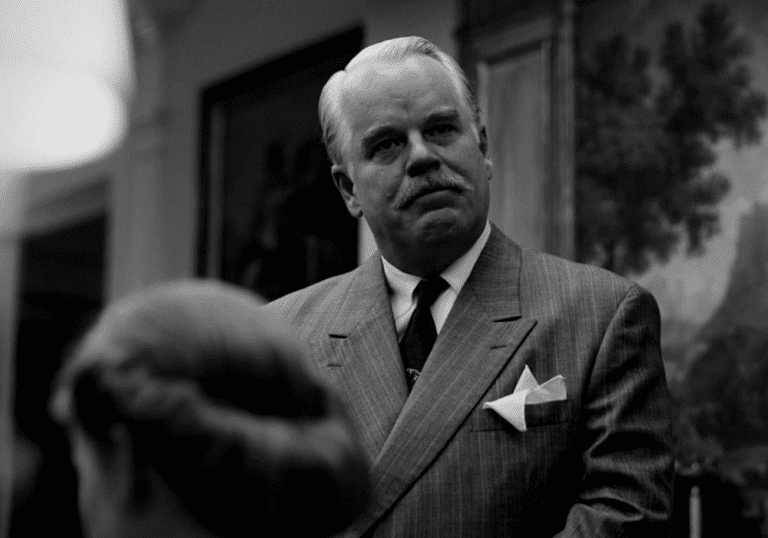
When I watched Paul Thomas Anderson’s The Master for the first time, it was nothing less than a revelation.
In a very literal sense, it was almost an apocalyptic moment. What I saw on the screen was simply my life revealed – and, particularly, the end of my life. At least, the end of the first half of my life.
See, I grew up with the Master.
And this is why I got choked up when I learned of Hoffman’s death, before my mind could even comprehend the reason. His performance had gotten embedded deep in my soul. It took my brain a few minutes to catch up to what my heart knew reflexively.
The film is, in itself, an intense psychological experience. It seems Anderson’s intent was for his audience to feel the emotional oppression, confusion, and relief of the main character Freddie Quell (played brilliantly by Joaquin Phoenix), such that the line between our minds and his becomes blurred. When Freddie, the alcoholic, PTSD-ridden WWII veteran, first meets Hoffman’s character Lancaster Dodd, the leader of a cult called The Cause, we are immediately subjected to the charming benevolence characteristic of all master manipulators, such that we ourselves are nearly deceived.
And when Dodd, the Master, introduces Freddie to “informal processing” (The Cause’s version of Scientology’s “auditing”) we are witnesses to the vicious, twisted core of emotional abuse.
It is nothing less than breaking a person’s spirit in order to control them, all the while convincing them it is for their own good.
The Master: “You will be my guinea pig and protégé.”
///
Dan Allender has said, “We can only see healing when we name what is true.”
For me that requires saying that what happened to me was not just someone getting angry or being too strict or controlling. No, what happened to me was constant, calculated emotional abuse and manipulation. My abuser wasn’t accidentally saying some abusive things here and there. Rather, he was acting out of his own pathologies to systematically break me, to stop me from being who he knew I really was in order to minimize the perceived threat to his own ego.
It was a program of isolation and control. A vicious cycle of aggression, deprivation, and benevolence to ensure conformity. An intentional sabotage of opportunity and hope to force me into submission or face the disapproval of God himself.
And while his churches and groups over the years were not, perhaps, on the scale of The Cause, I must name them too.
They were high-control, cultlike communities.
And I grew up with the Master.
///
Just before she died of breast cancer, we had a few conversations.
The Master had controlled everything about her life. She had been forced to take her adulterous, abusive, addicted husband back (into our family’s home) several times before he finally left for good. She had been forced to function as the sole provider for our family, working insane hours all while being berated and shamed for the slightest infractions. She never remarried, never had children.
She was so kind. She impacted so many people through a life of humility and service. And she was broken. Like me.
But in those few conversations before she died, it was the strangest thing.
The creativity, the independence, the intellect. It was all there again. The unbroken person she truly was, emerging one last time.
And, the connection.
///
During the recent In Memoriam segment on the Oscars, I cried again when Philip Seymour Hoffman’s picture appeared on the screen.
This man helped me to name the Master.
His performance sealed the eruption of the Real taking place in my life.
He helped me to get on the motorcycle, turn up the throttle, and not look back.
///
The Master: “If you leave here, I don’t ever want to see you again. Or, you can stay.”
Freddie: “Maybe in the next life.”


Previous Post

April 18, 2014
Jesus Is Dying to be Inclusive - So Why Aren't We?
Next Post

April 29, 2014 Five Problems With Grace
Browse Our Archives
Select a Category Uncategorized
Select a Month December 2018 August 2018 July 2018 July 2017 May 2017 January 2017 November 2016 October 2016 August 2016 July 2016 May 2016 April 2016 March 2016 February 2016 January 2016 December 2015 November 2015 October 2015 September 2015 August 2015 July 2015 June 2015 May 2015 April 2015 February 2015 January 2015 December 2014 November 2014 October 2014 September 2014 August 2014 July 2014 June 2014 May 2014 April 2014 March 2014 February 2014 January 2014 December 2013 October 2013 September 2013 August 2013 July 2013 June 2013 May 2013 April 2013 March 2013 February 2013 January 2013 December 2012 November 2012 September 2012 August 2012 July 2012 June 2012 March 2012 December 2011 November 2011 October 2011 September 2011 August 2011 March 2011
Follow Us!
TAKE THE
Religious Wisdom Quiz
Which Psalm is the longest chapter in the Bible?
Select your answer to see how you score.
Psalm 23 Psalm 50 Psalm 119 Psalm 1
Support this
Column


Related posts from Zach Hoag Is Uncategorized

Why We Sometimes Need to Say "Cult"


The Ghost of Christmas Present has a word...
TRENDING AT PATHEOS General Christian

Seventy and Five Years Old: God Still Starts...
There is a small detail tucked into Genesis 12 that I skipped...

A Biblical Vision of Success in Christian Life...
The Concern and Quest Recent trends and tendencies I note around me...

Indigenous Peoples’ Day and the Church
Indigenous' Peoples Day or Columbus Day? Depending on where you live...

When Spiritual Growth Looks Like Losing Ground
Four Passive Spiritual Disciplines: An Introduction When I was a college freshman,...

Faith and Finding Your Current Season
“To everything there is a season,” Ecclesiastes tells us, “and a time...

Did Jesus Fear God's Wrath in Gethsemane?
That Time Jesus Was Terrified Before we begin, let me say at...
view all General Christian blogs
Ad-Free & Subscriber Log-In Subscription Support
- About Us
- 2026 Calendar
- Videos
- Podcasts
- Library of World Religions
- Faith In Media Tracker
- Advertise With Us
- Write for Us
- Privacy Policy
- Terms of Service
- Do Not Sell My Data
- Contact Us
- Radiant Digital
- Manage Newsletter Subscriptions
- Unsubscribe From Notifications
- Sitemap
Copyright 2008-2026, Patheos. All rights reserved.
Subscription Support Ad-Free & Subscriber Log-In
Follow Patheos