
BuddhistCatholicContemplativeEvangelicalGeneral ChristianHinduJewishLatter-day SaintMuslimNew VisionsProgressive Christian
Beliefs
- Buddhist
- Catholic
- Contemplative
- Evangelical
- General Christian
- Hindu
- Jewish
- Latter-day Saint
- More Voices
- Muslim
- New Visions
- Pagan
- Progressive Christian
Topics
- Religion News
- Food and Religion
- Sports and Religion
- Religious Art
- Religious Music and Entertainment
- Religious Events
- History and Religion
- Style and Religion
- Politics and Religion
- Women in Religion
- Recreation Outdoors and Religion
- Business Finance and Religion
- Careers Workplace and Religion
- Education and Religion
- Family Parenting and Religion
- Health Fitness and Religion
- Home and Religion
- Relationships and Religion
- Technology and Religion
- Travel and Religion
Columnists
- Buddhist Columnists
- Business Finance and Religion Columnists
- Careers Workplace and Religion Columnists
- Catholic Columnists
- Contemplative Columnists
- Education and Religion Columnists
- Evangelists Columnists
- Family Parenting and Religion Columnists
- General Christian Columnists
- Health Fitness and Religion Columnists
- Hindu Columnists
- History and Religion Columnists
- Home and Religion Columnists
- Jewish Columnists
- More Voices Columnists
- Latter Day Columnists
- Muslim Columnists
- New Visions Columnists
- Nonreligious Columnists
- Pagan Columnists
- Politics and Religion Columnists
- Progressive Columnists
- Recreation Outdoors and Religion Columnists
- Relationships and Religion Columnists
- Religion News Columnists
- Religious Art Columnists
- Religious Events Columnists
- Religious Music and Entertainment Columnists
- Sports and Religion Columnists
- Style and Religion Columnists
- Technology and Religion Columnists
- Travel and Religion Columnists
- Women in Religion Columnists
Resource Library
- 2026 Calendar
- Library of World Religions
- The 100 Most Holy Places on Earth
- Patheos Answers
- Podcasts
- Videos
- Faith Leaders Database
- Anglican Episcopalian
- Bahai
- Baptist
- Buddhism
- Christianity
- Confucianism
- Eastern Orthodoxy
- Hinduism
- Holiness and Pentecostal
- ISKCON
- Islam
- Judaism
- Lutheran
- Methodist
- The Church of Jesus Christ of Latter-day Saints
- New Age
- Paganism
- Presbytarian and Reformed
- Protestantism
- Religion Behind the Scenes
- Roman Catholic
- Scientology
- Shia Islam
- Sikhism
- Sufism
- Sunni Islam
- Taoism
- Zen
- See all religions
Research Tools
 Ad-Free & Subscriber Log-In Subscription Support
Ad-Free & Subscriber Log-In Subscription Support
Follow Patheos 

- Trending:
- Forgiveness
- |
- Marriage
- |
- Consciousness
- |
- Death Penalty
- |
- Election
- |
- Halloween
 Zach Hoag Is Uncategorized
- Home
- Jesus Is Dying to be Inclusive – So Why Aren’t We?
Jesus Is Dying to be Inclusive – So Why Aren’t We?
Last updated on: August 16, 2018 at 2:21 pm by Zach Hoag
Jesus Is Dying to be Inclusive – So Why Aren’t We? 2018-08-16T14:21:52-05:00 Zach Hoag
Patheos Explore the world's faith through different perspectives on religion and spirituality! Patheos has the views of the prevalent religions and spiritualities of the world.
It’s Good Friday, and lots of Christians are reflecting on the single most defining truth in our faith-story.
That Jesus died for our sins according to the Scriptures.
Yes, there’s more to the story than just that. But if you were going to pin down one sentence, one phrase, that encapsulates who we are both in our own perception and the perceptions of those outside the church, it would likely be, Jesus died for our sins. Yes, Jesus lived (to inaugurate the kingdom). Yes, Jesus rose (to begin the new creation). Indeed, Jesus is Lord (and Caesar is not). And of a truth, Jesus is coming again (to complete the new kingdom/creation).
But all of this, and the whole story, seems to powerfully pivot on the point of his death.
The problem is, the way we have often understood that phrase – Jesus died for our sins – misses the real depth and significance of Good Friday. We have viewed it primarily as an individual transaction to pay for my damnable mistakes (and save me from the fiery wrath of God in the afterlife). Perhaps the last thing we have in mind when we say it is the thing that is really at the center of it: Israel. For Good Friday, and the crucifixion itself, uniquely locates our faith-story in the story of Israel.
Really, the cross can only be understood the apex of Israel’s prophetic anticipation. What I mean is, the hope for a pathologically unfaithful and politically oppressed nation was a Messiah who would somehow ameliorate their unfaithfulness and liberate them from the empire. And, given this nation’s history of worshiping God through sacrifice, it makes sense that both of these problems might be solved through a scapegoat. In this case, a person who would somehow embody all of Israel’s unfaithfulness and endure the just consequence of their sin – the oppression and retribution of the empire, par excellence, by execution on a Roman cross.
One of the key ways in which Israel had been unfaithful was in their vocation as a light to the world, and in their potential to welcome the world. That is, they persistently adopted the ways of empire – power, greed, excess, violence, oppression – and excluded those on the margins from full religious and social acceptance. During his kingdom-inaugurating life, Jesus confronted this head-on by attacking the unrighteous economies and exclusionary table practices of the religious insiders. Just before his arrest, and likely provoking his arrest, Jesus turned over the tables in the Temple which symbolized both unrighteous economy and religious exclusion.
Thus, Jesus became the true Israel, the light of the world, the one welcoming strangers, the unclean, Gentiles, women.
And Jesus died for Israel’s sins of exclusion.
Obviously, what was true of Israel’s unfaithfulness is no less true of all of us. In this sense, Jesus “is the atoning sacrifice for our [Israel’s] sins, and not only for ours but also for the sins of the whole world.”
And, “now in Christ Jesus you who once were far away have been brought near by the blood of Christ.”
But it goes further than that: “His purpose was to create in himself one new humanity out of the two, thus making peace, and in one body to reconcile both of them to God through the cross, by which he put to death their hostility.”
Through the cross, the prophetic anticipation of Israel’s forgiveness and restoration was accomplished. But also the forgiveness and restoration of everyone. And the making one of two groups formerly at odds – the religious and non-religious, the insiders and outsiders, those at the table and those eating the crumbs. Reunited as one new humanity.
Jesus died to be inclusive. So why is the church so bent on being exclusive? [Tweet This]
Why do we continue to practice policies and doctrines that deny the humanity of those who identify differently? Why do we create new classes of the unclean? Why can’t women lead? Why do gay people face dehumanization and discrimination? Why do racial minorities find themselves outnumbered and outcast?
On Good Friday, this is what we must consider. That the whole meaning of the cross is wrapped up in putting to death the hostility between insiders and outsiders. In restoring the welcome of the covenant, so that Abraham’s family may truly become a family of many nations, peoples, and cultures. Indeed, a blessing to the whole world.
Today, on Good Friday, Jesus is dying to be inclusive.
Why aren’t we?
—
Postscript:
By the way, if the cross is our defining truth, it must be the truth that ties together all the other truths. And indeed it is. Because the Messiah was really, truly the Liberating King of Israel. And, as he inaugurated the kingdom during his life, he qualified himself, not just to be a scapegoat, but to be a spotless, innocent lamb. And for this reason, God couldn’t allow the innocent king to remain in the tomb. The empire couldn’t keep this good man down. That would be wrong.
So, God raised him from the dead.
And after Jesus rose, he ascended to reign at the right hand of God the Father, leading a host of captives in his wake, including the empire, sin, and, now, even death itself.
The true light of the world has guaranteed that no unfaithfulness can stop the new kingdom and creation from restoring perfect peace, justice, and love to the good world that God has made.
So we might as well join him, forgiven and free from guilt, in welcoming all into this covenant family.
It’s Friday – but Sunday’s coming.
Previous Post

April 13, 2014
How to Be Evangelical After World Vision: The Code
Next Post

April 25, 2014 Naming the Master
Browse Our Archives
Select a Category Uncategorized
Select a Month December 2018 August 2018 July 2018 July 2017 May 2017 January 2017 November 2016 October 2016 August 2016 July 2016 May 2016 April 2016 March 2016 February 2016 January 2016 December 2015 November 2015 October 2015 September 2015 August 2015 July 2015 June 2015 May 2015 April 2015 February 2015 January 2015 December 2014 November 2014 October 2014 September 2014 August 2014 July 2014 June 2014 May 2014 April 2014 March 2014 February 2014 January 2014 December 2013 October 2013 September 2013 August 2013 July 2013 June 2013 May 2013 April 2013 March 2013 February 2013 January 2013 December 2012 November 2012 September 2012 August 2012 July 2012 June 2012 March 2012 December 2011 November 2011 October 2011 September 2011 August 2011 March 2011
Follow Us!
TAKE THE
Religious Wisdom Quiz
What instrument did David play?
Select your answer to see how you score.
Harp Trumpet Flute Lyre
Support this
Column


Related posts from Zach Hoag Is Uncategorized

3 Reasons God Did Not Kill Jesus (But...

We're Never Gonna Survive Unless...We Get a Lot...
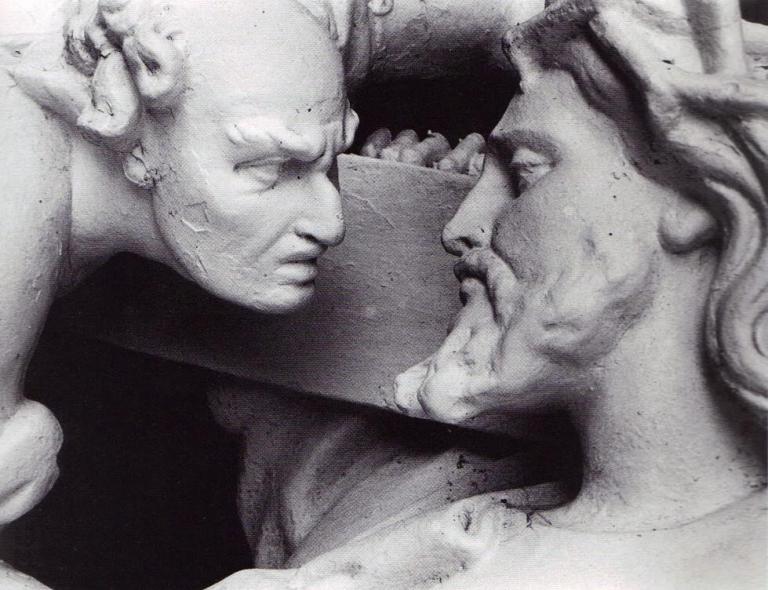
Victory Over the Devil: Jeremy Myers On the...

Best Reads of 2015: Redeeming Sex...From Harmful Evangelical...
TRENDING AT PATHEOS General Christian

Seventy and Five Years Old: God Still Starts...
There is a small detail tucked into Genesis 12 that I skipped...

A Biblical Vision of Success in Christian Life...
The Concern and Quest Recent trends and tendencies I note around me...

Indigenous Peoples’ Day and the Church
Indigenous' Peoples Day or Columbus Day? Depending on where you live...

When Spiritual Growth Looks Like Losing Ground
Four Passive Spiritual Disciplines: An Introduction When I was a college freshman,...

Faith and Finding Your Current Season
“To everything there is a season,” Ecclesiastes tells us, “and a time...

Did Jesus Fear God's Wrath in Gethsemane?
That Time Jesus Was Terrified Before we begin, let me say at...
view all General Christian blogs
Ad-Free & Subscriber Log-In Subscription Support
- About Us
- 2026 Calendar
- Videos
- Podcasts
- Library of World Religions
- Faith In Media Tracker
- Advertise With Us
- Write for Us
- Privacy Policy
- Terms of Service
- Do Not Sell My Data
- Contact Us
- Radiant Digital
- Manage Newsletter Subscriptions
- Unsubscribe From Notifications
- Sitemap
Copyright 2008-2026, Patheos. All rights reserved.
Subscription Support Ad-Free & Subscriber Log-In
Follow Patheos