
BuddhistCatholicContemplativeEvangelicalGeneral ChristianHinduJewishLatter-day SaintMuslimNew VisionsProgressive Christian
Beliefs
- Buddhist
- Catholic
- Contemplative
- Evangelical
- General Christian
- Hindu
- Jewish
- Latter-day Saint
- More Voices
- Muslim
- New Visions
- Pagan
- Progressive Christian
Topics
- Religion News
- Food and Religion
- Sports and Religion
- Religious Art
- Religious Music and Entertainment
- Religious Events
- History and Religion
- Style and Religion
- Politics and Religion
- Women in Religion
- Recreation Outdoors and Religion
- Business Finance and Religion
- Careers Workplace and Religion
- Education and Religion
- Family Parenting and Religion
- Health Fitness and Religion
- Home and Religion
- Relationships and Religion
- Technology and Religion
- Travel and Religion
Columnists
- Buddhist Columnists
- Business Finance and Religion Columnists
- Careers Workplace and Religion Columnists
- Catholic Columnists
- Contemplative Columnists
- Education and Religion Columnists
- Evangelists Columnists
- Family Parenting and Religion Columnists
- General Christian Columnists
- Health Fitness and Religion Columnists
- Hindu Columnists
- History and Religion Columnists
- Home and Religion Columnists
- Jewish Columnists
- More Voices Columnists
- Latter Day Columnists
- Muslim Columnists
- New Visions Columnists
- Nonreligious Columnists
- Pagan Columnists
- Politics and Religion Columnists
- Progressive Columnists
- Recreation Outdoors and Religion Columnists
- Relationships and Religion Columnists
- Religion News Columnists
- Religious Art Columnists
- Religious Events Columnists
- Religious Music and Entertainment Columnists
- Sports and Religion Columnists
- Style and Religion Columnists
- Technology and Religion Columnists
- Travel and Religion Columnists
- Women in Religion Columnists
Resource Library
- 2026 Calendar
- Library of World Religions
- The 100 Most Holy Places on Earth
- Patheos Answers
- Podcasts
- Videos
- Faith Leaders Database
- Anglican Episcopalian
- Bahai
- Baptist
- Buddhism
- Christianity
- Confucianism
- Eastern Orthodoxy
- Hinduism
- Holiness and Pentecostal
- ISKCON
- Islam
- Judaism
- Lutheran
- Methodist
- The Church of Jesus Christ of Latter-day Saints
- New Age
- Paganism
- Presbytarian and Reformed
- Protestantism
- Religion Behind the Scenes
- Roman Catholic
- Scientology
- Shia Islam
- Sikhism
- Sufism
- Sunni Islam
- Taoism
- Zen
- See all religions
Research Tools
 Ad-Free & Subscriber Log-In Subscription Support
Ad-Free & Subscriber Log-In Subscription Support
Follow Patheos 

- Trending:
- Forgiveness
- |
- Marriage
- |
- Consciousness
- |
- Death Penalty
- |
- Election
- |
- Halloween
 The Semi-Official Blog of Zack Hunt
- Home
- Progressive Christian
- Martin Luther King Jr. And The Making Of Habits
Martin Luther King Jr. And The Making Of Habits
Last updated on: January 16, 2017 at 11:19 am by Zack Hunt
Martin Luther King Jr. And The Making Of Habits 2017-01-16T11:19:44-06:00 Zack Hunt
Patheos Explore the world's faith through different perspectives on religion and spirituality! Patheos has the views of the prevalent religions and spiritualities of the world.
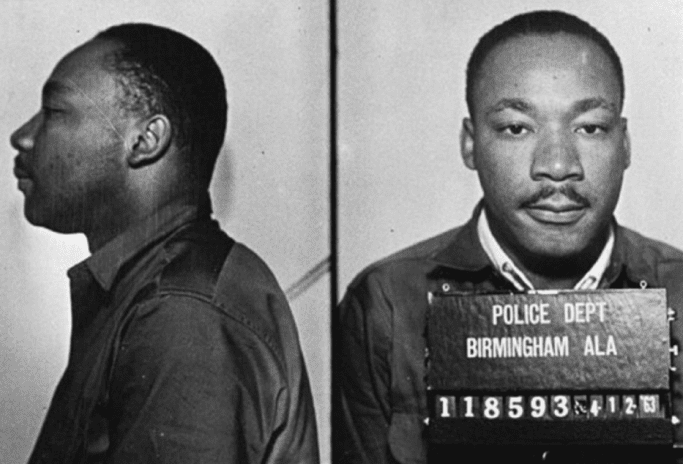
On the wall of my favorite little Persian restaurant in Memphis (yes, there are Persian restaurants in Memphis), there hung a sign.
On the sign were written these words, “In the beginning, we make our habits. In the end, our habits make us.”
In that spirit, I’ve decided to begin a new habit today. Starting today and every MLK Day henceforth, I want to make it a habit of reading through Dr. King’s Letter From A Birmingham Jail and when my children are old enough (they’re 1 and 3 now), I want to read it to them too.
I don’t tell you that to pat myself on the back as if it’s some great achievement. It’s not. The letter is fairly short and it is no great accomplishment to read something one has already read through many times before. I announce it publicly simply to keep myself publicly accountable for the new habit I hope to form; a habit I need to form because I am part of the often ignorant, more often than not intransigent, and too often callous audience Dr. King was trying to reach from his Birmingham cell.
I am a white clergyman.
An ordained elder in the Church of the Nazarene, to be exact.
And I need to make Dr. King’s prophetic words an ongoing conviction in my life.
I also announce my new habit publicly in the perhaps vain hope that you too might take up the same habit for yourself. Why should you? Because Dr. King’s Letter From A Birmingham Jail is, without question, one of the greatest works of civil and theological reflection, not just in American history, but also and especially in the history of the Christian Church. It deserves a place in our spiritual disciplines, particularly if you come from a background like mine: white, privileged, and too many times blissfully (and shamefully) unaware of the pain and struggles of my neighbors who look and talk and think and act differently than I do.
Those who know Dr. King’s letter well, know its conviction jumps right of the page and its criticisms (sadly) remain as relevant today as they were half a century ago. Like this prophetic warning that seems as if it could have written just last year,
I am further convinced that if our white brothers dismiss as “rabble rousers” and “outside agitators” those of us who employ nonviolent direct action, and if they refuse to support our nonviolent efforts, millions of Negroes will, out of frustration and despair, seek solace and security in black nationalist ideologies–a development that would inevitably lead to a frightening racial nightmare.
In his letter, Dr. King also famously spoke of time. He was calling to account white clergymen, his brothers in the faith, for their admonition to wait on equal rights because they would arrive eventually. In response, Dr. King wrote,
Such an attitude stems from a tragic misconception of time, from the strangely irrational notion that there is something in the very flow of time that will inevitably cure all ills. Actually, time itself is neutral; it can be used either destructively or constructively. More and more I feel that the people of ill will have used time much more effectively than have the people of good will. We will have to repent in this generation not merely for the hateful words and actions of the bad people but for the appalling silence of the good people. Human progress never rolls in on wheels of inevitability; it comes through the tireless efforts of men willing to be co workers with God, and without this hard work, time itself becomes an ally of the forces of social stagnation. We must use time creatively, in the knowledge that the time is always ripe to do right. Now is the time to make real the promise of democracy and transform our pending national elegy into a creative psalm of brotherhood. Now is the time to lift our national policy from the quicksand of racial injustice to the solid rock of human dignity.
You will, no doubt, see many quotes from Dr. King’s famous letter shared across social media and rightfully so. I share these with you, not to add to the noise, but to once again hold myself accountable, for as I confessed before, I am that white clergyman Dr. King wrote to and I need hear and heed these words of my brother in the faith. Which is why I want to make an annual habit of reading Dr. King’s letter because I don’t want to become complacent and dismissive of the struggles of those whose plight my privilege makes it impossible for me to fully comprehend. I want to return time and again to Dr. King’s letter so that I will remain convicted and convinced that if I want to see the change in the world I so often write about, I can’t simply sit by and wait on the wheels of inevitability to come rolling by.
As I read through Dr. King’s letter today, I also promise I will do my best to resist the temptation to blow up your Twitter and Facebook feeds sharing every incredible quote I come from.
Instead, I want to leave you with a lesser known section of a King essay you are probably not quite as familiar with. It was entitled The Time For Freedom Has Come and appeared in the September 10, 1961 edition of New York Times Magazine. There are, of course, many riches to be mined in Dr. King’s essay, but I want to leave you with his final words, words that beautifully and succinctly sum up the driving force in Dr. King’s life: the life and teaching of Jesus of Nazareth.
In an effort to understand the students and to help them understand themselves, I asked one student I know to find a quotation expressing his feeling of our struggle. He was an inarticulate you man, athletically expert and far more poetic with a basketball than with words, but few would have found the quotation he typed on a care and left on my desk early one morning:
I sought my soul, but my soul I could not see,
I sought God, but he eluded me,
I sought my brother, and I found all three.
Previous Post

January 12, 2017
Silence: A Gut-Wrenching Look At Faith
Next Post
January 18, 2017 A Hard, But Simple Truth For Non-Affirming Christians
Browse Our Archives
Select a Category Book Review Classifieds Commentary Fundie Friday Funny Pictures Music Video News Prophecy Technology Televangelist Throwback Thursday Tract Tuesday Tracts Uncategorized Videos
Select a Month June 2019 May 2019 April 2019 March 2019 February 2019 January 2019 December 2018 November 2018 October 2018 August 2018 June 2018 May 2018 March 2018 February 2018 January 2018 October 2017 September 2017 August 2017 July 2017 June 2017 May 2017 April 2017 March 2017 February 2017 January 2017 December 2016 November 2016 September 2016 July 2016 June 2016 May 2016 April 2016 March 2016 February 2016 January 2016 December 2015 November 2015 October 2015 September 2015 August 2015 July 2015 June 2015 May 2015 April 2015 March 2015 February 2015 January 2015 December 2014 November 2014 October 2014 September 2014 August 2014 July 2014 June 2014 May 2014 April 2014 March 2014 February 2014 January 2014 December 2013 November 2013 October 2013 September 2013 August 2013 July 2013 June 2013 May 2013 April 2013 March 2013 February 2013 January 2013 December 2012 November 2012 October 2012 September 2012 August 2012 July 2012 June 2012 May 2012 April 2012 March 2012 February 2012 January 2012 December 2011 November 2011 October 2011 September 2011 August 2011 July 2011 June 2011 May 2011 April 2011 March 2011 February 2011 January 2011 December 2010 November 2010 October 2010 September 2010 August 2010
Follow Us!
TAKE THE
Religious Wisdom Quiz
What instrument did David play?
Select your answer to see how you score.
Harp Lyre Flute Trumpet
Related posts from The Semi-Official Blog of Zack Hunt

The End Is Nigh! Get Your Rapture Survival...
The Semi-Official Blog of Zack Hunt

Is It Really Well With My Soul?
The Semi-Official Blog of Zack Hunt

Daddy, Is Your Friend Going To Come Back...
The Semi-Official Blog of Zack Hunt

I Want To Speak At Your Event And...
The Semi-Official Blog of Zack Hunt
TRENDING AT PATHEOS Progressive Christian

Why Christians Have a Sacred Duty to Vote:...
The Bible offers strong support for the sacred duty to vote. Here...

What Being a Modern-Day Apostle Means to Me
In my last column, I discussed the ins and outs of modern-day...

Did Ancient China Once Worship the God of...
Across human history, a common thread weaves through the origins of the...

Love Your Neighbor – Including Earth-Kin: Lev. 19,...
God’s command to love your neighbor means acting in an ethical and...

Lead a Church Study of “Jesus and Lao...
Guest writer Jack Thomas (The Irreverent Reverend) reflects on leading his church...

Principles for Understanding the Apostolic Ministry Today
Whenever people discover that my formal ministry title is "apostle," as in...
view all Progressive Christian blogs
Ad-Free & Subscriber Log-In Subscription Support
- About Us
- 2026 Calendar
- Videos
- Podcasts
- Library of World Religions
- Faith In Media Tracker
- Advertise With Us
- Write for Us
- Privacy Policy
- Terms of Service
- Do Not Sell My Data
- Contact Us
- Radiant Digital
- Manage Newsletter Subscriptions
- Unsubscribe From Notifications
- Sitemap
Copyright 2008-2026, Patheos. All rights reserved.
Subscription Support Ad-Free & Subscriber Log-In
Follow Patheos