
BuddhistCatholicContemplativeEvangelicalGeneral ChristianHinduJewishLatter-day SaintMuslimNew VisionsProgressive Christian
Beliefs
- Buddhist
- Catholic
- Contemplative
- Evangelical
- General Christian
- Hindu
- Jewish
- Latter-day Saint
- More Voices
- Muslim
- New Visions
- Pagan
- Progressive Christian
Topics
- Religion News
- Food and Religion
- Sports and Religion
- Religious Art
- Religious Music and Entertainment
- Religious Events
- History and Religion
- Style and Religion
- Politics and Religion
- Women in Religion
- Recreation Outdoors and Religion
- Business Finance and Religion
- Careers Workplace and Religion
- Education and Religion
- Family Parenting and Religion
- Health Fitness and Religion
- Home and Religion
- Relationships and Religion
- Technology and Religion
- Travel and Religion
Columnists
- Buddhist Columnists
- Business Finance and Religion Columnists
- Careers Workplace and Religion Columnists
- Catholic Columnists
- Contemplative Columnists
- Education and Religion Columnists
- Evangelists Columnists
- Family Parenting and Religion Columnists
- General Christian Columnists
- Health Fitness and Religion Columnists
- Hindu Columnists
- History and Religion Columnists
- Home and Religion Columnists
- Jewish Columnists
- More Voices Columnists
- Latter Day Columnists
- Muslim Columnists
- New Visions Columnists
- Nonreligious Columnists
- Pagan Columnists
- Politics and Religion Columnists
- Progressive Columnists
- Recreation Outdoors and Religion Columnists
- Relationships and Religion Columnists
- Religion News Columnists
- Religious Art Columnists
- Religious Events Columnists
- Religious Music and Entertainment Columnists
- Sports and Religion Columnists
- Style and Religion Columnists
- Technology and Religion Columnists
- Travel and Religion Columnists
- Women in Religion Columnists
Resource Library
- 2026 Calendar
- Library of World Religions
- The 100 Most Holy Places on Earth
- Patheos Answers
- Podcasts
- Videos
- Faith Leaders Database
- Anglican Episcopalian
- Bahai
- Baptist
- Buddhism
- Christianity
- Confucianism
- Eastern Orthodoxy
- Hinduism
- Holiness and Pentecostal
- ISKCON
- Islam
- Judaism
- Lutheran
- Methodist
- The Church of Jesus Christ of Latter-day Saints
- New Age
- Paganism
- Presbytarian and Reformed
- Protestantism
- Religion Behind the Scenes
- Roman Catholic
- Scientology
- Shia Islam
- Sikhism
- Sufism
- Sunni Islam
- Taoism
- Zen
- See all religions
Research Tools
 Ad-Free & Subscriber Log-In Subscription Support
Ad-Free & Subscriber Log-In Subscription Support
Follow Patheos 

- Trending:
- Forgiveness
- |
- Marriage
- |
- Consciousness
- |
- Death Penalty
- |
- Election
- |
- Halloween
 The Semi-Official Blog of Zack Hunt
- Home
- Progressive Christian
- Life’s Not Fair (Which Is Why We Should Do Something About It)
Life’s Not Fair (Which Is Why We Should Do Something About It)
Last updated on: February 17, 2016 at 10:04 am by Zack Hunt
Life’s Not Fair (Which Is Why We Should Do Something About It) 2016-02-17T10:04:46-06:00 Zack Hunt
Patheos Explore the world's faith through different perspectives on religion and spirituality! Patheos has the views of the prevalent religions and spiritualities of the world.
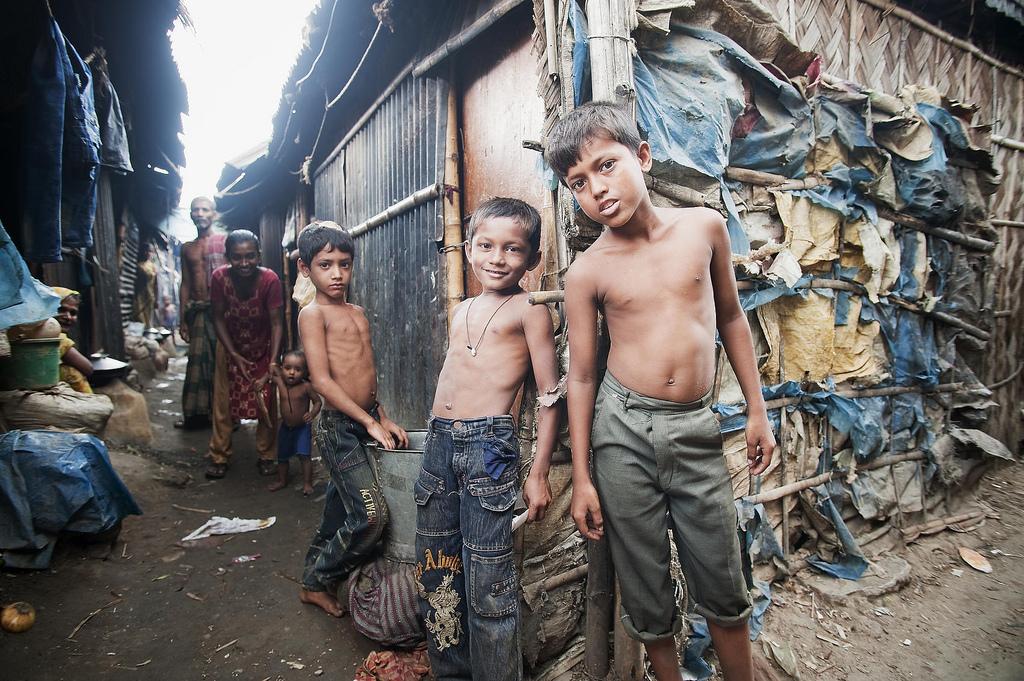 (Credit: United Nations Photo, Flickr Creative Commons)
You ever watch Vice on HBO?
It’s been around for a few years, but I just started watching the other day after having exhausted everything I want to watch on Netflix.
If you’re not familiar with it – and I’m just barely familiar with it, so maybe this is a poor description – it’s sort of like a millennial version of 60 Minutes, but half as long. The show (produced by the same people behind the Vice website) usually tackles 2 or 3 unrelated, but often controversial subjects each episode. The second half of the episode I watched the other day focused on the slums of Mumbai and the dramatic economic disparity in that exist there and throughout much of India.
Here it is if you want to watch it. And you should. The segment on Mumbai begins at the 17:46 mark.
One of the world’s wealthiest men, Nita Ambani, makes his home in Mumbai. Nothing particularly unusual about that. Rich people live everywhere. What makes Ambani’s residence unique is the fact that his “home” is a 400,000 square foot, 27-storey skyscraper that rises above the Mumbai slums like a giant middle finger.
At an estimated cost of $1 billion – yes, that’s billion with a “b” – it’s the most expensive single family home on earth.
Contrast that with the population of India in general where, according to the show, 360 million people live in poverty and in Mumbai in particular where 11 million people call slums like Dharavi (featured on the show) home. As the host of Vice put it, that 11 million figure is the equivalent of “4 times the population of Chicago…living in absolute squalor.” And that overall poverty statistic in India? That’s equivalent to the entire population of the United States living in abject poverty.
It’s unimaginable.
But seeing it is even worse, even when “seeing” it just means watching it on TV.
According to the show, there’s only 1 working toilet for every 1,400 people living in Dhavari. Which means raw sewage flows freely through the streets. Countless people in Dhavari literally live at work, sleeping on the floor because they can’t afford rent even in the slum. Young children are seen working heavy machinery, while women sort trash in hopes of selling whatever they can recycle, and around each corner is a new horror that no one should ever have to live through.
As the show’s producer put it, “half the population is living off the trash of the other half.”
It’s utterly heartbreaking and gives a whole new meaning to a mantra I heard nearly every day growing up.
Life’s not fair.
It’s a somewhat nicer way of saying, “Shut up and stop complaining.”
Your friend got a new car for their 16th birthday and you’re still riding the bus to school?
Life’s not fair.
You got cut from the team even though you tried your hardest and are obviously so much better than that one guy that did make the team?
Life’s not fair.
You’ve got an insatiable hankering for a Chick-Fil-A chicken sandwich, but it’s Sunday?
Life’s not fair.
For me (and I’m guessing for you too), being told “life’s not fair” not only functioned as an effective weapon in the battle to quiet my nonstop adolescent complaining, it also served as a way to put my struggles and disappointments in perspective because at the end of the day, what I thought was the end of the world as I knew it, really wasn’t. Or as the kids today might put it, being told “life’s not fair” was and still is for most of us, a privilege check.
But as I watched this episode of Vice and witnessed the unspeakable struggle of strangers on the other side of the planet, I couldn’t help but think that ancient mantra – “Life’s not fair.” But this time it wasn’t about my pseudo-struggles.
It was about the absurd unfairness that is the accident of my birth.
By absolutely no effort of my own, I was born in America. Not to a wealthy family by any means, but one that could afford to send me off to kindergarten instead of putting me to work sorting trash in hopes of scraping together enough change to eat our next meal.
I did absolutely nothing to earn the blessing of where I was born.
The 11 million people living in abject poverty in Mumbai did absolutely nothing to suffer the curse of where they were born.
It gives “life’s not fair” a whole new meaning.
In the United States, we love to revel in the myth of the self-made man and idea that all you have to do is pull yourself up by your bootstraps to succeed in life. We’re decidedly less enthusiastic about admitting the radically important role the dumb luck the circumstance of our birth plays in our success. And that’s to say nothing of all the people who helped us along the way to success, but whose critical role mysteriously gets edited out when we retell the legend of our triumph in life.
The truth of the matter is the folks living in squalor in Mumbai work just as hard – if not much, much harder – than the rest of us, but are almost guaranteed both by the random circumstance of their birth and the not so random nature of modern global economics that they will live and die in utter poverty.
How fair is that?
How fair is it that I was born with so much and they were born with so little?
I get that life’s not fair and never will be, but as a Christian, I just can’t leave it at that because of a guy named Abraham, a man named Cain, and a savior named Jesus.
Abraham got a pretty killer deal from God for no apparent reason. Genesis 12 begins with God calling Abraham to leave his homeland behind and if Abraham will do so, he will be blessed beyond imagination. But there’s nothing in Genesis 12 to indicate Abraham did anything do earn such a sweet hookup.
If 12 year old me was his neighbor, I’d be the first one shouting from the rooftops, “It’s not fair!” And my mom would right there next to me to remind me life isn’t fair.
And all of that is true.
But it’s not the end of the story.
God doesn’t doesn’t bless Abraham because God got bored one day and thought “I should make a random dude rich. Let’s see who’s out there. Eh, I guess that Abraham dude will work.”
God’s blessing of Abraham had a very specific and truly incredible purpose: Abraham is blessed to be a blessing and through him “all the families of the earth will be blessed.”
Now, if you grew up in the Church, this sort of language is old hat and about as cliché as it gets. We love to #blessed our pictures and stories on social media and we all know the Sunday School answer to this story is Abraham’s great-great-great-lots of greats later-grandson Jesus was the ultimate way all the families of the earth would be blessed.
But think about this story again, this time through the lens of Mumbai.
And with another biblical story in the back of your mind.
You remember Cain, right? Of course you do. Not exactly the modicum of virtue, what with the whole murdering his brother thing. But there’s a fascinating exchange during God’s integration of Cain that frames not only God’s covenant with Abraham, but the entire story of Israel.
Then the Lord said to Cain, “Where is your brother Abel?”
He said, “I do not know; am I my brother’s keeper?”
Am I my brother’s keeper?
It’s a line brothers and sisters have used throughout time to let themselves off the hook for not keeping track of their sibling like their parents told them to do. Today, Cain’s response to God has morphed into a broader justification for ignoring the needs of our neighbors as if the correct response to Cain’s question is “Of course we’re not our brother’s keeper. Each person is only responsible for themselves.” It’s a mentality that plays well in many corners of America, but it’s profoundly unbiblical.
From the laws of Leviticus and their divine command to care for the poor and the alien in Israel’s midst, to God’s repeated chastisement of Israel in the Psalms and prophets for their failure to seek justice, rescue the oppressed, defend the orphan, and plead for the widow, to Jesus himself who declared that at the end of all things God’s judgment of our souls will come down to how we cared from the least of these around us, and finally to the early Church who answered the call of their Lord by sharing everything they had in common and giving it to the poor, the Bible gives a resounding and rather unequivocal answer to Cain’s question.
Yes, we are our brother’s keeper.
Which is what makes the Abrahamic covenant so incredibly interesting, so profoundly hopeful, and so fundamentally relevant for us today.
God’s covenant with Abraham wasn’t a get rich quick scheme for one lucky guy in the ancient near east.
It was a means of grace for the entire world.
Not just in ethereal, salvific ways through Jesus, but in very earthly and tangible ways through each and everyone of us who claims to be a child of God.
It’s not fair that some of us begin life with so much while others are born with so little. We may “earn” things later in life, but the very opportunity to do earn riches is, in many ways, an accident of birth.
I don’t think we can ever answer why this is the case, why it is that God didn’t choose to give all of us the same opportunity and the same blessings at birth. That, I think, is a question whose answer will have to wait till eternity.
But there is a question or two we can answer.
Am I my brother’s keeper?
And if I am, what am I going to do about it?
If we are going to claim to be a biblical people, then the answer to that first question is yes. As the people of God we have been blessed to be a blessing, a means of grace to the entire world. Not just in abstract spiritual ways, but also in the tangible everyday feeding of the hungry, clothing of the naked, and caring for the sick and imprisoned.
Of course, answering that second question and figuring out the logistics of doing those aforementioned things from Matthew 25 can be difficult and will absolutely require a great deal of creativity and sacrifice.
But in a land of unprecedented wealth, where the coffers of the Church alone could end homelessness in America, the challenge of caring for the world’s poor (to say nothing of the poor here at home) is one we can meet and one we must meet (or at the very least try to meet) if we are going to continue to talk about being a biblical people and go about calling ourselves disciples of Jesus.
Otherwise, all that talk about things like biblical values and loving our neighbors and, yes, even the sanctity of life is just that.
All talk.
Previous Post

February 1, 2016
The American Beatitudes

Browse Our Archives
Select a Category Book Review Classifieds Commentary Fundie Friday Funny Pictures Music Video News Prophecy Technology Televangelist Throwback Thursday Tract Tuesday Tracts Uncategorized Videos
Select a Month June 2019 May 2019 April 2019 March 2019 February 2019 January 2019 December 2018 November 2018 October 2018 August 2018 June 2018 May 2018 March 2018 February 2018 January 2018 October 2017 September 2017 August 2017 July 2017 June 2017 May 2017 April 2017 March 2017 February 2017 January 2017 December 2016 November 2016 September 2016 July 2016 June 2016 May 2016 April 2016 March 2016 February 2016 January 2016 December 2015 November 2015 October 2015 September 2015 August 2015 July 2015 June 2015 May 2015 April 2015 March 2015 February 2015 January 2015 December 2014 November 2014 October 2014 September 2014 August 2014 July 2014 June 2014 May 2014 April 2014 March 2014 February 2014 January 2014 December 2013 November 2013 October 2013 September 2013 August 2013 July 2013 June 2013 May 2013 April 2013 March 2013 February 2013 January 2013 December 2012 November 2012 October 2012 September 2012 August 2012 July 2012 June 2012 May 2012 April 2012 March 2012 February 2012 January 2012 December 2011 November 2011 October 2011 September 2011 August 2011 July 2011 June 2011 May 2011 April 2011 March 2011 February 2011 January 2011 December 2010 November 2010 October 2010 September 2010 August 2010
Follow Us!
TAKE THE
Religious Wisdom Quiz
Therefore, I urge you, brothers, in view of God's mercy, to offer your bodies as _______, holy and pleasing to God-this is your spiritual act of worship.
Select your answer to see how you score.
An Offering Sacrificial Lambs Clay Vessels Living Sacrifices
Related posts from The Semi-Official Blog of Zack Hunt

The End Is Nigh! Get Your Rapture Survival...
The Semi-Official Blog of Zack Hunt

Is It Really Well With My Soul?
The Semi-Official Blog of Zack Hunt

Daddy, Is Your Friend Going To Come Back...
The Semi-Official Blog of Zack Hunt

I Want To Speak At Your Event And...
The Semi-Official Blog of Zack Hunt
TRENDING AT PATHEOS Progressive Christian

Why Christians Have a Sacred Duty to Vote:...
The Bible offers strong support for the sacred duty to vote. Here...

What Being a Modern-Day Apostle Means to Me
In my last column, I discussed the ins and outs of modern-day...

Did Ancient China Once Worship the God of...
Across human history, a common thread weaves through the origins of the...

Love Your Neighbor – Including Earth-Kin: Lev. 19,...
God’s command to love your neighbor means acting in an ethical and...

Lead a Church Study of “Jesus and Lao...
Guest writer Jack Thomas (The Irreverent Reverend) reflects on leading his church...

Principles for Understanding the Apostolic Ministry Today
Whenever people discover that my formal ministry title is "apostle," as in...
view all Progressive Christian blogs
Ad-Free & Subscriber Log-In Subscription Support
- About Us
- 2026 Calendar
- Videos
- Podcasts
- Library of World Religions
- Faith In Media Tracker
- Advertise With Us
- Write for Us
- Privacy Policy
- Terms of Service
- Do Not Sell My Data
- Contact Us
- Radiant Digital
- Manage Newsletter Subscriptions
- Unsubscribe From Notifications
- Sitemap
Copyright 2008-2026, Patheos. All rights reserved.
Subscription Support Ad-Free & Subscriber Log-In
Follow Patheos