
BuddhistCatholicContemplativeEvangelicalGeneral ChristianHinduJewishLatter-day SaintMuslimNew VisionsProgressive Christian
Beliefs
- Buddhist
- Catholic
- Contemplative
- Evangelical
- General Christian
- Hindu
- Jewish
- Latter-day Saint
- More Voices
- Muslim
- New Visions
- Pagan
- Progressive Christian
Topics
- Religion News
- Food and Religion
- Sports and Religion
- Religious Art
- Religious Music and Entertainment
- Religious Events
- History and Religion
- Style and Religion
- Politics and Religion
- Women in Religion
- Recreation Outdoors and Religion
- Business Finance and Religion
- Careers Workplace and Religion
- Education and Religion
- Family Parenting and Religion
- Health Fitness and Religion
- Home and Religion
- Relationships and Religion
- Technology and Religion
- Travel and Religion
Columnists
- Buddhist Columnists
- Business Finance and Religion Columnists
- Careers Workplace and Religion Columnists
- Catholic Columnists
- Contemplative Columnists
- Education and Religion Columnists
- Evangelists Columnists
- Family Parenting and Religion Columnists
- General Christian Columnists
- Health Fitness and Religion Columnists
- Hindu Columnists
- History and Religion Columnists
- Home and Religion Columnists
- Jewish Columnists
- More Voices Columnists
- Latter Day Columnists
- Muslim Columnists
- New Visions Columnists
- Nonreligious Columnists
- Pagan Columnists
- Politics and Religion Columnists
- Progressive Columnists
- Recreation Outdoors and Religion Columnists
- Relationships and Religion Columnists
- Religion News Columnists
- Religious Art Columnists
- Religious Events Columnists
- Religious Music and Entertainment Columnists
- Sports and Religion Columnists
- Style and Religion Columnists
- Technology and Religion Columnists
- Travel and Religion Columnists
- Women in Religion Columnists
Resource Library
- 2026 Calendar
- Library of World Religions
- The 100 Most Holy Places on Earth
- Patheos Answers
- Podcasts
- Videos
- Faith Leaders Database
- Anglican Episcopalian
- Bahai
- Baptist
- Buddhism
- Christianity
- Confucianism
- Eastern Orthodoxy
- Hinduism
- Holiness and Pentecostal
- ISKCON
- Islam
- Judaism
- Lutheran
- Methodist
- The Church of Jesus Christ of Latter-day Saints
- New Age
- Paganism
- Presbytarian and Reformed
- Protestantism
- Religion Behind the Scenes
- Roman Catholic
- Scientology
- Shia Islam
- Sikhism
- Sufism
- Sunni Islam
- Taoism
- Zen
- See all religions
Research Tools
 Ad-Free & Subscriber Log-In Subscription Support
Ad-Free & Subscriber Log-In Subscription Support
Follow Patheos 

- Trending:
- Forgiveness
- |
- Marriage
- |
- Consciousness
- |
- Death Penalty
- |
- Election
- |
- Halloween
 The Semi-Official Blog of Zack Hunt
- Home
- Progressive Christian
- The Manners Of Christians
The Manners Of Christians
Last updated on: December 16, 2015 at 4:26 pm by Zack Hunt
The Manners Of Christians 2015-12-16T16:26:53-06:00 Zack Hunt
Patheos Explore the world's faith through different perspectives on religion and spirituality! Patheos has the views of the prevalent religions and spiritualities of the world.
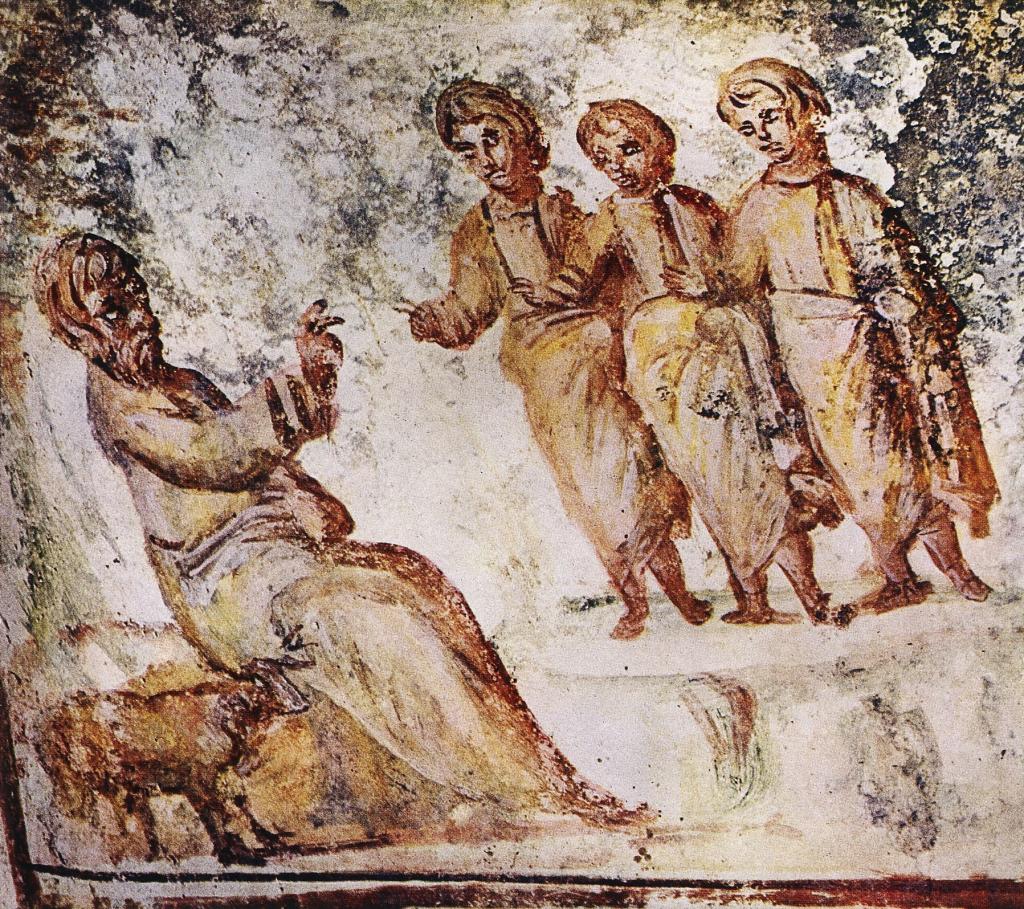
One of the things I really enjoyed about my time at Yale was the opportunity to read the non-canonical writings of the early Church; that is the works of the early Church fathers that didn’t make the cut for the New Testament.
It’s not like that opportunity is in any way exclusive to Yale. I just hadn’t had the chance to read many, if any, of the early Church fathers’ works or even really made much effort to to do so because in my particular evangelical context, if it wasn’t in the Bible, it really wasn’t worth reading. As I told myself back then, it must have been left out of the Bible for a reason, right? And obviously, the only reason it was left out was because it had to be part of Satan’s diabolical agenda to lead true believers astray like he does with those gnostic gospels I heard were full of nothing buy heresy (even though I never took the time to confirm those rumors for myself). So, in my naïveté, I ignored most of these writings because I assumed they were worthless material that would only distract me from the only truth worth knowing – biblical truth.
Boy, was I an idiot.
There is soooo much great stuff in the writings of the early Church that I was missing out on.
Sure, there is some dubious stuff out there too that definitely didn’t belong in the New Testament, but there is also a wealth of material full of truth and wisdom that very easily could have found its way into the Bible and become as beloved and quoted as the epistles we now know so well. There’s Clement and Irenaeus, Origen and Justin Martyr, the Shepherd of Hermas and Tertullian, and so many more.
One such reservoir of Christian wisdom I stumbled upon recently is the Epistle of Machetes to Diognetus.
Like many of the early Church’s writings (including some New Testament works), we don’t know who wrote it. Machetes is a generic name that simply means “a disciple.” And while Diognetus was a real person (one of Marcus Aurelius’ tutors), it’s highly doubtful this letter was actually written directly to him.
We also don’t know exactly when this epistle was written. Some scholars date it as early as 130 CE, while others argue for a late 2nd century date. Either way, it was written by a Christian disciple who bore witness to the birth of the Church and therefore had first-hand knowledge of how some of the earliest Christians lived and moved and had their being in the world.
There’s a lot worth reading in the Epistle to Diognetus, but what really stuck out to me was chapter 5, often titled “The Manners of the Christians.”
Given recent and fierce debates about what it means to be a Christian in our ever-changing and increasingly violent world, where being a Christian is too often defined by what we don’t do, who are enemies are, and how we cast our vote at the ballot box, the fifth chapter of Machetes’ epistles casts an interesting light on the life of the early Church and what defined their identity as Christians.
Here’s the chapter in full, emphasis mine.
For the Christians are distinguished from other men neither by country, nor language, nor the customs which they observe. For they neither inhabit cities of their own, nor employ a peculiar form of speech, nor lead a life which is marked out by any singularity. The course of conduct which they follow has not been devised by any speculation or deliberation of inquisitive men; nor do they, like some, proclaim themselves the advocates of any merely human doctrines. But, inhabiting Greek as well as barbarian cities, according as the lot of each of them has determined, and following the customs of the natives in respect to clothing, food, and the rest of their ordinary conduct, they display to us their wonderful and confessedly striking method of life. They dwell in their own countries, but simply as sojourners. As citizens, they share in all things with others, and yet endure all things as if foreigners. Every foreign land is to them as their native country, and every land of their birth as a land of strangers. They marry, as do all [others]; they beget children; but they do not destroy their offspring. They have a common table, but not a common bed. They are in the flesh, but they do not live after the flesh. They pass their days on earth, but they are citizens of heaven. They obey the prescribed laws, and at the same time surpass the laws by their lives. They love all men, and are persecuted by all. They are unknown and condemned; they are put to death, and restored to life. They are poor, yet make many rich; they are in lack of all things, and yet abound in all; they are dishonored, and yet in their very dishonor are glorified. They are evil spoken of, and yet are justified; they are reviled, and bless; they are insulted, and repay the insult with honor; they do good, yet are punished as evil-doers. When punished, they rejoice as if quickened into life; they are assailed by the Jews as foreigners, and are persecuted by the Greeks; yet those who hate them are unable to assign any reason for their hatred.
As I said, I know this isn’t canonical, but there’s a lot of truth in there that seems as if it could have been lifted directly from the pages of the New Testament.
Truth, that many of us need to hear today.
Sadly, those who hate us today too often have a laundry list of (very valid) reasons for their hatred. And I’m sure there were valid reasons some had for hating the early Christians too. (This epistle is after all, a work of apologetics.)
But imagine if we lived such lives as Christians, such authentically Christlike, self-sacrificing, and other-serving lives defined by such a radical incarnation of love for all that we didn’t given anyone anywhere any reason to hate us.
Imagine what the Church could accomplish.
Imagine how different the world might be.
Imagine what might happen if we finally started taking our call to live like Jesus seriously, instead of relegating our Christian identity to a list of ideas we intellectually agree to.
What a world that would be.
Previous Post
December 9, 2015
Jesus Was A Hypocrite

Browse Our Archives
Select a Category Book Review Classifieds Commentary Fundie Friday Funny Pictures Music Video News Prophecy Technology Televangelist Throwback Thursday Tract Tuesday Tracts Uncategorized Videos
Select a Month June 2019 May 2019 April 2019 March 2019 February 2019 January 2019 December 2018 November 2018 October 2018 August 2018 June 2018 May 2018 March 2018 February 2018 January 2018 October 2017 September 2017 August 2017 July 2017 June 2017 May 2017 April 2017 March 2017 February 2017 January 2017 December 2016 November 2016 September 2016 July 2016 June 2016 May 2016 April 2016 March 2016 February 2016 January 2016 December 2015 November 2015 October 2015 September 2015 August 2015 July 2015 June 2015 May 2015 April 2015 March 2015 February 2015 January 2015 December 2014 November 2014 October 2014 September 2014 August 2014 July 2014 June 2014 May 2014 April 2014 March 2014 February 2014 January 2014 December 2013 November 2013 October 2013 September 2013 August 2013 July 2013 June 2013 May 2013 April 2013 March 2013 February 2013 January 2013 December 2012 November 2012 October 2012 September 2012 August 2012 July 2012 June 2012 May 2012 April 2012 March 2012 February 2012 January 2012 December 2011 November 2011 October 2011 September 2011 August 2011 July 2011 June 2011 May 2011 April 2011 March 2011 February 2011 January 2011 December 2010 November 2010 October 2010 September 2010 August 2010
Follow Us!
TAKE THE
Religious Wisdom Quiz
Who was Isaac's wife?
Select your answer to see how you score.
Leah Rachel Sarah Rebekah
Related posts from The Semi-Official Blog of Zack Hunt

The End Is Nigh! Get Your Rapture Survival...
The Semi-Official Blog of Zack Hunt

Is It Really Well With My Soul?
The Semi-Official Blog of Zack Hunt

Daddy, Is Your Friend Going To Come Back...
The Semi-Official Blog of Zack Hunt

I Want To Speak At Your Event And...
The Semi-Official Blog of Zack Hunt
TRENDING AT PATHEOS Progressive Christian

Why Christians Have a Sacred Duty to Vote:...
The Bible offers strong support for the sacred duty to vote. Here...

What Being a Modern-Day Apostle Means to Me
In my last column, I discussed the ins and outs of modern-day...

Did Ancient China Once Worship the God of...
Across human history, a common thread weaves through the origins of the...

Love Your Neighbor – Including Earth-Kin: Lev. 19,...
God’s command to love your neighbor means acting in an ethical and...

Lead a Church Study of “Jesus and Lao...
Guest writer Jack Thomas (The Irreverent Reverend) reflects on leading his church...

Principles for Understanding the Apostolic Ministry Today
Whenever people discover that my formal ministry title is "apostle," as in...
view all Progressive Christian blogs
Ad-Free & Subscriber Log-In Subscription Support
- About Us
- 2026 Calendar
- Videos
- Podcasts
- Library of World Religions
- Faith In Media Tracker
- Advertise With Us
- Write for Us
- Privacy Policy
- Terms of Service
- Do Not Sell My Data
- Contact Us
- Radiant Digital
- Manage Newsletter Subscriptions
- Unsubscribe From Notifications
- Sitemap
Copyright 2008-2026, Patheos. All rights reserved.
Subscription Support Ad-Free & Subscriber Log-In
Follow Patheos