
BuddhistCatholicContemplativeEvangelicalGeneral ChristianHinduJewishLatter-day SaintMuslimNew VisionsProgressive Christian
Beliefs
- Buddhist
- Catholic
- Contemplative
- Evangelical
- General Christian
- Hindu
- Jewish
- Latter-day Saint
- More Voices
- Muslim
- New Visions
- Pagan
- Progressive Christian
Topics
- Religion News
- Food and Religion
- Sports and Religion
- Religious Art
- Religious Music and Entertainment
- Religious Events
- History and Religion
- Style and Religion
- Politics and Religion
- Women in Religion
- Recreation Outdoors and Religion
- Business Finance and Religion
- Careers Workplace and Religion
- Education and Religion
- Family Parenting and Religion
- Health Fitness and Religion
- Home and Religion
- Relationships and Religion
- Technology and Religion
- Travel and Religion
Columnists
- Buddhist Columnists
- Business Finance and Religion Columnists
- Careers Workplace and Religion Columnists
- Catholic Columnists
- Contemplative Columnists
- Education and Religion Columnists
- Evangelists Columnists
- Family Parenting and Religion Columnists
- General Christian Columnists
- Health Fitness and Religion Columnists
- Hindu Columnists
- History and Religion Columnists
- Home and Religion Columnists
- Jewish Columnists
- More Voices Columnists
- Latter Day Columnists
- Muslim Columnists
- New Visions Columnists
- Nonreligious Columnists
- Pagan Columnists
- Politics and Religion Columnists
- Progressive Columnists
- Recreation Outdoors and Religion Columnists
- Relationships and Religion Columnists
- Religion News Columnists
- Religious Art Columnists
- Religious Events Columnists
- Religious Music and Entertainment Columnists
- Sports and Religion Columnists
- Style and Religion Columnists
- Technology and Religion Columnists
- Travel and Religion Columnists
- Women in Religion Columnists
Resource Library
- 2026 Calendar
- Library of World Religions
- The 100 Most Holy Places on Earth
- Patheos Answers
- Podcasts
- Videos
- Faith Leaders Database
- Anglican Episcopalian
- Bahai
- Baptist
- Buddhism
- Christianity
- Confucianism
- Eastern Orthodoxy
- Hinduism
- Holiness and Pentecostal
- ISKCON
- Islam
- Judaism
- Lutheran
- Methodist
- The Church of Jesus Christ of Latter-day Saints
- New Age
- Paganism
- Presbytarian and Reformed
- Protestantism
- Religion Behind the Scenes
- Roman Catholic
- Scientology
- Shia Islam
- Sikhism
- Sufism
- Sunni Islam
- Taoism
- Zen
- See all religions
Research Tools
 Ad-Free & Subscriber Log-In Subscription Support
Ad-Free & Subscriber Log-In Subscription Support
Follow Patheos 

- Trending:
- Forgiveness
- |
- Marriage
- |
- Consciousness
- |
- Death Penalty
- |
- Election
- |
- Halloween
 The Semi-Official Blog of Zack Hunt
- Home
- Progressive Christian
- The End Of Captivity: An Interview With Tripp York
The End Of Captivity: An Interview With Tripp York
Last updated on: September 21, 2015 at 9:21 am by Zack Hunt
The End Of Captivity: An Interview With Tripp York 2015-09-21T09:21:27-06:00 Zack Hunt
Patheos Explore the world's faith through different perspectives on religion and spirituality! Patheos has the views of the prevalent religions and spiritualities of the world.
 (Photo Courtesy of Tripp York)
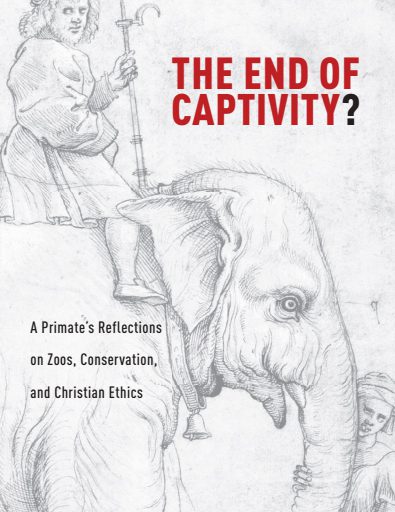
Today, I have the privilege of interview my friend, fellow Trevecca alum, and author of one of my favorite books ever (The Devil Wears Nada), Tripp York, about his latest book, The End of Captivity?
Here’s the thing I hate about reading your books: they always make me rethink my assumptions. Why, sir, should I bother rethinking things I’ve already got figured out? Isn’t that a sign of weakness?
It’s a sign of greatness, my friend. Especially if you’re reading some bit of nonsense I’ve written. Thanks for funding the cause, brother.
You talk in The End of Captivity about the stark impossibility of animals’ freedom from us. But isn’t that their fault for selfishly wanting to live where I want to build my new house?
Hahaha. Exactly. What a bunch of assholes, right?! Speaking of which, coyotes are making downtown Chicago their new home. Maybe the Cubs will become the Pups. Can’t hurt.
In Chapter 4, you say that in naming animals “we narrate, for other forms of life, how those animals are going to exist (or not exist) in this world. We determine, for all other animals, how they are going to relate to us. We also determine how they will live and die. It is in this fourth form of naming that we exercise greatest power in relation to other living beings.” Now, I thought that was one of the great things about being human: dominion over nature!! But then you go on to say I shouldn’t use my God given dominion to exploit nature and animals even though it says so right there in Genesis. Tell me, why do you hate the Bible?
Oh man, you’re killing it today. I love the Bible. It’s such a scandalous book, and naughty too. Did I ever tell you I once did a one-person adaptation of the Song of Songs? That’s a story for another day, I guess.
Yes, we are the privileged species in that we are, as Andrew Linzey notes, the servant species. Our lovely dominion is rooted in caring for that which is a gift and does not belong to us. It’s like this (I think I am getting this example from Bill McKibben): I grant dominion to my babysitter when the babysitter is watching my child. I fully expect my child to be completely intact upon my return.
Actually, I don’t have any children. I do have a beautiful blind Siberian husky and a very temperamental and, rather, ‘niceness-challenged’ cat. The dog sitter damn well better make sure my dog is better off upon my return than how I left her.
I’m not quite as concerned about the cat.
I may be misreading you, but if even an animal sanctuary raises ethical questions, then it would seem that killing and eating animals would also raise ethical issues. So, if Christians should seriously rethink our relationship to animals and our reasons for keeping them in captivity in order to live in a more peaceable kingdom, then should Christians also consider becoming vegetarians?
I’m not sure how a Christian doesn’t, at bare minimum, consider vegetarianism (at least those of us in very affluent parts of the world). Given the directive in Genesis to eat the fruit of the trees, and given the eschatological nature of Christianity as rooted in Isaiah with the depiction of God’s holy mountain, the Noahic covenant, and the covenant made in Hosea, then, yes, at the very least, it must be considered. What MUST also occur, again, at the absolute bare minimum, is a refusal to consume factory-farmed animals. Anyone who eats animals from slaughterhouses has literally said, “I do not care about our earth, our water, our soil, our oxygen, our trees, nor do I care about the billions of animals systematically tortured, confined, maimed, and destroyed, nor do I care about what I am putting in my own body—which is supposedly a temple for the Holy Spirit.” Talk about bad theology! Not to mention a person who is participating in the single most destructive practice toward the planet. I can’t tell you how many times I have almost died, literally died, laughing when meeting someone who claims to be an environmentalist and, yet, eats animals from slaughterhouses (which is almost all animals you will consume at restaurants and grocery stores). Granted, a lot of these people are academics—which, I know, you can’t expect much from them, for sure, but still . . . come on. But on this point, I’m not so much concerned about whether or not you’re an environmentalist, I just want to know how a Christian can possibly justify participating in one of the most barbaric and violent edifices that’s ever been created. It’s a principality and power that is destroying the earth and its resources, while complicit in the starvation of people in poorer countries. Eating animals from slaughterhouses is not just theologically and environmentally suspect, it’s a form of environmental racism that takes resources away from poorer countries so that we can gorge ourselves on cheap, hormone-injected animals that we see as nothing more than soulless objects to be flushed down our toilets. Talk about a shitty theology of creation.
See what I did there?! See?! Did you catch it?! Aaahhh…
In Chapter 6 you say, “Christians are being out-narrated by individuals who seem to have a more faithful understanding of what it means to live peaceably than those within our own tradition.” Personally, I can probably count on one hand the number of Christians I know that are serious and passionate animal advocates (you being one of them). Why aren’t there more Steve Irwins in the Church? Are there just not enough Australians on our church’s membership roles?
God love those Aussies. (Sorry, Bret and Jermaine—New Zealand doesn’t count.)
It’s because many within the church have an impoverished account of creation, not to mention what the slightest idea of taking eschatology seriously would mean. We should be at the forefront of caring about these issues, as well as seeing how they are connected to other pertinent social justice issues (eco-feminists have been all over this from day one—the connections between conservation, what we eat, and how that’s connected to misogyny and environmental racism are tight).
I’m just not sure how someone who imagines creation to be good can be so indifferent to, well, not only the plight of rhinos and bongos, but cows, chickens, and salmon. They are not only our biological kin, but, according to scripture, they are our covenantal kin. My guess is that most Christians don’t actually believe such a claim because, if they did, they would show it. They’d live it. I think many Christians are atheists on these matters. Granted, I’ve met far more atheists concerned with the good that is creation than Christians, so I guess calling Christians ‘atheistic’ on this topic is not going to accomplish what I want it to accomplish. Good for the atheists!
Ok, fine. I’ll admit it. Zoos sometimes make me sad and I don’t just mean the overpriced concessions. It’s sad to think about the fact that animals meant to live in the wild are now held captive in a relatively tiny amount of space. As a Christian, should I support my local zoo or should I sneak in at night and set the captives free?
What? An actual question about zoos?! Ha! For your readers, I only spend one chapter on captive animals for food. The rest is about zoos. So, you know, all you omnivores out there, check out my book. I promise it’s not obnoxious (I really, really, really hate talking about vegetarianism/veganism—I’m much more interested in the role zoos and sanctuaries play in our imaginations and in reality).
And, no, definitely do not liberate the animals in your local zoo. Personally, I’d rather not find out that tigers and mandrills are roaming my backyard. Mandrills will ‘eff you up. But, of course, this leads us to the larger point: there is very little wild left for many of these animals to return. Indeed, some animals in zoos end up there because they were going to be culled or killed. Loss of natural habitat is the enemy, and that’s all on us.
Bonus Question: If God wants us to live peacefully with animals and presumably not eat them and yet God made bacon delicious, does that make God complicit in evil?
In terms of bacon: man, this is like a theodicy question for all the little piggies in the world! I can hear Babe saying, “Why did you make us so yummy, God?! Why?! Why do you hate us so much?!” I’m guessing for pigs, God is not the giant pig in the sky.
Then again, God does say, like, 342 times, TO NOT EAT PIGS.
Poor ancient Israelites—had they only known that God was going to eventually change God’s mind on that one . . .
Tripp York, PhD teaches at Virginia Wesleyan College in Virginia Beach, VA. He’s the author or editor of 11 books—some of them even readable. He enjoys surfing all the knee-high waves of the not-so legendary East Coast and thanks punk rock for saving his life.
WEBSITE: http://trippyork.com/
CLICK HERE
Previous Post

September 11, 2015
9/11: #NeverForget.....Never Forgive?

Browse Our Archives
Select a Category Book Review Classifieds Commentary Fundie Friday Funny Pictures Music Video News Prophecy Technology Televangelist Throwback Thursday Tract Tuesday Tracts Uncategorized Videos
Select a Month June 2019 May 2019 April 2019 March 2019 February 2019 January 2019 December 2018 November 2018 October 2018 August 2018 June 2018 May 2018 March 2018 February 2018 January 2018 October 2017 September 2017 August 2017 July 2017 June 2017 May 2017 April 2017 March 2017 February 2017 January 2017 December 2016 November 2016 September 2016 July 2016 June 2016 May 2016 April 2016 March 2016 February 2016 January 2016 December 2015 November 2015 October 2015 September 2015 August 2015 July 2015 June 2015 May 2015 April 2015 March 2015 February 2015 January 2015 December 2014 November 2014 October 2014 September 2014 August 2014 July 2014 June 2014 May 2014 April 2014 March 2014 February 2014 January 2014 December 2013 November 2013 October 2013 September 2013 August 2013 July 2013 June 2013 May 2013 April 2013 March 2013 February 2013 January 2013 December 2012 November 2012 October 2012 September 2012 August 2012 July 2012 June 2012 May 2012 April 2012 March 2012 February 2012 January 2012 December 2011 November 2011 October 2011 September 2011 August 2011 July 2011 June 2011 May 2011 April 2011 March 2011 February 2011 January 2011 December 2010 November 2010 October 2010 September 2010 August 2010
Follow Us!
TAKE THE
Religious Wisdom Quiz
In the parable of the talents, what is rewarded?
Select your answer to see how you score.
Riches Patience Sincerity Faithfulness
Related posts from The Semi-Official Blog of Zack Hunt

The End Is Nigh! Get Your Rapture Survival...
The Semi-Official Blog of Zack Hunt

Is It Really Well With My Soul?
The Semi-Official Blog of Zack Hunt

Daddy, Is Your Friend Going To Come Back...
The Semi-Official Blog of Zack Hunt

I Want To Speak At Your Event And...
The Semi-Official Blog of Zack Hunt
TRENDING AT PATHEOS Progressive Christian

Why Christians Have a Sacred Duty to Vote:...
The Bible offers strong support for the sacred duty to vote. Here...

What Being a Modern-Day Apostle Means to Me
In my last column, I discussed the ins and outs of modern-day...

Did Ancient China Once Worship the God of...
Across human history, a common thread weaves through the origins of the...

Love Your Neighbor – Including Earth-Kin: Lev. 19,...
God’s command to love your neighbor means acting in an ethical and...

Lead a Church Study of “Jesus and Lao...
Guest writer Jack Thomas (The Irreverent Reverend) reflects on leading his church...

Principles for Understanding the Apostolic Ministry Today
Whenever people discover that my formal ministry title is "apostle," as in...
view all Progressive Christian blogs
Ad-Free & Subscriber Log-In Subscription Support
- About Us
- 2026 Calendar
- Videos
- Podcasts
- Library of World Religions
- Faith In Media Tracker
- Advertise With Us
- Write for Us
- Privacy Policy
- Terms of Service
- Do Not Sell My Data
- Contact Us
- Radiant Digital
- Manage Newsletter Subscriptions
- Unsubscribe From Notifications
- Sitemap
Copyright 2008-2026, Patheos. All rights reserved.
Subscription Support Ad-Free & Subscriber Log-In
Follow Patheos