
BuddhistCatholicContemplativeEvangelicalGeneral ChristianHinduJewishLatter-day SaintMuslimNew VisionsProgressive Christian
Beliefs
- Buddhist
- Catholic
- Contemplative
- Evangelical
- General Christian
- Hindu
- Jewish
- Latter-day Saint
- More Voices
- Muslim
- New Visions
- Pagan
- Progressive Christian
Topics
- Religion News
- Food and Religion
- Sports and Religion
- Religious Art
- Religious Music and Entertainment
- Religious Events
- History and Religion
- Style and Religion
- Politics and Religion
- Women in Religion
- Recreation Outdoors and Religion
- Business Finance and Religion
- Careers Workplace and Religion
- Education and Religion
- Family Parenting and Religion
- Health Fitness and Religion
- Home and Religion
- Relationships and Religion
- Technology and Religion
- Travel and Religion
Columnists
- Buddhist Columnists
- Business Finance and Religion Columnists
- Careers Workplace and Religion Columnists
- Catholic Columnists
- Contemplative Columnists
- Education and Religion Columnists
- Evangelists Columnists
- Family Parenting and Religion Columnists
- General Christian Columnists
- Health Fitness and Religion Columnists
- Hindu Columnists
- History and Religion Columnists
- Home and Religion Columnists
- Jewish Columnists
- More Voices Columnists
- Latter Day Columnists
- Muslim Columnists
- New Visions Columnists
- Nonreligious Columnists
- Pagan Columnists
- Politics and Religion Columnists
- Progressive Columnists
- Recreation Outdoors and Religion Columnists
- Relationships and Religion Columnists
- Religion News Columnists
- Religious Art Columnists
- Religious Events Columnists
- Religious Music and Entertainment Columnists
- Sports and Religion Columnists
- Style and Religion Columnists
- Technology and Religion Columnists
- Travel and Religion Columnists
- Women in Religion Columnists
Resource Library
- 2026 Calendar
- Library of World Religions
- The 100 Most Holy Places on Earth
- Patheos Answers
- Podcasts
- Videos
- Faith Leaders Database
- Anglican Episcopalian
- Bahai
- Baptist
- Buddhism
- Christianity
- Confucianism
- Eastern Orthodoxy
- Hinduism
- Holiness and Pentecostal
- ISKCON
- Islam
- Judaism
- Lutheran
- Methodist
- The Church of Jesus Christ of Latter-day Saints
- New Age
- Paganism
- Presbytarian and Reformed
- Protestantism
- Religion Behind the Scenes
- Roman Catholic
- Scientology
- Shia Islam
- Sikhism
- Sufism
- Sunni Islam
- Taoism
- Zen
- See all religions
Research Tools
 Ad-Free & Subscriber Log-In Subscription Support
Ad-Free & Subscriber Log-In Subscription Support
Follow Patheos 

- Trending:
- Forgiveness
- |
- Marriage
- |
- Consciousness
- |
- Death Penalty
- |
- Election
- |
- Halloween
 The Semi-Official Blog of Zack Hunt
- Home
- Progressive Christian
- Christianity Without The Cross
Christianity Without The Cross
Last updated on: February 20, 2015 at 12:58 pm by Zack Hunt
Christianity Without The Cross 2015-02-20T12:58:05-06:00 Zack Hunt
Patheos Explore the world's faith through different perspectives on religion and spirituality! Patheos has the views of the prevalent religions and spiritualities of the world.
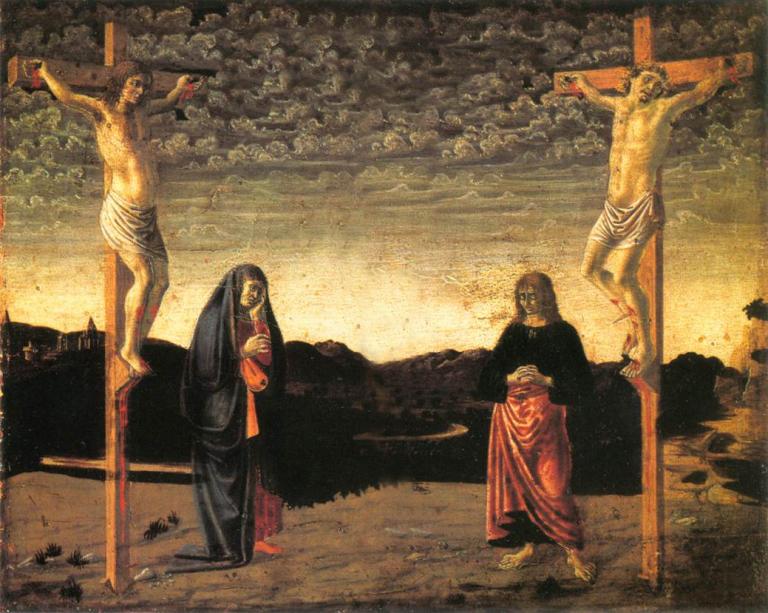
Tony Campolo tells a story about a parent-teacher meeting he once had while a professor at Eastern University.
A father of one of his students had demanded a meeting with his son and Tony because he was upset about some of the things Tony was teaching his son about what it really means to be a follower of Jesus.
What Tony was teaching was simply too radical for this father. He was incensed that his son had taken the gospel literally, given up everything he had, and was now out on the street serving the poor in his community.
“I don’t mind being a Christian…up to a point!” the father shouted to Tony.
“And what point is that, dad?” replied the son.
“The cross?”
I was reminded of that punch-to-the-gut anecdote this week as I read through some of the responses to my posts (and other articles across the Internet) about ISIS, Islam, and how we as Christians our called to love our enemies.
It didn’t come as any kind of shock to hear the anti-Muslim rhetoric. Sadly, any call for compassion and understanding towards our Muslim neighbors is almost always met these days with outrage by folks who have no problem separating themselves from fellow Christians who do evil things, but find themselves unable to extend that same grace to their Muslim neighbors.
But what was a bit surprising was the response of fellow Christians whose words were, for me at least, an echo of that confrontation between Tony and his student’s father.
Folks went out of their way to either reinterpret the words of Jesus to mean effectively the very opposite of what he actually said (and did) or they would do theological gymnastics to excuse Christians altogether from following Jesus…all the way to the cross.
In one person’s justification of violence, they said that the message of the gospel is “protect the innocent and defeat evil.”
Another quoted Psalm 18:40 to explain what loving ISIS the way God loves them really looks like: “You have given me the necks of my enemies that I might destroy all who hate me.”
That sort of sentiment was far from unique. A chorus I heard repeated often went something like this, “We’re called to love our enemies, but because we love others too, we need to wipe these people off the earth for everyone’s safety.” In others, as one person put it, “Yes, Jesus told us to love our enemies and turn the other cheek, but that doesn’t apply to real and actual life threatening attacks.”
All of that was undergirded by a theological argument I have seen increasingly often in recent days – particularly in response to Islamic terrorism – which I find not only absurd, but bordering on the heretical. It goes something like this: “Yes, Jesus told his disciples not to defend the most innocent person in history when he was arrested and, yes, he himself refused to respond violently when his enemies came after him, and, yes, he allowed those same enemies to nail him to a cross, but that was a unique event that occurred for a redemptive purpose. It has nothing to do with our we should treat our enemies today.”
In other words, as Christians, we should follow the example of Jesus’ life and teaching…up to the point of the cross.
Now, it is true that the effect of crucifixion – our salvation – is unique, but the example of the passion narrative, in particular Jesus’ willingness to follow God’s call and love his enemies even if it cost him his life, is at the very foundation of the Christian life.
As Jesus himself said in Matthew 16, “If any want to become my followers, let them deny themselves and take up their cross and follow me. For those who want to save their life will lose it, and those who lose their life for my sake will find it.” It’s almost like he anticipated the very argument we hear so many Christians making today that the cross is just about our salvation; it’s not an example of how we are supposed to live our lives (or defend the innocent).
Paul, of course, famously echoed Jesus’ call to the cruciform life, declaring in Philippians 2 that as his followers, our lives should be like that of Christ who emptied himself, took on the form of a slave, humbled himself, and became obedient to the point of death – even death on a cross.
Like Jesus, Paul too seemed to anticipate today’s attempts (or more accurately, he saw them in his own day) to downplay the centrality of the cross in the Christian life. In 1 Corinthians, he readily acknowledged that preaching Christ crucified was a stumbling block for some and foolishness to others. Paul knew and no doubt had already encountered folks who were ok with most of Jesus’ teachings and would gladly claim him as Lord so they could be saved, but weren’t willing to follow him all the way to the cross because loving enemies, non-violence, and giving up one’s life is just not the way to combat violent enemies who snuff out the lives of innocent people.
Centuries later, as war broke across Europe and Hitler began his campaign to exterminate the Jewish people (along with homosexuals, gypsies, and countless others) Dietrich Bonhoeffer would once again remind the Church of the centrality of the cross and the cost of discipleship
Today, the cross seems to have become an inconvenience once again, a theological stumbling block to be reconciled and then pushed aside as we righteously blaze the path to war and the utter destruction of our enemies. As important as it might be to securing our eternal salvation, it has little relevance to our life in the here and now.
Or at least, so we tell ourselves.
Which is particularly ironic given our love for all things “radical.”
We love talking about having a radical faith and being radical for Jesus. We slap it on t-shirts, relentlessly post about it online, and have libraries full of books that promise to teach us how to be radical in our faith, but in a world defined by power and violence, wherein the clearest and most radical thing we can do is say “no” to both, our claim to being radical has become nothing but a bad joke that amounts to little more throwing a few extra bucks in the offering plate or spending a week taking selfies with poor kids in Africa.
Actually being radical the way Jesus was radical requires real sacrifice, real courage, real faith, and maybe even our lives. It flips our way of looking at the world upside down by saying “no” to power and violence. Actually being radical like Jesus was radical certainly involves a call to defeat evil and stand up for the innocent, but it’s how those things are accomplished – non-violently, through love, grace, and forgiveness being extended to those who don’t deserve it – that makes Christianity genuinely radical. But that sort of cruciform life is risky, if not altogether terrifying in the face of evil like ISIS. And, if we’re being really honest, it’s sounds like complete foolishness when we’ve got so many bombs we can drop on their heads instead.
Which is why moments like the one we find ourselves in today so clearly expose the scandal of the cross and the truly radical nature of the Christian life we have been called to live. For if we reject the way of the cross and respond like the rest of the world responds to evil, we will be no different than our neighbors, we certainly won’t be radical in any way, and the cross itself will be stripped of its unique, world changing power.
No matter how righteous our cause may be, as Christians the cross remains in front of us a stumbling block on the path to vengeance. Which, I think, is why so many of us in the Church are so willing to go out of our way to justify our dismissal of the cross as a way of life. Killing our enemies is just easier. It’s quicker and more satisfying than finding a non-violent solution. And it doesn’t require the struggle that comes along with loving and forgiving people that want us dead.
The cruciform life, on the other hand, demands total surrender to the will of God, unconditional love for everyone, and death to self. But we can’t imagine or perhaps don’t want to imagine any other response to power and violence than more power and violence. So, we come up with theological reasons to dismiss the cross as nothing more than a cog in the wheel of divine activity that has little practical relevance to everyday life.
But when we do that, when we relegate to death of Jesus to an abstract background role in the Christian life, the cross becomes nothing more than a guarantor of magic words we said at an altar. Sure, the cross still plays an important role in our belief system, but it is no longer a central and defining part of how we live our lives.
When that happens, when the cross becomes irrelevant to how we actually go about living out the Christian life, we become the very thing Paul warned about: a people who possess a form of godliness, but deny its transforming power.
In other words, our lives become Christianity without the cross.
Previous Post

February 16, 2015
Why ISIS Causes Me To Struggle With The Gospel

Browse Our Archives
Select a Category Book Review Classifieds Commentary Fundie Friday Funny Pictures Music Video News Prophecy Technology Televangelist Throwback Thursday Tract Tuesday Tracts Uncategorized Videos
Select a Month June 2019 May 2019 April 2019 March 2019 February 2019 January 2019 December 2018 November 2018 October 2018 August 2018 June 2018 May 2018 March 2018 February 2018 January 2018 October 2017 September 2017 August 2017 July 2017 June 2017 May 2017 April 2017 March 2017 February 2017 January 2017 December 2016 November 2016 September 2016 July 2016 June 2016 May 2016 April 2016 March 2016 February 2016 January 2016 December 2015 November 2015 October 2015 September 2015 August 2015 July 2015 June 2015 May 2015 April 2015 March 2015 February 2015 January 2015 December 2014 November 2014 October 2014 September 2014 August 2014 July 2014 June 2014 May 2014 April 2014 March 2014 February 2014 January 2014 December 2013 November 2013 October 2013 September 2013 August 2013 July 2013 June 2013 May 2013 April 2013 March 2013 February 2013 January 2013 December 2012 November 2012 October 2012 September 2012 August 2012 July 2012 June 2012 May 2012 April 2012 March 2012 February 2012 January 2012 December 2011 November 2011 October 2011 September 2011 August 2011 July 2011 June 2011 May 2011 April 2011 March 2011 February 2011 January 2011 December 2010 November 2010 October 2010 September 2010 August 2010
Follow Us!
TAKE THE
Religious Wisdom Quiz
Which prophet confronted David about his sin with Bathsheba?
Select your answer to see how you score.
Abiathar Samuel Gad Nathan
Related posts from The Semi-Official Blog of Zack Hunt

The End Is Nigh! Get Your Rapture Survival...
The Semi-Official Blog of Zack Hunt

Is It Really Well With My Soul?
The Semi-Official Blog of Zack Hunt

Daddy, Is Your Friend Going To Come Back...
The Semi-Official Blog of Zack Hunt

I Want To Speak At Your Event And...
The Semi-Official Blog of Zack Hunt
TRENDING AT PATHEOS Progressive Christian

Why Christians Have a Sacred Duty to Vote:...
The Bible offers strong support for the sacred duty to vote. Here...

What Being a Modern-Day Apostle Means to Me
In my last column, I discussed the ins and outs of modern-day...

Did Ancient China Once Worship the God of...
Across human history, a common thread weaves through the origins of the...

Love Your Neighbor – Including Earth-Kin: Lev. 19,...
God’s command to love your neighbor means acting in an ethical and...

Lead a Church Study of “Jesus and Lao...
Guest writer Jack Thomas (The Irreverent Reverend) reflects on leading his church...

Principles for Understanding the Apostolic Ministry Today
Whenever people discover that my formal ministry title is "apostle," as in...
view all Progressive Christian blogs
Ad-Free & Subscriber Log-In Subscription Support
- About Us
- 2026 Calendar
- Videos
- Podcasts
- Library of World Religions
- Faith In Media Tracker
- Advertise With Us
- Write for Us
- Privacy Policy
- Terms of Service
- Do Not Sell My Data
- Contact Us
- Radiant Digital
- Manage Newsletter Subscriptions
- Unsubscribe From Notifications
- Sitemap
Copyright 2008-2026, Patheos. All rights reserved.
Subscription Support Ad-Free & Subscriber Log-In
Follow Patheos