
BuddhistCatholicContemplativeEvangelicalGeneral ChristianHinduJewishLatter-day SaintMuslimNew VisionsProgressive Christian
Beliefs
- Buddhist
- Catholic
- Contemplative
- Evangelical
- General Christian
- Hindu
- Jewish
- Latter-day Saint
- More Voices
- Muslim
- New Visions
- Pagan
- Progressive Christian
Topics
- Religion News
- Food and Religion
- Sports and Religion
- Religious Art
- Religious Music and Entertainment
- Religious Events
- History and Religion
- Style and Religion
- Politics and Religion
- Women in Religion
- Recreation Outdoors and Religion
- Business Finance and Religion
- Careers Workplace and Religion
- Education and Religion
- Family Parenting and Religion
- Health Fitness and Religion
- Home and Religion
- Relationships and Religion
- Technology and Religion
- Travel and Religion
Columnists
- Buddhist Columnists
- Business Finance and Religion Columnists
- Careers Workplace and Religion Columnists
- Catholic Columnists
- Contemplative Columnists
- Education and Religion Columnists
- Evangelists Columnists
- Family Parenting and Religion Columnists
- General Christian Columnists
- Health Fitness and Religion Columnists
- Hindu Columnists
- History and Religion Columnists
- Home and Religion Columnists
- Jewish Columnists
- More Voices Columnists
- Latter Day Columnists
- Muslim Columnists
- New Visions Columnists
- Nonreligious Columnists
- Pagan Columnists
- Politics and Religion Columnists
- Progressive Columnists
- Recreation Outdoors and Religion Columnists
- Relationships and Religion Columnists
- Religion News Columnists
- Religious Art Columnists
- Religious Events Columnists
- Religious Music and Entertainment Columnists
- Sports and Religion Columnists
- Style and Religion Columnists
- Technology and Religion Columnists
- Travel and Religion Columnists
- Women in Religion Columnists
Resource Library
- 2026 Calendar
- Library of World Religions
- The 100 Most Holy Places on Earth
- Patheos Answers
- Podcasts
- Videos
- Faith Leaders Database
- Anglican Episcopalian
- Bahai
- Baptist
- Buddhism
- Christianity
- Confucianism
- Eastern Orthodoxy
- Hinduism
- Holiness and Pentecostal
- ISKCON
- Islam
- Judaism
- Lutheran
- Methodist
- The Church of Jesus Christ of Latter-day Saints
- New Age
- Paganism
- Presbytarian and Reformed
- Protestantism
- Religion Behind the Scenes
- Roman Catholic
- Scientology
- Shia Islam
- Sikhism
- Sufism
- Sunni Islam
- Taoism
- Zen
- See all religions
Research Tools
 Ad-Free & Subscriber Log-In Subscription Support
Ad-Free & Subscriber Log-In Subscription Support
Follow Patheos 

- Trending:
- Forgiveness
- |
- Marriage
- |
- Consciousness
- |
- Death Penalty
- |
- Election
- |
- Halloween
 The Semi-Official Blog of Zack Hunt
- Home
- Progressive Christian
- The Single Greatest Challenge To Christianity
The Single Greatest Challenge To Christianity
Last updated on: October 13, 2014 at 10:42 am by Zack Hunt
The Single Greatest Challenge To Christianity 2014-10-13T10:42:30-06:00 Zack Hunt
Patheos Explore the world's faith through different perspectives on religion and spirituality! Patheos has the views of the prevalent religions and spiritualities of the world.
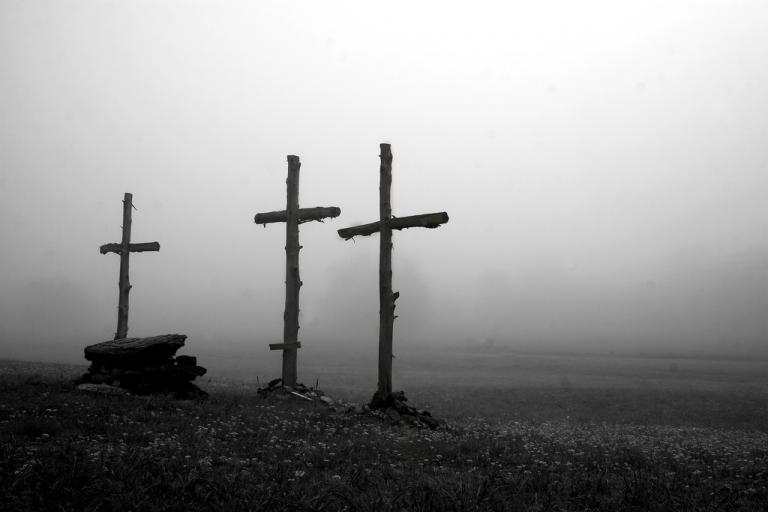 (H/T Jason St. Peter, Flickr Creative Commons)
Christianity seems to be in a state of crisis these days.
Countless news articles bemoan declining attendance while boldly proclaiming the imminent death of the Church.
From the fleeing of millennials to debates over same-sex marriage to Pat Robertson, the Christian faith is not without its challenges.
But what is the single greatest challenge to Christianity today?
Despite the ravings of folks like Ken Ham and Richard Dawkins, it’s not science.
Nor is it fundamentalism in general, no matter how frustrating or appalling it might be.
The church is filled with hypocrisy, which certainly undermines our integrity, but hypocrisy is not our gravest threat.
And even though it fills headlines and offers plenty of fodder for folks proclaiming an impending apocalypse, same-sex marriage does not pose an existential threat to the faith.
No, the single greatest challenge to Christianity is the same great challenge we’ve always faced: the proclamation of a good and loving Creator in the face of a creation filled with so much evil.
No matter what we do to combat it, evil only ever seems to increase, never diminish. While, to the critical eye, God appears either disinterested or incapable of doing anything about it.
That is, if God exists at all.
To be fair, when we closely examine the problem of evil, we have to admit that a great deal of responsibility lies at our own feet. Nevertheless, the world is filled with needless suffering that one would presume a good and loving God could eradicate without impinging on our cherished free will.
So why doesn’t God act?
Or if God does act, why the hell isn’t God doing more?
It’s all too easy to dismiss the severity of this issue while sitting behind a glowing MacBook, sipping on a Venti Frappuchino at Starbucks. Blessed that we are to live in the relative safety and undeniable comfort of the United States, it’s easy to consider what theologians call theodicy as little more than a philosophical problem.
Or an issue of faith that simply requires more trust on the part of the believer.
Unfortunately, that sort of approach only makes matters worse.
For, when we tell those who suffer that their pain is part of God’s plan, we only ever compound the problem of evil. We don’t resolve it.
Moreover, I think this sort of casual dismissal of the problem of pain is ultimately at the heart of those headlines proclaiming the imminent death of the church.
Because when we make the gospel merely about a momentary intellectual decision and agreement to a list of beliefs, while treating the evil of this world as a secondary issue, we make the gospel irrelevant. Which is why it should come as no surprise to see a socially conscious generation fleeing a church more interested in being right than addressing the immense suffering right outside its doorstep.
To put it another way, it’s incredibly difficult for many people to believe in a God who promises to heal pain in heaven, when nothing is being done to alleviate suffering and injustice in the here and now.
Now, of course, the problem of evil is nothing new. Though it sometimes appears to be a revolutionary trump card to undermine religion and disprove the existence of God, the problem of evil has existed for as long as people have believed in a higher power.
Which is why I’m sure it’s no coincidence that Job is the oldest book in the Bible.
After all, why go any further down the path of discipleship if this God we’re supposed to worship is incapable of or disinterested in dealing with evil?
Or worse, if that God is the source of evil in the world.
If that ancient book has anything to teach us today, I think it’s that there is no easy answer to the problem of evil and maybe no answer at all this side of eternity. Because while Job does have his life restored, no reason is ever given for why a good and loving Creator allowed His creation to suffer.
Nevertheless, our inability to resolve this most fundamental challenge to faith doesn’t mean we can’t or shouldn’t engage the problem of evil.
In fact, we must respond, not simply for our own intellectual credibility, but because real people are really suffering.
Which is why our response to the problem of evil can’t be merely philosophical. It can start there, but if it remains in the realm of abstract debate, we diminish the seriousness of the issue at hand.
For, if nothing else, the problem of evil is an imminently practical issue.
And as such it requires a practical response.
As Christians, our response to evil is found in the life, death, and resurrection of Jesus of Nazareth.
In the life of Jesus we see a God who took on flesh because that God takes the problem of a suffering creation seriously. In the cross we see a God who doesn’t ignore the cries of His people, but confronts them head on, making their pain his own. And in the resurrection we witness the dawn of a new creation and the beginning of God’s victory over evil.
As Christians, these are not merely theological musings.
They are a call to a particular, difficult, but hope filled way of life.
The incarnation forces us to confront evil in the here and now, rather than ignore it until eternity. The cross calls us to stand beside and be willing to suffer with those in pain. And the resurrection empowers us to become the agents of God’s new creation by embodying the hope, healing, and justice of the dawning kingdom on earth, just as it is in heaven.
Now, don’t get me wrong.
This is no elegant solution to the problem of evil. We can be the perfect embodiment of love and hope we are called to be and yet evil will nevertheless continue to exist.
It’s that frustrating reality that torments me with doubt, not just about the goodness or power of God, but whether God exists at all.
Of course, I’m not alone in that.
God’s people across the centuries have cried out with the psalmist, “My God, my God, why have you forsaken me?”
And yet for some reason some of us continue to believe in spite of all our doubts.
In spite of all the evil we see around us.
Why is that?
To be honest, sometimes I don’t know. And I certainly can’t speak for everyone who continues to believe in the face of evil, but I think many of us cling to our faith because in spite of all the suffering we see around us (and experience ourselves), we also see the good news incarnated all around us, both in our lives and in the lives of others.
The moments may be more few and far between than we would like, but we’ve seen broken lives restored. We’ve witness peace restored to the grieving. And we’ve watched the dam being breached and justice rolling down like water.
If only for a passing moment, we have been witnesses to these sacred moments.
We’ve caught glimpses of the resurrection and we want to incarnate those moments in our own lives for the sake of others.
Because without those glimpses there is no hope.
There is no healing.
There is no love.
And without those glimpses, the answer to the problem of evil becomes quite simple.
There is no God.
Or if there is, it’s not a God worth worshiping.
Previous Post

October 10, 2014
The Difference Between Faith And Denial
Next Post
October 14, 2014 Is Pope Francis Changing The Vatican's Stance On Homosexuality?
Browse Our Archives
Select a Category Book Review Classifieds Commentary Fundie Friday Funny Pictures Music Video News Prophecy Technology Televangelist Throwback Thursday Tract Tuesday Tracts Uncategorized Videos
Select a Month June 2019 May 2019 April 2019 March 2019 February 2019 January 2019 December 2018 November 2018 October 2018 August 2018 June 2018 May 2018 March 2018 February 2018 January 2018 October 2017 September 2017 August 2017 July 2017 June 2017 May 2017 April 2017 March 2017 February 2017 January 2017 December 2016 November 2016 September 2016 July 2016 June 2016 May 2016 April 2016 March 2016 February 2016 January 2016 December 2015 November 2015 October 2015 September 2015 August 2015 July 2015 June 2015 May 2015 April 2015 March 2015 February 2015 January 2015 December 2014 November 2014 October 2014 September 2014 August 2014 July 2014 June 2014 May 2014 April 2014 March 2014 February 2014 January 2014 December 2013 November 2013 October 2013 September 2013 August 2013 July 2013 June 2013 May 2013 April 2013 March 2013 February 2013 January 2013 December 2012 November 2012 October 2012 September 2012 August 2012 July 2012 June 2012 May 2012 April 2012 March 2012 February 2012 January 2012 December 2011 November 2011 October 2011 September 2011 August 2011 July 2011 June 2011 May 2011 April 2011 March 2011 February 2011 January 2011 December 2010 November 2010 October 2010 September 2010 August 2010
Follow Us!
TAKE THE
Religious Wisdom Quiz
Who was the king of Israel known for his wisdom?
Select your answer to see how you score.
Solomon Hezekiah Saul David
Related posts from The Semi-Official Blog of Zack Hunt
The End Is Nigh! Get Your Rapture Survival...
The Semi-Official Blog of Zack Hunt

Is It Really Well With My Soul?
The Semi-Official Blog of Zack Hunt

Daddy, Is Your Friend Going To Come Back...
The Semi-Official Blog of Zack Hunt
I Want To Speak At Your Event And...
The Semi-Official Blog of Zack Hunt
TRENDING AT PATHEOS Progressive Christian

Why Christians Have a Sacred Duty to Vote:...
The Bible offers strong support for the sacred duty to vote. Here...

What Being a Modern-Day Apostle Means to Me
In my last column, I discussed the ins and outs of modern-day...

Did Ancient China Once Worship the God of...
Across human history, a common thread weaves through the origins of the...

Love Your Neighbor – Including Earth-Kin: Lev. 19,...
God’s command to love your neighbor means acting in an ethical and...

Lead a Church Study of “Jesus and Lao...
Guest writer Jack Thomas (The Irreverent Reverend) reflects on leading his church...

Principles for Understanding the Apostolic Ministry Today
Whenever people discover that my formal ministry title is "apostle," as in...
view all Progressive Christian blogs
Ad-Free & Subscriber Log-In Subscription Support
- About Us
- 2026 Calendar
- Videos
- Podcasts
- Library of World Religions
- Faith In Media Tracker
- Advertise With Us
- Write for Us
- Privacy Policy
- Terms of Service
- Do Not Sell My Data
- Contact Us
- Radiant Digital
- Manage Newsletter Subscriptions
- Unsubscribe From Notifications
- Sitemap
Copyright 2008-2026, Patheos. All rights reserved.
Subscription Support Ad-Free & Subscriber Log-In
Follow Patheos