
BuddhistCatholicContemplativeEvangelicalGeneral ChristianHinduJewishLatter-day SaintMuslimNew VisionsProgressive Christian
Beliefs
- Buddhist
- Catholic
- Contemplative
- Evangelical
- General Christian
- Hindu
- Jewish
- Latter-day Saint
- More Voices
- Muslim
- New Visions
- Pagan
- Progressive Christian
Topics
- Religion News
- Food and Religion
- Sports and Religion
- Religious Art
- Religious Music and Entertainment
- Religious Events
- History and Religion
- Style and Religion
- Politics and Religion
- Women in Religion
- Recreation Outdoors and Religion
- Business Finance and Religion
- Careers Workplace and Religion
- Education and Religion
- Family Parenting and Religion
- Health Fitness and Religion
- Home and Religion
- Relationships and Religion
- Technology and Religion
- Travel and Religion
Columnists
- Buddhist Columnists
- Business Finance and Religion Columnists
- Careers Workplace and Religion Columnists
- Catholic Columnists
- Contemplative Columnists
- Education and Religion Columnists
- Evangelists Columnists
- Family Parenting and Religion Columnists
- General Christian Columnists
- Health Fitness and Religion Columnists
- Hindu Columnists
- History and Religion Columnists
- Home and Religion Columnists
- Jewish Columnists
- More Voices Columnists
- Latter Day Columnists
- Muslim Columnists
- New Visions Columnists
- Nonreligious Columnists
- Pagan Columnists
- Politics and Religion Columnists
- Progressive Columnists
- Recreation Outdoors and Religion Columnists
- Relationships and Religion Columnists
- Religion News Columnists
- Religious Art Columnists
- Religious Events Columnists
- Religious Music and Entertainment Columnists
- Sports and Religion Columnists
- Style and Religion Columnists
- Technology and Religion Columnists
- Travel and Religion Columnists
- Women in Religion Columnists
Resource Library
- 2026 Calendar
- Library of World Religions
- The 100 Most Holy Places on Earth
- Patheos Answers
- Podcasts
- Videos
- Faith Leaders Database
- Anglican Episcopalian
- Bahai
- Baptist
- Buddhism
- Christianity
- Confucianism
- Eastern Orthodoxy
- Hinduism
- Holiness and Pentecostal
- ISKCON
- Islam
- Judaism
- Lutheran
- Methodist
- The Church of Jesus Christ of Latter-day Saints
- New Age
- Paganism
- Presbytarian and Reformed
- Protestantism
- Religion Behind the Scenes
- Roman Catholic
- Scientology
- Shia Islam
- Sikhism
- Sufism
- Sunni Islam
- Taoism
- Zen
- See all religions
Research Tools
 Ad-Free & Subscriber Log-In Subscription Support
Ad-Free & Subscriber Log-In Subscription Support
Follow Patheos 

- Trending:
- Forgiveness
- |
- Marriage
- |
- Consciousness
- |
- Death Penalty
- |
- Election
- |
- Halloween
 The Semi-Official Blog of Zack Hunt
- Home
- Progressive Christian
- A Lesson On Faith From Neil deGrasse Tyson
A Lesson On Faith From Neil deGrasse Tyson
Last updated on: June 16, 2014 at 9:55 am by Zack Hunt
A Lesson On Faith From Neil deGrasse Tyson 2014-06-16T09:55:28-06:00 Zack Hunt
Patheos Explore the world's faith through different perspectives on religion and spirituality! Patheos has the views of the prevalent religions and spiritualities of the world.
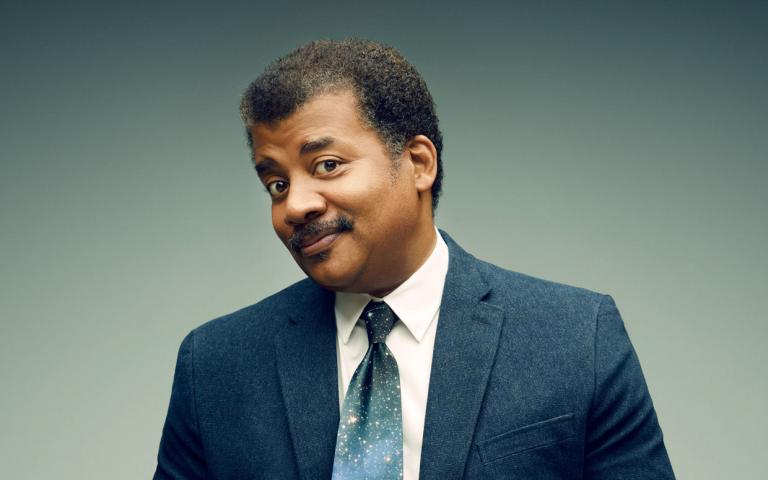
(H/T)
While my father-in-law was in town last week we caught up – or I caught up, he had already seen it – on the season finale of Cosmos.
It fitting fashion, Neil deGrasse Tyson ended the first season of his revamped version of Carl Sagan’s Cosmos
But before cutting to the credits, Tyson added a few thoughts of his own that I thought the church would do well to listen to.
Question Authority. No idea is true just because someone says it is. Think for yourself.
Question Yourself. Don’t believe anything just because you want to. Believing something doesn’t make it so.
Test Ideas by the evidence gained from observation and experiment. If a favorite idea fails a well designed test, it’s wrong. Get over it.
Follow the evidence wherever it leads – If you have no evidence, reserve judgement.
Remember you could be wrong.
I realize it’s more than a bit ironic to suggest that the church should take these words as a lesson on faith since there is at least the implicit notion behind Tyson’s words (given his own views on religion) that such a path should lead a person away from faith.
But given the fundamentalism and fear which have become so pervasive in the church today that few of us even recognize it unless it’s standing on a corner with a sign protesting a funeral, I think anyone who believes their faith is really worth believing in should heed the words of Neil deGrasse Tyson.
Why?
For starters, he highlights an important problem that has plagued the faith for centuries and continues to exist today albeit in sometimes more subtle, though no less nefarious ways. I’m talking about tyrants in the church, both those in positions of ecclesial authority and those with popular authority who demand unquestioned obedience to their version of absolute truth. But, as we all know too well, too often the only thing absolute is their desire to damn anyone to hell who disagrees.
While Jesus may have believed that the truth will set us free, we routinely see these despots of dogmatism use the truth – or their version of it – as a means to keep people in bondage.
If we are ever to be freed from the shackles of dogmatism and legalism, it will only happen when find the courage to follow in the footsteps of Jesus and Paul and Luther and countless others who boldly questioned authority, understanding that no matter the Bible verse that might be used as proof text or how strong a demagogue’s rhetoric might be, nothing is true just because some says it.
But even then we must be on guard against ourselves.
Emotions can get the best of us and our passions can prevent us from the sort learning and growing that is critical for a healthy faith. Learning and growing require us to admit that sometimes we’re wrong – even about important things. If we weren’t ever wrong, then there would be no need for growth and, among other problems, we would be left explaining why we don’t need to grow in wisdom, but Jesus did.
Which is why we must remember that strong, passionate faith doesn’t make Christianty true.
But that’s ok, because that’s what makes it faith.
And just as importantly, acknowledging our capacity to be wrong – particularly when it comes to declaring what the Bible teaches – should keep us humble in our strong convictions.
Humble in the knowledge that, as Tyson says, believing something doesn’t make it so.
Now there are obvious limitations in heeding Tyson’s advance. For example, there is no test to prove or disprove the existence of God. But while we may not be able to test that sort of claim, we can test whether or not our theology and concept of the Christian life is actually Christ-like.
In other words, if we claim that we’re being loving and yet the people we say we’re loving are left hurt, ostracized, and abandoned, then we can test our claims of being a loving people against the way people left their encounters with Jesus and, hopefully, realize that we might not be acting quite as loving as we like to think we are.
So while we might not be able to test the existence of God, we can compare the results of our way of living and loving with the way Jesus lived and loved and if we fail the test of Christ-likeness, then we need to admit when our theological rhetoric is wrong….and get over it.
Which leads us to what is perhaps the scariest part of Tyson’s advice for many of us in the church – the call to follow the evidence wherever it may lead.
I think many of us are worried that following the evidence will lead a person to atheism. To be honest, I think some of us should be afraid of this possibility because as people begin to question the sort of God some of us believe in, they’ll probably leave and never look back.
For example, when we preach a God who directly violates the very laws of science we also claim God wrote or proclaim a God who arbitrarily kills some people and damns others to hell for His glory, then we should be worried that questioning that sort of God will lead people down a path that ends in the abandonment of faith. After all who could and who would want to believe in such a God?
However, if we’re as confident that Christianity is true as we claim to be, then we should have nothing do fear about where the evidence will lead.
No question or path of inquiry should be off-limits.
In fact, we should be encouraging people to ask the tough questions and follow the evidence because we should be confident that the conclusions they ultimately reach will be that Jesus really is Lord.
In truth, our dogmatism and fear of questions only reveals a lack of confidence in the things we claim we’re most sure of. For if we really had the confidence of faith we claim to have, we wouldn’t feel the need to demonize people for asking tough and even embarrassing questions because we would have nothing to hide.
Finally, the last lesson Tyson offers might be most important of all, for there may be nothing more fundamental that we struggle with in the church today than admitting that we’re wrong.
It starts with our insistence that we’re just telling it like it is and preaching the God’s honest absolute truth directly from the Bible. But while we might think we’re preaching absolute truth and just telling it like it is and even though we might have the choir singing our praise behind us because they are just as disinterested in difficult questions and the complexities of real life as we are, the real truth of the matter is that it’s our version of the absolute truth that we’re preaching and it’s often absolute only in the sense that we absolutely believe it’s true and absolutely won’t stand to have anyone disagree. If we’re going to claim otherwise – that we are in fact preaching the unfiltered and unadulterated absolute truth – then we must admit that we’re taking a position above what even the Biblical writers claimed to know, that is to say, we believe we are seeing through a mirror clearly.
Now, admittedly, our addiction to absolute truth is a tough habit to kick. When conviction gets mingled with the uncertainty that comes along with faith, we tend to retrench in our sense of surety rather than admit our limited knowledge. And that’s a tough trench to climb our way out of.
I’m also keenly aware that by following Tyson’s (unintentional faith) advice we won’t suddenly convert the world to Christianity.
But that’s ok, because we’re not called to convert anyone anyway.
We’re called to make disciples and unlike making converts, both making disciples and being a disciples requires humility, a passion for learning, and a willingness to allow people to ask questions no matter how tough those questions might be or uncomfortable their answers might make us.
Previous Post

June 12, 2014
Giant Balloon Jesus Invades Australia
Next Post
June 18, 2014 Jesus' Autograph Hits The Auction Block
Browse Our Archives
Select a Category Book Review Classifieds Commentary Fundie Friday Funny Pictures Music Video News Prophecy Technology Televangelist Throwback Thursday Tract Tuesday Tracts Uncategorized Videos
Select a Month June 2019 May 2019 April 2019 March 2019 February 2019 January 2019 December 2018 November 2018 October 2018 August 2018 June 2018 May 2018 March 2018 February 2018 January 2018 October 2017 September 2017 August 2017 July 2017 June 2017 May 2017 April 2017 March 2017 February 2017 January 2017 December 2016 November 2016 September 2016 July 2016 June 2016 May 2016 April 2016 March 2016 February 2016 January 2016 December 2015 November 2015 October 2015 September 2015 August 2015 July 2015 June 2015 May 2015 April 2015 March 2015 February 2015 January 2015 December 2014 November 2014 October 2014 September 2014 August 2014 July 2014 June 2014 May 2014 April 2014 March 2014 February 2014 January 2014 December 2013 November 2013 October 2013 September 2013 August 2013 July 2013 June 2013 May 2013 April 2013 March 2013 February 2013 January 2013 December 2012 November 2012 October 2012 September 2012 August 2012 July 2012 June 2012 May 2012 April 2012 March 2012 February 2012 January 2012 December 2011 November 2011 October 2011 September 2011 August 2011 July 2011 June 2011 May 2011 April 2011 March 2011 February 2011 January 2011 December 2010 November 2010 October 2010 September 2010 August 2010
Follow Us!
TAKE THE
Religious Wisdom Quiz
What city is home to the Vatican?
Select your answer to see how you score.
Florence Jerusalem Rome Bethlehem
Related posts from The Semi-Official Blog of Zack Hunt
The End Is Nigh! Get Your Rapture Survival...
The Semi-Official Blog of Zack Hunt

Is It Really Well With My Soul?
The Semi-Official Blog of Zack Hunt

Daddy, Is Your Friend Going To Come Back...
The Semi-Official Blog of Zack Hunt
I Want To Speak At Your Event And...
The Semi-Official Blog of Zack Hunt
TRENDING AT PATHEOS Progressive Christian

Why Christians Have a Sacred Duty to Vote:...
The Bible offers strong support for the sacred duty to vote. Here...

What Being a Modern-Day Apostle Means to Me
In my last column, I discussed the ins and outs of modern-day...

Did Ancient China Once Worship the God of...
Across human history, a common thread weaves through the origins of the...

Love Your Neighbor – Including Earth-Kin: Lev. 19,...
God’s command to love your neighbor means acting in an ethical and...

Lead a Church Study of “Jesus and Lao...
Guest writer Jack Thomas (The Irreverent Reverend) reflects on leading his church...

Principles for Understanding the Apostolic Ministry Today
Whenever people discover that my formal ministry title is "apostle," as in...
view all Progressive Christian blogs
Ad-Free & Subscriber Log-In Subscription Support
- About Us
- 2026 Calendar
- Videos
- Podcasts
- Library of World Religions
- Faith In Media Tracker
- Advertise With Us
- Write for Us
- Privacy Policy
- Terms of Service
- Do Not Sell My Data
- Contact Us
- Radiant Digital
- Manage Newsletter Subscriptions
- Unsubscribe From Notifications
- Sitemap
Copyright 2008-2026, Patheos. All rights reserved.
Subscription Support Ad-Free & Subscriber Log-In
Follow Patheos