
BuddhistCatholicContemplativeEvangelicalGeneral ChristianHinduJewishLatter-day SaintMuslimNew VisionsProgressive Christian
Beliefs
- Buddhist
- Catholic
- Contemplative
- Evangelical
- General Christian
- Hindu
- Jewish
- Latter-day Saint
- More Voices
- Muslim
- New Visions
- Pagan
- Progressive Christian
Topics
- Religion News
- Food and Religion
- Sports and Religion
- Religious Art
- Religious Music and Entertainment
- Religious Events
- History and Religion
- Style and Religion
- Politics and Religion
- Women in Religion
- Recreation Outdoors and Religion
- Business Finance and Religion
- Careers Workplace and Religion
- Education and Religion
- Family Parenting and Religion
- Health Fitness and Religion
- Home and Religion
- Relationships and Religion
- Technology and Religion
- Travel and Religion
Columnists
- Buddhist Columnists
- Business Finance and Religion Columnists
- Careers Workplace and Religion Columnists
- Catholic Columnists
- Contemplative Columnists
- Education and Religion Columnists
- Evangelists Columnists
- Family Parenting and Religion Columnists
- General Christian Columnists
- Health Fitness and Religion Columnists
- Hindu Columnists
- History and Religion Columnists
- Home and Religion Columnists
- Jewish Columnists
- More Voices Columnists
- Latter Day Columnists
- Muslim Columnists
- New Visions Columnists
- Nonreligious Columnists
- Pagan Columnists
- Politics and Religion Columnists
- Progressive Columnists
- Recreation Outdoors and Religion Columnists
- Relationships and Religion Columnists
- Religion News Columnists
- Religious Art Columnists
- Religious Events Columnists
- Religious Music and Entertainment Columnists
- Sports and Religion Columnists
- Style and Religion Columnists
- Technology and Religion Columnists
- Travel and Religion Columnists
- Women in Religion Columnists
Resource Library
- 2026 Calendar
- Library of World Religions
- The 100 Most Holy Places on Earth
- Patheos Answers
- Podcasts
- Videos
- Faith Leaders Database
- Anglican Episcopalian
- Bahai
- Baptist
- Buddhism
- Christianity
- Confucianism
- Eastern Orthodoxy
- Hinduism
- Holiness and Pentecostal
- ISKCON
- Islam
- Judaism
- Lutheran
- Methodist
- The Church of Jesus Christ of Latter-day Saints
- New Age
- Paganism
- Presbytarian and Reformed
- Protestantism
- Religion Behind the Scenes
- Roman Catholic
- Scientology
- Shia Islam
- Sikhism
- Sufism
- Sunni Islam
- Taoism
- Zen
- See all religions
Research Tools
 Ad-Free & Subscriber Log-In Subscription Support
Ad-Free & Subscriber Log-In Subscription Support
Follow Patheos 

- Trending:
- Forgiveness
- |
- Marriage
- |
- Consciousness
- |
- Death Penalty
- |
- Election
- |
- Halloween

- Home
- Evangelical
- How John MacArthur Gets Mental Illness Wrong
How John MacArthur Gets Mental Illness Wrong
Last updated on: May 16, 2024 at 12:27 am by Esther O’Reilly
How John MacArthur Gets Mental Illness Wrong 2024-05-16T00:27:29-04:00 Esther O’Reilly
Patheos Explore the world's faith through different perspectives on religion and spirituality! Patheos has the views of the prevalent religions and spiritualities of the world.
A couple months ago, I tweeted out an awful story about a young man who committed suicide after going on a course of citalopram, an anti-depressant. He received this prescription over the phone, and within a week, his anxiety had spiked dramatically. Unable to cope, he took his own life.
I had forgotten all about this story until a few days ago, when a young Christian reader of mine sent a message reminding me of it. He told me he had just narrowly avoided the very same fate, with the very same drug.
We have a problem here. So how do we talk about it?
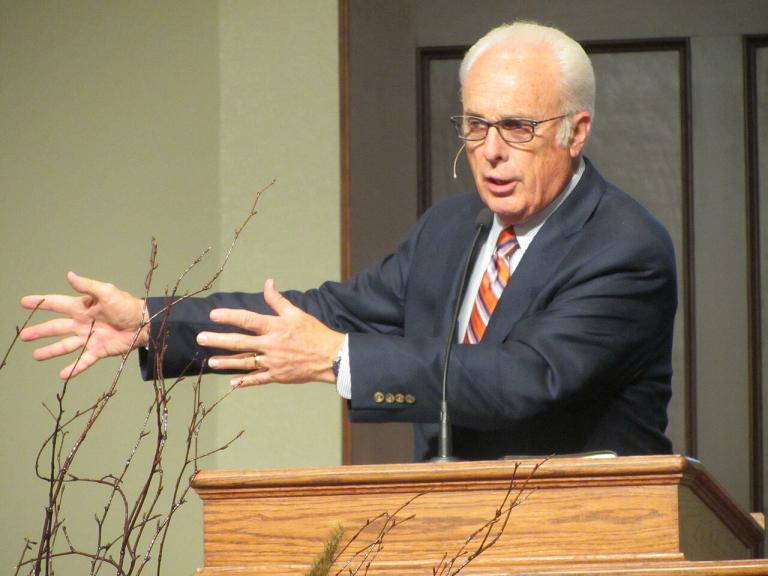
A couple weeks ago, John MacArthur drew sharp criticism for suggesting, in the course of a panel discussion about faith and culture and family, that the whole category of “mental illness” is a fiction. A noble lie. A Big Pharma fairytale, designed to keep people coming back for the drugs they never needed. “There’s no such thing as PTSD, there’s no such thing as OCD. There’s no such thing as ADHD. Those are noble lies to basically give the excuse, at the end of the day, to medicate people.”
When I say MacArthur “drew criticism” for this take, I mean that absolutely no one liked this take. I mean that everyone from Rachel Held Evans’ sister to the Boniface Option guy came out to say this was a bad, bad take. I noticed that people were especially incensed by MacArthur’s inclusion of PTSD, which makes sense given that it sits at the intersection of sexual trauma and veteran trauma. For one fleeting moment, there was something both #ChurchToo Twitter and redpilled masculinist Twitter could shake hands and agree on. It was fleeting, but it was a moment.
I thought of putting out a hot take of my own, but I decided to let it bake, which will no doubt cost me views now. But I still think it’s worth coming back to say something. Before I proceed, I’ll say that this isn’t an abstract discourse for me. I’ve known many people who struggle with all kinds of mental illness. I’ve known people who were suicidal, including multiple men of all ages who attempted it, and one who succeeded. I know people who live daily with the burdens of depression, OCD, and chronic anxiety.
So, yeah. I kind of care about all this. So here’s my take, served cold.
The first thing I noticed, which no one else seemed to pick up on, was that MacArthur wasn’t pointing to Christian sources when he made these comments. He cited two books by secular psychiatrists: Thomas Szasz’s The Myth of Mental Illness (1950) and Bruce Levine’s A Profession Without Reason (2013). Levine’s book hasn’t generated much discussion, but it’s in a similar vein to Szasz’s book, which was widely read and praised as a seminal work by prominent figures like Karl Popper. Its bold attack on the pharmaceutical establishment would inspire followers who found their place among fellow anti-establishmentarians in the roiling 60s. This was a time when institutions of all kinds were losing unconditional deference, Big Pharma no less than Big Religion, Big Corporate, and Big Military. Levine makes the parallel to religion quite explicit in his book, which is constructed around the life and thought of Baruch Spinoza. Just as Spinoza questioned the sayings of the Bible, so Levine argues that we should question the sayings of Big Pharma. These sayings may present themselves as “science,” but Levine suggests they’re more like alchemy.
Such writers might seem like unlikely bedfellows for a revered evangelical pastor like John MacArthur, especially since their argument relies on materialist presuppositions. I’m not sure MacArthur actually realizes this. Watching a sermon where he expands on his remarks, I’m struck by a bit where he emphasizes that the only things he classifies as “illness” are things you can point to physically in someone’s brain. He uses the word “objective” here—things you can observe and diagnose “objectively.” But this seems to concede the materialist’s assumption that “objective” = “physical.” If you cut open a person’s brain, you wouldn’t find his soul either, yet I assume MacArthur believes his soul exists.
But I think MacArthur is intuitively drawn to these writers because all of them share an anti-establishment spirit. They simply differ on which establishments are worth attacking. They start from a similar place, then branch off in different directions. To give one especially interesting example from Levine’s book, Levine discusses the history of homosexuality as a mental illness. As homosexuality gradually became normalized, people realized the absurdity of including it in the DSM-5. Today, nobody even thinks about rolling back the clock. This is on Levine’s way to the argument that a similar revolution needs to happen with other things currently classified as mental illness, like schizophrenia.
Now, MacArthur is obviously not going to agree with Levine that homosexuality should be normalized. But I think he would agree that it shouldn’t have been classified as a mental illness. He would just call it sin.
And this is where so many people were coming out to hammer MacArthur, because applying a framework of sin to all kinds of mental illness has caused so much turmoil in the church. In fairness, he doesn’t chalk everything up to sin. When discussing PTSD, he tries to show sympathy for the struggling veteran who’s lost friends. MacArthur just wants the veteran to understand that what he’s experiencing is “grief” — no more, no less. It isn’t its own distinctive thing that needs an acronym or needs any special treatment beyond what we would normally suggest to people dealing with grief.
Here some veterans in the audience might dryly comment, “Ah, so that’s why I keep waking up in the night trying to strangle my wife!”
I myself am hardly an unquestioning acolyte at the altar of Big Pharma. I don’t nod my head meekly at every single new diagnostic acronym they create. To pick another one in MacArthur’s list, I myself have wondered how much there really is to ADHD. There’s certainly a conversation to be had about how many little boys were put on Ritalin for acting like…well, like little boys. I have similar questions about things like narcissistic personality disorder. Is this really a “disorder,” or have we just invented a medical category for the condition otherwise known as “being an asshole”?
To give a more recent example where I was completely on MacArthur’s side against both Big Pharma and Big Government, I took lots of flak during the pandemic for questioning the various mantras our overlords handed down to us. I also questioned the haste and safety of the vaccine rollout. I think time has borne me out on all of these questions, as it’s borne out MacArthur for refusing to close his church. I thought, and still do think, that this choice embodied anti-establishment resistance at its best.
Still, I wonder if MacArthur’s anti-establishmentarianism in this area might in some sense spring from the same source as his mental illness denialism. To question the latter is not to say that the establishment is always right, nor even to say that they offer all the best ways of handling mental illness. There’s my friend, after all, with his depression and his citalopram. However, I think that such stories function as double-edged swords. To be sure, they do cut against the hasty over-prescriptions of Big Pharma. But they’re also in tension with cavalier pronouncements against the very idea that body and mind and spirit all interact with each other, and that chemical imbalances in the brain can dramatically affect whether we love life or would rather not go on living.
A powerful recent book on this topic, which I’ve given away to multiple people, is John Andrew Bryant’s A Quiet Mind to Suffer With, a memoir intimately chronicling Bryant’s painful journey through OCD. I could quibble with a few things about the book, but as a whole I think it stands as a very important corrective to blanket mental illness denialism. Bryant is a devout Christian, yet he finds himself afflicted by dark, strange thoughts that he simply can’t control. With much time, prayer, and effort, he’s learned to live with them, but he’s never been able to banish them entirely. He makes a vivid analogy to going shopping with a screaming toddler in tow. The toddler is screaming, he’s trying to make sure you get no shopping done today, but you have to tuck him under your arm and say, “Nope. We’re going shopping.” And even though he’s still screaming, you will get your shopping done. But he never stops screaming.
It’s been rightly pointed out that MacArthur is vulnerable to the accusation of prosperity gospel-ism here, with his inflexible insistence that if you would just pray harder and practice better spiritual discipline, you could eliminate these things. Someone found an old clip where MacArthur even sounds incredulous when responding to John Piper’s humble confession of a years-long depression. “It lasted several years??” MacArthur asks, while the audience laughs. The concept seems entirely foreign to him. He’s never experienced it, he has no category for it. One would have hoped that a story like Piper’s might inspire MacArthur to reassess, but apparently it didn’t.
All that being said, Christians do have a tightrope to walk here, because sin and sickness, if we are brutally honest, are often tangled together in dark and complex ways. Consider autism. The evidence is simply incontrovertible that autism is a Thing. It’s real, it has very clear symptoms that can be tracked and assessed on a scale of severity, it’s not just something made up by some shadowy Big Pharma exec with too much time on his hands. If you doubt this, there are many, many parents who would be glad to inform you otherwise. On the other hand, people suffering with autism aren’t just sufferers. They can also be perpetrators of great hurt to the people around them. That’s not sickness. That’s sin. Is the sin in some sense connected to the sickness? In a way, yes, in the sense that autism heightens certain sensitivities, lowers impulse control, and so on. But plenty of people with this condition have found ways to recognize it, manage it, and not mistreat their friends and loved ones. It doesn’t mean they have no such thing as autism. It just means they’re dealing with their autism in non-sinful ways.
The same applies to any number of “things with acronyms.” The veteran with PTSD (sickness) can choose to drown himself in alcohol and become a wife-beater (sin), or he can choose to seek help, which should include seeking God, but may well also include seeking a good therapist. Once again, I am no fan of much that trots itself out in the guise of “therapy” these days. Therapy is a tool as good or as bad as the man using it. Lots of bad men are using it. That doesn’t mean it can’t be a good tool.
I’m sure I’m preaching to the choir here. MacArthur is clearly in a small minority. But I hope I’ve made a reasonable attempt to understand him fairly, while acknowledging that this isn’t just MacArthur’s random harmless musings. This reflects a whole system of dealing with real people’s real problems that has caused real pain. Nor, as I’ve sometimes wondered, is it merely a generational divide. Younger pastors in MacArthur’s tribe operate according to these assumptions too. I don’t blame people for being angry about this. At the same time, I don’t blame other people for wanting to honor the good work MacArthur has still done. Just the other day, my friend Meg Basham was giving MacArthur credit for opening her eyes to the gospel when she was still mired in a decadent sorority girl lifestyle. I praise God for that. I hope you can too. Legacies are complicated, and John MacArthur’s will be no different.
But on this issue, this one time, in Christian and ex-Christian unity, we can all agree that he’s wrong.
Previous Post

April 20, 2024
When Mandisa Forgave Simon Cowell
Next Post

May 20, 2024 The Sort-Of Christian Revival
Recent Comments
"Really appreciated this. Your take is essentially where I stand on the issue, although I ..."
How Should Christians Think About Homosexuality ..."
"Kingsnorth advertises husband ignorance with every arricle. Does he honestly believe Christ cares nothing for ..."
Paul Kingsnorth’s Erasmus Lecture, Revisited
"The reformed chjurch is Sardis. There is no new life and miracle in the "bloody" ..."
How John MacArthur Gets Mental Illness ..."
"Veterans are an exception. Not all medical advice is accurate. I was diagnosed with Generalized ..."
How John MacArthur Gets Mental Illness ..."
Browse Our Archives
Select a Category 3 star 3.5 star 4 star 4.5 star Anatomy of a Song Behind the Songs Blog Stuff Book Reviews CCM CCM vs. SG CD Reviews Christians in Entertainment Christmas Essential 12 Christmas Favorites Christmas Top Fives Concert Reviews Concerts Culture Devotional Thoughts Faith and Culture From the Vault Fun Gospel Singers Gospel Songs Great Music Guest Posts Harmony Master Classes History Holidays Humor Hymns Interviews Marriage in the Movies Monday Morning Humor Movie Reviews Movies Music NQC Odds and Ends Old Movies, New Eyes Old Southern Gospel News Old Stuff Open Threads Other Genres Perfect Tenor Performances Polls Questions and Answers Recently Added SG vs. The Rest of the World Sing It Again Songs Songwriting Southern Gospel Surprise Sunday The Definitive Hymns Theology Toe-to-Toe Top 10 Lists Top 5 Top 5 Lists Two Sisters Review Uncategorized Video Posts Youtube Finds
Select a Month August 2026 February 2025 August 2024 June 2024 May 2024 April 2024 March 2024 October 2023 March 2023 February 2023 December 2022 October 2022 September 2022 August 2022 July 2022 June 2022 May 2022 March 2022 February 2022 January 2022 December 2021 November 2021 September 2021 August 2021 July 2021 June 2021 May 2021 April 2021 March 2021 February 2021 January 2021 December 2020 November 2020 October 2020 September 2020 August 2020 June 2020 March 2020 February 2020 December 2019 November 2019 October 2019 September 2019 August 2019 July 2019 June 2019 May 2019 April 2019 March 2019 February 2019 January 2019 December 2018 November 2018 October 2018 September 2018 August 2018 July 2018 April 2018 September 2017 August 2017 May 2017 February 2017 December 2016 November 2016 September 2016 August 2016 July 2016 June 2016 May 2016 April 2016 March 2016 February 2016 January 2016 December 2015 November 2015 October 2015 September 2015 August 2015 July 2015 June 2015 May 2015 April 2015 March 2015 February 2015 January 2015 December 2014 November 2014 October 2014 September 2014 August 2014 July 2014 June 2014 May 2014 April 2014 March 2014 February 2014 January 2014 December 2013 November 2013 October 2013 September 2013 August 2013 July 2013 June 2013 May 2013 April 2013 March 2013 February 2013 January 2013 December 2012 November 2012 October 2012 September 2012 August 2012 July 2012 June 2012 May 2012 April 2012 March 2012 February 2012 January 2012 December 2011 November 2011 October 2011 September 2011 August 2011 July 2011 June 2011 May 2011 April 2011 March 2011 February 2011
Follow Us!
TAKE THE
Religious Wisdom Quiz
What does Jesus say will set you free?
Select your answer to see how you score.
Money The truth Fame Power
Related posts from Young Fogey

Should You Turn Your Testimony Into Content?
Paul Kingsnorth's Erasmus Lecture, Revisited

The Conservative Case for Sauron

TRENDING AT PATHEOS Evangelical

The First Eucharistic Controversy: Christ’s Real Presence
For Catholics, the Eucharist is the source and summit of the Christian...

How to Make a Decision When You Can't...
Main point: It’s much more valuable to stay close to God so...

Archdiocese Hosts Military Marriage Retreat in Germany
RASTATT, Germany — The transient military lifestyle, with its frequent deployments and...

Nearly every morning, I make the drive to Detroit with my high-school-age...

The Real AI Story Is Adoption Without Trust
Artificial intelligence has crossed a political threshold. It is no longer a...

A new article, written by Jeff Lindsay and Gale L. Pooley,...
view all Evangelical blogs
What Are Your Thoughts?leave a comment
Ad-Free & Subscriber Log-In Subscription Support
- About Us
- 2026 Calendar
- Videos
- Podcasts
- Library of World Religions
- Faith In Media Tracker
- Advertise With Us
- Write for Us
- Privacy Policy
- Terms of Service
- Do Not Sell My Data
- Contact Us
- Radiant Digital
- Manage Newsletter Subscriptions
- Unsubscribe From Notifications
- Sitemap
Copyright 2008-2026, Patheos. All rights reserved.
Subscription Support Ad-Free & Subscriber Log-In
Follow Patheos