
BuddhistCatholicContemplativeEvangelicalGeneral ChristianHinduJewishLatter-day SaintMuslimNew VisionsProgressive Christian
Beliefs
- Buddhist
- Catholic
- Contemplative
- Evangelical
- General Christian
- Hindu
- Jewish
- Latter-day Saint
- More Voices
- Muslim
- New Visions
- Pagan
- Progressive Christian
Topics
- Religion News
- Food and Religion
- Sports and Religion
- Religious Art
- Religious Music and Entertainment
- Religious Events
- History and Religion
- Style and Religion
- Politics and Religion
- Women in Religion
- Recreation Outdoors and Religion
- Business Finance and Religion
- Careers Workplace and Religion
- Education and Religion
- Family Parenting and Religion
- Health Fitness and Religion
- Home and Religion
- Relationships and Religion
- Technology and Religion
- Travel and Religion
Columnists
- Buddhist Columnists
- Business Finance and Religion Columnists
- Careers Workplace and Religion Columnists
- Catholic Columnists
- Contemplative Columnists
- Education and Religion Columnists
- Evangelists Columnists
- Family Parenting and Religion Columnists
- General Christian Columnists
- Health Fitness and Religion Columnists
- Hindu Columnists
- History and Religion Columnists
- Home and Religion Columnists
- Jewish Columnists
- More Voices Columnists
- Latter Day Columnists
- Muslim Columnists
- New Visions Columnists
- Nonreligious Columnists
- Pagan Columnists
- Politics and Religion Columnists
- Progressive Columnists
- Recreation Outdoors and Religion Columnists
- Relationships and Religion Columnists
- Religion News Columnists
- Religious Art Columnists
- Religious Events Columnists
- Religious Music and Entertainment Columnists
- Sports and Religion Columnists
- Style and Religion Columnists
- Technology and Religion Columnists
- Travel and Religion Columnists
- Women in Religion Columnists
Resource Library
- 2026 Calendar
- Library of World Religions
- The 100 Most Holy Places on Earth
- Patheos Answers
- Podcasts
- Videos
- Faith Leaders Database
- Anglican Episcopalian
- Bahai
- Baptist
- Buddhism
- Christianity
- Confucianism
- Eastern Orthodoxy
- Hinduism
- Holiness and Pentecostal
- ISKCON
- Islam
- Judaism
- Lutheran
- Methodist
- The Church of Jesus Christ of Latter-day Saints
- New Age
- Paganism
- Presbytarian and Reformed
- Protestantism
- Religion Behind the Scenes
- Roman Catholic
- Scientology
- Shia Islam
- Sikhism
- Sufism
- Sunni Islam
- Taoism
- Zen
- See all religions
Research Tools
 Ad-Free & Subscriber Log-In Subscription Support
Ad-Free & Subscriber Log-In Subscription Support
Follow Patheos 

- Trending:
- Forgiveness
- |
- Marriage
- |
- Consciousness
- |
- Death Penalty
- |
- Election
- |
- Halloween

- Home
- Evangelical
- Politics and Religion
- In a Negative World… (Part II)
In a Negative World… (Part II)
Last updated on: August 25, 2022 at 8:24 pm by Esther O’Reilly
In a Negative World… (Part II) 2022-08-25T20:24:37-04:00 Esther O’Reilly
Patheos Explore the world's faith through different perspectives on religion and spirituality! Patheos has the views of the prevalent religions and spiritualities of the world.
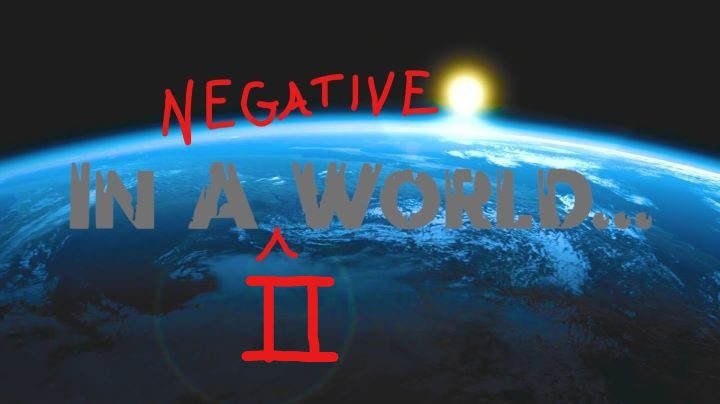
Today I continue my notes on Trevin Wax’s Gospel Coalition series about the “three-world model” of American church history. Yesterday, I discussed the suggestion that we entered a “negative world” earlier than Aaron Renn has proposed, depending on your perspective. If you were an adult convert, your perspective might look a little different from the perspective of a child in a deeply conservative family. Trevin recalls coming of age in the Clinton era. I came to full political awareness in the Bush era, but my memories still overlap with the sunset of the Clinton era.
I also appreciate Trevin’s heightened awareness of the global church, which he touches on in his intro piece when he talks about his time studying at an Eastern European university. My mother’s roots are GARBC (General Association of Regular Baptist Churches), and she always had a strong sense of solidarity with the global Baptist Church. This memoir of the underground church in the Soviet Union was written about a family Mom knew from Bible college. Having roots like this has a useful inoculating effect when Tucker Carlson asks why Americans should care about “this country called Ukraine,” because “Putin never did anything to you.” “Because,” my Baptist side wants to say, “you greasy grifter, among other things, there’s this thing called, uh, THE CHURCH, and because people who actually REMEMBER the Cold War, thankuverymuch, can remember that it was, uh, kind of a BIG DEAL. For THE CHURCH.” In my last piece, I talked about the vulnerabilities emerging in disaffected right-leaning Christians who feel more “seen” by Tucker Carlson than by their pastor. I’ll unpack this more today, then segue into how this intersects with the discourse around race relations/justice/reconciliation.
Tim Keller, Again
I promised I wasn’t going to revive the Tim Keller Discourse last time, but I lied a little, because Trevin quotes from him in his third entry on navigating “negative world.” So, this really does provide a natural opportunity to refine some of the recent discourse-generating criticism of Keller’s model, specifically the critique that Keller has been trying unsuccessfully to run a “neutral-world” script. The problem with this critique is that I don’t actually think Keller has ever been under any illusions about what Christians are facing in the public square. This quote that Trevin uses (from 2014, no less) is a nice counter-example:
So what’s happening is the roof has come off for the devout. The devout had a kind of a shelter, an umbrella. . . . You had the devout, you had the secular, and you had that middle ground that made it hard to speak disrespectfully of traditional values. That middle ground [is now more likely to identify with the secular than with the religious]. . . . And so . . . the devout suddenly realize that they are out there, that the umbrella is gone, and they are taking a lot of flak for their views, just public flak.
Keller finds Louie Giglio’s disinvitation to speak at Obama’s second inauguration “enormously discouraging,” because it signals that “traditional Christians don’t even have a right to be in the public square.”
But when Keller has unpacked this further, it emerges that he ultimately blames the excesses of the Religious Right for this reversal (source):
You know how they raised their money? For 20 years, they sent out letters talking about how, “You’ve got to send us money because the gay people are going to try to come and take your children away, because they’re evil and because the Democrats and the Left are going to destroy your religious liberty.” They just said awful things and vilified people. It’s one of the reasons why so many gay activists now just don’t want to forgive evangelicals, because when they had a little more power in the ’80s and ’90s, that’s how they raised their money. That’s how they got people out. And weirdly enough, that’s not the Christian way at all. The Christian way is, the way up is down. The way to rule is to serve. This is how Jesus did it. The way to get happy is to not think about your own happiness but the happiness of others. The way to get any influence is to empty yourself and be a servant. That’s Jesus’ way, and they’re not doing that. They’re actually using the Nietzschean way. And I think what that did was by, for a long time, just keeping evangelicals frothing at the mouth about how everything is going so bad and making everybody so angry.
By the way, things are getting bad for evangelicals. It’s very possible. I am not in denial about the fact that ten years from now, if you have evangelical convictions about sex and gender, you may not be able to work for a major university or for the government or for a big corporation. And it’s not that Christians haven’t faced that other places in the past. We shouldn’t be crybabies. Nevertheless, having said all that, yeah, we nurtured this. And Christian nationalists use that. And therefore, we brought it on ourselves.
There are so many things wrong with this passage, but I particularly want to note the sharpness of the pivot from “The Religious Right was a bunch of fearmongering bigots” to “By the way, the predictions of the Religious Right are in fact coming true.” I’m afraid this looks an awful lot like Rod Dreher’s “law of merited impossibility”: “This will never happen, but if and when it does, you’ll deserve it.” Not very winsome, if I were being consulted on such things.
The most charitable thing I can think to say here is that perhaps Keller does still have a blind spot over our public school sex ed, unaware of the depraved depths to which it has sunk. Perhaps the full devastation being wrought on young people’s “transitioning” bodies hasn’t really come home to him. I’m unsure what would qualify as “evil,” if not this. I’m not sure what would qualify as “taking our children away,” if not this. By contrast, at least Wax in his series clearly observes and acknowledges that this is a “galvanizing issue” of our time.
Taking Cues
In his fourth entry, Trevin suggests that it’s not only “Big Eva” elites who are eager to “synchronize” their views with an inner ring. If they’re tempted to “punch right and coddle left,” Christians right of center may be tempted to “punch left and coddle right”:
If you’re trying to reach a segment of the population that often feels forgotten—a people united in their disdain for “the left” or “the elites”—you will feel the pressure to synchronize your concerns with right-wing podcasters and conservative talk show hosts. Your prioritization of concerns will shift toward the people whose favor you care about most, and in this case, fighting racial injustice or echoing the Bible’s instruction about caring for the immigrant and stranger will likely not score as high on your list. Culture warriors are not immune to the temptation to soft-pedal the biblical commands in certain areas, so as not to offend the sensibilities of people in their community.
Again, Trevin is bringing some old memories out of the bank for me here, because I remember when figures like Ann Coulter and Michelle Malkin were still hot stuff. College Republicans at my university regularly brought in speakers like this, pundits who worked in a brash, provocative vein. As a university brat, I got to ride my father’s coattails to these events. I saw Coulter, Malkin, and many others—even caught an elegantly aging Phyllis Schlafly (pushing twenty years ago now). These were also the glory days of Mike Adams, aka the Lenny Bruce of conservative punditry, whom I tried my best to eulogize in The American Conservative after his suicide two years ago.
Tragically, a “where are they now?” for these figures reveals that the ones who aren’t dead have lived long enough to see themselves become villains. I look back now at this book by Malkin, which we have on a shelf somewhere, and think about the irony of the title, Unhinged, given that Malkin has now gone full groyper. It was a useful book in its day, a catalogue of mind-numbing leftist hate in the Bush era. It seems comical in a post-Trump world, but it’s worth recalling just how hated the mild-mannered Bush, Jr. actually was. Little did we know Malkin would just end up shilling for hate-mongers on the other side of the political coin.
For Coulter and Malkin, as well as bloggers like Pam Geller, the alt-right had an attraction because they were already intensely, almost obsessively fixated on issues around race and immigration. Sometimes, they did say certain uncomfortable truths out loud. But they didn’t seem to be grounded in a holistic worldview that could make them not merely provocative, but constructive. They were vulnerable to proto-“edgelords” who brought out their own worst sides. And so I watched in real time as one pundit after another disappeared down that rabbit hole. My mother, a savvy observer of Internet culture in her day, will say she watched the alt-right being born right in front of her.
So when Trevin talks about “the concerns of right-wing pundits and talk-show hosts,” I understand the fear. And yet, with all that said, I still question whether it moves the conversation forward to talk non-specifically about “soft-pedaling biblical commands to fight racial injustice and care for the immigrant.” Vague sweeping phrases like “fight racial injustice” or “care for the immigrant” still keep many vital questions and details in soft focus (including the question of how well the left has actually done either of these things). It’s wholly fair for right-of-center people to ask for more of those details when you float a non-specific sound bite like this. We are talking about profoundly messy, multivariate problems when we talk about “race” or “immigration,” problems that don’t lend themselves to the sort of “good vs. evil” framing that can aptly capture the abortion debate, or the sexual indoctrination debate.
Conversation-Stoppers
Trevin pictures “a pastor in the Deep South” who might experience approval for praying against abortion, but makes the congregation “nervous” when his prayers “focus on the less fortunate, the immigrant, or victims of racial discrimination.” He pictures the congregation whispering among themselves, “Is he woke?!”
First, I have to wonder if “people in the Deep South” would really “grow nervous” over a basic prayer for the “less fortunate.” I have to imagine many southern churches are in fact overflowing with expansive southern hospitality to the poor in their respective communities. Maybe I’m wrong, and Trevin has some particular stingy southern churches in mind. Without context, it’s just a kind of vague thought experiment.
But to Trevin’s big question, would I think this pastor was “woke?” I would say that I prefer to focus on ideas over labels. I wouldn’t necessarily assume such a pastor was pushing an agenda, if that’s what Trevin means. But I would suspect that a pastor offering a vague blanket prayer for “victims of racial discrimination” has probably picked up a particular social narrative that isn’t offering him a fully objective perspective on such things. I would assume he’s probably a nice guy who cares about people and worries that he might be seen as uncaring. So he wants to show that that’s not true. He wants to show that he cares.
Unfortunately, the sorts of voices which might be in his ear on this issue are not guaranteed to steer him wisely. Just to give one of many examples, I remember a prolonged Twitter thread where former TGC writer Dante Stewart highlighted a story from his hometown about alleged ha
rassment on a running trail. Several women described the suspect as a black man. This fact then featured as one of several descriptive details in the police “heads up” release. That basic piece of police protocol was enough to set Stewart ranting and raving for tweet after tweet about the evils of white supremacy. By the way, I say Stewart is a “former” TGC writer, because if we were to run a “where are they now?” on him, he was last seen Twitter-stanning “queer theology” before his byline was silently removed from the site.
So I have to ask, when white evangelicals are asked to “listen seriously to their black brothers and sisters,” does it include the sort of thing Stewart was pushing in that thread? I’m not being flip. This is a serious question. If we aren’t allowed to distinguish clearly between wisdom and foolishness right out of the gate, then we can’t even agree on the terms for “the conversation” that everybody keeps saying we need to have about race. We can’t even start to “have the conversation” about things like holistic police reform, which I actually agree is desperately needed.
This is why we’re getting nowhere. This is why people wonder what might lie behind certain kinds of non-specific prayer: because they can’t tell if the hidden part is an entire narrative that they are expected to adopt on pain of not being considered good Christians. Because they don’t want to be emotionally blackmailed into affirming a particular set of propositions about race relations, immigration, or any other complicated multivariate problem with no clean solutions. Because they don’t want to be gaslit into “repenting of their whiteness,” which these days isn’t just a hypothetical.
Now, I realize Trevin can’t open all these cans of worms by himself in a series of very short blog posts. What I am saying is that when space doesn’t allow for more unpacking, there needs to be an acknowledgment of just how much there really is to unpack.
That should probably conclude this entry. I’ll continue the race theme next time, looking at Trevin’s claim that the three-worlds framework fails completely if we “switch” to a racial justice “lens.”
Politics and Religion
Previous Post

June 5, 2022
In a Negative World... (Part I)
Next Post

June 25, 2022 Chris Rice and the Conversation We Can't Not Have
Browse Our Archives
Select a Category 3 star 3.5 star 4 star 4.5 star Anatomy of a Song Behind the Songs Blog Stuff Book Reviews CCM CCM vs. SG CD Reviews Christians in Entertainment Christmas Essential 12 Christmas Favorites Christmas Top Fives Concert Reviews Concerts Culture Devotional Thoughts Faith and Culture From the Vault Fun Gospel Singers Gospel Songs Great Music Guest Posts Harmony Master Classes History Holidays Humor Hymns Interviews Marriage in the Movies Monday Morning Humor Movie Reviews Movies Music NQC Odds and Ends Old Movies, New Eyes Old Southern Gospel News Old Stuff Open Threads Other Genres Perfect Tenor Performances Polls Questions and Answers Recently Added SG vs. The Rest of the World Sing It Again Songs Songwriting Southern Gospel Surprise Sunday The Definitive Hymns Theology Toe-to-Toe Top 10 Lists Top 5 Top 5 Lists Two Sisters Review Uncategorized Video Posts Youtube Finds
Select a Month August 2026 February 2025 August 2024 June 2024 May 2024 April 2024 March 2024 October 2023 March 2023 February 2023 December 2022 October 2022 September 2022 August 2022 July 2022 June 2022 May 2022 March 2022 February 2022 January 2022 December 2021 November 2021 September 2021 August 2021 July 2021 June 2021 May 2021 April 2021 March 2021 February 2021 January 2021 December 2020 November 2020 October 2020 September 2020 August 2020 June 2020 March 2020 February 2020 December 2019 November 2019 October 2019 September 2019 August 2019 July 2019 June 2019 May 2019 April 2019 March 2019 February 2019 January 2019 December 2018 November 2018 October 2018 September 2018 August 2018 July 2018 April 2018 September 2017 August 2017 May 2017 February 2017 December 2016 November 2016 September 2016 August 2016 July 2016 June 2016 May 2016 April 2016 March 2016 February 2016 January 2016 December 2015 November 2015 October 2015 September 2015 August 2015 July 2015 June 2015 May 2015 April 2015 March 2015 February 2015 January 2015 December 2014 November 2014 October 2014 September 2014 August 2014 July 2014 June 2014 May 2014 April 2014 March 2014 February 2014 January 2014 December 2013 November 2013 October 2013 September 2013 August 2013 July 2013 June 2013 May 2013 April 2013 March 2013 February 2013 January 2013 December 2012 November 2012 October 2012 September 2012 August 2012 July 2012 June 2012 May 2012 April 2012 March 2012 February 2012 January 2012 December 2011 November 2011 October 2011 September 2011 August 2011 July 2011 June 2011 May 2011 April 2011 March 2011 February 2011
Follow Us!
TAKE THE
Religious Wisdom Quiz
What mountain was the prophet Elijah hiding on when an earthquake, wind, fire, and then a whisper came?
Select your answer to see how you score.
Mount Carmel Mount Moriah Mount Horeb Mount Gerizim
Related posts from Young Fogey

Should You Turn Your Testimony Into Content?
Paul Kingsnorth's Erasmus Lecture, Revisited

The Conservative Case for Sauron

TRENDING AT PATHEOS Evangelical

A new article, written by Jeff Lindsay and Gale L. Pooley,...

Swimfan: Forgotten Aughts Pleasures
This is a recovery effort. In 2002, My Big Fat Greek Wedding...

Top Three Anti-Catholic Lies About Catholicism
This is my initial transcript for the video, "THE 3 WORST...

Pope Leo Celebrates Mass for Nurses & Docs...
I don't have any idea how he did it, but Pope Leo...

The Sermon on the Mount, Part I: Matthew...
The Sermon on the Mount, Part I (Matthew 4:12-5:12) St. Matthew moves...

What's up from Crossway: Reviewing some of their latest A few weeks...
view all Evangelical blogs
Ad-Free & Subscriber Log-In Subscription Support
- About Us
- 2026 Calendar
- Videos
- Podcasts
- Library of World Religions
- Faith In Media Tracker
- Advertise With Us
- Write for Us
- Privacy Policy
- Terms of Service
- Do Not Sell My Data
- Contact Us
- Radiant Digital
- Manage Newsletter Subscriptions
- Unsubscribe From Notifications
- Sitemap
Copyright 2008-2026, Patheos. All rights reserved.
Subscription Support Ad-Free & Subscriber Log-In
Follow Patheos