
BuddhistCatholicContemplativeEvangelicalGeneral ChristianHinduJewishLatter-day SaintMuslimNew VisionsProgressive Christian
Beliefs
- Buddhist
- Catholic
- Contemplative
- Evangelical
- General Christian
- Hindu
- Jewish
- Latter-day Saint
- More Voices
- Muslim
- New Visions
- Pagan
- Progressive Christian
Topics
- Religion News
- Food and Religion
- Sports and Religion
- Religious Art
- Religious Music and Entertainment
- Religious Events
- History and Religion
- Style and Religion
- Politics and Religion
- Women in Religion
- Recreation Outdoors and Religion
- Business Finance and Religion
- Careers Workplace and Religion
- Education and Religion
- Family Parenting and Religion
- Health Fitness and Religion
- Home and Religion
- Relationships and Religion
- Technology and Religion
- Travel and Religion
Columnists
- Buddhist Columnists
- Business Finance and Religion Columnists
- Careers Workplace and Religion Columnists
- Catholic Columnists
- Contemplative Columnists
- Education and Religion Columnists
- Evangelists Columnists
- Family Parenting and Religion Columnists
- General Christian Columnists
- Health Fitness and Religion Columnists
- Hindu Columnists
- History and Religion Columnists
- Home and Religion Columnists
- Jewish Columnists
- More Voices Columnists
- Latter Day Columnists
- Muslim Columnists
- New Visions Columnists
- Nonreligious Columnists
- Pagan Columnists
- Politics and Religion Columnists
- Progressive Columnists
- Recreation Outdoors and Religion Columnists
- Relationships and Religion Columnists
- Religion News Columnists
- Religious Art Columnists
- Religious Events Columnists
- Religious Music and Entertainment Columnists
- Sports and Religion Columnists
- Style and Religion Columnists
- Technology and Religion Columnists
- Travel and Religion Columnists
- Women in Religion Columnists
Resource Library
- 2026 Calendar
- Library of World Religions
- The 100 Most Holy Places on Earth
- Patheos Answers
- Podcasts
- Videos
- Faith Leaders Database
- Anglican Episcopalian
- Bahai
- Baptist
- Buddhism
- Christianity
- Confucianism
- Eastern Orthodoxy
- Hinduism
- Holiness and Pentecostal
- ISKCON
- Islam
- Judaism
- Lutheran
- Methodist
- The Church of Jesus Christ of Latter-day Saints
- New Age
- Paganism
- Presbytarian and Reformed
- Protestantism
- Religion Behind the Scenes
- Roman Catholic
- Scientology
- Shia Islam
- Sikhism
- Sufism
- Sunni Islam
- Taoism
- Zen
- See all religions
Research Tools
 Ad-Free & Subscriber Log-In Subscription Support
Ad-Free & Subscriber Log-In Subscription Support
Follow Patheos 

- Trending:
- Forgiveness
- |
- Marriage
- |
- Consciousness
- |
- Death Penalty
- |
- Election
- |
- Halloween

- Home
- Evangelical
- Marriage in the Movies: Regarding Henry
Marriage in the Movies: Regarding Henry
Last updated on: July 28, 2018 at 11:24 pm by Esther O’Reilly
Marriage in the Movies: Regarding Henry 2018-07-28T23:24:45-04:00 Esther O’Reilly
Patheos Explore the world's faith through different perspectives on religion and spirituality! Patheos has the views of the prevalent religions and spiritualities of the world.
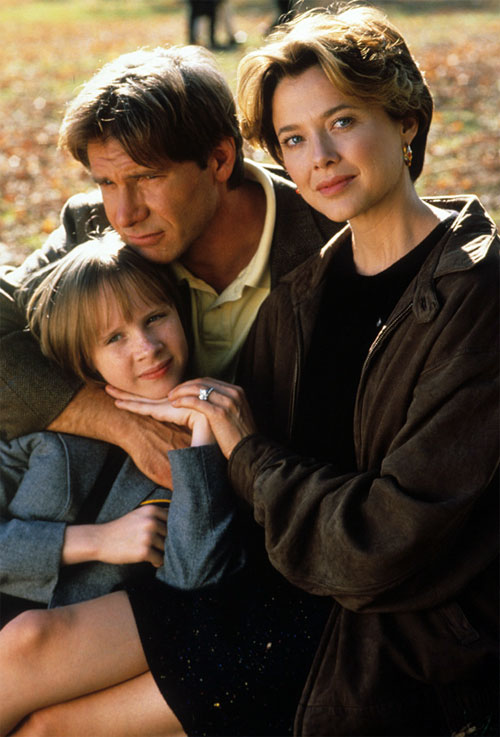
Now that I’ve spent two weeks talking about the discouraging realities of homosexual “marriage,” I think it’s time for something uplifting about real marriage. What better way to provide that than by reviving a series my readers have probably forgotten about? As a quick (re)-introduction, this series looks at various Hollywood films and judges how well they handle the topic of marriage. I eased in with a Christian film (Fireproof), and have since tackled the Robin Williams classic Mrs. Doubtfire and the modern documentary-style film Boyhood. I was planning to add a lot more entries, but it just never happened. I’m hoping to start freshening it up a bit more regularly, because I think it’s a very timely topic to explore.
My featured film for today is a little 90s picture called Regarding Henry. And yes, if you’re looking at the promo shot on the right and thinking, “Is that… Han Solo?” you get a cookie. Indeed, many critics (myself included) rank this film among Harrison Ford’s strongest performances. But it’s not just Ford’s work that makes it memorable for me. It’s the movie’s surprisingly insightful treatment of marriage and the family. In fact, if the script threw in some references to God or church, it might even pass as a Christian movie (except with much better acting and writing). I like it so much that I was even inspired to put together a little music video for it, which you’ll get to watch if you read to the end of this article. (Unless you cheat and skip there, of course.) Spoiler alert, as usual.
Here’s the premise: Henry Turner (Ford) is a hotshot, cutthroat lawyer, a workaholic who maintains a cool relationship with his wife and daughter. One night, he steps out to buy cigarettes and happens to blunder into a hold-up. The trigger-happy registry robber fires two shots, and in a few seconds, Henry’s life is changed forever. His wife is shattered with the news that even if he recovers speaking and motor skills, most of his memories have been erased. He is forced to start fresh. But as the movie shows us, that may not be such a bad thing. (And for those who think that premise is just too implausible, Harrison Ford has said that while preparing for the role, he actually met and interviewed an actual lawyer who experienced this very process.)
Where the old Henry was a high society darling, the new Henry feels awkward around his old friends, preferring the company of the housemaid, the secretary or the waiter. Where the old Henry was impatient and indifferent to his daughter, Rachel, the new Henry depends on her to teach him how to tie a shoe and read a book all over again. And where the old Henry didn’t hesitate to play dirty in the courtroom at the expense of innocent people, the new Henry insists on revisiting old case files and asking uncomfortable questions.
We watch all these changes through the eyes of Henry’s wife, Sarah (Annette Bening). She hardly knows what to make of it all, but she’s starting to feel something she hasn’t felt for the longest time: genuine love for her husband. They had married after a whirlwind courtship, but his work consumed and hardened both of them. When he is rendered helpless and child-like, it revives her best and most affectionate instincts. In one sequence, Henry wanders out on the town after returning home from hospitalization and therapy. Sarah greets him with worried relief when he eventually finds his way back, and the reaction catches him off guard. “Wow. You really missed me!”
One thing the movie handles brilliantly is Henry’s piece-wise memory recall. He still doesn’t truly recognize his daughter, but he is suddenly seized with the memory of the gray carpet where he taught her to tie her shoe. He doesn’t remember a woman from work but knows she likes strawberries on her pancakes. He acts shyly around his wife, as he would around a strange woman. But when she lays her head down on his chest at night, he says simply, “I remember your hair.”
The movie also touches sensitively on his renewal of intimacy with Sarah. He worries that she will expect a certain standard, but she extends grace with a tender whisper, a wordless caress. She is with her husband and content to be so. He asks her to describe how they met, so she does, fondly painting a picture of the confidently smooth, charismatic man he used to be. Yet she holds the memory lightly, understanding what she has now, and understanding that it is good.
As they grow closer, Henry begins to take her hand as they walk together in public. She acts surprised and tells him he never liked showing affection in public before. “It bothered you.” “Why?” he asks, astonished. “I don’t know why.” “Me either!” Then he steps up on a bench and pulls her up with him. “Come here. I don’t mind so much anymore.” After they’re interrupted mid-kiss by a couple old high society friends, she can’t help dissolving into giggles.
Of course, the movie has to inject some tension into its third act. Just as Henry is getting to know his daughter for the first time, he discovers that she’s been accepted into a private boarding school. And an unfortunate bit of eavesdropping at a party reveals that his co-workers now view him with contempt and ridicule. To top it off, he suddenly discovers some old love letters to his wife from a pal at the office. She is sickened to come home and find him confronting her with the letters in his hand. All her pleadings and attempts to explain how different things were before the accident are in vain. He throws the letters in her face and retorts, “I don’t remember who I was then!” He walks out the door angry and hurt, renting a hotel room. I love the way Annette Bening rests her head on the door-frame after he leaves, so poignantly capturing Sarah’s heartbreak.
Much to Henry’s surprise, another old friend has followed him to the Ritz-Carlton: the woman with whom he had also had an extra-marital affair. “This was our hotel.” Ford plays this scene beautifully, as you watch the progression of confusion, shock and horror across Henry’s face. The other woman is a clever guilt-tripper, but Henry waves her away with his hand and leaves her behind.
This is Henry’s moral turning point, the point at which he must fully confront the man he used to be. First, he realizes he has the power to make it right to an old couple he harmed in his last case. He takes a bus to a nursing home and gives the wife a document that was deceptively kept back from the evidence. This woman has a small part, but she’s a very good actress. She greets him bitterly, as would be expected, which wounds him: “You remember me.” But she is overcome when he hands her the document, asking simply, “Why?” With equal simplicity, he responds, “I changed.” The next scene is very funny as Henry interrupts his boss’s office meeting to announce, “I can’t be a lawyer anymore.” The boss is surprised but shakes his hand and wishes him luck, only to be told that the old couple’s lawyer is on the phone. Henry grins mischievously. “Good luck to you too.”
Just as Henry does not absolve himself from the responsibility of making this old case right, he takes responsibility for his actions as a husband. He returns to his wife’s doorstep with a humble, repentant spirit. When she opens the door slowly and waits fearfully for him to speak first, he blurts out the old pickup line he used when they first met: “I know this great blowfish place.” She bursts into tears and says that she’s sorry, but he insists, “No. I’m sorry.” Whether or not he remembers his sins is not the point. The point is that they have had hurtful consequences for the people around him. For this, he must still ask forgiveness. As they embrace, he tells her that he doesn’t like his old clothes anymore. And he doesn’t like his job. And he doesn’t like eggs. She laughs through the tears. “Whatever you want. Whatever you want.”
The movie ends on a high note as Henry pulls his daughter out of her starchy boarding school mid-class, explaining to the teacher, “I missed her first 11 years, and I don’t want to miss any more.” This is really Sarah’s sacrifice, as she had been the one insisting on sending Rachel to the school. By letting it go, she is letting go of the pride she had in that status symbol, even though Rachel herself was miserable there. Now, they are finally free to be a family.
The song I picked to go with my little tribute to this film is called “Sanity’s Side,” by Little River Band. A beautiful thing I discovered as I went along is that the lyrics could apply both to Henry and to his wife. The recurring line, “You suddenly find you’re standing, looking over the edge of time. You can’t remember handling situations and nursery rhymes,” is especially profound. Henry must literally reconstruct his memories, but Sarah’s memories of love and family have also been deeply buried through years of growing apart from her husband. (In fact, you could say her character is the one that truly undergoes continuous change, since Henry is starting over from a blank slate.)
I hope this has been a nice walk down memory lane for some older readers who might recall when this movie first came out. And for younger readers with an old soul who are disappointed with what Hollywood usually has to offer on the topic of marriage, let me encourage you to check it out. If nothing else, see it for Ford and Bening’s honest, poignant acting. Watching talented performers connect with uplifting material is always encouraging. Would that it happened more often.
(For those with mobiles, click here to watch on Youtube. This will also correct the aspect ratio a bit.)
Next Post

August 7, 2015 GOP Candidates, First Impressions
Browse Our Archives
Select a Category 3 star 3.5 star 4 star 4.5 star Anatomy of a Song Behind the Songs Blog Stuff Book Reviews CCM CCM vs. SG CD Reviews Christians in Entertainment Christmas Essential 12 Christmas Favorites Christmas Top Fives Concert Reviews Concerts Culture Devotional Thoughts Faith and Culture From the Vault Fun Gospel Singers Gospel Songs Great Music Guest Posts Harmony Master Classes History Holidays Humor Hymns Interviews Marriage in the Movies Monday Morning Humor Movie Reviews Movies Music NQC Odds and Ends Old Movies, New Eyes Old Southern Gospel News Old Stuff Open Threads Other Genres Perfect Tenor Performances Polls Questions and Answers Recently Added SG vs. The Rest of the World Sing It Again Songs Songwriting Southern Gospel Surprise Sunday The Definitive Hymns Theology Toe-to-Toe Top 10 Lists Top 5 Top 5 Lists Two Sisters Review Uncategorized Video Posts Youtube Finds
Select a Month August 2026 February 2025 August 2024 June 2024 May 2024 April 2024 March 2024 October 2023 March 2023 February 2023 December 2022 October 2022 September 2022 August 2022 July 2022 June 2022 May 2022 March 2022 February 2022 January 2022 December 2021 November 2021 September 2021 August 2021 July 2021 June 2021 May 2021 April 2021 March 2021 February 2021 January 2021 December 2020 November 2020 October 2020 September 2020 August 2020 June 2020 March 2020 February 2020 December 2019 November 2019 October 2019 September 2019 August 2019 July 2019 June 2019 May 2019 April 2019 March 2019 February 2019 January 2019 December 2018 November 2018 October 2018 September 2018 August 2018 July 2018 April 2018 September 2017 August 2017 May 2017 February 2017 December 2016 November 2016 September 2016 August 2016 July 2016 June 2016 May 2016 April 2016 March 2016 February 2016 January 2016 December 2015 November 2015 October 2015 September 2015 August 2015 July 2015 June 2015 May 2015 April 2015 March 2015 February 2015 January 2015 December 2014 November 2014 October 2014 September 2014 August 2014 July 2014 June 2014 May 2014 April 2014 March 2014 February 2014 January 2014 December 2013 November 2013 October 2013 September 2013 August 2013 July 2013 June 2013 May 2013 April 2013 March 2013 February 2013 January 2013 December 2012 November 2012 October 2012 September 2012 August 2012 July 2012 June 2012 May 2012 April 2012 March 2012 February 2012 January 2012 December 2011 November 2011 October 2011 September 2011 August 2011 July 2011 June 2011 May 2011 April 2011 March 2011 February 2011
Follow Us!
TAKE THE
Religious Wisdom Quiz
Which principle is behind "Turn the other cheek"?
Select your answer to see how you score.
Hit back harder Do not retaliate Start a fight Ignore injustice
Related posts from Young Fogey


Saving Cinderella: A Conversation With Faith Moore


TRENDING AT PATHEOS Evangelical

Looking at the Largest Orthodox Cathedral on Earth
There is often a considerable amount of anger and, shall we...

The Problem with False Prophets
Miller’s Station UMC| 10/18/26| Anchor Verse: Jeremiah 23: 1, 9-23 I...

Emotion in Early Christianity by Andrew Crislip
Andrew Crislip’s Emotion in Early Christianity examines an often overlooked dimension of...

16 Spiritual Touchstones for a More Grounded Life
After decades of spiritual study, here are 16 principles I try...

Catholic Evangelization: Sharing Your Faith Every Day
Welcome back to the Graceful Awakening mini-series called, “From Faith to Mission.” ...

The Pillar of the Boatmen: the Ancient Monument...
The Pillar of the Boatmen is a Romano-Gaulish sculpture that dates from...
view all Evangelical blogs
Ad-Free & Subscriber Log-In Subscription Support
- About Us
- 2026 Calendar
- Videos
- Podcasts
- Library of World Religions
- Faith In Media Tracker
- Advertise With Us
- Write for Us
- Privacy Policy
- Terms of Service
- Do Not Sell My Data
- Contact Us
- Radiant Digital
- Manage Newsletter Subscriptions
- Unsubscribe From Notifications
- Sitemap
Copyright 2008-2026, Patheos. All rights reserved.
Subscription Support Ad-Free & Subscriber Log-In
Follow Patheos