
BuddhistCatholicContemplativeEvangelicalGeneral ChristianHinduJewishLatter-day SaintMuslimNew VisionsProgressive Christian
Beliefs
- Buddhist
- Catholic
- Contemplative
- Evangelical
- General Christian
- Hindu
- Jewish
- Latter-day Saint
- More Voices
- Muslim
- New Visions
- Pagan
- Progressive Christian
Topics
- Religion News
- Food and Religion
- Sports and Religion
- Religious Art
- Religious Music and Entertainment
- Religious Events
- History and Religion
- Style and Religion
- Politics and Religion
- Women in Religion
- Recreation Outdoors and Religion
- Business Finance and Religion
- Careers Workplace and Religion
- Education and Religion
- Family Parenting and Religion
- Health Fitness and Religion
- Home and Religion
- Relationships and Religion
- Technology and Religion
- Travel and Religion
Columnists
- Buddhist Columnists
- Business Finance and Religion Columnists
- Careers Workplace and Religion Columnists
- Catholic Columnists
- Contemplative Columnists
- Education and Religion Columnists
- Evangelists Columnists
- Family Parenting and Religion Columnists
- General Christian Columnists
- Health Fitness and Religion Columnists
- Hindu Columnists
- History and Religion Columnists
- Home and Religion Columnists
- Jewish Columnists
- More Voices Columnists
- Latter Day Columnists
- Muslim Columnists
- New Visions Columnists
- Nonreligious Columnists
- Pagan Columnists
- Politics and Religion Columnists
- Progressive Columnists
- Recreation Outdoors and Religion Columnists
- Relationships and Religion Columnists
- Religion News Columnists
- Religious Art Columnists
- Religious Events Columnists
- Religious Music and Entertainment Columnists
- Sports and Religion Columnists
- Style and Religion Columnists
- Technology and Religion Columnists
- Travel and Religion Columnists
- Women in Religion Columnists
Resource Library
- 2026 Calendar
- Library of World Religions
- The 100 Most Holy Places on Earth
- Patheos Answers
- Podcasts
- Videos
- Faith Leaders Database
- Anglican Episcopalian
- Bahai
- Baptist
- Buddhism
- Christianity
- Confucianism
- Eastern Orthodoxy
- Hinduism
- Holiness and Pentecostal
- ISKCON
- Islam
- Judaism
- Lutheran
- Methodist
- The Church of Jesus Christ of Latter-day Saints
- New Age
- Paganism
- Presbytarian and Reformed
- Protestantism
- Religion Behind the Scenes
- Roman Catholic
- Scientology
- Shia Islam
- Sikhism
- Sufism
- Sunni Islam
- Taoism
- Zen
- See all religions
Research Tools
 Ad-Free & Subscriber Log-In Subscription Support
Ad-Free & Subscriber Log-In Subscription Support
Follow Patheos 

- Trending:
- Forgiveness
- |
- Marriage
- |
- Consciousness
- |
- Death Penalty
- |
- Election
- |
- Halloween

- Home
- New Visions
- History and Religion
- Who is “Us”? Rethinking Church in a Multicultural Society
Who is “Us”? Rethinking Church in a Multicultural Society
Last updated on: April 26, 2026 at 10:33 am by Larry Jordan
Who is “Us”? Rethinking Church in a Multicultural Society 2026-04-26T10:33:44-05:00 Larry Jordan
Patheos Explore the world's faith through different perspectives on religion and spirituality! Patheos has the views of the prevalent religions and spiritualities of the world.
Real spirituality is embodied—right here and right now.

Real spirituality is embodied. Otherwise, it is merely an intellectual exercise. Image from StockCake/In the public domain
I wrote about the false presumption of “normalcy” here. Some small corners of the world might look mostly Christian, middle-class, or white. Globally, we are NOT predominantly Christian, middle-class or white. We never were. We never will be.
One purpose of that article (and this one) is to assert that NO identity is “normal” in a multicultural, secular society. All religion is cultural, and all theology is speculation, so we should all realize that our beliefs are NOT facts and that reasonable people can disagree.
Another purpose of that article (and this one) is to assert that real spirituality is NOT woo-woo. Whether it is based on belief or practice, spirituality is embodied—right here and right now. Otherwise, it is merely an intellectual exercise, NOT a practical undertaking.
You Might Be Right
In The Way, I said that sometimes, we think that we “know” because we believe our scriptures are inerrant or our traditions are infallible. Those beliefs themselves are opinions, not facts, about the veracity of our scriptures or our traditions.
Today, many of us are spiritual, but not religious (SBNR). In one of the online communities that I frequent, someone wondered whether SBNR is a kind of cultural appropriation and trivialization of “genuine” religious traditions. In my opinion, it is just the opposite.
Religion has appropriated and trivialized genuine spiritual experiences that are inherently accessible, helpful, and universal. Many Western religions replaced experience with belief, emphasizing doctrine, exclusivity, and evangelization, rather than connection and transformation.
Where our tradition is dominant, we might get away with saying that other traditions point to the greater truth in our own tradition. However, in a multicultural, secular society, who is to say that any one tradition contains the greater truth, the “Truth with a capital T”?
You might be right, as I always say. Of course, that implies that you might be wrong, too. Likewise, I might be right, and I might be wrong. We look foolish when we insist that our beliefs are unquestionably right and that others’ beliefs are unquestionably wrong.
Christian Supremacy
Ideally, nobody “wins,” nobody “loses,” and we all live happily ever after. Practically, however, the Western traditions, such as Christianity, are notoriously doctrinal, exclusive and evangelical. Often, they insist that their beliefs are right and that everyone else is going to hell.
Many former Christians, including me, were discouraged from asking questions. If or when we left the church, we were shunned. Eventually, we discovered the difference between “church friends” and real friends. Outside the church, many of us enjoy deeper and richer friendships.
I wrote about “Christian supremacy” here. Recently, John Thatamil, a Christian theologian, chided many Christians for subscribing to the harmful and popular practice that he calls Christian supremacy.
Thatamil reminds us that Jesus said that we can NOT serve two masters, namely God and mammon. Jesus did NOT say anything about people who find spiritual nourishment in other traditions. In fact, in the Gospel of Mark, he said, “He that is not against us is for us.”
Likewise, in the Gospel of Matthew, Jesus says, “And if anyone will not welcome you or listen to your words, shake the dust off your feet when you leave that home or town.” He did NOT say, “Admonish them, attempt to change their minds, then tell them that they are going to hell.”
The Unlearning Curve Podcast
Recently, I appeared on The Unlearning Curve podcast, where I discussed Christian supremacy. I am a follower of Jesus. As such, I respect the words and works of Jesus and the beliefs of the earliest Jewish Christians who followed him.
The Jewish Christians followed Jesus before there was any Bible or creed or hierarchy, and before there were speculative doctrines such as original sin or the Trinity or substitutionary atonement. The Jewish Christians likely did NOT believe in the virgin birth, divine sonship or physical resurrection of Jesus, either. These stories appeared in the later Gospels, written many years after Jesus’ death.
But I do NOT respect many of the exclusionary, literal and rigid constructions of contemporary Christianity. On this podcast and elsewhere, I suggested that many Christians only superficially understand Christian beliefs. And most are completely ignorant of non-Christian beliefs.
Also, I agreed with researcher Ryan Burge that, for most Christians, their politics drive their spirituality, not vice versa. And I suggested that one unfortunate outcome of the exclusionary, literal and rigid constructions and the superficial understandings is that there are very few Christians who have been transformed by their spirituality. But I know many people who have been transformed after leaving the church.
In The Way, I described my transformation from a single-minded investment banker to an open-hearted and open-minded spiritual seeker.
Real Spirituality is Embodied
This article is NOT a departure from my usual message that “Everyone is related, and everything is connected.” Instead, it is a reminder to look at the greater good, beyond those who share our beliefs. And is a reminder that real spirituality is embodied—right here and right now.
We should NOT ignore our spirituality at the polls, and we should NOT leave our spirituality at church.
My last article was NOT an attack on middle-class, straight, white people. And this article is NOT an attack on Christians. Of course, many Christian, middle-class, straight, white people look out for LGBTQ+ people, minorities and poor people.
And the free market, less government, low tax Reagan conservatives and the homophobic, Islamophobic, xenophobic MAGA conservatives are increasingly parting ways. Also, “Love your neighbor,” Christians and “You’re going to hell,” Christians are increasingly parting ways.
More people are saying, “I’m NOT that kind of conservative,” or “I’m NOT that kind of Christian.” So if the MAGA conservatives and the “You’re going to hell,” Christians prevail, more people might say, “I’m NOT a conservative anymore,” or “I’m NOT a Christian anymore.”
Arguably, that is already happening. I do NOT believe that it is a coincidence that church attendance has been declining since 2016. Further, I do NOT believe that it is a coincidence that young men (but NOT young women) are returning to church, the last bastion of patriarchy.
If we care more about what someone does in the privacy of their home than about whether she is clothed, fed, healed, housed, or schooled, then we might want to rethink our politics and our religion.
If you want to keep up with the latest from You Might Be Right, please subscribe.
The Way received a 2024 Nautilus Book Award.
If you enjoyed this article, please leave a comment at the bottom of this page.
Thanks for reading You Might Be Right!!
New Visions
More Voices
Education and Religion
About Larry Jordan
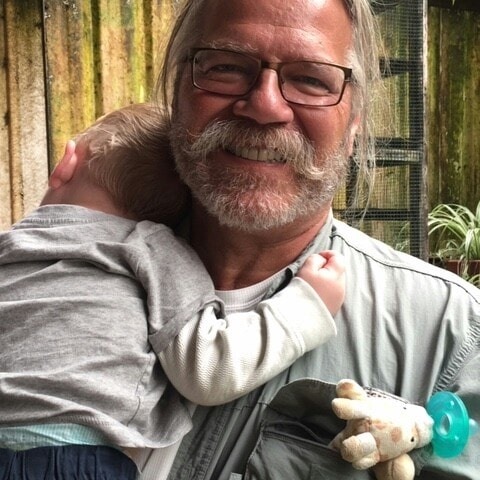
Larry Jordan is a follower of Jesus with a Zen practice. He wrote “The Way,” informed by the Eastern religions, the mystics, and the quantum physicists. "The Way" won a 2024 Nautilus Book Award. You can read more about the author here.
Previous Post

April 17, 2026
Who Is “Us”? Rethinking Community in a Changing America
Next Post

April 30, 2026 Our Questions Often Presuppose Our Beliefs
Recent Comments
"Thanks, good to know. I'll check it out!!"
Reflections on My Spiritual Reconstruction
"Loved your deconstruction and reconstruction articles. thank youI have a Patheos column too - Lotus ..."
Reflections on My Spiritual Reconstruction
"We are all spiritually connected. It is a privilege to be pilgrims on journey at ..."
Reflections on Interspirituality
""that something has gone wrong, that human beings really are implicated in that rupture"So the ..."
Reflections on My Religious Deconstruction
Browse Our Archives
Select a Category Uncategorized
Select a Month October 2026 September 2026 August 2026 July 2026 June 2026 May 2026 April 2026 March 2026 February 2026 January 2026 December 2025 November 2025 October 2025 September 2025 August 2025 July 2025 June 2025 May 2025 April 2025 March 2025 February 2025 January 2025 December 2024 November 2024 October 2024 September 2024 August 2024 July 2024 June 2024 May 2024 April 2024 March 2024 February 2024
Follow Us!
TAKE THE
Religious Wisdom Quiz
Rejoice in the Lord always. I will say it again: __!
Select your answer to see how you score.
Hope Rejoice Pray Believe
Books by This Author Books by Larry Jordan
Related posts from You Might Be Right


Why I Practice in Many Spiritual Traditions, Not...


Reflections on My Religious Deconstruction
TRENDING AT PATHEOS History and Religion

Swimfan: Forgotten Aughts Pleasures
This is a recovery effort. In 2002, My Big Fat Greek Wedding...

Top Three Anti-Catholic Lies About Catholicism
This is my initial transcript for the video, "THE 3 WORST...

Pope Leo Celebrates Mass for Nurses & Docs...
I don't have any idea how he did it, but Pope Leo...

The Sermon on the Mount, Part I: Matthew...
The Sermon on the Mount, Part I (Matthew 4:12-5:12) St. Matthew moves...

What's up from Crossway: Reviewing some of their latest A few weeks...

Janie Learns the Way of the Cross: A...
Teaching children about Jesus' Passion can be challenging. Many parents and educators...
view all History and Religion blogs
What Are Your Thoughts?leave a comment
Ad-Free & Subscriber Log-In Subscription Support
- About Us
- 2026 Calendar
- Videos
- Podcasts
- Library of World Religions
- Faith In Media Tracker
- Advertise With Us
- Write for Us
- Privacy Policy
- Terms of Service
- Do Not Sell My Data
- Contact Us
- Radiant Digital
- Manage Newsletter Subscriptions
- Unsubscribe From Notifications
- Sitemap
Copyright 2008-2026, Patheos. All rights reserved.
Subscription Support Ad-Free & Subscriber Log-In
Follow Patheos