
BuddhistCatholicContemplativeEvangelicalGeneral ChristianHinduJewishLatter-day SaintMuslimNew VisionsProgressive Christian
Beliefs
- Buddhist
- Catholic
- Contemplative
- Evangelical
- General Christian
- Hindu
- Jewish
- Latter-day Saint
- More Voices
- Muslim
- New Visions
- Pagan
- Progressive Christian
Topics
- Religion News
- Food and Religion
- Sports and Religion
- Religious Art
- Religious Music and Entertainment
- Religious Events
- History and Religion
- Style and Religion
- Politics and Religion
- Women in Religion
- Recreation Outdoors and Religion
- Business Finance and Religion
- Careers Workplace and Religion
- Education and Religion
- Family Parenting and Religion
- Health Fitness and Religion
- Home and Religion
- Relationships and Religion
- Technology and Religion
- Travel and Religion
Columnists
- Buddhist Columnists
- Business Finance and Religion Columnists
- Careers Workplace and Religion Columnists
- Catholic Columnists
- Contemplative Columnists
- Education and Religion Columnists
- Evangelists Columnists
- Family Parenting and Religion Columnists
- General Christian Columnists
- Health Fitness and Religion Columnists
- Hindu Columnists
- History and Religion Columnists
- Home and Religion Columnists
- Jewish Columnists
- More Voices Columnists
- Latter Day Columnists
- Muslim Columnists
- New Visions Columnists
- Nonreligious Columnists
- Pagan Columnists
- Politics and Religion Columnists
- Progressive Columnists
- Recreation Outdoors and Religion Columnists
- Relationships and Religion Columnists
- Religion News Columnists
- Religious Art Columnists
- Religious Events Columnists
- Religious Music and Entertainment Columnists
- Sports and Religion Columnists
- Style and Religion Columnists
- Technology and Religion Columnists
- Travel and Religion Columnists
- Women in Religion Columnists
Resource Library
- 2026 Calendar
- Library of World Religions
- The 100 Most Holy Places on Earth
- Patheos Answers
- Podcasts
- Videos
- Faith Leaders Database
- Anglican Episcopalian
- Bahai
- Baptist
- Buddhism
- Christianity
- Confucianism
- Eastern Orthodoxy
- Hinduism
- Holiness and Pentecostal
- ISKCON
- Islam
- Judaism
- Lutheran
- Methodist
- The Church of Jesus Christ of Latter-day Saints
- New Age
- Paganism
- Presbytarian and Reformed
- Protestantism
- Religion Behind the Scenes
- Roman Catholic
- Scientology
- Shia Islam
- Sikhism
- Sufism
- Sunni Islam
- Taoism
- Zen
- See all religions
Research Tools
 Ad-Free & Subscriber Log-In Subscription Support
Follow Patheos 

- Trending:
- Advent
- |
- Forgiveness
- |
- Thanksgiving
- |
- Election
- |
- Seasonal Holidays
- |
- Marriage

- Home
- New Visions
- History and Religion
- Our Questions Often Presuppose Our Beliefs
Our Questions Often Presuppose Our Beliefs
Last updated on: April 30, 2026 at 11:45 am by Larry Jordan
Our Questions Often Presuppose Our Beliefs 2026-04-30T11:45:54-05:00 Larry Jordan
Patheos Explore the world's faith through different perspectives on religion and spirituality! Patheos has the views of the prevalent religions and spiritualities of the world.
How did the Universe begin? How did life begin? How did sentience begin?

How did the Universe begin? How did life begin? How did sentience begin? Image from vecteezy/Pisut Tardging
I wrestle with many spiritual questions. Often, I encounter mystery, paradox and uncertainty, rather than “solid” answers. Sometimes, I change my mind. Changing our minds can be helpful, even necessary, as we gain more life experience and encounter different perspectives.
Three Big (Loaded) Questions
I used to think that the big questions were things like, “Is there a God?” or “What is the meaning of life?” or “What happens when we die?” But these questions seem to presuppose a theistic universe, and the universe might NOT be theistic.
Generally, these questions arise from our conditioning, NOT our experience. What in our experience suggests that there is a personal God? What suggests that there is an externally-determined meaning or a place to go after we die or a vehicle like a soul that transports us? Really, did we ask these questions on our own, or did the people who conditioned us ask them?
I found Zen after I had just about “called off the search,” tired of chasing my tail and running into mystery, paradox, and uncertainty. Buddhism generally does not confirm or deny specific beliefs. Rather, it does NOT address them because they are speculative.
It is an admission, NOT a dismissal, to call something “speculative.” We can NOT wrestle with these big questions without speculating.
I wrote about Zen here. Ask a Zen master questions like these: “Is there a God? What is the meaning of life? What happens when we die?” And he or she might answer: “Who knows? Do you realize that you are connected to everyone and everything? Are you here now?”
I wrote about curiosity here. Scientists are awed and inspired, too, but they often attribute awesomeness and inspiration to the natural world, NOT to a supernatural source. It seems to me that science involves a balance between imagination and wonder on one hand, and discipline and skepticism on the other. One of my friends wisely suggested that spirituality involves the same balance. I completely agree.
THE Three Big (Neutral) Questions
In The Way, I discussed three big questions that do NOT presuppose either a theistic or a non-theistic universe. These are THE big questions that keep philosophers and scientists up at night: “How did the Universe begin? How did life begin? How did sentience begin?”
In trying to draw the “bright line” between what we know and what we believe, I searched for natural explanations for these occurrences. That is NOT because I reject supernatural answers. Rather, if there were NOT any natural answers, then it might be helpful and necessary to embrace supernatural answers. In that case, I might have written a very different book.
Instead, I reported that scientists had plausible explanations, but NOT final answers, to these questions. Of course, we might NOT ever know the answers. We can NOT create a Universe in a lab. Likewise, we can NOT explore sentience objectively, from the outside looking in. Because we are on the inside looking in, part of the experiment that we are conducting.
My friend Jim Palmer says that supernaturalism is a construct, and he wonders where to draw the line between the natural and supernatural. He writes, “When the supernatural is no longer required as a category, the shift is practical, not abstract. It changes how experience is interpreted, how decisions are made, how meaning is formed, and how responsibility is taken. Nothing is lost. The field is reorganized.”
If the beginning of the Universe, the beginning of life, and the beginning of sentience all occurred naturally—rather than supernaturally (through the action or design of a Creator), would the complexity and diversity and interconnectivity of the Universe be any less astounding? Would we be any less grateful for an amazing world of natural, rather than supernatural, origin?
Still More Big Questions
In my writing, I attempt to address the big questions from a neutral place, without assumptions or presuppositions.
Does Ultimate Reality, a personal God or an impersonal Universe, have intention? I wrote about intention here. Most theists presuppose that a personal God has intention. Interestingly, many non-theists also presuppose that an impersonal Universe has intention. And if we assert that we are here to learn lessons and that we progress or regress depending on whether we have learned them, then we presuppose intention.
Do we have souls? I wrote about souls here. Without souls, it would be difficult to get to heaven or hell, even if they exist. Also, it would be difficult to reincarnate, even if it is otherwise possible. And if we assert that we maintain our individuality or we go somewhere when we die, then we presuppose that we have souls to maintain our individuality and to transport us elsewhere.
Do we have free will? I wrote about free will here. Without free will, it would NOT be just or merciful to punish or reward us for our actions or our thoughts. And if we assert that we will be punished or rewarded, then we presuppose that we have free will.
How Would We Live Our Lives Any Differently?
If the Universe is NOT intentional, if we do NOT have souls or if we do NOT have free will, would we live our lives any differently? To me, that is the crux of the matter. If we would NOT live our lives any differently, then these questions are simply interesting speculations. However, if we were to live our lives differently, then how would we live differently? What would that life look like?
How did the Universe begin? How did life begin? How did sentience begin?
If you want to keep up with the latest from You Might Be Right, please subscribe.
The Way received a 2024 Nautilus Book Award.
If you enjoyed this article, please leave a comment at the bottom of this page.
Thanks for reading You Might Be Right!!
New Visions
More Voices
Education and Religion
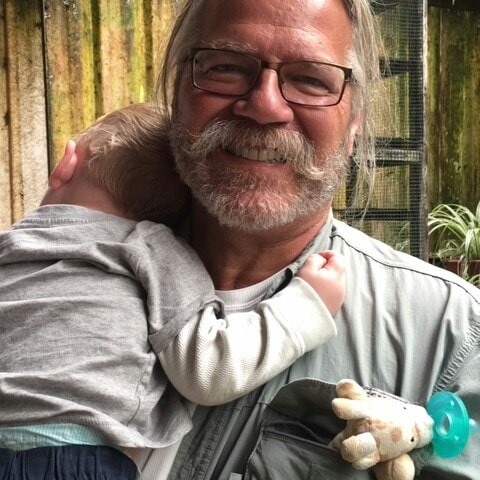
About Larry Jordan
Larry Jordan is a follower of Jesus with a Zen practice. He wrote “The Way,” informed by the Eastern religions, the mystics, and the quantum physicists. "The Way" won a 2024 Nautilus Book Award. You can read more about the author here.
Previous Post

April 26, 2026
Who is "Us"? Rethinking Church in a Multicultural Society
Next Post

May 7, 2026 What Does "Faith" Mean in Non-Religious Spirituality?
Recent Comments
"Thank you for your very insightful perspective on the Golden Rule.Ran across a comment earlier ..."
The Golden Rule Demands More than ..."
"Thanks, good to know. I'll check it out!!"
Reflections on My Spiritual Reconstruction
"Loved your deconstruction and reconstruction articles. thank youI have a Patheos column too - Lotus ..."
Reflections on My Spiritual Reconstruction
"We are all spiritually connected. It is a privilege to be pilgrims on journey at ..."
Reflections on Interspirituality
Browse Our Archives
Select a Category Uncategorized
Select a Month November 2026 October 2026 September 2026 August 2026 July 2026 June 2026 May 2026 April 2026 March 2026 February 2026 January 2026 December 2025 November 2025 October 2025 September 2025 August 2025 July 2025 June 2025 May 2025 April 2025 March 2025 February 2025 January 2025 December 2024 November 2024 October 2024 September 2024 August 2024 July 2024 June 2024 May 2024 April 2024 March 2024 February 2024
Follow Us!
TAKE THE
Religious Wisdom Quiz
According to Galatians 5:22-23, what are these called: love, joy, peace, patience, kindness, goodness, faithfulness, gentleness, self-control?
Select your answer to see how you score.
The Beatitudes The Fruit of the Spirit The Ten Commandments The Gifts of the Spirit
Books by This Author Books by Larry Jordan
Related posts from You Might Be Right

Spirituality without Supernaturalism

"The Deconstruction Space is a Mess"


Existential Health: Being Available, Engaged and Present
TRENDING AT PATHEOS History and Religion

Reasons for Restraint: Ricardo Gonzalez, Florida and Dec...
The Morning of January 3 I begin with the dead. On the...

I published this column for Thanksgiving 2012 in the Deseret News....

For many years, Catholicism has been caught up in division over the...

'Statements of Faith' never get shorter
Nothing demonstrates a conservative commitment to faith and faithfulness like a "statement...

Michele's Reviews - Future Grace by John Piper
In God's Place, at God's Pace, by Future Grace Impatience is...

Bama Gramma's Blackout Christmas: the Power of Light...
Another Christmas Skit: I have an alter ego: Bama Gramma. She shows...
view all History and Religion blogs
What Are Your Thoughts?leave a comment
Ad-Free & Subscriber Log-In Subscription Support
- About Us
- 2026 Calendar
- Videos
- Podcasts
- Library of World Religions
- Faith In Media Tracker
- Advertise With Us
- Write for Us
- Privacy Policy
- Terms of Service
- Do Not Sell My Data
- Contact Us
- Radiant Digital
- Manage Newsletter Subscriptions
- Unsubscribe From Notifications
- Sitemap
Copyright 2008-2026, Patheos, part of the Radiant Digital network of media brands. All rights reserved.
Subscription Support Ad-Free & Subscriber Log-In
Follow Patheos