
BuddhistCatholicContemplativeEvangelicalGeneral ChristianHinduJewishLatter-day SaintMuslimNew VisionsProgressive Christian
Beliefs
- Buddhist
- Catholic
- Contemplative
- Evangelical
- General Christian
- Hindu
- Jewish
- Latter-day Saint
- More Voices
- Muslim
- New Visions
- Pagan
- Progressive Christian
Topics
- Religion News
- Food and Religion
- Sports and Religion
- Religious Art
- Religious Music and Entertainment
- Religious Events
- History and Religion
- Style and Religion
- Politics and Religion
- Women in Religion
- Recreation Outdoors and Religion
- Business Finance and Religion
- Careers Workplace and Religion
- Education and Religion
- Family Parenting and Religion
- Health Fitness and Religion
- Home and Religion
- Relationships and Religion
- Technology and Religion
- Travel and Religion
Columnists
- Buddhist Columnists
- Business Finance and Religion Columnists
- Careers Workplace and Religion Columnists
- Catholic Columnists
- Contemplative Columnists
- Education and Religion Columnists
- Evangelists Columnists
- Family Parenting and Religion Columnists
- General Christian Columnists
- Health Fitness and Religion Columnists
- Hindu Columnists
- History and Religion Columnists
- Home and Religion Columnists
- Jewish Columnists
- More Voices Columnists
- Latter Day Columnists
- Muslim Columnists
- New Visions Columnists
- Nonreligious Columnists
- Pagan Columnists
- Politics and Religion Columnists
- Progressive Columnists
- Recreation Outdoors and Religion Columnists
- Relationships and Religion Columnists
- Religion News Columnists
- Religious Art Columnists
- Religious Events Columnists
- Religious Music and Entertainment Columnists
- Sports and Religion Columnists
- Style and Religion Columnists
- Technology and Religion Columnists
- Travel and Religion Columnists
- Women in Religion Columnists
Resource Library
- 2026 Calendar
- Library of World Religions
- The 100 Most Holy Places on Earth
- Patheos Answers
- Podcasts
- Videos
- Faith Leaders Database
- Anglican Episcopalian
- Bahai
- Baptist
- Buddhism
- Christianity
- Confucianism
- Eastern Orthodoxy
- Hinduism
- Holiness and Pentecostal
- ISKCON
- Islam
- Judaism
- Lutheran
- Methodist
- The Church of Jesus Christ of Latter-day Saints
- New Age
- Paganism
- Presbytarian and Reformed
- Protestantism
- Religion Behind the Scenes
- Roman Catholic
- Scientology
- Shia Islam
- Sikhism
- Sufism
- Sunni Islam
- Taoism
- Zen
- See all religions
Research Tools
 Ad-Free & Subscriber Log-In Subscription Support
Ad-Free & Subscriber Log-In Subscription Support
Follow Patheos 

- Trending:
- Forgiveness
- |
- Marriage
- |
- Consciousness
- |
- Death Penalty
- |
- Election
- |
- Halloween

- Home
- New Visions
- History and Religion
- Free Speech, Harm, Privilege, and Truth
Free Speech, Harm, Privilege, and Truth
Last updated on: December 4, 2025 at 7:23 am by Larry Jordan
Free Speech, Harm, Privilege, and Truth 2025-12-04T07:23:04-06:00 Larry Jordan
Patheos Explore the world's faith through different perspectives on religion and spirituality! Patheos has the views of the prevalent religions and spiritualities of the world.
“Truth with a capital T” is universal. If we are having trouble convincing someone of our “truth,” then it is probably NOT “Truth with a capital T.” (Or maybe we are trying to have a conversation with someone who does NOT want to listen to us, even when we are speaking the Truth.)
A good friend sent me this quote from writer Ernest Hemingway. And it highlights the common thread in whatever success I might have enjoyed as an investment banker and as a spiritual writer. “The most essential gift for a writer is a built-in, shock-proof sh*t detector.” In investment banking, I saw a lot of sh*tty numbers. And in spiritual writing, I see a lot of sh*tty words.

If we are having trouble convincing someone of our “truth,” then it is probably NOT “Truth with a capital T.” Image from StockCake in the public domain/AI-generated
In these divisive times, many of my friends mothballed their social media accounts. They quit attending their churches. And they stopped watching, reading or listening to the national news.
However, others are doubling down. They say that they are entitled to free speech, that they are telling their “truth.” And that their words are NOT harmful, that the harm they inflict is NOT real. At that point, my “built-in, shock-proof sh*t detector” usually starts going off.
We should understand the nature of free speech, harm, privilege, or truth. Otherwise, we might gaslight others and play the victim when (in fact) we are the victimizers, NOT the victims.
What is Free Speech?
The First Amendment to the U.S. Constitution prohibits Congress from making laws that abridge the freedoms of speech, press, religion, and assembly and the right to petition the government. Still, while it guarantees the right to express even unpopular or offensive views, there are limits, such as causing harm, defamation, incitement to violence, obscenity and threats.
The amendment restricts the powers of the federal government. It does NOT restrict the powers of companies, individuals, or state and local governments. Justice Oliver Wendell Holmes, Jr. described a broader legal principle when he said, “Your right to swing your fist ends where my nose begins.” That is, others’ rights are as important as our own in a civil society.
But we should be concerned about civility, as well as legality. Civility is a broader concept that involves treating others with dignity and respect. Civility requires our discernment and discipline. Rotary International promotes the Four-Way Test: “Is it the truth? Is it fair to all concerned? Will it build goodwill and better friendships? Will it be beneficial to all concerned?”
How much of what we think, say or do meets the Four-Way Test? Why would we ever need to think, say or do anything untruthful, unfair, divisive or hurtful? “Truth with a capital T” is universal.
What is Harm?
In the New York Times bestseller How to Know a Person, author and commentator David Brooks writes, “Remember that the person who is lower in any power structure than you are has a greater awareness of the situation than you do.” For example, George Floyd knew that his life was in danger as police officer Derek Chauvin killed him. Chauvin did NOT know or did NOT care.
Think about the times that you have been hurt and the times that you have hurt others. When you were hurt, were you or the person who hurt you best able to determine whether you were hurt? Think about the times that you have apologized or the times that someone has apologized to you. When someone apologized to you, did it seem sincere when they said, “I’m sorry, but…”?
And when someone says, “I’m sorry, but…” and then they explain or justify or rationalize the behavior that hurt you, did that feel like a real apology or like a conditional and defensive response? That is, do you think that there is a difference between saying, “I’m sorry that I hurt you?” and “I’m sorry that you took it that way?” Me too.
What is Privilege?
In How to Know a Person, Brooks described two lessons that he learned while serving on a panel discussion with a Black woman. He writes, “Because of where I work and all the other advantages that have been bestowed upon me as a White guy in America, society conspires to make me visible. Because of my co-panelist’s social coordinates, society conspires to make her invisible.”
But when White men recognize their privilege, they are NOT acknowledging that life was easy for them, that things were handed to them or that they did not deserve whatever they earned. Instead, they are acknowledging that because of their relative affluence, maleness and whiteness, they may NOT have encountered the same obstacles as others.
Of course, NOT all White men were affluent, and NOT all Black women were impoverished. But, generally, maleness and whiteness provide more advantages than disadvantages in our society.
Brooks continues, “I saw the culture war as one thing and wanted to analyze it from the detached perspective a journalist is trained to adopt. She saw the culture war entirely differently—as an assault on basic justice. She didn’t want to analyze it from a detached point of view; she wanted to communicate it as an activist in the middle of the fight.”
In many situations, a Black person, an LGBTQ+ person, a Muslim, a poor person or a woman probably has a very different lived human experience than a rich, straight White Christian man. And do we ever have conversations about Black people, LGBTQ+ people, immigrants, poor people or women without them? If so, then how can we ever hope to understand their perspectives?
What is Truth?
In The Way, I distinguish between the truth in a particular tradition, which is individual, and “Truth with a capital T,” which is universal. There is a big difference between my truth or your truth and The Truth. The Truth is evident for anyone willing to recognize it. “Do not seek the truth; only cease to cherish opinions” is one of my favorite Zen sayings.
We do NOT need to convince people that the sun is shining. If we are having trouble convincing people that (for example) trans women are not women, maybe we are NOT talking about The Truth. Maybe we are talking about our “truth,” which might be very different from a trans person’s truth. Complex issues are rarely black-and-white. I wrote about that here.
From a detached point of view, it is easy to be casual about our language if we are NOT directly impacted. We might say that they’re “just words.” But, from an engaged point of view, some words carry more weight than others for someone who is directly impacted. They’re NOT just words; they’re weapons that remind us of previous injustices, trespasses and wounds.
“Truth with a capital T” is universal. If we are having trouble convincing someone of our “truth,” then it is probably NOT “Truth with a capital T.” (Or maybe we are trying to have a conversation with someone who does NOT want to listen to us, even when we are speaking the Truth.)
If you want to keep up with the latest from You Might Be Right, please subscribe.
The Way received a 2024 Nautilus Book Award.
If you enjoyed this article, please leave a comment at the bottom of this page.
Thanks for reading You Might Be Right!!
New Visions
More Voices
Education and Religion
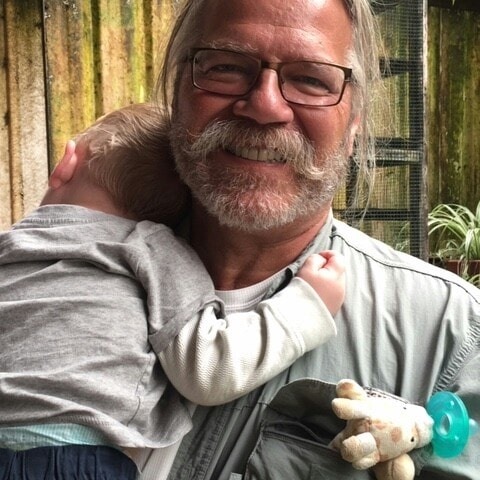
About Larry Jordan
Larry Jordan is a follower of Jesus with a Zen practice. He wrote “The Way,” informed by the Eastern religions, the mystics, and the quantum physicists. "The Way" won a 2024 Nautilus Book Award. You can read more about the author here.
Previous Post

November 29, 2025
We Can Change Our Beliefs. Sometimes, We Should
Next Post

December 15, 2025 Why Would Anyone Spend a Week in Meditation?
Recent Comments
"Thanks, good to know. I'll check it out!!"
Reflections on My Spiritual Reconstruction
"Loved your deconstruction and reconstruction articles. thank youI have a Patheos column too - Lotus ..."
Reflections on My Spiritual Reconstruction
"We are all spiritually connected. It is a privilege to be pilgrims on journey at ..."
Reflections on Interspirituality
""that something has gone wrong, that human beings really are implicated in that rupture"So the ..."
Reflections on My Religious Deconstruction
Browse Our Archives
Select a Category Uncategorized
Select a Month October 2026 September 2026 August 2026 July 2026 June 2026 May 2026 April 2026 March 2026 February 2026 January 2026 December 2025 November 2025 October 2025 September 2025 August 2025 July 2025 June 2025 May 2025 April 2025 March 2025 February 2025 January 2025 December 2024 November 2024 October 2024 September 2024 August 2024 July 2024 June 2024 May 2024 April 2024 March 2024 February 2024
Follow Us!
TAKE THE
Religious Wisdom Quiz
Which Christian denomination places great emphasis on "justification by faith alone"?
Select your answer to see how you score.
Catholics Orthodox Methodists Lutherans
Books by This Author Books by Larry Jordan
Related posts from You Might Be Right


Why I Practice in Many Spiritual Traditions, Not...


Reflections on My Religious Deconstruction
TRENDING AT PATHEOS History and Religion

The Real AI Story Is Adoption Without Trust
Artificial intelligence has crossed a political threshold. It is no longer a...

A new article, written by Jeff Lindsay and Gale L. Pooley,...

Swimfan: Forgotten Aughts Pleasures
This is a recovery effort. In 2002, My Big Fat Greek Wedding...

Top Three Anti-Catholic Lies About Catholicism
This is my initial transcript for the video, "THE 3 WORST...

Pope Leo Celebrates Mass for Nurses & Docs...
I don't have any idea how he did it, but Pope Leo...

The Sermon on the Mount, Part I: Matthew...
The Sermon on the Mount, Part I (Matthew 4:12-5:12) St. Matthew moves...
view all History and Religion blogs
What Are Your Thoughts?leave a comment
Ad-Free & Subscriber Log-In Subscription Support
- About Us
- 2026 Calendar
- Videos
- Podcasts
- Library of World Religions
- Faith In Media Tracker
- Advertise With Us
- Write for Us
- Privacy Policy
- Terms of Service
- Do Not Sell My Data
- Contact Us
- Radiant Digital
- Manage Newsletter Subscriptions
- Unsubscribe From Notifications
- Sitemap
Copyright 2008-2026, Patheos. All rights reserved.
Subscription Support Ad-Free & Subscriber Log-In
Follow Patheos