
BuddhistCatholicContemplativeEvangelicalGeneral ChristianHinduJewishLatter-day SaintMuslimNew VisionsProgressive Christian
Beliefs
- Buddhist
- Catholic
- Contemplative
- Evangelical
- General Christian
- Hindu
- Jewish
- Latter-day Saint
- More Voices
- Muslim
- New Visions
- Pagan
- Progressive Christian
Topics
- Religion News
- Food and Religion
- Sports and Religion
- Religious Art
- Religious Music and Entertainment
- Religious Events
- History and Religion
- Style and Religion
- Politics and Religion
- Women in Religion
- Recreation Outdoors and Religion
- Business Finance and Religion
- Careers Workplace and Religion
- Education and Religion
- Family Parenting and Religion
- Health Fitness and Religion
- Home and Religion
- Relationships and Religion
- Technology and Religion
- Travel and Religion
Columnists
- Buddhist Columnists
- Business Finance and Religion Columnists
- Careers Workplace and Religion Columnists
- Catholic Columnists
- Contemplative Columnists
- Education and Religion Columnists
- Evangelists Columnists
- Family Parenting and Religion Columnists
- General Christian Columnists
- Health Fitness and Religion Columnists
- Hindu Columnists
- History and Religion Columnists
- Home and Religion Columnists
- Jewish Columnists
- More Voices Columnists
- Latter Day Columnists
- Muslim Columnists
- New Visions Columnists
- Nonreligious Columnists
- Pagan Columnists
- Politics and Religion Columnists
- Progressive Columnists
- Recreation Outdoors and Religion Columnists
- Relationships and Religion Columnists
- Religion News Columnists
- Religious Art Columnists
- Religious Events Columnists
- Religious Music and Entertainment Columnists
- Sports and Religion Columnists
- Style and Religion Columnists
- Technology and Religion Columnists
- Travel and Religion Columnists
- Women in Religion Columnists
Resource Library
- 2026 Calendar
- Library of World Religions
- The 100 Most Holy Places on Earth
- Patheos Answers
- Podcasts
- Videos
- Faith Leaders Database
- Anglican Episcopalian
- Bahai
- Baptist
- Buddhism
- Christianity
- Confucianism
- Eastern Orthodoxy
- Hinduism
- Holiness and Pentecostal
- ISKCON
- Islam
- Judaism
- Lutheran
- Methodist
- The Church of Jesus Christ of Latter-day Saints
- New Age
- Paganism
- Presbytarian and Reformed
- Protestantism
- Religion Behind the Scenes
- Roman Catholic
- Scientology
- Shia Islam
- Sikhism
- Sufism
- Sunni Islam
- Taoism
- Zen
- See all religions
Research Tools
 Ad-Free & Subscriber Log-In Subscription Support
Ad-Free & Subscriber Log-In Subscription Support
Follow Patheos 

- Trending:
- Forgiveness
- |
- Marriage
- |
- Consciousness
- |
- Death Penalty
- |
- Election
- |
- Halloween

- Home
- New Visions
- History and Religion
- How Do We Cultivate Meaningful Connections?
How Do We Cultivate Meaningful Connections?
Last updated on: November 16, 2025 at 8:33 pm by Larry Jordan
How Do We Cultivate Meaningful Connections? 2025-11-16T20:33:51-06:00 Larry Jordan
Patheos Explore the world's faith through different perspectives on religion and spirituality! Patheos has the views of the prevalent religions and spiritualities of the world.
Our society is increasingly divisive, individualistic and insensitive. And in this environment, some people struggle to cultivate meaningful connections and substantial relationships, especially people who used to find connections and relationships in church. I wrote about leaving church and finding community here. I wrote about leaving church and maintaining spiritual practices here.

Since we left the church, we have more friends and deeper friendships. Image in the public domain/AI-generated
Some People Struggle to Cultivate Meaningful Connections
Recently, I was on a Zoom call with some deconstructing Christians and ex-Christians who were lamenting the loss of their church communities. “I wish that I had such a close community now.” One friend, a compassionate and wise person (and a former minister), replied, “Maybe, but be careful what you wish for. Where are those people today? They shunned us when we left church.
“Worse, they betrayed our confidences. While we were so trusting that we confessed our deepest secrets and our most private failings to them, they were so untrustworthy that they turned on us. After we left, they said things like ‘He was an addict, a cheat, a liar, a thief. He was never a real Christian. Good riddance.'”
Some of my “church friends” are still friends because there was something that bound us beyond a shared belief system. But many of my church friends were just people that I knew from church. Just like some of my “work friends” are still friends because there was something that bound us beyond a shared workplace. But many of my work friends were just people that I knew from work.
So, how do we cultivate meaningful connections and substantial relationships? And how do we develop friendships with real friends, not just “church friends” or “work friends?”
We Can Put Ourselves Out There
In The Way, I described how a casual friend posted a distressing message on social media, “The worst part of being strong is that no one ever asks if you’re okay.” We have all seen these posts. Usually, we react with a sad face, or we say something unhelpful like, “I’m praying for you,” or something vague, like “Call me if you need anything.”
How much clearer can someone be? The post is a call for help. The person needs attention, RIGHT NOW, from another person. When I saw my friend’s post, I knew that she had a terminal illness, that I could not “fix” her, and that (even if we were to develop a “lifelong” friendship), she was not going to live a long life. Still, I reached out, and we became dear friends.
That connection developed into one of the closest connections that I ever had. So, since that experience, I have reached out to people who appear to be suffering in some way. Often, when I say, “Here’s my number. I’m always available for a call or a Zoom call. When are you available?” they say, “I’m available RIGHT NOW.” And we connect RIGHT NOW.
In my life, there are a few people who reached out in my darkest hour. We will always be friends. There are a few people whom I reached out to in their darkest hours. We will always be friends. Several years ago, I did a “gratitude tour” to thank the people who reached out to me. “You helped me when I needed it most. And you changed my life. I appreciate it.”
P.S. If you do a gratitude tour, do it RIGHT NOW. I tracked down one of my helpers, a former minister, in a memory care center. We embraced. I reminded him who I was and why I was there. “I’m sorry,” he said, “I don’t remember you, but you seem like a nice guy, and I’m glad that I helped you.” It was a bittersweet moment. If you ever do a gratitude tour, bring Kleenex.
We Can Respond Warmly When People Approach Us
Some people struggle to cultivate meaningful connections and substantial relationships, especially people who used to find connections and relationships in church.
One of the unexpected benefits of writing a book is that readers will occasionally reach out. “I enjoyed your book. I like your columns. They resonate with me, and it feels like I know your heart.” That person is already a friend. We just haven’t met yet. And we need to fix that RIGHT NOW.
Many people complain about how social media creates enemies, fosters divisions, and pushes people into silos. I have seen those things happen, too. But, for me, social media has connected me, created lasting friendships, fostered mutual understanding, and overcome superficial differences that can divide well-meaning people who have more in common than they ever realized.
In fact, many of my close friends in “real” life are people whom I first met online. And they are NOT always people who act like me, look like me, or think like me. My circle of friends is wider now, and I have met people online whom I never would have met in the normal course of things.
In The Way, I described how our cultural exchange trip to Ghana led to our sponsoring several African men and women in their college educations. This has become a six-figure investment for us. In the process, we helped these young men and women (many of whom we never met) to work through financial problems, medical problems, relationship problems, transportation problems, etc.
Sometimes, people exclaim, “You are taking a tremendous amount of risk in befriending people whom you do not know and sending money to people whom you have never met.” Of course, I am, but if I want people to connect with me, I have to connect with them. If I want people to pay it forward, I have to make the investment. If I want people to trust me, I have to trust them.
“What if your African students spend your money on beer and cigars?” In my experience, if you extend trust, then you will inspire trust. Also, remember that I am NOT Mother Teresa. After all, what would I spend my money on if I did not spend it on African college students? I would certainly spend some of it on beer and cigars!!
We Can Take the First Step
When we retired, many of our “friends” were not real friends, but people that we knew from church or from work. And many of our real friends were still busy with their families and their work. Often, we would have to initiate things, and we wondered. “Why doesn’t anybody call us?” Eventually, we realized that many people do not call, but many of the same people do call back.
We discovered the Rule of Three: If you want anybody to call back, call at least three people, or call the same person at least three times. At first, people might be surprised to hear from you, but once they realize that you are not selling something or soliciting donations, they will get used to your calls. Before long, they might look forward to your calls, and they might even call you back.
Today, we sometimes wonder, “Why does everybody call us?” We have more friends and deeper friendships. Also, our friends are more diverse, since we met them in so many different places. What a dramatic change and what a great “problem” to have!!
One year, I approached a different person every month with the same genuine, but unusual, proposal. “You are the most interesting person that I know. I have nothing to sell, and nothing to tell. But I would like to take you to lunch, just so that I can get to know you a little better.” Nine out of ten people were thrilled to have lunch. After a year, I had twelve new, interesting friends.
Also, at the end of my lunch with the most interesting people that I know, I would ask, “Who is the most interesting person that you know? ” You can probably guess what I did next. Exactly!! RIGHT NOW, I approached that person. “The most interesting person that I know said that you are the most interesting person that he/she knows. I would like to take you to lunch.”
Some people struggle to cultivate meaningful connections and substantial relationships, especially people who used to find connections and relationships in church.
If you want to keep up with the latest from You Might Be Right, please subscribe.
The Way received a 2024 Nautilus Book Award.
If you enjoyed this article, please leave a comment at the bottom of this page.
Thanks for reading You Might Be Right!!
New Visions
More Voices
Education and Religion
About Larry Jordan
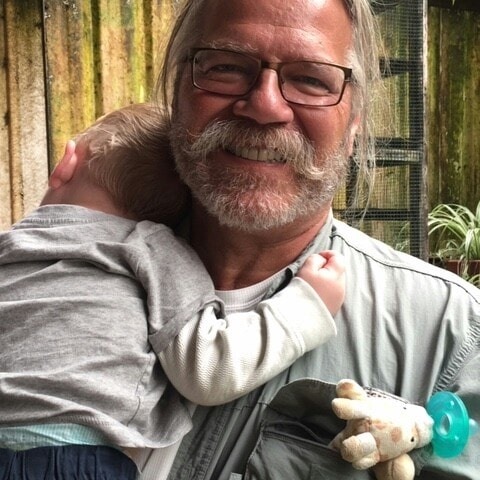
Larry Jordan is a follower of Jesus with a Zen practice. He wrote “The Way,” informed by the Eastern religions, the mystics, and the quantum physicists. "The Way" won a 2024 Nautilus Book Award. You can read more about the author here.
Previous Post

November 6, 2025
Black-and-White and Gray All Over
Next Post

November 20, 2025 What Does It Mean to Believe Responsibly?
Recent Comments
"Thank you for your very insightful perspective on the Golden Rule.Ran across a comment earlier ..."
The Golden Rule Demands More than ..."
"Thanks, good to know. I'll check it out!!"
Reflections on My Spiritual Reconstruction
"Loved your deconstruction and reconstruction articles. thank youI have a Patheos column too - Lotus ..."
Reflections on My Spiritual Reconstruction
"We are all spiritually connected. It is a privilege to be pilgrims on journey at ..."
Reflections on Interspirituality
Browse Our Archives
Select a Category Uncategorized
Select a Month October 2026 September 2026 August 2026 July 2026 June 2026 May 2026 April 2026 March 2026 February 2026 January 2026 December 2025 November 2025 October 2025 September 2025 August 2025 July 2025 June 2025 May 2025 April 2025 March 2025 February 2025 January 2025 December 2024 November 2024 October 2024 September 2024 August 2024 July 2024 June 2024 May 2024 April 2024 March 2024 February 2024
Follow Us!
TAKE THE
Religious Wisdom Quiz
"Resist the devil, and he will _____."
Select your answer to see how you score.
Pursue You Flee From You Grudgingly Respect You Despise You
Books by This Author Books by Larry Jordan
Related posts from You Might Be Right


Why I Practice in Many Spiritual Traditions, Not...


Reflections on My Religious Deconstruction
TRENDING AT PATHEOS History and Religion

The Problem with False Prophets
Miller’s Station UMC| 10/18/26| Anchor Verse: Jeremiah 23: 1, 9-23 I...

Emotion in Early Christianity by Andrew Crislip
Andrew Crislip’s Emotion in Early Christianity examines an often overlooked dimension of...

16 Spiritual Touchstones for a More Grounded Life
After decades of spiritual study, here are 16 principles I try...

Catholic Evangelization: Sharing Your Faith Every Day
Welcome back to the Graceful Awakening mini-series called, “From Faith to Mission.” ...

The Pillar of the Boatmen: the Ancient Monument...
The Pillar of the Boatmen is a Romano-Gaulish sculpture that dates from...

In one sense walking into Westminster Abbey is like walking down the...
view all History and Religion blogs
What Are Your Thoughts?leave a comment
Ad-Free & Subscriber Log-In Subscription Support
- About Us
- 2026 Calendar
- Videos
- Podcasts
- Library of World Religions
- Faith In Media Tracker
- Advertise With Us
- Write for Us
- Privacy Policy
- Terms of Service
- Do Not Sell My Data
- Contact Us
- Radiant Digital
- Manage Newsletter Subscriptions
- Unsubscribe From Notifications
- Sitemap
Copyright 2008-2026, Patheos. All rights reserved.
Subscription Support Ad-Free & Subscriber Log-In
Follow Patheos