
BuddhistCatholicContemplativeEvangelicalGeneral ChristianHinduJewishLatter-day SaintMuslimNew VisionsProgressive Christian
Beliefs
- Buddhist
- Catholic
- Contemplative
- Evangelical
- General Christian
- Hindu
- Jewish
- Latter-day Saint
- More Voices
- Muslim
- New Visions
- Pagan
- Progressive Christian
Topics
- Religion News
- Food and Religion
- Sports and Religion
- Religious Art
- Religious Music and Entertainment
- Religious Events
- History and Religion
- Style and Religion
- Politics and Religion
- Women in Religion
- Recreation Outdoors and Religion
- Business Finance and Religion
- Careers Workplace and Religion
- Education and Religion
- Family Parenting and Religion
- Health Fitness and Religion
- Home and Religion
- Relationships and Religion
- Technology and Religion
- Travel and Religion
Columnists
- Buddhist Columnists
- Business Finance and Religion Columnists
- Careers Workplace and Religion Columnists
- Catholic Columnists
- Contemplative Columnists
- Education and Religion Columnists
- Evangelists Columnists
- Family Parenting and Religion Columnists
- General Christian Columnists
- Health Fitness and Religion Columnists
- Hindu Columnists
- History and Religion Columnists
- Home and Religion Columnists
- Jewish Columnists
- More Voices Columnists
- Latter Day Columnists
- Muslim Columnists
- New Visions Columnists
- Nonreligious Columnists
- Pagan Columnists
- Politics and Religion Columnists
- Progressive Columnists
- Recreation Outdoors and Religion Columnists
- Relationships and Religion Columnists
- Religion News Columnists
- Religious Art Columnists
- Religious Events Columnists
- Religious Music and Entertainment Columnists
- Sports and Religion Columnists
- Style and Religion Columnists
- Technology and Religion Columnists
- Travel and Religion Columnists
- Women in Religion Columnists
Resource Library
- 2026 Calendar
- Library of World Religions
- The 100 Most Holy Places on Earth
- Patheos Answers
- Podcasts
- Videos
- Faith Leaders Database
- Anglican Episcopalian
- Bahai
- Baptist
- Buddhism
- Christianity
- Confucianism
- Eastern Orthodoxy
- Hinduism
- Holiness and Pentecostal
- ISKCON
- Islam
- Judaism
- Lutheran
- Methodist
- The Church of Jesus Christ of Latter-day Saints
- New Age
- Paganism
- Presbytarian and Reformed
- Protestantism
- Religion Behind the Scenes
- Roman Catholic
- Scientology
- Shia Islam
- Sikhism
- Sufism
- Sunni Islam
- Taoism
- Zen
- See all religions
Research Tools
 Ad-Free & Subscriber Log-In Subscription Support
Ad-Free & Subscriber Log-In Subscription Support
Follow Patheos 

- Trending:
- Forgiveness
- |
- Marriage
- |
- Consciousness
- |
- Death Penalty
- |
- Election
- |
- Halloween

- Home
- New Visions
- History and Religion
- Are We Interconnected, or Are We Separate?
Are We Interconnected, or Are We Separate?
Last updated on: January 2, 2025 at 7:02 am by Larry Jordan
Are We Interconnected, or Are We Separate? 2025-01-02T07:02:14-06:00 Larry Jordan
Patheos Explore the world's faith through different perspectives on religion and spirituality! Patheos has the views of the prevalent religions and spiritualities of the world.
We are essentially interconnected and apparently separate, too. This is a real-life paradox, “both/and,” not “either/or.”
We can make more sense of things if we can accept paradox and embrace mystery. Of course, if we want comfort, rather than clarity, then paradox can be frustrating. We can have a difficult time realizing that some answers are NOT simple, that we can NOT have all of the answers and that we can NOT trust those who claim otherwise.
I wrote about serving others here. Some readers challenged me to explain how a post called “Serving Others Can Transform Us” could suggest that “There are no others.” “This is a contradiction,” they said. “Are we interconnected, or are we separate?”

We are essentially interconnected and apparently separate, too. Image from StockCake/AI generated
There Are Paradoxes All Around Us
There is no contradiction. The post merely repeats the paradox that is consistent in my writing. Often, I suggest that we are One, and we are many, too.
I wrote about the Absolute and the relative here. And I wrote about mystics and scientists here. I wrote about imagination and mystery here. And I wrote about paradox here.
According to Merriam-Webster, a paradox is “a seemingly absurd or self-contradictory statement or proposition that when investigated or explained may prove to be well founded or true.” Thus, we sometimes correctly perceive things as “both/and,” not “either/or.”
In The Way, I said that, “In a black-and-white Newtonian world, there is no paradox. But in a Technicolor quantum Universe, there are paradoxes all around us.” In my opinion, accepting paradox can help us to make more sense of things.
Accept Paradox and Embrace Mystery
So, the Western worldview was shaped by Newtonian thinking, not quantum Universe thinking, and we are only beginning to discover that. Scientists will correctly affirm that Newtonian thinking is NOT incorrect, but it is incomplete. Together, they are more complete.
In my opinion, contemporary Christianity has done us a disservice by pretending that our Iron Age belief system has all of the answers. Now, when our beliefs conflict with reality, do we conform our beliefs to our observations of reality, or do we conform our perceptions of reality to our beliefs?
And what are we to do with some literal interpretations of a 6,000 year old planet, a six-day creation, an Earth-centric universe, a heaven above, a hell below, global floods and talking snakes? When we concede that some Biblical language is allegorical, metaphorical or mythical, what are we to do with fantastical accounts of miracles, physical resurrections, and virgin births?
In The Way, my prescription for “Christianity 2.0” suggests that we accept paradox and embrace mystery; that we acknowledge 2,000 years of advances in history, philosophy, and science; and that we hold beliefs loosely and pursue experiences of Ultimate Reality, rather than speculations about God.
The Neuroscientist and the Pool Man
In my last post, I touted Dr. Jill Bolte Taylor’s TED Talk, where a neuroscientist describes a transcendent experience in clinical terms. Actually, I first learned of this talk in a conversation about consciousness with my pool man. (Yes, I had a conversation about consciousness with my pool man, and yes, we were standing at the deep end. Insert rim shot here.)
Imagine that you, like Dr. Taylor, could only process thoughts with your right brain, your creative, holistic, intuitive, hemisphere. Like her, you might feel a sense of benevolence, security and unity. You might see everyone and everything as essentially interconnected.
Now, imagine that you, like Dr. Taylor, would eventually recover the ability to process thoughts with your left brain, your analytical, linear, logical hemisphere. Like all of us in everyday life, you might feel a sense of agency, identity and individuality. You might see everyone and everything as apparently separated.
Neither the right brain perspective nor the left brain perspective are incorrect, but they are incomplete. Together, they are more complete. We are essentially interconnected and apparently separate, too. This is a real-life paradox, “both/and,” not “either/or.”
The One and the Many
There is nothing new about this. Before Newton, Plato wrote about the One and the many. Buddha talked about emptiness and form. And Lao Tzu talked about the Tao and the 10,000 things. Later, the modern quantum physicists studied the ancient Hindu Upanishads and noticed the parallels between Eastern mysticism and the new physics.
Likewise, many sayings in the non-canonical Gospel of Thomas and several sayings in the canonical Gospels seemingly suggest a quantum or unitive understanding. Jesus lived in the Middle East, at the confluence of the Eastern and Western worlds. He was never as Western or as Newtonian or as left-brained or as individualistic as many of his followers.
Sometimes, we can make more sense of things if we can accept paradox and embrace mystery.
If you want to keep up with the latest from You Might Be Right, please subscribe.
The Way received a 2024 Nautilus Book Award.
If you enjoyed this article, please leave a comment at the bottom of this page.
Thanks for reading You Might Be Right!!
New Visions
More Voices
Education and Religion
About Larry Jordan
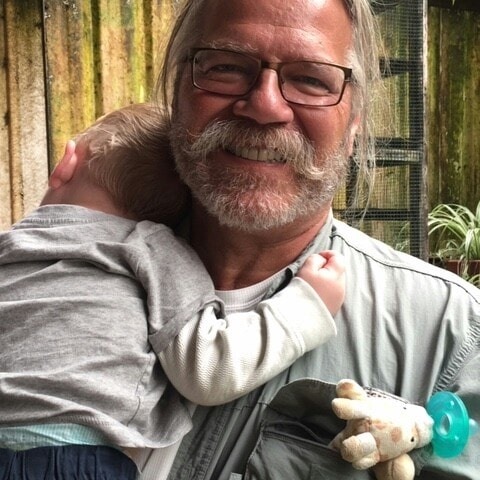
Larry Jordan is a follower of Jesus with a Zen practice. He wrote “The Way,” informed by the Eastern religions, the mystics, and the quantum physicists. "The Way" won a 2024 Nautilus Book Award. You can read more about the author here.
Previous Post
December 27, 2024
Serving Others Can Transform Us
Next Post

January 9, 2025 Reality is Fluid, Holistic, Intangible and Relational
Recent Comments
"Thanks, good to know. I'll check it out!!"
Reflections on My Spiritual Reconstruction
"Loved your deconstruction and reconstruction articles. thank youI have a Patheos column too - Lotus ..."
Reflections on My Spiritual Reconstruction
"We are all spiritually connected. It is a privilege to be pilgrims on journey at ..."
Reflections on Interspirituality
""that something has gone wrong, that human beings really are implicated in that rupture"So the ..."
Reflections on My Religious Deconstruction
Browse Our Archives
Select a Category Uncategorized
Select a Month October 2026 September 2026 August 2026 July 2026 June 2026 May 2026 April 2026 March 2026 February 2026 January 2026 December 2025 November 2025 October 2025 September 2025 August 2025 July 2025 June 2025 May 2025 April 2025 March 2025 February 2025 January 2025 December 2024 November 2024 October 2024 September 2024 August 2024 July 2024 June 2024 May 2024 April 2024 March 2024 February 2024
Follow Us!
TAKE THE
Religious Wisdom Quiz
Who cried out, "My God, my God, why have you forsaken me?" while dying?
Select your answer to see how you score.
Paul Stephen David Jesus
Books by This Author Books by Larry Jordan
Related posts from You Might Be Right


Why I Practice in Many Spiritual Traditions, Not...

Reflections on My Religious Deconstruction
TRENDING AT PATHEOS History and Religion

57th Dove Awards Honor Dolly Parton, Crown New...
On gospel music’s biggest night, the 57th annual GMA Dove Awards honored...

The First Eucharistic Controversy: Christ’s Real Presence
For Catholics, the Eucharist is the source and summit of the Christian...

What a Stop Sign Can Teach Us About...
How to Make a Decision When You Can't Hear God Main point:...

Archdiocese Hosts Military Marriage Retreat in Germany
RASTATT, Germany — The transient military lifestyle, with its frequent deployments and...

Nearly every morning, I make the drive to Detroit with my high-school-age...

The Real AI Story Is Adoption Without Trust
Artificial intelligence has crossed a political threshold. It is no longer a...
view all History and Religion blogs
What Are Your Thoughts?leave a comment
Ad-Free & Subscriber Log-In Subscription Support
- About Us
- 2026 Calendar
- Videos
- Podcasts
- Library of World Religions
- Faith In Media Tracker
- Advertise With Us
- Write for Us
- Privacy Policy
- Terms of Service
- Do Not Sell My Data
- Contact Us
- Radiant Digital
- Manage Newsletter Subscriptions
- Unsubscribe From Notifications
- Sitemap
Copyright 2008-2026, Patheos. All rights reserved.
Subscription Support Ad-Free & Subscriber Log-In
Follow Patheos