
BuddhistCatholicContemplativeEvangelicalGeneral ChristianHinduJewishLatter-day SaintMuslimNew VisionsProgressive Christian
Beliefs
- Buddhist
- Catholic
- Contemplative
- Evangelical
- General Christian
- Hindu
- Jewish
- Latter-day Saint
- More Voices
- Muslim
- New Visions
- Pagan
- Progressive Christian
Topics
- Religion News
- Food and Religion
- Sports and Religion
- Religious Art
- Religious Music and Entertainment
- Religious Events
- History and Religion
- Style and Religion
- Politics and Religion
- Women in Religion
- Recreation Outdoors and Religion
- Business Finance and Religion
- Careers Workplace and Religion
- Education and Religion
- Family Parenting and Religion
- Health Fitness and Religion
- Home and Religion
- Relationships and Religion
- Technology and Religion
- Travel and Religion
Columnists
- Buddhist Columnists
- Business Finance and Religion Columnists
- Careers Workplace and Religion Columnists
- Catholic Columnists
- Contemplative Columnists
- Education and Religion Columnists
- Evangelists Columnists
- Family Parenting and Religion Columnists
- General Christian Columnists
- Health Fitness and Religion Columnists
- Hindu Columnists
- History and Religion Columnists
- Home and Religion Columnists
- Jewish Columnists
- More Voices Columnists
- Latter Day Columnists
- Muslim Columnists
- New Visions Columnists
- Nonreligious Columnists
- Pagan Columnists
- Politics and Religion Columnists
- Progressive Columnists
- Recreation Outdoors and Religion Columnists
- Relationships and Religion Columnists
- Religion News Columnists
- Religious Art Columnists
- Religious Events Columnists
- Religious Music and Entertainment Columnists
- Sports and Religion Columnists
- Style and Religion Columnists
- Technology and Religion Columnists
- Travel and Religion Columnists
- Women in Religion Columnists
Resource Library
- 2026 Calendar
- Library of World Religions
- The 100 Most Holy Places on Earth
- Patheos Answers
- Podcasts
- Videos
- Faith Leaders Database
- Anglican Episcopalian
- Bahai
- Baptist
- Buddhism
- Christianity
- Confucianism
- Eastern Orthodoxy
- Hinduism
- Holiness and Pentecostal
- ISKCON
- Islam
- Judaism
- Lutheran
- Methodist
- The Church of Jesus Christ of Latter-day Saints
- New Age
- Paganism
- Presbytarian and Reformed
- Protestantism
- Religion Behind the Scenes
- Roman Catholic
- Scientology
- Shia Islam
- Sikhism
- Sufism
- Sunni Islam
- Taoism
- Zen
- See all religions
Research Tools
 Ad-Free & Subscriber Log-In Subscription Support
Follow Patheos 

- Trending:
- Advent
- |
- Forgiveness
- |
- Thanksgiving
- |
- Election
- |
- Seasonal Holidays
- |
- Marriage

- Home
- New Visions
- History and Religion
- Leaving Church, Maintaining Spiritual Practices
Leaving Church, Maintaining Spiritual Practices
Last updated on: March 25, 2024 at 1:39 pm by Larry Jordan
Leaving Church, Maintaining Spiritual Practices 2024-03-25T13:39:20-05:00 Larry Jordan
Patheos Explore the world's faith through different perspectives on religion and spirituality! Patheos has the views of the prevalent religions and spiritualities of the world.
Many people are leaving church over questions of belief or doctrine. How are people who are leaving church maintaining spiritual practices?
In the West, most people might say that their spiritual practices consist of attending church, praying, and/or reading the Bible.
According to Pew Research Center, most Americans actually have little or no spiritual practice:
- Almost one-third of adults seldom or never attend church, and almost two thirds attend church less than once a week.
- Almost one-quarter of adults seldom or never pray, and almost half pray less than once a day.
- Almost half of adults seldom or never read scripture, and almost two-thirds read scripture less than once a week.
It might be equally appropriate to ask “How are people who are remaining in church maintaining spiritual practices?” There are likely more “religious but not spiritual” people than there are “spiritual but not religious” people.
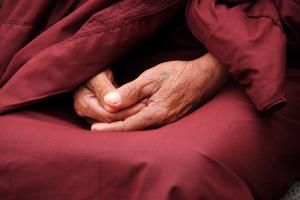
Many people are leaving church. How are they maintaining spiritual practices? Image from Pixabay/terimakasi0
What are Spiritual Practices?
To me, spirituality is the experience that there is an Ultimate Reality or something that is greater than ourselves. This something might be personal or not and it might be supernatural or not. Spiritual practices help us to realize our connectedness and interrelatedness to Ultimate Reality.
Spirituality is not inherently religious or irreligious. In fact, Pew Research Center reports that one-third of adults believe in a higher power of some kind, but not in God as described in the Bible. Barbara Brown Taylor, an Episcopal priest, asks, “What do any of us mean when we say ‘God’? We use the word as if it were made of steel instead of silk netting.”
The Bhagavad Gita is one of the most significant scriptures in the Hindu tradition. The Gita recounts a conversation between a warrior, Arjuna, and his charioteer, Krishna, an avatar or incarnation of Vishnu, one of the Hindu gods. Krishna describes several yogas or paths to Brahman or Ultimate Reality. Generally, Hinduism recognizes four main paths:
- Karma Yoga is the path of action or selfless service. Karma yoga focuses on establishing connection and eliminating selfish desires by focusing on our actions, rather than the fruit of our actions. In the Gita, Krishna tells Arjuna, “You have the right to work, but never to the fruit of work. You should never engage in action for the sake of reward.” Christians might see Mother Theresa and Hindus might see Mahatma Gandhi as karma yogis. We have many opportunities in our daily lives to engage in service to others.
- Bhakti Yoga is the path of devotion or worship. In Hinduism, some are atheists who do not believe in a personal God, and some are theists who believe in a personal God. Ramakrishna is a Hindu bhakta who (at times) practiced other religions, including Christianity. He suggested that the God with name and form and the God without name and form are the same. Because they often perceive God as personal, the Abrahamic religions (Judaism, Christianity, and Islam) are very much oriented toward devotion and worship.
- Jnana Yoga is the path of knowledge or wisdom. Author David Carse discusses bhakti yoga and jnana yoga, writing “There is a tradition that jnana is the higher path because the bhakta relies on a belief in someone or something to be devoted to, whereas the jnani knows there is neither. But true bhakti is pure devotion with no object; and the true jnani knows nothing.” This paradoxical both/and language is more typical of the Eastern religions than of the Western religions. Still, Western religions have expressions of devotion (bhakti) and wisdom (jnana) too.
- Raja Yoga is the path of meditation or mindfulness. The Eastern religions emphasize meditation, rather than prayer. In the East, Ultimate Reality is not always perceived as personal. Thus, if we see God as personal, then we can have a conversation or a relationship; if we see Ultimate Reality as impersonal, then we can have a sense of connectedness or relatedness. Many people both meditate and pray, and some Christian prayer, like Centering Prayer, is almost indistinguishable from meditation.
How Do We Maintain Spiritual Practices?
Obviously, there are analogies to the four paths to Ultimate Reality in many sacred traditions and some secular traditions. The path that people choose is often determined by their proclivities, and these paths are not mutually-exclusive. Spiritual practitioners can pursue these paths inside (or outside of) church and in addition to (or instead of ) church.
Would Western people be more spiritual if they considered how they could adopt spiritual practices in their everyday lives, rather than focusing solely on the few hours that they spend in church? If we believe that we are “saved” by our actions or our beliefs, then do we feel less inclined to manifest awe, gratitude, reverence, and a sense of responsibility in our everyday lives?
Many people are leaving church over questions of belief or doctrine. How are people who are leaving church maintaining spiritual practices? For that matter, how are people who are remaining in church maintaining spiritual practices?
If you want to stay up to date on the latest from You Might Be Right, simply subscribe with your email.
New Visions
More Voices
Education and Religion

About Larry Jordan
Larry Jordan is a follower of Jesus with Zen practice. Recently, he published his first book, “The Way: Meaningful Spirituality for a Modern World,” which was informed by the Eastern religions, the mystics, and the quantum physicists. You can read more about the author here.
Previous Post

March 14, 2024
Leaving Church, Finding Community
Next Post

March 28, 2024 Is Free Will an Illusion?
Recent Comments
"Thank you for your very insightful perspective on the Golden Rule.Ran across a comment earlier ..."
The Golden Rule Demands More than ..."
"Thanks, good to know. I'll check it out!!"
Reflections on My Spiritual Reconstruction
"Loved your deconstruction and reconstruction articles. thank youI have a Patheos column too - Lotus ..."
Reflections on My Spiritual Reconstruction
"We are all spiritually connected. It is a privilege to be pilgrims on journey at ..."
Reflections on Interspirituality
Browse Our Archives
Select a Category Uncategorized
Select a Month November 2026 October 2026 September 2026 August 2026 July 2026 June 2026 May 2026 April 2026 March 2026 February 2026 January 2026 December 2025 November 2025 October 2025 September 2025 August 2025 July 2025 June 2025 May 2025 April 2025 March 2025 February 2025 January 2025 December 2024 November 2024 October 2024 September 2024 August 2024 July 2024 June 2024 May 2024 April 2024 March 2024 February 2024
Follow Us!
TAKE THE
Religious Wisdom Quiz
Elisha purified a pot of stew that had been poisoned with what?
Select your answer to see how you score.
Wild Mushrooms Arsenic Wild Gourds Bad Cheese
Books by This Author Books by Larry Jordan
Related posts from You Might Be Right


Spirituality without Supernaturalism

"The Deconstruction Space is a Mess"

TRENDING AT PATHEOS History and Religion

What music feeds you during Advent?
The first day of Advent is coming to a close as I...

John Piper's Definition of "Without Error"
For any of you who may not know, John Piper is a...

In 1943, as a young army recruit in Texas, George M....
How Do We Find Hope In A Crazy...
"Hope is the thing with feathers that perches in the soul, and...

The Adventurous Lectionary – Advent 2 - December...
The Adventurous Lectionary – The Second Sunday of Advent - December 6,...

Prioritizing Jesus This Advent
Miller’s Station UMC| 29 November 2026| Mathew 19:16-27 When we prioritize Jesus,...
view all History and Religion blogs
What Are Your Thoughts?leave a comment
Ad-Free & Subscriber Log-In Subscription Support
- About Us
- 2026 Calendar
- Videos
- Podcasts
- Library of World Religions
- Faith In Media Tracker
- Advertise With Us
- Write for Us
- Privacy Policy
- Terms of Service
- Do Not Sell My Data
- Contact Us
- Radiant Digital
- Manage Newsletter Subscriptions
- Unsubscribe From Notifications
- Sitemap
Copyright 2008-2026, Patheos, part of the Radiant Digital network of media brands. All rights reserved.
Subscription Support Ad-Free & Subscriber Log-In
Follow Patheos