
BuddhistCatholicContemplativeEvangelicalGeneral ChristianHinduJewishLatter-day SaintMuslimNew VisionsProgressive Christian
Beliefs
- Buddhist
- Catholic
- Contemplative
- Evangelical
- General Christian
- Hindu
- Jewish
- Latter-day Saint
- More Voices
- Muslim
- New Visions
- Pagan
- Progressive Christian
Topics
- Religion News
- Food and Religion
- Sports and Religion
- Religious Art
- Religious Music and Entertainment
- Religious Events
- History and Religion
- Style and Religion
- Politics and Religion
- Women in Religion
- Recreation Outdoors and Religion
- Business Finance and Religion
- Careers Workplace and Religion
- Education and Religion
- Family Parenting and Religion
- Health Fitness and Religion
- Home and Religion
- Relationships and Religion
- Technology and Religion
- Travel and Religion
Columnists
- Buddhist Columnists
- Business Finance and Religion Columnists
- Careers Workplace and Religion Columnists
- Catholic Columnists
- Contemplative Columnists
- Education and Religion Columnists
- Evangelists Columnists
- Family Parenting and Religion Columnists
- General Christian Columnists
- Health Fitness and Religion Columnists
- Hindu Columnists
- History and Religion Columnists
- Home and Religion Columnists
- Jewish Columnists
- More Voices Columnists
- Latter Day Columnists
- Muslim Columnists
- New Visions Columnists
- Nonreligious Columnists
- Pagan Columnists
- Politics and Religion Columnists
- Progressive Columnists
- Recreation Outdoors and Religion Columnists
- Relationships and Religion Columnists
- Religion News Columnists
- Religious Art Columnists
- Religious Events Columnists
- Religious Music and Entertainment Columnists
- Sports and Religion Columnists
- Style and Religion Columnists
- Technology and Religion Columnists
- Travel and Religion Columnists
- Women in Religion Columnists
Resource Library
- 2026 Calendar
- Library of World Religions
- The 100 Most Holy Places on Earth
- Patheos Answers
- Podcasts
- Videos
- Faith Leaders Database
- Anglican Episcopalian
- Bahai
- Baptist
- Buddhism
- Christianity
- Confucianism
- Eastern Orthodoxy
- Hinduism
- Holiness and Pentecostal
- ISKCON
- Islam
- Judaism
- Lutheran
- Methodist
- The Church of Jesus Christ of Latter-day Saints
- New Age
- Paganism
- Presbytarian and Reformed
- Protestantism
- Religion Behind the Scenes
- Roman Catholic
- Scientology
- Shia Islam
- Sikhism
- Sufism
- Sunni Islam
- Taoism
- Zen
- See all religions
Research Tools
 Ad-Free & Subscriber Log-In Subscription Support
Ad-Free & Subscriber Log-In Subscription Support
Follow Patheos 

- Trending:
- Forgiveness
- |
- Marriage
- |
- Consciousness
- |
- Death Penalty
- |
- Election
- |
- Halloween
 Why I Am Catholic
-
More
- Home
- The Definition Of A Gentlemen (A Few Words For Wednesday)
The Definition Of A Gentlemen (A Few Words For Wednesday)
Last updated on: January 24, 2017 at 6:53 pm by Frank Weathers
The Definition Of A Gentlemen (A Few Words For Wednesday) 2017-01-24T18:53:43-05:00 Frank Weathers
Patheos Explore the world's faith through different perspectives on religion and spirituality! Patheos has the views of the prevalent religions and spiritualities of the world.
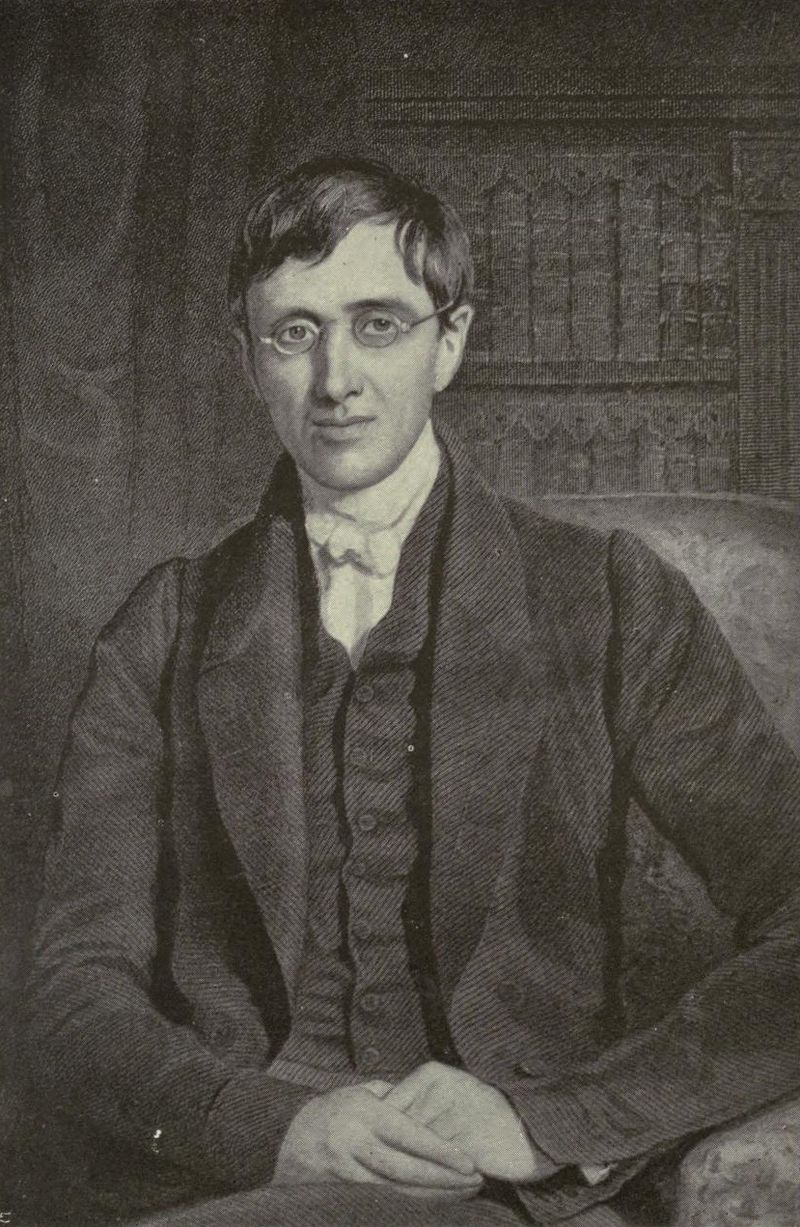
“Portrait Miniature of John Henry Newman” by William Charles Ross Licensed under Public Domain via Wikimedia Commons.
While I was on vacation, I started thumbing through a book my wife picked up for me at our public library’s used book sale. Edited by a Fr. Raphael H. Gross, of the Missionaries of the Precious Blood, the somewhat uninspiring title of the tome is, A Century of the Catholic Essay
I have no idea how pastoral Fr. Raphael was, or how good his homilies were, etc., but as an editor, well, let’s just say that I haven’t been able to put the book down yet.
Out of copyright, and out of print, I intend to share a number of his selections from the collection in this space. Let’s start with a succinct essay from Catholic convert, and recently canonized saint, John Henry Newman.
In just two paragraphs, one very long, and the other short, he summarizes the traits of the seemingly long forgotten creature, formerly aspired to, known as the gentleman. There is much to be gained from reading jaunty St. John Henry’s definition.
IT is almost a definition of a gentleman to say that he is one who never inflicts pain. This description is both refined and, so far as it goes, accurate. He is mainly occupied in merely removing the obstacles which hinder the free and unembarrassed action of those about him, and he concurs with their movements rather than takes the initiative himself. His benefits may be considered as parallel to what are called the comforts or conveniences in arrangements of a personal nature — like an easy chair or a good fire, which do their best in dispelling cold and fatigue, though nature provides both means of rest and animal heat without them. The true gentleman in like manner carefully avoids whatever may cause a jar or a jolt in the mind of those with whom he is cast – all clashing of opinion or collision of feeling, all restraint or suspicion or gloom or resentment, his great concern being to make every one at ease and at home. He has his eyes on all his company, he is tender towards the bashful, gentle towards the distant, and merciful towards the absurd. He can recollect to whom he is speaking; he guards against unseasonable allusions or topics which may irritate; he is seldom prominent in conversation, and never wearisome. He makes light of favors when he does them, and seems to be receiving when he is conferring. He never speaks of himself except when compelled, never defends himself by a mere retort; he has no ears for slander or gossip, is scrupulous in imputing motives to those who interfere with him, and interprets everything for the best. He is never mean or little in his disputes, never takes unfair advantage, never mistakes personalities or sharp sayings for arguments, or insinuates evil which he dare not say out. From a long-sighted prudence, he observes the maxim of the ancient sage, that we should ever conduct ourselves towards our enemy as if he were one day to be our friend. He has too much good sense to be affronted at insults. He is too well employed to remember injuries and too indolent to bear malice. He is patient, forbearing, and resigned on philosophical principle; he submits to pain because it is inevitable, to bereavement because it is irreparable, and to death because it is his destiny. If he engages in controversy of any kind, his disciplined intellect preserves him from the blundering discourtesy of better, perhaps, but less educated minds, who, like blunt weapons, tear and hack instead of cutting clean, who mistake the point in argument, waste their strength on trifles, misconceive their adversary, and leave the question more involved than they find it. He may be right or wrong in his opinion, but he is too clear-headed to be unjust; he is as simple as he is forcible, and as brief as he is decisive. Nowhere shall we find greater candor, consideration, indulgence; he throws himself into the minds of his opponents, he accounts for their mistakes. He knows the weakness of human reason as well as its strength, its province, and its limits. If he be an unbeliever, he will be too profound and large-minded to ridicule religion or to act against it; he is too wise to be a dogmatist or fanatic in his infidelity. He respects piety and devotion; he even supports institutions as venerable, beautiful, or useful, to which he does not assent; he honors the ministers of religion, and it contents him to decline its mysteries without assailing or denouncing them. He is a friend of religious toleration, and that not only because his philosophy has taught him to look on all forms of faith with an impartial eye, but also from the gentleness and effeminacy of feeling which is the attendant on civilization.
Not that he may not hold a religion, too, in his own way, even when he is not a Christian. In that case his religion is one of imagination and sentiment; it is the embodiment of those ideas of the sublime, majestic, and beautiful without which there can be no large philosophy. Sometimes he acknowledges the being of God, sometimes he invests an unknown principle or qualities with the attributes of perfection. And this deduction of his reason or creation his fancy he makes the occasion of such excellent thoughts, and the starting point of so varied and systematic a teaching, that he even seems like a disciple of Christianity itself. From the very accuracy and steadiness of his logical powers, he is able to see what sentiments are consistent in those who hold any religious doctrine at all, and he appears to others to feel and to hold a whole circle of theological truths, which exist in his mind otherwise than as a number of deductions. Such are some of the lineaments of the ethical character which the cultivated intellect will form, apart from the religious principle. They are seen within the pale of the church and without it, in holy men and in profligate; they form the beau ideal of the world; they partly assist and partly distort the development of the Catholic. They may subserve the education of a St. Francis de Sales or a Cardinal Pole; they may be the limits of contemplations of a Shaftesbury or a Gibbon. Basil and Julian were fellow students at the schools of Athens; and one became the saint and doctor of the Church, the other a scoffing and relentless foe.
You can find this, and many other fine works, on the YIMCatholic Bookshelf.


Browse Our Archives
Select a Category Blog News Conversion Story Culture Learning Living Nature Prayer Uncategorized Working
Select a Month June 2016 May 2016 August 2015 July 2015 June 2015 May 2015 April 2015 March 2015 February 2015 January 2015 December 2014 November 2014 October 2014 September 2014 August 2014 July 2014 June 2014 May 2014 April 2014 March 2014 February 2014 January 2014 December 2013 November 2013 October 2013 September 2013 August 2013 July 2013 June 2013 May 2013 April 2013 March 2013 February 2013 January 2013 December 2012 November 2012 October 2012 September 2012 August 2012 July 2012 June 2012 May 2012 April 2012 March 2012 February 2012 January 2012 December 2011 November 2011 October 2011 September 2011 August 2011 July 2011 June 2011 May 2011 April 2011 March 2011 February 2011 January 2011 December 2010 November 2010 October 2010 September 2010 August 2010 July 2010 June 2010 May 2010 April 2010 March 2010 February 2010 January 2010 December 2009 November 2009 October 2009 September 2009 August 2009
Follow Us!
TAKE THE
Religious Wisdom Quiz
What did Isaiah tell Hezekiah to use as a remedy for his illness?
Select your answer to see how you score.
Wine A poultice of figs Olive oil River water
Related posts from Why I Am Catholic

Belated Happy Birthday To Blaise Pascal, Unofficial Saint...

Because My Brother Imran Yousef Is An American...

Joe Six-Pack, USMC, With A Few Post-Terrorist Attack...

This Is Why God Invented YouTube...
TRENDING AT PATHEOS Catholic

Rejecting Doom: Christian Hope And Human Action
Christianity is a religion of hope. We are to have hope and...

It’s What Comes From Within Which Matters
One of the most difficult things for us to understand is why...

Why I Choose the Eucharist Over the Sermon
Choose the Eucharist, Not the Sermon What are we supposed to get...

5 Design Elements Found in Spiritually Rooted Homes
Putting Spirituality Into Home Decor Our homes are more than our living...

Credo: A Story of God Told with the...
About 10 years ago, I began to imagine a personal "Credo" that...

The Anatomy of Divine Revelation in Catholic Thought
The claim that God has made Himself known to human beings is...
Ad-Free & Subscriber Log-In Subscription Support
- About Us
- 2026 Calendar
- Videos
- Podcasts
- Library of World Religions
- Faith In Media Tracker
- Advertise With Us
- Write for Us
- Privacy Policy
- Terms of Service
- Do Not Sell My Data
- Contact Us
- Radiant Digital
- Manage Newsletter Subscriptions
- Unsubscribe From Notifications
- Sitemap
Copyright 2008-2026, Patheos. All rights reserved.
Subscription Support Ad-Free & Subscriber Log-In
Follow Patheos