
BuddhistCatholicContemplativeEvangelicalGeneral ChristianHinduJewishLatter-day SaintMuslimNew VisionsProgressive Christian
Beliefs
- Buddhist
- Catholic
- Contemplative
- Evangelical
- General Christian
- Hindu
- Jewish
- Latter-day Saint
- More Voices
- Muslim
- New Visions
- Pagan
- Progressive Christian
Topics
- Religion News
- Food and Religion
- Sports and Religion
- Religious Art
- Religious Music and Entertainment
- Religious Events
- History and Religion
- Style and Religion
- Politics and Religion
- Women in Religion
- Recreation Outdoors and Religion
- Business Finance and Religion
- Careers Workplace and Religion
- Education and Religion
- Family Parenting and Religion
- Health Fitness and Religion
- Home and Religion
- Relationships and Religion
- Technology and Religion
- Travel and Religion
Columnists
- Buddhist Columnists
- Business Finance and Religion Columnists
- Careers Workplace and Religion Columnists
- Catholic Columnists
- Contemplative Columnists
- Education and Religion Columnists
- Evangelists Columnists
- Family Parenting and Religion Columnists
- General Christian Columnists
- Health Fitness and Religion Columnists
- Hindu Columnists
- History and Religion Columnists
- Home and Religion Columnists
- Jewish Columnists
- More Voices Columnists
- Latter Day Columnists
- Muslim Columnists
- New Visions Columnists
- Nonreligious Columnists
- Pagan Columnists
- Politics and Religion Columnists
- Progressive Columnists
- Recreation Outdoors and Religion Columnists
- Relationships and Religion Columnists
- Religion News Columnists
- Religious Art Columnists
- Religious Events Columnists
- Religious Music and Entertainment Columnists
- Sports and Religion Columnists
- Style and Religion Columnists
- Technology and Religion Columnists
- Travel and Religion Columnists
- Women in Religion Columnists
Resource Library
- 2026 Calendar
- Library of World Religions
- The 100 Most Holy Places on Earth
- Patheos Answers
- Podcasts
- Videos
- Faith Leaders Database
- Anglican Episcopalian
- Bahai
- Baptist
- Buddhism
- Christianity
- Confucianism
- Eastern Orthodoxy
- Hinduism
- Holiness and Pentecostal
- ISKCON
- Islam
- Judaism
- Lutheran
- Methodist
- The Church of Jesus Christ of Latter-day Saints
- New Age
- Paganism
- Presbytarian and Reformed
- Protestantism
- Religion Behind the Scenes
- Roman Catholic
- Scientology
- Shia Islam
- Sikhism
- Sufism
- Sunni Islam
- Taoism
- Zen
- See all religions
Research Tools
 Ad-Free & Subscriber Log-In Subscription Support
Ad-Free & Subscriber Log-In Subscription Support
Follow Patheos 

- Trending:
- Forgiveness
- |
- Marriage
- |
- Consciousness
- |
- Death Penalty
- |
- Election
- |
- Halloween
 Why I Am Catholic
-
More
- Home
- 5 Ways Of Worshiping God (By A Saint Who Was A Dhimmi)
5 Ways Of Worshiping God (By A Saint Who Was A Dhimmi)
Last updated on: January 24, 2017 at 6:53 pm by Frank Weathers
5 Ways Of Worshiping God (By A Saint Who Was A Dhimmi) 2017-01-24T18:53:02-05:00 Frank Weathers
Patheos Explore the world's faith through different perspectives on religion and spirituality! Patheos has the views of the prevalent religions and spiritualities of the world.

St. John of Damacus, Public Domain

I’ve been reading some of the selections on the YIMCatholic Bookshelf. As it turns out, a good number of the books in that collection are written by authors whose names begin with the letter S. Saint this, or Saint that, for example.
Sometimes these folks have brief passages in their works that are both short and helpful. In fact, some of them are like the listicles that the interwebs have come to know and love. Like the one below, which was written by St. John Damascene.
Did you know that this particular Doctor of the Church was a Dhimmi living in Damascus when his neighbors were mostly adherents of Islam? This fact didn’t seem to bother him, or them. In fact, it appears that before he headed off to the cloister, he may have served as the chief councilor to the Umayyad Caliph in Damascus.
Let’s get to the listicle alluded to in the title above, shall we? It appears in his Apologia Against Those Who Decry Holy Images. Remember the iconoclasts? Yep. The Doctor from Damascus wasn’t amused when other Christians started being bitten by the politically correct bug waffling over the adoration of icons, and religious art. He torpedoes that whole movement pretty handily.
So, what are the 5 ways of worshiping, or adoring God? St. John thought you’d never ask.
On Adoration.
What is Adoration?
Adoration is a token of subjection,—that is, of submission and humiliation. There are many kinds of adoration.
On the kinds of Adoration.
The first kind is the worship of latreia, which we give to God, who alone is adorable by nature, and this worship is shown in several ways, and first by the worship of servants. All created things worship Him, as servants their master. All things serve Thee, the psalm says. Some serve willingly, others unwillingly; some with full knowledge, willingly, as in the case of the devout, others knowing, but not willing, against their will, as the devil’s. Others, again, not knowing the true God, worship in spite of themselves Him whom they do not know.
The second kind is the worship of admiration and desire which we give to God on account of His essential glory. He alone is worthy of praise, who receives it from no one, being Himself the cause of all glory and all good, He is light, incomprehensible sweetness, incomparable, immeasurable perfection, an ocean of goodness, boundless wisdom, and power, who alone is worthy of Himself to excite admiration, to be worshipped, glorified, and desired.
The third kind of worship is that of thanksgiving for the goods we have received. We must thank God for all created things, and show Him perpetual worship, as from Him and through Him all creation takes its being and subsists. He gives lavishly of His gifts to all, and without being asked. He wishes all to be saved, and to partake of His goodness. He is long-suffering with us sinners. He allows His sun to shine upon the just and unjust, and His rain to fall upon the wicked and the good alike. And being the Son of God, He became one of us for our sakes, and made us partakers of His divine nature, so that we shall be like unto Him, as St John says in his Catholic epistle.
The fourth kind is suggested by the need and hope of benefits. Recognising that without Him we can neither do nor possess anything good, we worship Him, asking Him to satisfy our needs and desires, that we may be preserved from evil and arrive at good.
The fifth kind is the worship of contrition and confession. As sinners we worship God, and prostrate ourselves before Him, needing His forgiveness, as it becomes servants. This happens in three ways. A man may be sorry out of love, or lest he should lose God’s benefits, or for fear of chastisement. The first is prompted by goodness and desire for God himself, and the condition of a son: the second is interested, the third is slavish.
You can find the entire book right here.
Umayyad Caliphate, huh? Hmmm. That rings a bell.
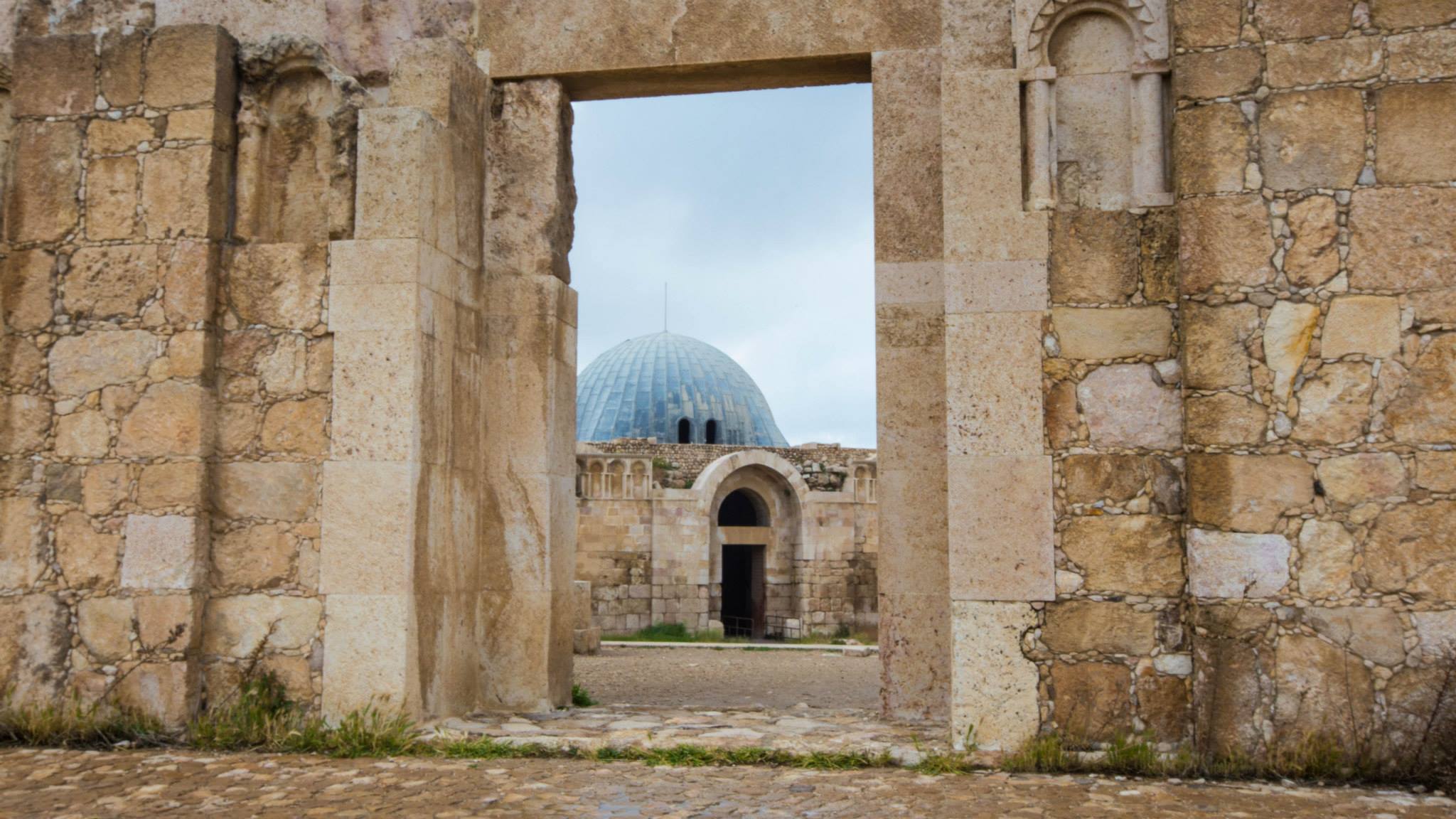
Umayyad Palace (720AD), the Citadel, Amman, Jordan.
Image credit: Connor Eberhart
Previous Post

May 14, 2016
Because the Church was Catholic at Pentecost
Next Post
May 16, 2016 BREAKING: SCOTUS Decides Not To Decide On The HHS Mandate UPDATED
Browse Our Archives
Select a Category Blog News Conversion Story Culture Learning Living Nature Prayer Uncategorized Working
Select a Month June 2016 May 2016 August 2015 July 2015 June 2015 May 2015 April 2015 March 2015 February 2015 January 2015 December 2014 November 2014 October 2014 September 2014 August 2014 July 2014 June 2014 May 2014 April 2014 March 2014 February 2014 January 2014 December 2013 November 2013 October 2013 September 2013 August 2013 July 2013 June 2013 May 2013 April 2013 March 2013 February 2013 January 2013 December 2012 November 2012 October 2012 September 2012 August 2012 July 2012 June 2012 May 2012 April 2012 March 2012 February 2012 January 2012 December 2011 November 2011 October 2011 September 2011 August 2011 July 2011 June 2011 May 2011 April 2011 March 2011 February 2011 January 2011 December 2010 November 2010 October 2010 September 2010 August 2010 July 2010 June 2010 May 2010 April 2010 March 2010 February 2010 January 2010 December 2009 November 2009 October 2009 September 2009 August 2009
Follow Us!
TAKE THE
Religious Wisdom Quiz
What city did Paul write his first letter to the Corinthians from?
Select your answer to see how you score.
Ephesus Corinth Rome Athens
Related posts from Why I Am Catholic

Belated Happy Birthday To Blaise Pascal, Unofficial Saint...

Because My Brother Imran Yousef Is An American...

Joe Six-Pack, USMC, With A Few Post-Terrorist Attack...

This Is Why God Invented YouTube...
TRENDING AT PATHEOS Catholic

Creation, Preservation, and Teleology in Catholic Theology
As I write this, it is very early Monday morning. Like millions...

The Parable Of The Sower And The Word...
One of Christ’s most famous parables is that of the sower who...

Rejecting Doom: Christian Hope And Human Action
Christianity is a religion of hope. We are to have hope and...

Why I Choose the Eucharist Over the Sermon
Choose the Eucharist, Not the Sermon What are we supposed to get...

5 Design Elements Found in Spiritually Rooted Homes
Putting Spirituality Into Home Decor Our homes are more than our living...

Credo: A Story of God Told with the...
About 10 years ago, I began to imagine a personal "Credo" that...
Ad-Free & Subscriber Log-In Subscription Support
- About Us
- 2026 Calendar
- Videos
- Podcasts
- Library of World Religions
- Faith In Media Tracker
- Advertise With Us
- Write for Us
- Privacy Policy
- Terms of Service
- Do Not Sell My Data
- Contact Us
- Radiant Digital
- Manage Newsletter Subscriptions
- Unsubscribe From Notifications
- Sitemap
Copyright 2008-2026, Patheos. All rights reserved.
Subscription Support Ad-Free & Subscriber Log-In
Follow Patheos