
BuddhistCatholicContemplativeEvangelicalGeneral ChristianHinduJewishLatter-day SaintMuslimNew VisionsProgressive Christian
Beliefs
- Buddhist
- Catholic
- Contemplative
- Evangelical
- General Christian
- Hindu
- Jewish
- Latter-day Saint
- More Voices
- Muslim
- New Visions
- Pagan
- Progressive Christian
Topics
- Religion News
- Food and Religion
- Sports and Religion
- Religious Art
- Religious Music and Entertainment
- Religious Events
- History and Religion
- Style and Religion
- Politics and Religion
- Women in Religion
- Recreation Outdoors and Religion
- Business Finance and Religion
- Careers Workplace and Religion
- Education and Religion
- Family Parenting and Religion
- Health Fitness and Religion
- Home and Religion
- Relationships and Religion
- Technology and Religion
- Travel and Religion
Columnists
- Buddhist Columnists
- Business Finance and Religion Columnists
- Careers Workplace and Religion Columnists
- Catholic Columnists
- Contemplative Columnists
- Education and Religion Columnists
- Evangelists Columnists
- Family Parenting and Religion Columnists
- General Christian Columnists
- Health Fitness and Religion Columnists
- Hindu Columnists
- History and Religion Columnists
- Home and Religion Columnists
- Jewish Columnists
- More Voices Columnists
- Latter Day Columnists
- Muslim Columnists
- New Visions Columnists
- Nonreligious Columnists
- Pagan Columnists
- Politics and Religion Columnists
- Progressive Columnists
- Recreation Outdoors and Religion Columnists
- Relationships and Religion Columnists
- Religion News Columnists
- Religious Art Columnists
- Religious Events Columnists
- Religious Music and Entertainment Columnists
- Sports and Religion Columnists
- Style and Religion Columnists
- Technology and Religion Columnists
- Travel and Religion Columnists
- Women in Religion Columnists
Resource Library
- 2026 Calendar
- Library of World Religions
- The 100 Most Holy Places on Earth
- Patheos Answers
- Podcasts
- Videos
- Faith Leaders Database
- Anglican Episcopalian
- Bahai
- Baptist
- Buddhism
- Christianity
- Confucianism
- Eastern Orthodoxy
- Hinduism
- Holiness and Pentecostal
- ISKCON
- Islam
- Judaism
- Lutheran
- Methodist
- The Church of Jesus Christ of Latter-day Saints
- New Age
- Paganism
- Presbytarian and Reformed
- Protestantism
- Religion Behind the Scenes
- Roman Catholic
- Scientology
- Shia Islam
- Sikhism
- Sufism
- Sunni Islam
- Taoism
- Zen
- See all religions
Research Tools
 Ad-Free & Subscriber Log-In Subscription Support
Ad-Free & Subscriber Log-In Subscription Support
Follow Patheos 

- Trending:
- Forgiveness
- |
- Marriage
- |
- Consciousness
- |
- Death Penalty
- |
- Election
- |
- Halloween
 Why I Am Catholic
-
More
- Home
- Because Of The Holy See’s Diplomatic Corps
Because Of The Holy See’s Diplomatic Corps
Last updated on: January 22, 2015 at 1:47 pm by Frank Weathers
Because Of The Holy See’s Diplomatic Corps 2015-01-22T13:47:39-05:00 Frank Weathers
Patheos Explore the world's faith through different perspectives on religion and spirituality! Patheos has the views of the prevalent religions and spiritualities of the world.
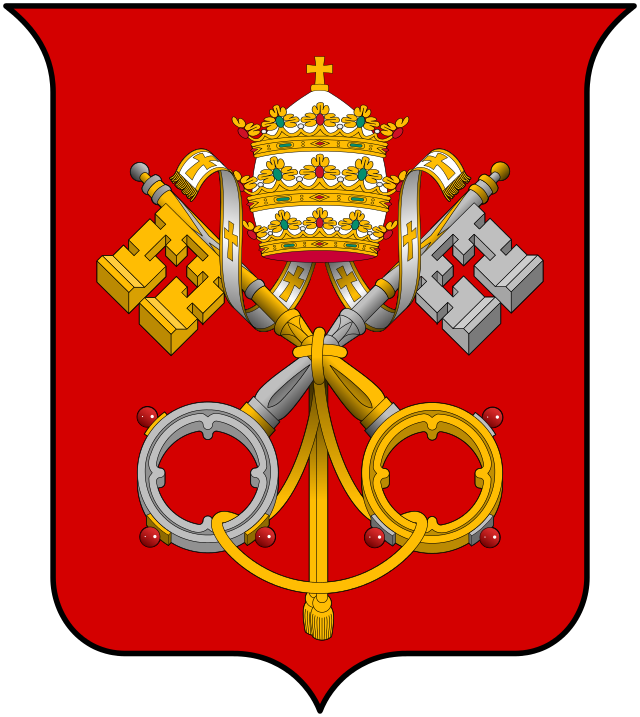 It’s been a long time since I titled a post with that starts with the word “because.” But given what is happening on the world stage these days, especially across that swath of territory in the Middle East, where an ersatz caliphate is trying to establish itself, the fact that the Catholic Church has a diplomatic corps sets her apart.
All Christians are diplomats, if we are to take St. Paul’s inspired words that “we are ambassadors for Christ” as being true. But the Holy See, long stripped of the temporal means to impact world affairs via force of arms, has continued to engage the principalities and powers of the world with thoughts and ideas. Ideas on what it means to be fully human. Thoughts on what justice actually looks like, etc.
Diplomats from the Holy See have the mission to promote an integral and solidary humanism with the nations, and supranational organizations, of the world. At last count, diplomatic relation have been established with 180 countries, as well as having membership (or observer) status with the United Nations, the European Union, and the Arab League, et al. For a complete list, head over to Wikipedia. So when the Church address events that are happening in the world, like the genocide occurring in Iraq and Syria, in this manner,
The whole world has witnessed with incredulity what is now called the “Restoration of the Caliphate,” which had been abolished on October 29,1923 by Kamal Ataturk, founder of modern Turkey. Opposition to this “restoration” by the majority of religious institutions and Muslim politicians has not prevented the “Islamic State” jihadists from committing and continuing to commit unspeakable criminal acts.
This Pontifical Council, together with all those engaged in interreligious dialogue, followers of all religions, and all men and women of good will, can only unambiguously denounce and condemn these practices which bring shame on humanity:
This Pontifical Council, together with all those engaged in interreligious dialogue, followers of all religions, and all men and women of good will, can only unambiguously denounce and condemn these practices which bring shame on humanity:
-the massacre of people on the sole basis of their religious affiliation;
-the despicable practice of beheading, crucifying and hanging bodies in public places;
-the choice imposed on Christians and Yezidis between conversion to Islam, payment of a tax (jizya) or forced exile;
-the forced expulsion of tens of thousands of people, including children, elderly, pregnant women and the sick;
-the abduction of girls and women belonging to the Yezidi and Christian communities as spoils of war (sabaya);
-the imposition of the barbaric practice of infibulation;
-the destruction of places of worship and Christian and Muslim burial places;
-the forced occupation or desecration of churches and monasteries;
-the removal of crucifixes and other Christian religious symbols as well as those of other
religious communities;
-the destruction of a priceless Christian religious and cultural heritage;
-indiscriminate violence aimed at terrorizing people to force them to surrender or flee.
No cause, and certainly no religion, can justify such barbarity.
…you can take it to the bank that this is what the diplomats of the Holy See are saying to world governments as well.
But Frank! Without an army to combat the insert the name of the evil menace of the day here from happening, what good is it? This is a colossal waste of time!
No, it isn’t. I mean, remember a few weeks back when Meriam Ibrahim was blessed by Pope Francis? The Holy See’s diplomatic corps had a lot to do with her being able to leave Sudan alive.
In fact, the deep, nuanced, thinking of the Catholic Church on what it means to be human, to live in peace, to live in community with all mankind, is pretty much at the top of the list of the most important things to be saying (and doing) in a world without hope, a world where might makes right, a world where disordered appetites ruin the lives of many, and where war is waged against truth, goodness, and beauty.
Edward Petin, writing in the journal Diplomat, explains.
What really singles the Holy See out, in this context, is its access to a vast network of missionaries, prelates and lay Catholics throughout the world, making it a valuable global ‘listening post’. As a result, Vatican diplomats are themselves very well informed and in a unique position to mediate disputes, prevent conflicts and ultimately save lives. Usually these achievements take place behind closed doors and rarely make the headlines. Even within the Church, few know, for example, that in 1978 the Holy See diplomats, led by John Paul II, prevented the ‘Beagle conflict’ – a border dispute between Argentina and Chile over three small islands at the tip of South America – from escalating into war.
Likewise, little is known about Archbishop Pablo Puente Buces, a former apostolic nuncio, and his significant role in bringing an end to the 1975-1990 Lebanese civil war by reaching out to various militia groups and heads of Islamic political parties. Similar peace efforts were made by other Holy See diplomats in Eastern Congo and Mozambique. Most recently, the papal nuncio to Haiti, Archbishop Bernardito Auza, has played a vital role in marshalling resources after the country was hit by a catastrophic earthquake.
Often the Pope’s ambassadors – who number about 100 worldwide – put their own lives at risk in the course of their work. The apostolic nuncio to Burundi, Archbishop Michael Courtney, was gunned down in 2003 after campaigning for peace in the troubled country; and similar heroism was shown by Archbishop Fernando Filoni, apostolic nuncio in Baghdad during the Iraq War, who remained in his post throughout the hostilities.
Such readiness for personal self-sacrifice derives from a Vatican diplomat’s training. Schooled at the Ecclesiastical Academy, the Holy See’s ancient college for diplomats, candidates are taught to be priests first and diplomats second, which instills in them a sense of serving not just the interests of the Vatican but of their flocks – and ultimately the world as a whole.
A Holy See diplomat is also trained to be discreet. Pope John XXIII, apostolic nuncio to France during the Second World War, believed that a papal ambassador should always be ‘obedient and silent…always self-effacing and remain in the shadow.’
‘To know how to obey, to know how to be quiet, to speak when necessary, with measured words and with reserve, that is the role of the diplomat of the Holy See, and it is also that of Saint Joseph,’ he said.
The effectiveness of Holy See diplomacy can also be attributed to the fact that it represents both a sovereign state and a faith with privileged status, vital in this age of heightened religious sensitivity, as an interlocutor with the two other Abrahamic faiths, Judaism and Islam.
Archbishop Filoni, mentioned above, is back in Iraq right now. May his mission there bear the fruits of lasting peace.
So, the fact that the Catholic Church has a diplomatic arm, actively engaged in meeting the world where it is, while bringing the radical thoughts of the gospel to the world’s stage, is a reason why I am Catholic? Absolutely.
Related Pope to UN: “I place before you the tears, the heartfelt cries of despair of Christians and religious minorities of the beloved land of Iraq.”
Compendium of the Social Doctrine of the Church
Next Post

August 13, 2014 This Thai Life Insurance Commercial "Gets" Marriage
Browse Our Archives
Select a Category Blog News Conversion Story Culture Learning Living Nature Prayer Uncategorized Working
Select a Month June 2016 May 2016 August 2015 July 2015 June 2015 May 2015 April 2015 March 2015 February 2015 January 2015 December 2014 November 2014 October 2014 September 2014 August 2014 July 2014 June 2014 May 2014 April 2014 March 2014 February 2014 January 2014 December 2013 November 2013 October 2013 September 2013 August 2013 July 2013 June 2013 May 2013 April 2013 March 2013 February 2013 January 2013 December 2012 November 2012 October 2012 September 2012 August 2012 July 2012 June 2012 May 2012 April 2012 March 2012 February 2012 January 2012 December 2011 November 2011 October 2011 September 2011 August 2011 July 2011 June 2011 May 2011 April 2011 March 2011 February 2011 January 2011 December 2010 November 2010 October 2010 September 2010 August 2010 July 2010 June 2010 May 2010 April 2010 March 2010 February 2010 January 2010 December 2009 November 2009 October 2009 September 2009 August 2009
Follow Us!
TAKE THE
Religious Wisdom Quiz
Who said, "Give us this day our daily bread"?
Select your answer to see how you score.
Isaiah Jesus David Paul
Related posts from Why I Am Catholic

Belated Happy Birthday To Blaise Pascal, Unofficial Saint...

Because My Brother Imran Yousef Is An American...

Joe Six-Pack, USMC, With A Few Post-Terrorist Attack...

This Is Why God Invented YouTube...
TRENDING AT PATHEOS Catholic

Creation, Preservation, and Teleology in Catholic Theology
As I write this, it is very early Monday morning. Like millions...

The Parable Of The Sower And The Word...
One of Christ’s most famous parables is that of the sower who...

Rejecting Doom: Christian Hope And Human Action
Christianity is a religion of hope. We are to have hope and...

Why I Choose the Eucharist Over the Sermon
Choose the Eucharist, Not the Sermon What are we supposed to get...

5 Design Elements Found in Spiritually Rooted Homes
Putting Spirituality Into Home Decor Our homes are more than our living...

Credo: A Story of God Told with the...
About 10 years ago, I began to imagine a personal "Credo" that...
Ad-Free & Subscriber Log-In Subscription Support
- About Us
- 2026 Calendar
- Videos
- Podcasts
- Library of World Religions
- Faith In Media Tracker
- Advertise With Us
- Write for Us
- Privacy Policy
- Terms of Service
- Do Not Sell My Data
- Contact Us
- Radiant Digital
- Manage Newsletter Subscriptions
- Unsubscribe From Notifications
- Sitemap
Copyright 2008-2026, Patheos. All rights reserved.
Subscription Support Ad-Free & Subscriber Log-In
Follow Patheos