
BuddhistCatholicContemplativeEvangelicalGeneral ChristianHinduJewishLatter-day SaintMuslimNew VisionsProgressive Christian
Beliefs
- Buddhist
- Catholic
- Contemplative
- Evangelical
- General Christian
- Hindu
- Jewish
- Latter-day Saint
- More Voices
- Muslim
- New Visions
- Pagan
- Progressive Christian
Topics
- Religion News
- Food and Religion
- Sports and Religion
- Religious Art
- Religious Music and Entertainment
- Religious Events
- History and Religion
- Style and Religion
- Politics and Religion
- Women in Religion
- Recreation Outdoors and Religion
- Business Finance and Religion
- Careers Workplace and Religion
- Education and Religion
- Family Parenting and Religion
- Health Fitness and Religion
- Home and Religion
- Relationships and Religion
- Technology and Religion
- Travel and Religion
Columnists
- Buddhist Columnists
- Business Finance and Religion Columnists
- Careers Workplace and Religion Columnists
- Catholic Columnists
- Contemplative Columnists
- Education and Religion Columnists
- Evangelists Columnists
- Family Parenting and Religion Columnists
- General Christian Columnists
- Health Fitness and Religion Columnists
- Hindu Columnists
- History and Religion Columnists
- Home and Religion Columnists
- Jewish Columnists
- More Voices Columnists
- Latter Day Columnists
- Muslim Columnists
- New Visions Columnists
- Nonreligious Columnists
- Pagan Columnists
- Politics and Religion Columnists
- Progressive Columnists
- Recreation Outdoors and Religion Columnists
- Relationships and Religion Columnists
- Religion News Columnists
- Religious Art Columnists
- Religious Events Columnists
- Religious Music and Entertainment Columnists
- Sports and Religion Columnists
- Style and Religion Columnists
- Technology and Religion Columnists
- Travel and Religion Columnists
- Women in Religion Columnists
Resource Library
- 2026 Calendar
- Library of World Religions
- The 100 Most Holy Places on Earth
- Patheos Answers
- Podcasts
- Videos
- Faith Leaders Database
- Anglican Episcopalian
- Bahai
- Baptist
- Buddhism
- Christianity
- Confucianism
- Eastern Orthodoxy
- Hinduism
- Holiness and Pentecostal
- ISKCON
- Islam
- Judaism
- Lutheran
- Methodist
- The Church of Jesus Christ of Latter-day Saints
- New Age
- Paganism
- Presbytarian and Reformed
- Protestantism
- Religion Behind the Scenes
- Roman Catholic
- Scientology
- Shia Islam
- Sikhism
- Sufism
- Sunni Islam
- Taoism
- Zen
- See all religions
Research Tools
 Ad-Free & Subscriber Log-In Subscription Support
Ad-Free & Subscriber Log-In Subscription Support
Follow Patheos 

- Trending:
- Forgiveness
- |
- Marriage
- |
- Consciousness
- |
- Death Penalty
- |
- Election
- |
- Halloween
 Why I Am Catholic
-
More
- Home
- In Praise Of A Catholic Christmas Holiday Favorite: Mincemeat Pie UPDATED
In Praise Of A Catholic Christmas Holiday Favorite: Mincemeat Pie UPDATED
Last updated on: January 24, 2017 at 5:13 pm by Frank Weathers
In Praise Of A Catholic Christmas Holiday Favorite: Mincemeat Pie UPDATED 2017-01-24T17:13:10-05:00 Frank Weathers
Patheos Explore the world's faith through different perspectives on religion and spirituality! Patheos has the views of the prevalent religions and spiritualities of the world.
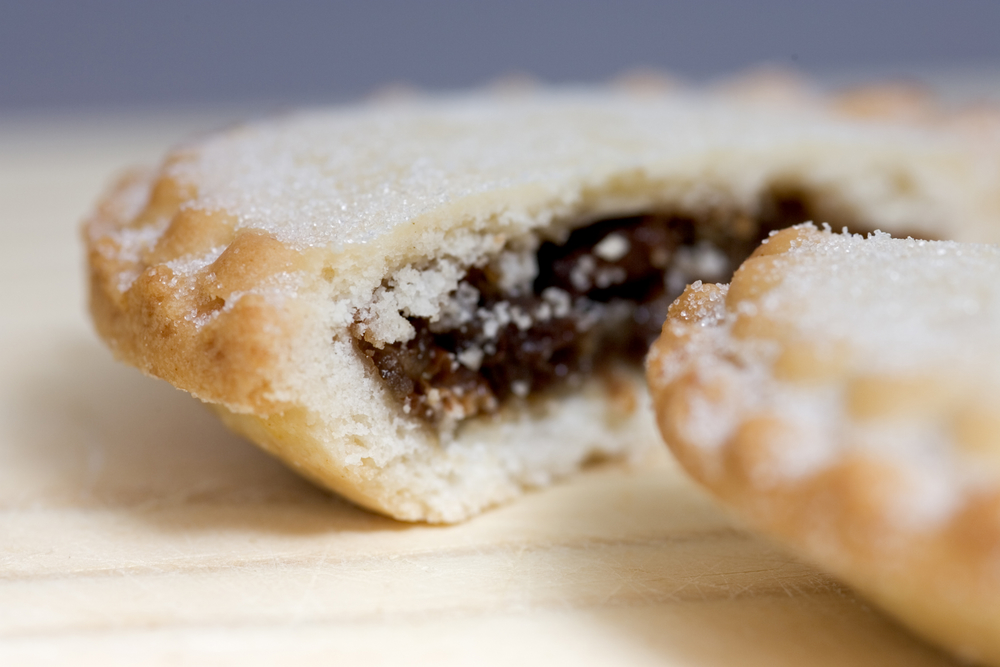
Photo courtesy of Shutterstock
Readers of this blog know that I’m a convert to Catholicism (RCIA Class of ’08). Something else they know is that I enjoy rediscovering all things with Catholic origins that folks like me (former non-denominational Christian) never even knew were Catholic in the first place.
Like my favorite pie for this time of year: mincemeat pie.
I also enjoy sharing stories like this because of the round about way in which they come about. In this instance, it was because my mom brought my favorite pie for dessert for Christmas dinner at Casa del Weathers. My kids were like, what is it? Keep in mind that these kids are transplants from California, where finding mincemeat pie wasn’t altogether impossible, but it was definitely more challenging than it is in Tennessee.
They were very interested to know what was inside the filling, see. I answered them with what I knew for sure (raisins, dates, apples, spices, orange peels), and the conversation soon turned to wether or not this was a bonafide Southern treat, or an Irish treat (from my mom’s side of the family). I said I really didn’t know, except that it’s my favorite pie, and that was why I loved it. End of story; dig in.
My mother went home, and followed up on it, for she sent me an e-mail the next morning.
Frank,
It is interesting to read what Wikipedia has to say about Mincemeat pie … it was frowned on by the Puritans because of its connection with “Catholic idolatry” … and, originally it had 13 ingredients representing Christ and the 12 Apostles … etc.
Love, Mom
At which point I thought, “Freaking Puritans!”
Of course I took the opportunity to remind her that the Puritans had outlawed celebrating Christmas for a time. I read the Wikipedia article with interest, and when I read that later on “its size reduced markedly from the large oblong shape once observed,” I learned that this may have been because the pies used to be shaped like a manger (though there is a concern that this may be an urban legend), and that they were called Christmas Pies.
Here’s what I dug up further about the origin and history of my favorite pie.
History of Mincemeat Pie
Mincemeat developed as a way of preserving meat without salting or smoking some 500 years ago in England, where mince pies are still considered an essential accompaniment to holiday dinners just like the traditional plum pudding. This pie is a remnant of a medieval tradition of spiced meat dishes, usually minced mutton, that have survived because of its association with Christmas. This pies have also been known as Christmas Pies. Mince pie as part of the Christmas table had long been an English custom.
Today, we are accustomed to eating mince pie as a dessert, but actually “minced” pie and its follow-up “mincemeat pie” began as a main course dish with with more meat than fruit (a mixture of meat, dried fruits, and spices). As fruits and spices became more plentiful in the 17th century, the spiciness of the pies increased accordingly.
11th Century – The Christmas pie came about at the time when the Crusaders were returning from the Holy Land. They brought home a variety of oriental spices. It was important to add three spices (cinnamon, cloves and nutmeg) for the three gifts given to the Christ child by the Magi. In honor of the birth of the Savior, the mince pie was originally made in an oblong casings (coffin or cradle shaped), with a place for the Christ Child to be placed on top. The baby was removed by the children and the manger (pie) was eaten in celebration. These pies were not very large, and it was thought lucky to eat one mince pie on each of the twelve days of Christmas (ending with Epiphany, the 6th of January).
Over the years, the pies grew smaller, the shape of the pie was gradually changed from oblong to round, and the meat content was gradually reduced until the pies were simply filled with a mixture of suet, spices and dried fruit, previously steeped in brandy. This filling was put into little pastry cases that were covered with pastry lids and then baked in an oven. Essentially, this is today’s English mince pie.
1413 – King Henry V of England served a mincemeat pie at his coronation in 1413. King Henry VIII (Dude, what did you do? —Ed.) liked his Christmas pie to be a main-dish pie filled with mincemeat.
1545 – A cookbook from the mid 16th century that also includes some account of domestic life, cookery and feasts in Tudor days, called A Proper newe Booke of Cokerye, declarynge what maner of meates be beste in season, for al times in the yere, and how they ought to be dressed, and serued at the table, bothe for fleshe dayes, and fyshe dayes, has a recipe for a pie that sounds alot like a modern day mincemeat pie:
To make Pyes – Pyes of mutton or beif must be fyne mynced and ceasoned wyth pepper and salte, and a lyttle saffron to coloure it, suet or marrow a good quantite, a lyttle vyneger, prumes, greate raysins and dates, take thefattest of the broathe of powdred beyfe, and yf you wyll have paest royall, take butter and yolkes of egges and so tempre the flowre to make the paeste.
1588 – In the 1588 Good Hous-Wiues Treasurie by Edward Allde, meats were still cut up to be eaten with a spoon and combined with fruits and heavy spices. Typical was his recipe for Minst Pye which used practically the same ingredients that go into a modern mince pie.
Remember the joys of Prohibition? Here we go.
A satirical “sermon” I’d love to read
1657 – Oliver Cromwell (1599-1658), the self-proclaimed Lord Protector of England from 1649 until 1658, detested Christmas as a pagan holiday (one not sanctioned by the Bible, that promoted gluttony and drunkenness). Oliver Cromwell’s Puritan Council abolished Christmas on December 22, 1657. In London, soldiers were ordered to go round the streets and take, by force if necessary, food being cooked for a Christmas celebration. The smell of a goose being cooked could bring trouble. Cromwell considered pies as a guilty, forbidden pleasure. The traditional mincemeat pie was banned. King Charles II (1630-1685) restored Christmas when he ascended the throne in 1660.
1646 – In the seventeenth and eighteenth centuries, mince pies, sometimes known as shred or secrets pies, were made in eccentric shapes. Maybe this was done to originally hide the fact that these were actually mince pies which were banned during the Christmas celebration in England, and possibly the tradition just continued for many years. In the 1646 ballad, The World Turned Upside Down by Thomason Tracts, one verse of the song refers to “shred pie.” The song was written bewailing Parliament’s ban on Christmas:
To conclude, I’le tell you news that’s right,
Christmas was kil’d at Naseby fight:
Charity was slain at that same time,
Jack Tell troth too, a friend of mine,
Likewise then did die,
Rost beef and shred pie,
Pig, Goose and Capon no quarter found.Final Chorus:
Yet let’s be content and the times lament,
You see the world is quite turned round.

And this silliness infected America too, see?
1659 – In 1659, Oliver Cromwell’s Puritan influence spread across the Atlantic ocean to American British Colonies, and many towns of New England went so far as to actually ban mincemeat pies at Christmas time. Christmas was actually banned in Boston from 1659 to 1681. Those celebrating it were fined.
Like I said earlier, “Freaking Puritans!” Happily, the pies came out from under the Puritan ban again in the 1800’s.
So short story, long? Another reason why I am Catholic is because my favorite pie, of all time, is Catholic (and I didn’t even know it).
Thanks for bringing it to Christmas dinner, mom! God is good.
UPDATE
Fr. Seraphim Beshoner, a professor at Franciscan University, podcasts on the mincemeat pie: Idolatrie in Crust.
Catholic customs we forgot we had
Next Post

December 27, 2013 The HHS Mandate Loses Again
Browse Our Archives
Select a Category Blog News Conversion Story Culture Learning Living Nature Prayer Uncategorized Working
Select a Month June 2016 May 2016 August 2015 July 2015 June 2015 May 2015 April 2015 March 2015 February 2015 January 2015 December 2014 November 2014 October 2014 September 2014 August 2014 July 2014 June 2014 May 2014 April 2014 March 2014 February 2014 January 2014 December 2013 November 2013 October 2013 September 2013 August 2013 July 2013 June 2013 May 2013 April 2013 March 2013 February 2013 January 2013 December 2012 November 2012 October 2012 September 2012 August 2012 July 2012 June 2012 May 2012 April 2012 March 2012 February 2012 January 2012 December 2011 November 2011 October 2011 September 2011 August 2011 July 2011 June 2011 May 2011 April 2011 March 2011 February 2011 January 2011 December 2010 November 2010 October 2010 September 2010 August 2010 July 2010 June 2010 May 2010 April 2010 March 2010 February 2010 January 2010 December 2009 November 2009 October 2009 September 2009 August 2009
Follow Us!
TAKE THE
Religious Wisdom Quiz
Three of the four beasts from Daniel's vision are: a bear with three ribs in its mouth, a leopard with four wings and four heads, and a terrifying beast with iron teeth and ten horns. Which beast is missing?
Select your answer to see how you score.
A lion with eagle's wings A dragon with seven heads A ram with two sets of gilded horns A bull breathing fire
Related posts from Why I Am Catholic

Belated Happy Birthday To Blaise Pascal, Unofficial Saint...

Because My Brother Imran Yousef Is An American...

Joe Six-Pack, USMC, With A Few Post-Terrorist Attack...

This Is Why God Invented YouTube...
TRENDING AT PATHEOS Catholic

Creation, Preservation, and Teleology in Catholic Theology
As I write this, it is very early Monday morning. Like millions...

The Parable Of The Sower And The Word...
One of Christ’s most famous parables is that of the sower who...

Rejecting Doom: Christian Hope And Human Action
Christianity is a religion of hope. We are to have hope and...

Why I Choose the Eucharist Over the Sermon
Choose the Eucharist, Not the Sermon What are we supposed to get...

5 Design Elements Found in Spiritually Rooted Homes
Putting Spirituality Into Home Decor Our homes are more than our living...

Credo: A Story of God Told with the...
About 10 years ago, I began to imagine a personal "Credo" that...
Ad-Free & Subscriber Log-In Subscription Support
- About Us
- 2026 Calendar
- Videos
- Podcasts
- Library of World Religions
- Faith In Media Tracker
- Advertise With Us
- Write for Us
- Privacy Policy
- Terms of Service
- Do Not Sell My Data
- Contact Us
- Radiant Digital
- Manage Newsletter Subscriptions
- Unsubscribe From Notifications
- Sitemap
Copyright 2008-2026, Patheos. All rights reserved.
Subscription Support Ad-Free & Subscriber Log-In
Follow Patheos